
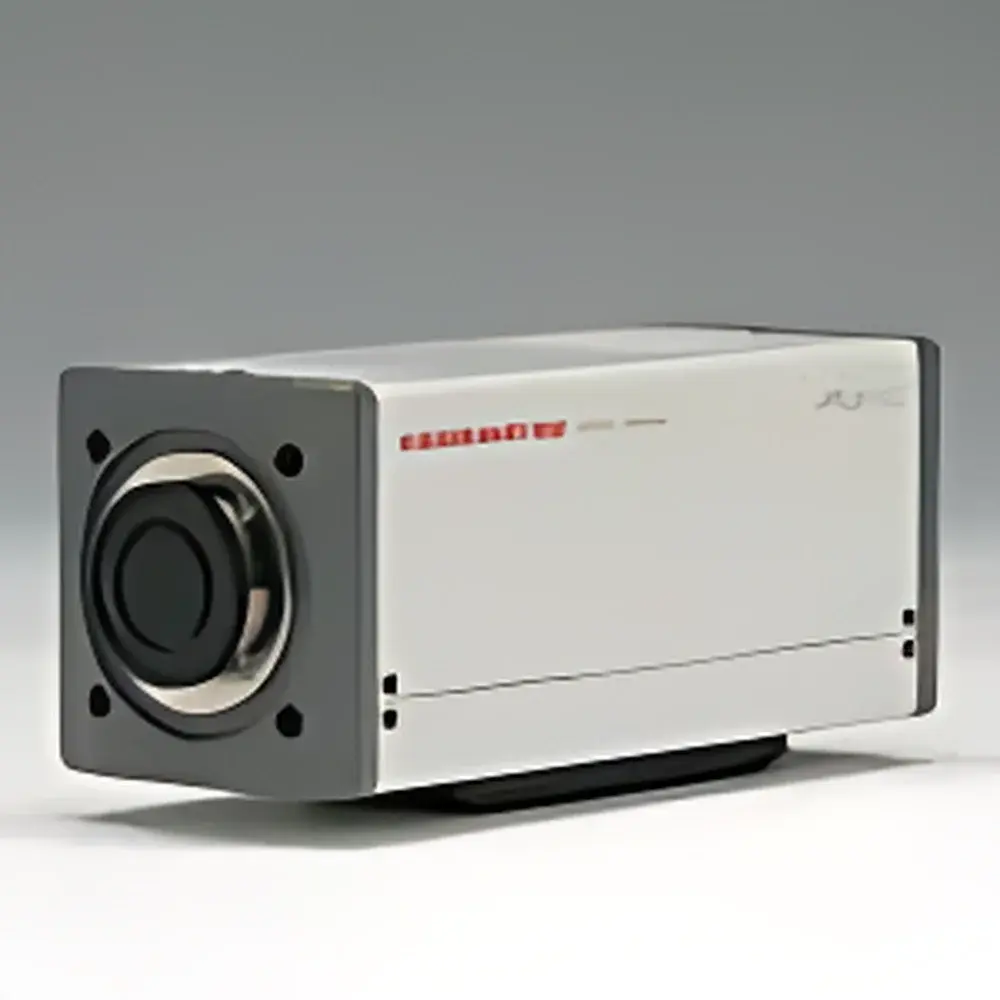
Hamamatsu ORCA-03G / ORCA-05G Scientific CCD Camera
| Origin | Japan |
|---|---|
| Manufacturer Type | Authorized Distributor |
| Origin Category | Imported |
| Model | ORCA-03G / ORCA-05G |
| Pricing | Available Upon Request |
| Imaging Sensor | Interline Transfer CCD with Microlens Array |
| Spectral Range | 200–1100 nm (UV to NIR) |
| Resolution | 1344 × 1024 pixels |
| Pixel Size | 6.45 µm × 6.45 µm |
| Active Area | 8.67 mm × 6.60 mm |
| Frame Rate | 8.9 fps (full frame, binning off) |
| Peak Quantum Efficiency | 70% @ ~600 nm |
| Cooling | Thermoelectrically cooled to −10 °C (ORCA-03G) |
| Dark Current | 0.1 e⁻/pixel/s (−10 °C, ORCA-03G) |
| Read Noise | 6–8 e⁻ rms (ORCA-03G), 10 e⁻ rms (ORCA-05G) |
| Exposure Time | 10 µs – 10 s (ORCA-03G), 10 µs – 1 s (ORCA-05G) |
| A/D Conversion | 12-bit |
Overview
The Hamamatsu ORCA-03G and ORCA-05G are high-performance scientific-grade interline transfer CCD cameras engineered for low-light quantitative imaging in demanding optical microscopy and photon-limited applications. Built upon Hamamatsu Photonics’ proprietary microlens-enhanced CCD architecture, both models deliver exceptional quantum efficiency across a broad spectral range—from deep ultraviolet (200 nm) through visible light to near-infrared (1100 nm)—enabling reliable detection of weak fluorescence signals, chemiluminescence, and X-ray scintillation. The ORCA-03G incorporates thermoelectric (Peltier) cooling to −10 °C, significantly suppressing dark current to 0.1 e⁻/pixel/s and optimizing signal-to-noise ratio for long-exposure acquisitions. In contrast, the ORCA-05G provides air-cooled operation with faster readout capability and reduced system complexity—ideal for high-throughput or time-resolved imaging where thermal stabilization is secondary to acquisition speed and integration simplicity. Both models employ true 12-bit analog-to-digital conversion and support precise exposure control from 10 microseconds to up to 10 seconds (ORCA-03G) or 1 second (ORCA-05G), ensuring flexibility across static and dynamic imaging modalities.
Key Features
- Microlens-integrated interline transfer CCD sensor delivering peak quantum efficiency of 70% at ~600 nm, with extended UV-NIR response (200–1100 nm)
- High spatial resolution: 1344 × 1024 active pixels with uniform 6.45 µm square pixel pitch and 8.67 mm × 6.60 mm active imaging area
- Low-noise performance: 6–8 e⁻ rms read noise (ORCA-03G), 10 e⁻ rms (ORCA-05G); dark current reduced to 0.1 e⁻/pixel/s at −10 °C (ORCA-03G)
- Flexible exposure control: programmable integration times from 10 µs to 10 s (ORCA-03G) or 1 s (ORCA-05G), supporting both transient event capture and slow kinetic assays
- Stable full-frame output at 8.9 fps without binning; compatible with standard C-mount and F-mount optical interfaces
- Hardware-triggered acquisition with TTL-compatible input/output lines for synchronization with external light sources, shutters, or stage controllers
Sample Compatibility & Compliance
The ORCA-03G/05G is routinely deployed in regulated and non-regulated laboratory environments requiring traceable, reproducible image data. Its stable analog signal chain, calibrated gain linearity, and deterministic exposure timing support compliance with ISO 17025-accredited measurement procedures. While not inherently FDA 21 CFR Part 11-compliant as a standalone device, the camera integrates seamlessly with validated third-party imaging platforms (e.g., MetaMorph, NIS-Elements, μManager) that implement audit trail, electronic signature, and data integrity controls required under GLP and GMP frameworks. The camera’s spectral calibration traceability to NIST-traceable standards enables quantitative intensity measurements in fluorescence intensity standardization protocols (e.g., according to ASTM E2892 for fluorescence microscopy quantification). It is widely used in academic core facilities, pharmaceutical QC labs, semiconductor metrology centers, and clinical pathology departments—where consistency across instrument platforms and longitudinal dataset comparability are critical.
Software & Data Management
Hamamatsu provides native SDKs (C/C++, LabVIEW, MATLAB) and the HCImage Live application for real-time acquisition, histogram analysis, region-of-interest (ROI) photometry, and multi-channel time-lapse sequencing. All acquired images are saved in TIFF or HDF5 format with embedded metadata—including exposure time, gain setting, sensor temperature (ORCA-03G), timestamp, and hardware configuration—ensuring FAIR (Findable, Accessible, Interoperable, Reusable) data principles. The SDK supports direct memory-mapped frame buffers for high-speed streaming into custom analysis pipelines, and includes functions for flat-field correction, dark-frame subtraction, and pixel defect masking. Integration with Python-based scientific stacks (e.g., via pyhamamatsu wrappers) allows automated batch processing, machine-learning–driven segmentation, and export to standardized formats such as OME-TIFF for interoperability with Bio-Formats and QuPath.
Applications
- Widefield fluorescence microscopy including GFP/YFP/mCherry expression tracking, FISH, and multicolor co-localization
- Time-lapse imaging of live-cell dynamics, mitotic progression, and organelle trafficking
- Quantitative histopathology and cytology—supporting digital slide scanning validation and AI training datasets
- Metallurgical and semiconductor inspection using reflected-light and oblique illumination modes
- Scintillator-based X-ray imaging (e.g., CsI:Tl, Gd₂O₂S) for non-destructive testing and micro-CT preclinical systems
- Dynamic contrast studies in flow cytometry and particle tracking velocimetry (PTV)
- Phase contrast and DIC microscopy enhanced by high SNR and minimal fixed-pattern noise
FAQ
What distinguishes the ORCA-03G from the ORCA-05G in terms of thermal management?
The ORCA-03G features integrated Peltier cooling capable of stabilizing the sensor at −10 °C, minimizing dark current for long exposures. The ORCA-05G relies on passive air cooling and is optimized for shorter exposures and higher frame-rate workflows.
Is the camera compatible with USB 3.0 or Camera Link interfaces?
No—the ORCA-03G/05G uses a proprietary PCI Express x4 interface via Hamamatsu’s DCAM-SDK-compatible frame grabber card (C10600 series). This ensures deterministic latency and full bandwidth utilization for sustained 8.9 fps throughput.
Can I perform on-chip binning to improve sensitivity?
Yes—hardware binning (2×2, 4×4) is supported in both models, trading spatial resolution for increased effective well depth and reduced read noise per binned super-pixel.
Does the camera support external triggering in master/slave configurations?
Yes—TTL-compatible trigger input and output lines enable precise synchronization with pulsed lasers, mechanical shutters, piezo stages, or other synchronized instruments in multimodal setups.
Are calibration files (flat-field, dark-frame) provided with the system?
Hamamatsu supplies factory-measured dark-frame libraries and flat-field reference images for each unit, accessible via SDK functions and usable for automated correction during acquisition or post-processing.




