
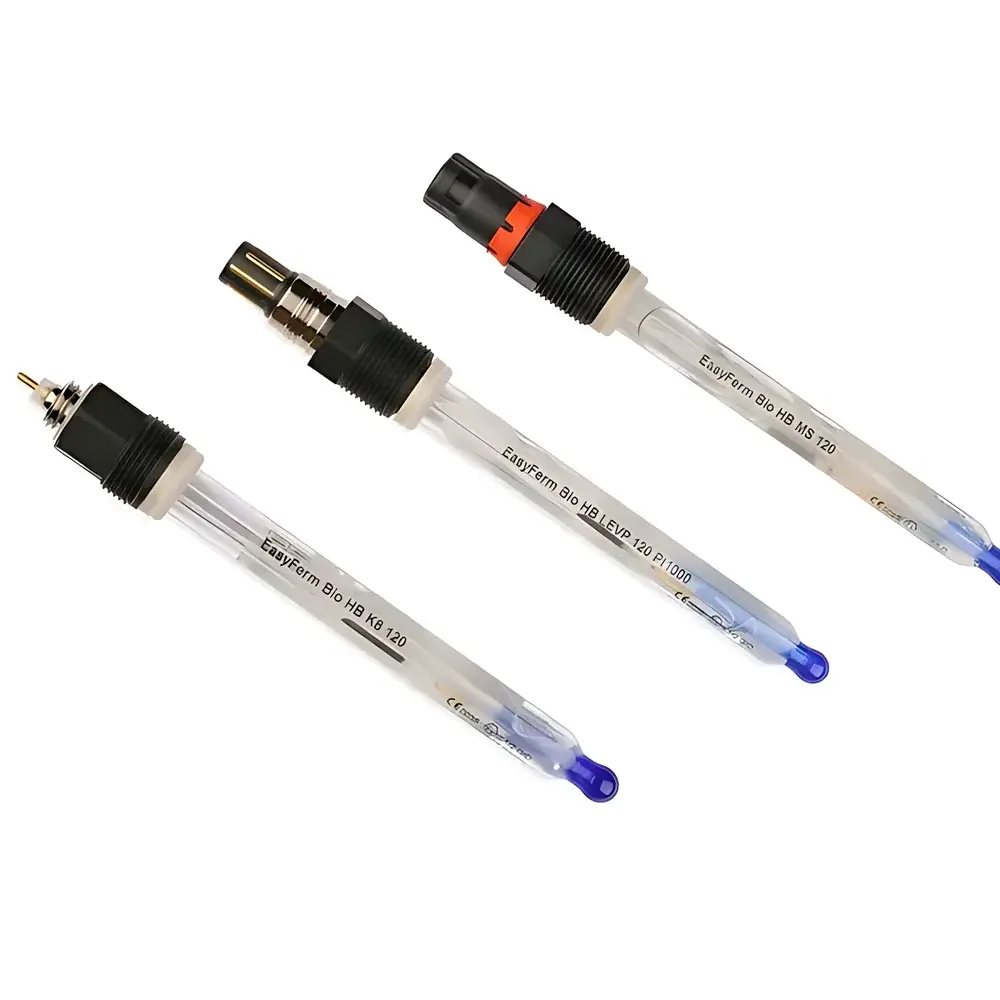
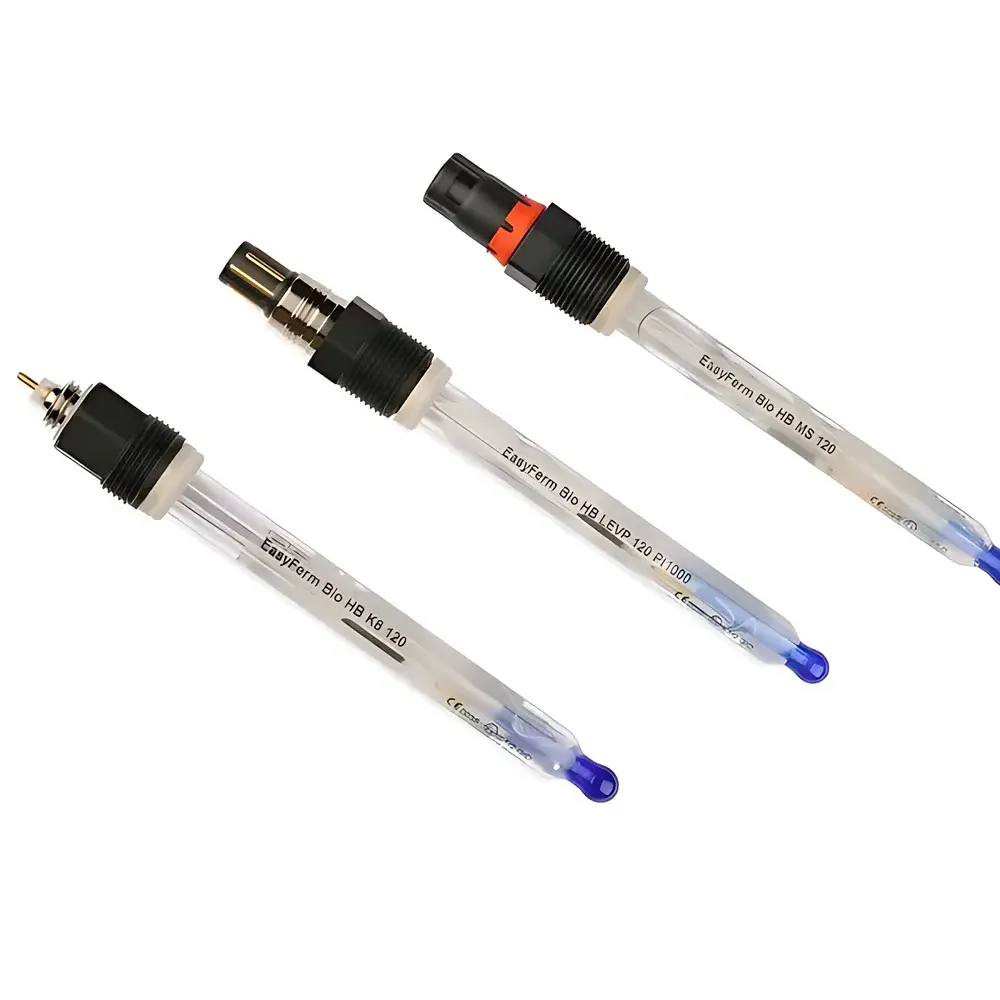
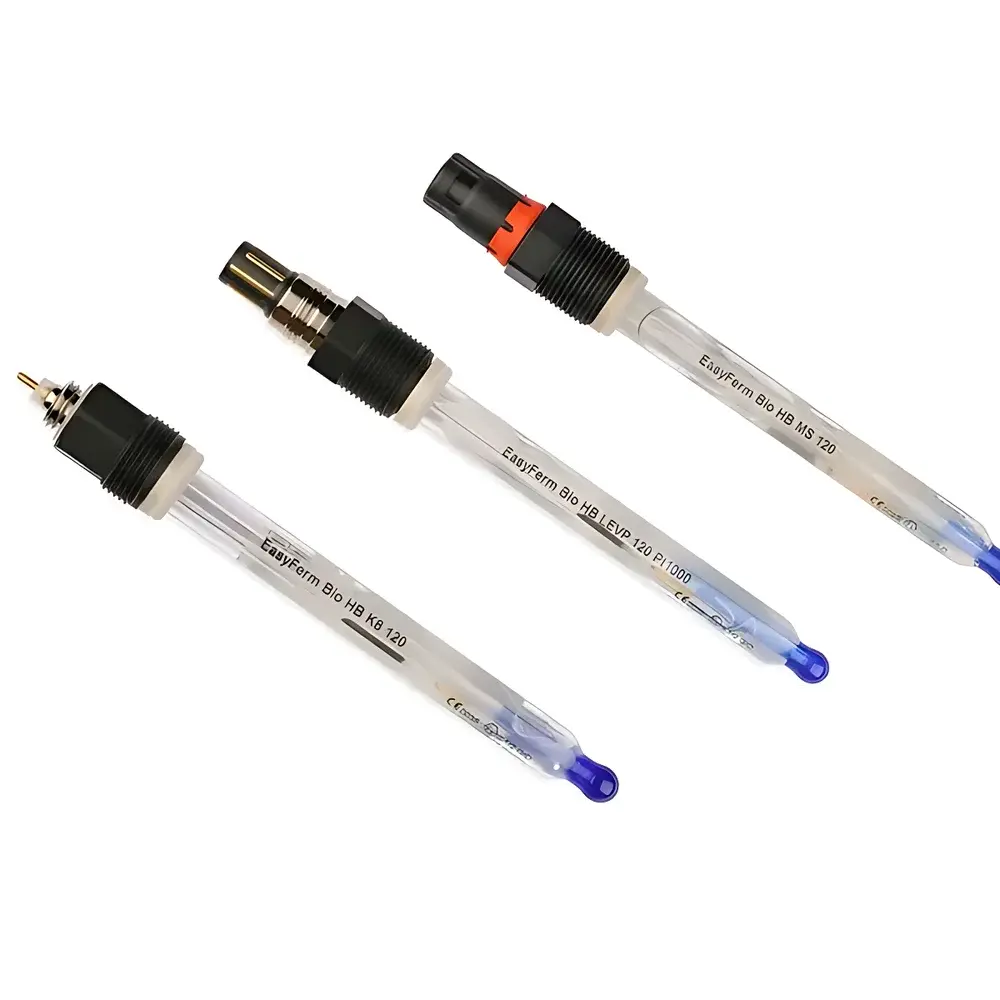
Hamilton HB42VP Online pH Sensor
| Brand | Hamilton |
|---|---|
| Origin | Shanghai, China |
| Manufacturer Type | Authorized Distributor |
| Origin Category | Domestic (China) |
| Model | HB42VP |
| Instrument Type | Inline / Process pH Sensor |
| Parameter Type | Single-parameter (pH) |
| Measurement Range | pH 0–14 |
| Resolution | 0.01 pH |
| Accuracy | ±0.15 pH |
| Calibration | Standard pH buffer solutions (e.g., pH 4.01, 7.00, 10.01) |
| Electrolyte System | Polisolve polymer electrolyte |
| Reference System | Polilyte polymer reference |
| Connection | VarioPin (VP) quick-fit connector |
| Glass Membrane | High-pH-resistant glass with low alkaline error |
| Temperature Compensation | Integrated Pt1000 RTD |
| Operating Pressure | Up to 6 bar (gauge), non-compensated |
| IP Rating | IP68 (when properly mounted in compatible housing) |
Overview
The Hamilton HB42VP is an industrial-grade inline pH sensor engineered for continuous, high-reliability process monitoring in demanding aqueous environments. Based on the established Polilyte platform, it employs a solid-state electrochemical architecture grounded in potentiometric measurement principles: the potential difference between a pH-sensitive glass membrane and a stable polymer-based reference electrode is converted into a calibrated pH value via Nernst equation derivation (−59.16 mV/pH at 25 °C). Unlike traditional liquid-filled electrodes, the HB42VP eliminates free electrolyte, removing the need for pressure compensation, refilling, or leakage management—making it especially suited for variable-pressure applications such as pressurized pipelines, bioreactors, and recirculating water loops. Its design targets long-term drift stability (12 months in clean-to-moderately fouling media), and robust performance across wide thermal gradients (0–80 °C operating range).
Key Features
- Polisolve Polymer Electrolyte: A proprietary, gelified KCl-polymer matrix that provides stable ionic conductivity without liquid migration—eliminating electrolyte depletion, hydrostatic pressure sensitivity, and clogging risks.
- Polilyte Reference System: Chemically inert polymer junction with controlled ion exchange kinetics; resists poisoning by sulfides, proteins, heavy metals, and viscous organics commonly encountered in wastewater, fermentation broths, and chemical synthesis streams.
- VarioPin (VP) Connector: IP67-rated, keyed bayonet-style interface ensuring repeatable electrical contact, mechanical alignment, and fluid-tight sealing during hot-swapping—fully compliant with Hamilton’s modular transmitter ecosystem (e.g., ArcAir, PH3000, and INTELLiCAL platforms).
- High-Performance pH Glass: Low-alkaline-error glass formulation optimized for accuracy across the full 0–14 pH range, with reduced sodium error above pH 10 and enhanced response time (<15 s to 95% of final value in stirred buffer).
- Integrated Pt1000 RTD: Precision temperature sensing embedded within the electrode body enables real-time, two-point automatic temperature compensation (ATC) per IUPAC and ISO 7027 guidelines.
- Robust Mechanical Design: 12 mm diameter borosilicate glass shaft, PPS (polyphenylsulfone) body, and optional FDA-compliant wetted materials—compatible with standard ¾″ NPT, DIN 19266, and ISO 228 threaded process adapters.
Sample Compatibility & Compliance
The HB42VP is validated for use in low-conductivity (≥50 µS/cm) and moderate-fouling aqueous matrices including municipal and industrial wastewater, deionized water, pharmaceutical process streams, cell culture media, and caustic cleaning-in-place (CIP) solutions. It meets EN 61326-1 (EMC), EN 61000-6-2/6-3 (immunity/emissions), and RoHS 2011/65/EU requirements. While not intrinsically safe, it is suitable for Zone 2/Class I Div 2 installations when paired with appropriate barrier systems. The sensor supports GLP/GMP workflows through traceable calibration logs and supports audit-ready data export when integrated with Hamilton transmitters compliant with FDA 21 CFR Part 11 (electronic signatures, event logging, and user access control).
Software & Data Management
When connected to Hamilton’s ArcAir or PH3000 series transmitters, the HB42VP enables full digital diagnostics—including electrode slope (%), asymmetry potential (mV), impedance tracking, and junction resistance trending—accessible via HART, Modbus RTU/TCP, or Ethernet/IP protocols. Calibration history, timestamped verification checks, and predictive maintenance alerts are stored locally and exportable in CSV or PDF format. All firmware updates and configuration changes are version-controlled and support rollback functionality—ensuring consistent metrological traceability across instrument lifecycles.
Applications
- Drinking water treatment: Real-time pH control in coagulation, disinfection, and corrosion inhibition stages.
- Biopharmaceutical manufacturing: In-situ pH monitoring during upstream processing (fed-batch and perfusion bioreactors) and downstream buffer preparation.
- Chemical process control: Neutralization reaction monitoring in acid-base titration loops and effluent compliance tracking.
- Food & beverage production: Sanitation cycle validation (CIP rinse pH verification) and formulation consistency control.
- Environmental monitoring: Continuous discharge monitoring per EPA Method 150.1 and ISO 10523.
FAQ
What calibration buffers are recommended for routine use?
Standard traceable buffers at pH 4.01, 7.00, and 10.01 (certified to NIST SRM standards) are recommended for two- or three-point calibration. Avoid citrate or phosphate buffers outside their specified temperature ranges.
Can the HB42VP be used in low-conductivity ultrapure water?
Yes—its low-noise polymer junction and high-impedance signal conditioning minimize ground loop errors; however, flow velocity >0.3 m/s and proper grounding of the measurement loop are essential for stable readings.
Is replacement of the electrolyte required?
No—the Polisolve system is sealed for life and does not require refilling, pressure adjustment, or gel replenishment under normal operating conditions.
How often should calibration be performed?
Initial calibration before installation, followed by verification every 24–72 hours in critical processes; weekly calibration is typical for general-purpose monitoring, supported by daily slope checks.
Does the sensor support temperature compensation?
Yes—integrated Pt1000 RTD enables automatic temperature compensation per the Nernst equation; no external probe is needed.





