
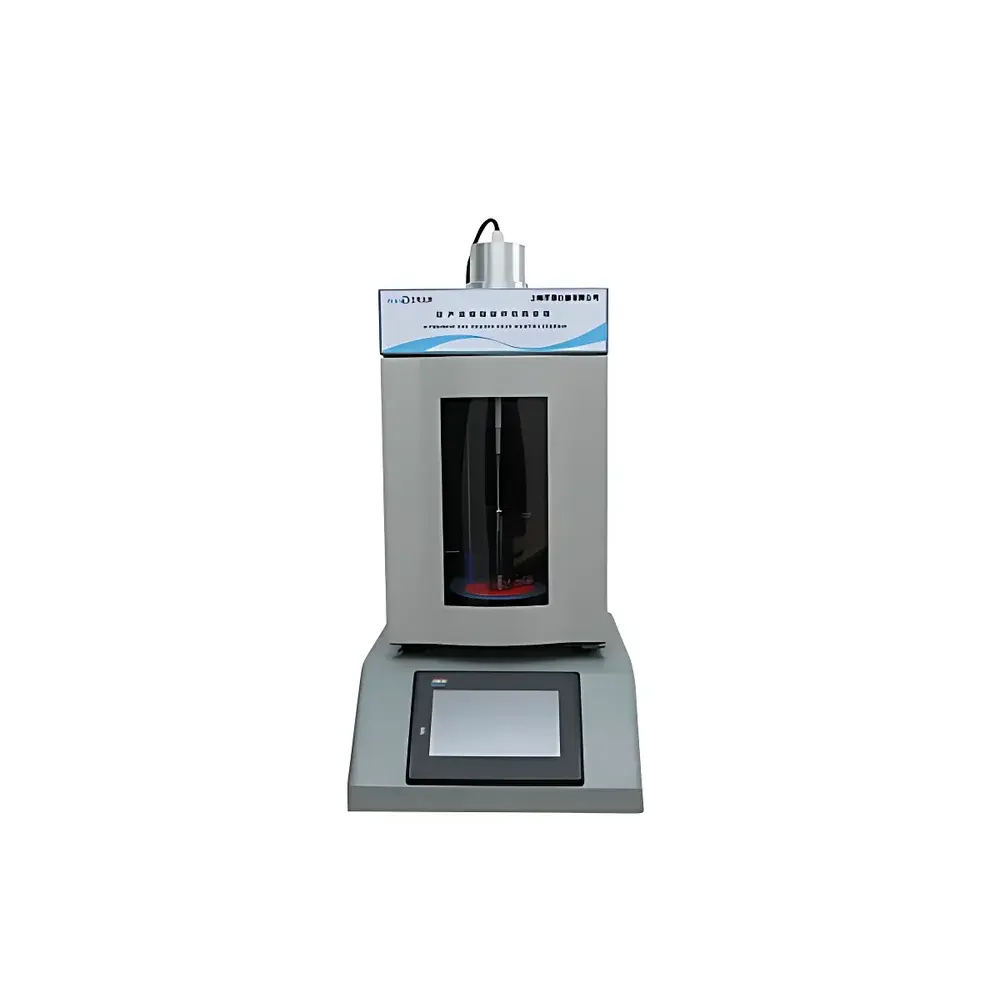
Hannuo Hannuo-1200EW High-Power Ultrasonic Cell Disruptor
| Brand | Hannuo |
|---|---|
| Origin | Shanghai, China |
| Manufacturer Type | Authorized Distributor |
| Product Category | Domestic |
| Model | Hannuo-1200EW |
| Instrument Type | Ultrasonic Cell Disruptor |
| Ultrasonic Power | 1200 W |
| Operating Frequency | 20 kHz |
| Temperature Range | Ambient to 90 °C |
| Sample Volume Capacity | 10–1000 mL (with interchangeable probes) |
| Probe Standard | Φ20 mm titanium alloy horn |
| Optional Probes | Φ10, Φ15, Φ22 mm |
| Pulse Mode | 0.1–99.9 s on/off adjustable |
| Duty Cycle | 0.1–99.9% |
| Control Interface | 7-inch TFT touch screen |
| Data Storage | 20 user-defined protocols |
| PC Connectivity | RS232/USB interface with data export & remote control capability |
| Safety Features | Overtemperature, overload, no-load, and time-out alarms |
| Power Supply | 220 V ±5%, 50 Hz (110 V option available) |
Overview
The Hannuo Hannuo-1200EW is a high-power, microprocessor-controlled ultrasonic cell disruptor engineered for reproducible lysis of biological and material samples under controlled thermal and mechanical conditions. It operates on the principle of acoustic cavitation—where high-intensity ultrasonic waves (20 kHz ±0.5 kHz) generate transient microbubbles in liquid media that collapse violently, producing localized shockwaves, shear forces, and extreme temperatures (>5000 K) and pressures (>1000 atm). This physical mechanism enables efficient disruption of cell membranes, organelles, bacterial walls, viral capsids, and aggregated nanoparticles without chemical or enzymatic intervention. Designed for laboratory-scale sample preparation, the instrument delivers scalable energy input (20–1200 W, 1–99% amplitude control) across variable volumes (10–1000 mL), making it suitable for both low-volume precision work and high-throughput extraction workflows in regulated and research environments.
Key Features
- Centralized microcomputer control architecture ensuring stable frequency tracking and amplitude linearity across full power range
- 7-inch high-resolution TFT touchscreen interface with real-time display of temperature, power output, duty cycle, pulse timing, and probe amplitude
- Programmable pulsed sonication mode (0.1–99.9 s on/off intervals) to minimize thermal accumulation during sensitive biomolecule isolation
- Integrated temperature monitoring with digital sensor feedback; optional external chiller integration supports operation down to 4 °C for thermolabile samples
- 20-user protocol memory with password-protected access and audit-ready parameter logging (timestamped start/stop, power history, fault events)
- Comprehensive safety system including overtemperature cutoff (≥95 °C), no-load detection, overcurrent protection, and automatic shutdown on timeout or hardware fault
- RS232 and USB interfaces compliant with standard serial communication protocols (Modbus RTU, ASCII command set) for integration into LIMS or automated lab platforms
- Modular transducer design compatible with titanium alloy probes (standard Φ20 mm; optional Φ10, Φ15, Φ22 mm) optimized for impedance matching and acoustic efficiency
Sample Compatibility & Compliance
The Hannuo-1200EW accommodates diverse sample matrices—including Gram-positive/negative bacteria, yeast, mammalian cells, plant tissues, viral suspensions, soil extracts, metal oxide slurries, and carbon-based nanomaterials (e.g., graphene dispersions, CNT suspensions). Its mechanical lysis approach avoids protease activation or nucleic acid degradation commonly associated with bead-beating or freeze-thaw methods. For quality-critical applications, the system supports GLP-compliant documentation via timestamped protocol export (CSV/TXT), electronic signature readiness, and configurable audit trails. While not certified to FDA 21 CFR Part 11 out-of-the-box, its data integrity features—including immutable session logs and user-level access control—align with ICH-GCP, ISO/IEC 17025, and USP requirements for method validation in pharmaceutical development and QC laboratories.
Software & Data Management
The device includes embedded firmware supporting local protocol execution and parameter archiving. When connected to a host PC via included software (Windows-compatible, .NET Framework 4.8+), users gain access to advanced functions: batch scheduling, multi-step sonication sequences, real-time power waveform visualization, trend analysis of temperature vs. energy delivery, and PDF report generation with embedded metadata (operator ID, sample ID, probe type, calibration date). All exported datasets include ISO 8601 timestamps and adhere to FAIR principles (Findable, Accessible, Interoperable, Reusable) for integration into ELN systems such as LabArchives or Benchling. Raw sensor data (temperature, current draw, reflected power) is recorded at 10 Hz resolution and stored with traceable calibration coefficients.
Applications
- Molecular Biology: Chromatin shearing for ChIP-seq, nuclear extraction, plasmid DNA isolation, ribonucleoprotein complex dissociation, and RNA integrity preservation in TRIzol-compatible workflows
- Biopharmaceutical Processing: Host cell lysis in upstream bioprocessing, inclusion body solubilization, vaccine antigen release from whole-pathogen preparations
- Nanomaterial Engineering: Exfoliation of 2D materials (MoS₂, h-BN), dispersion stabilization of quantum dots, deagglomeration of metal-organic frameworks (MOFs)
- Environmental & Forensic Science: Extraction of PAHs and PCBs from sediment cores, lysis of biofilm communities from pipe surfaces, ancient DNA recovery from calcified bone fragments
- Natural Product Chemistry: Accelerated solvent-free extraction of alkaloids, flavonoids, and terpenoids from botanical matrices under reduced thermal stress
FAQ
Is the Hannuo-1200EW suitable for GMP-regulated environments?
Yes—when deployed with documented SOPs, calibrated probes, and validated protocols, it meets foundational requirements for equipment qualification (IQ/OQ) per ASTM E2500 and Annex 11. Full 21 CFR Part 11 compliance requires third-party software validation.
What probe sizes are supported, and how does probe selection affect cavitation intensity?
Standard Φ20 mm probe delivers optimal energy transfer for 100–1000 mL volumes. Smaller probes (Φ10/Φ15 mm) increase power density for viscous or low-volume samples but require precise immersion depth control to avoid tip erosion.
Can the unit operate continuously for extended durations?
Continuous mode is permitted up to 999 minutes per cycle; however, thermal management must be verified for each application—ambient cooling or recirculating chillers are recommended for >5 min uninterrupted operation.
Does the system support external temperature control integration?
Yes—the rear-panel analog voltage output (0–10 V) interfaces with commercial refrigerated circulators (e.g., Huber, Julabo) for closed-loop temperature regulation during sonication.
How often should the ultrasonic horn be recalibrated?
Annual calibration is recommended using traceable reference standards (e.g., NIST-traceable hydrophone measurements per IEC 61689); visual inspection for pitting or erosion should occur before each high-power use.




