
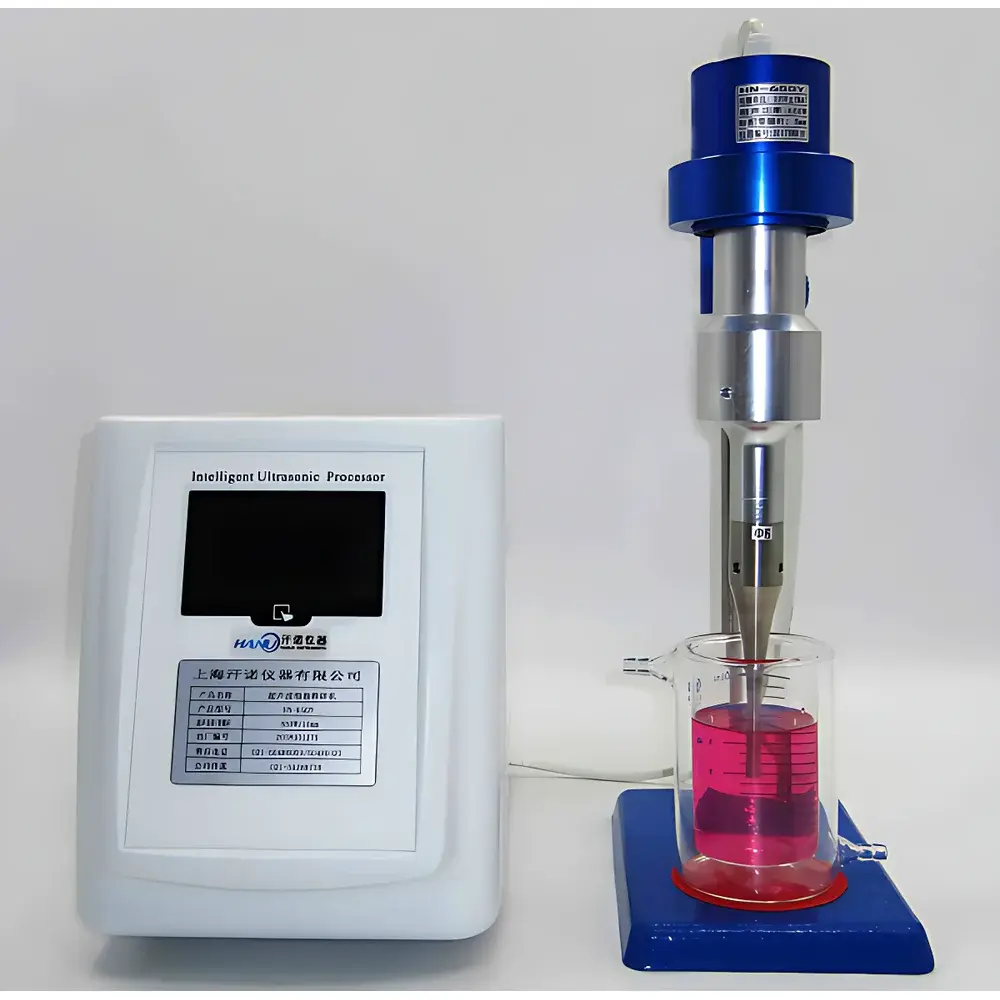
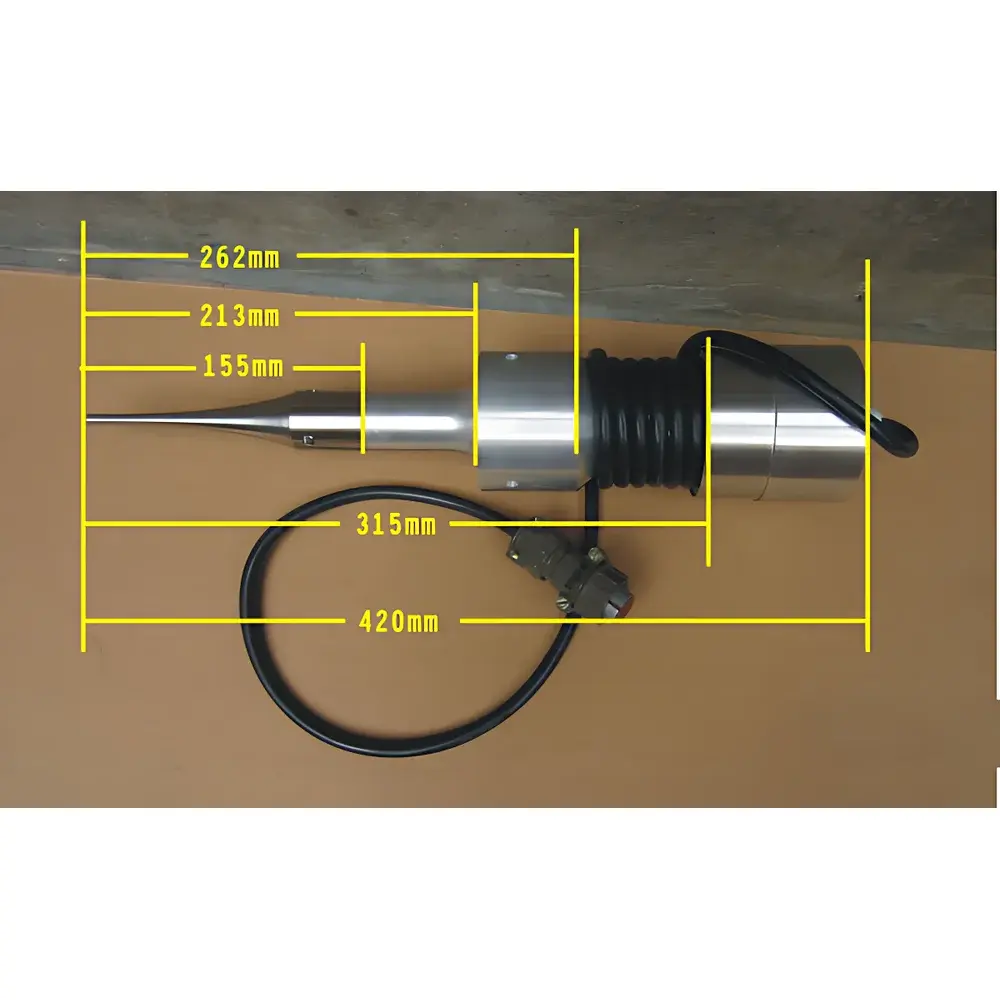
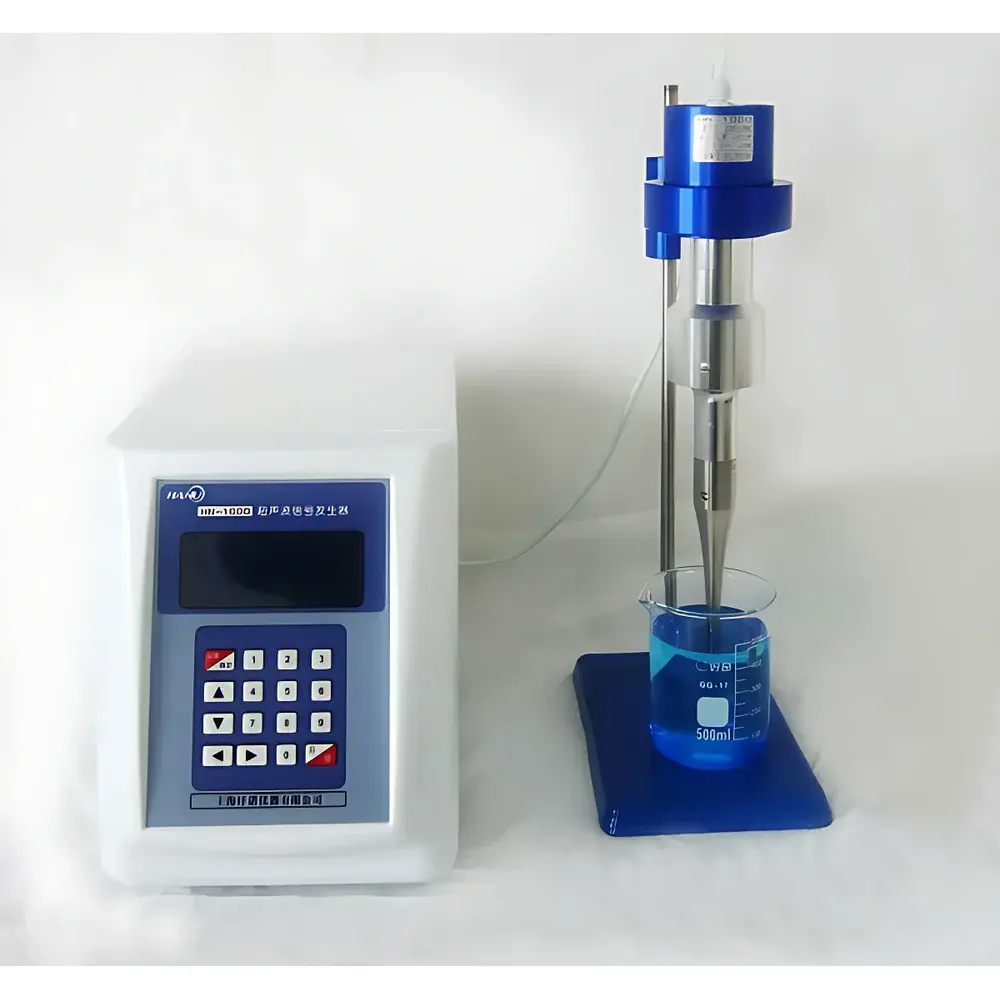
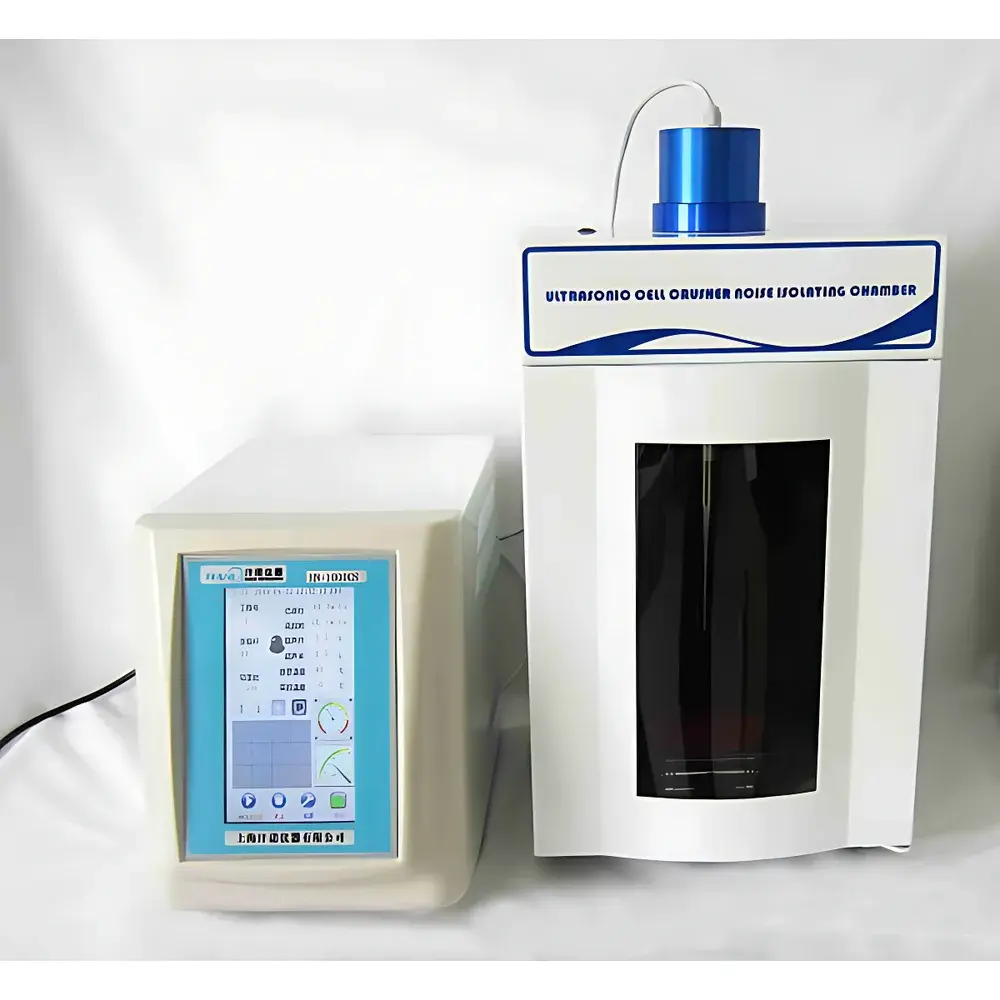
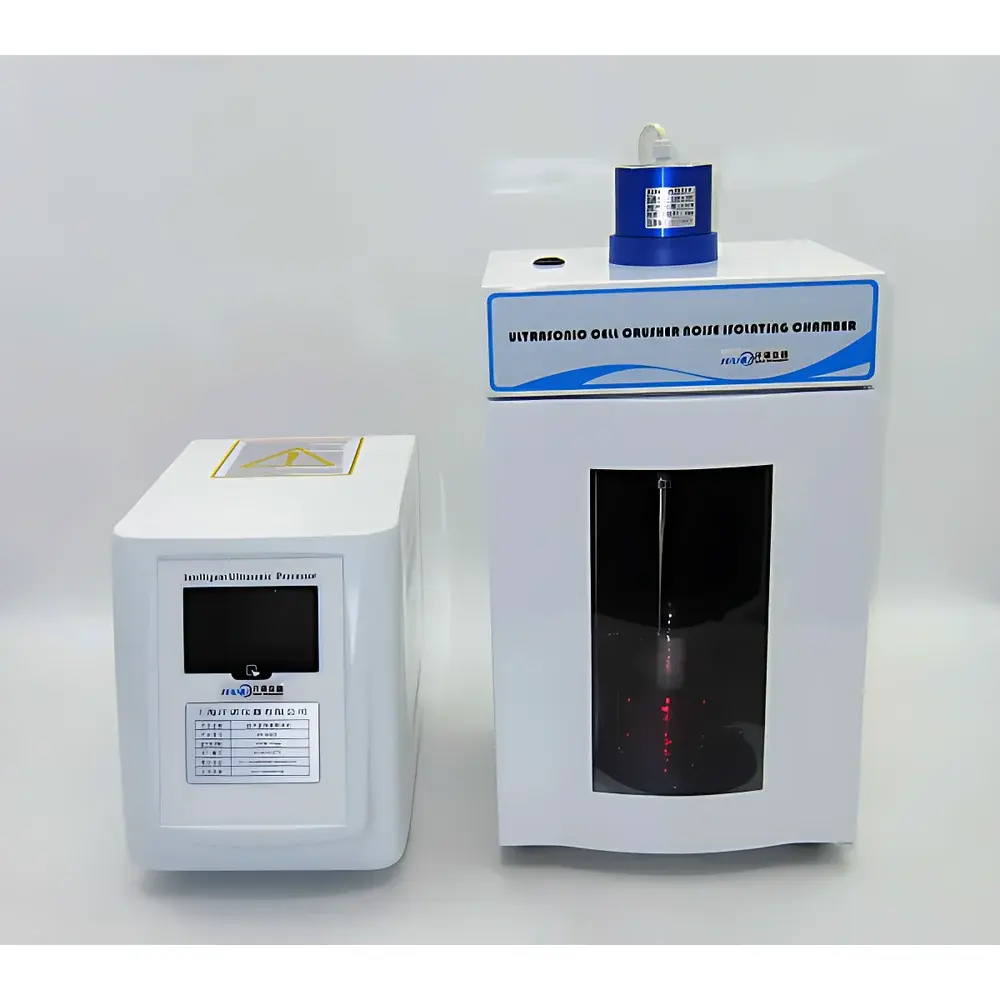
Hannuo HN-1500 High-Power Ultrasonic Cell Disruptor
| Brand | Hannuo |
|---|---|
| Origin | Shanghai, China |
| Model | HN-1500 |
| Ultrasonic Output Power | 1500 W |
| Operating Frequency | 22 kHz (auto-frequency tracking) |
| Temperature Control Range | 0–99 °C (optional extended range: −5 to 100 °C with chiller) |
| Sample Volume Capacity | 600 mL |
| Maximum Sample Load | 1 vessel |
| Pulse Mode Interval | 0.1–99.9 s adjustable |
| Total Processing Time | up to 99 h 59 min 59 s |
| Display | 4.3″ TFT touchscreen |
| Data Storage | 20 programmable protocols |
| Probe Material | Titanium alloy (Ti-6Al-4V) |
| Input Power | AC 220 V ±5%, 50 Hz |
| Compliance | CE-marked design principles |
Overview
The Hannuo HN-1500 High-Power Ultrasonic Cell Disruptor is a benchtop ultrasonic processor engineered for reproducible, scalable cell lysis and nanomaterial dispersion in life science and bioprocessing laboratories. It operates on the principle of high-intensity acoustic cavitation—generating transient microbubbles in liquid media that collapse violently under controlled 22 kHz ultrasound, producing localized shear forces, microstreaming, and thermal transients sufficient to disrupt cellular membranes, disintegrate aggregates, and homogenize colloidal suspensions. Unlike bath-type sonicators, the HN-1500 employs a focused, probe-based (horn-type) architecture delivering direct energy coupling into the sample—ensuring high energy density, minimal cross-contamination risk, and consistent treatment across volumes from 100 mL to 1000 mL. Its modular design supports integration into regulated environments where process traceability and parameter control are essential, including upstream bioprocessing, nucleic acid extraction, nanoparticle formulation, and protein solubilization workflows.
Key Features
- 1500 W continuous ultrasonic output with real-time power regulation (0–100% in 1% increments), enabling precise energy dosing per unit mass or volume.
- Intelligent auto-frequency tracking system maintains stable resonance at 22 kHz ±0.5 kHz despite load variation, temperature drift, or probe wear—critical for inter-batch consistency.
- 4.3″ capacitive touchscreen interface with intuitive navigation, supporting multi-language UI (English default), password-protected access, and audit-ready operation logs.
- Titanium alloy (Ti-6Al-4V) probe with precision-machined tip geometry ensures mechanical durability, corrosion resistance, and optimal acoustic impedance matching in aqueous and organic media.
- Programmable pulse mode (0.1–99.9 s on/off intervals) mitigates sample heating and preserves thermolabile biomolecules during prolonged processing.
- Integrated Pt100 temperature sensor provides real-time sample temperature monitoring; optional external chiller interface enables closed-loop thermal control from −5 °C to +100 °C using dual-jacketed reactors.
- 20 user-defined protocol storage with timestamped execution history—facilitating SOP adherence and method transfer between operators or sites.
- Comprehensive safety architecture: over-temperature cutoff, overload current protection, probe detachment detection, and automatic fault logging with diagnostic codes.
Sample Compatibility & Compliance
The HN-1500 accommodates a broad spectrum of biological and synthetic samples—including mammalian and bacterial cell cultures, yeast spheroplasts, plant tissues, liposomes, polymeric nanoparticles, and ceramic dispersions—within standard glass or stainless-steel vessels (e.g., 50–1000 mL double-walled jacketed reactors). Probe diameters (Φ15 mm, Φ20 mm, Φ22 mm) are selected based on viscosity, particle size distribution, and required shear intensity. The instrument’s mechanical and electrical design aligns with IEC 61000-6-3 (EMC emission limits) and IEC 61000-6-2 (immunity standards). While not FDA-cleared as a medical device, its operational parameters support compliance with ISO 13485-aligned quality systems when integrated into validated laboratory processes. Data export via optional RS-232/USB enables alignment with 21 CFR Part 11 requirements when paired with compliant LIMS or ELN platforms.
Software & Data Management
The embedded microcontroller firmware records all critical operational parameters—including actual delivered power (W), cumulative sonication time, pulse profile, measured temperature, and fault events—with timestamps accurate to ±0.1 s. Protocols can be exported as CSV files for offline analysis or imported into third-party process monitoring tools. Optional PC software (Windows/Linux-compatible) provides remote control, real-time graphing of power vs. time profiles, and batch report generation compliant with GLP documentation templates. All stored protocols include operator ID fields and digital signature prompts to support accountability in regulated environments.
Applications
- Cell disruption for intracellular protein, DNA, and RNA isolation—optimized for E. coli, CHO, HEK293, and primary tissue lysates.
- Nanoparticle deagglomeration and stabilization in drug delivery formulations (e.g., PLGA, lipid nanoparticles).
- Emulsification of oil-in-water and water-in-oil systems for cosmetic and food-grade applications.
- Accelerated solvent extraction of phytochemicals and natural products from botanical matrices.
- Surface functionalization of carbon nanotubes, graphene oxide, and metal-organic frameworks (MOFs).
- Preparation of homogeneous catalyst suspensions for heterogeneous reaction screening.
FAQ
What is the maximum recommended sample volume for continuous operation at full 1500 W?
For thermal stability and cavitation efficiency, the HN-1500 is rated for sustained use with 600 mL aqueous samples at ambient temperature; volumes up to 1000 mL require active cooling or pulsed operation.
Can the HN-1500 be used with corrosive solvents such as chloroform or DMF?
Yes—provided the titanium probe is undamaged and the reactor vessel is chemically compatible; avoid prolonged exposure to hydrofluoric acid or hot concentrated alkalis.
Is validation support available for IQ/OQ/PQ documentation?
Hannuo provides technical specifications, calibration certificates for temperature sensors, and traceable power verification procedures upon request; site-specific qualification must be performed by the end user per ISO/IEC 17025 guidelines.
Does the system meet electromagnetic compatibility requirements for laboratory use?
Yes—the HN-1500 conforms to IEC 61000-6-3 (radiated/conducted emissions) and IEC 61000-6-2 (electrostatic discharge, surge immunity) for Class A laboratory equipment.
How is probe wear monitored and compensated for?
The auto-frequency tracking algorithm detects resonance shifts indicative of tip erosion; users should inspect probe tips visually every 50 hours of cumulative use and recalibrate amplitude settings if tip diameter reduction exceeds 5%.



