
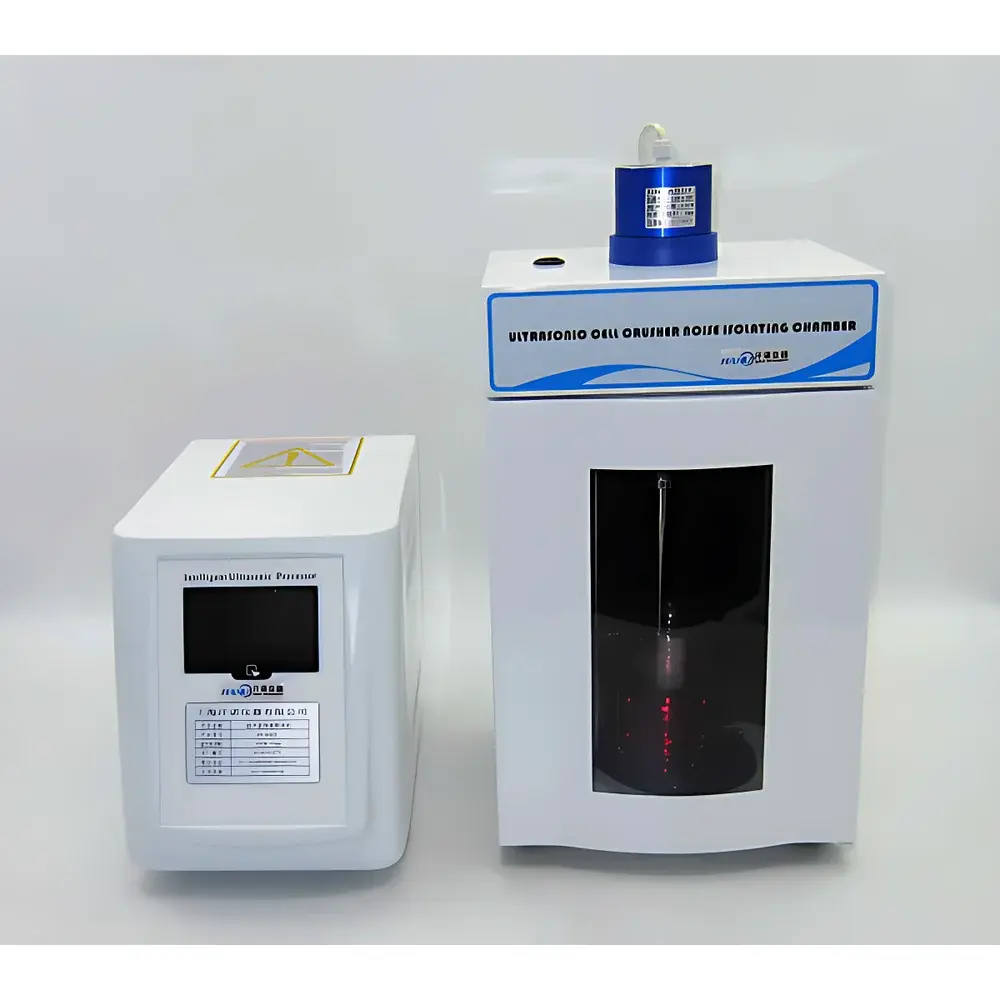
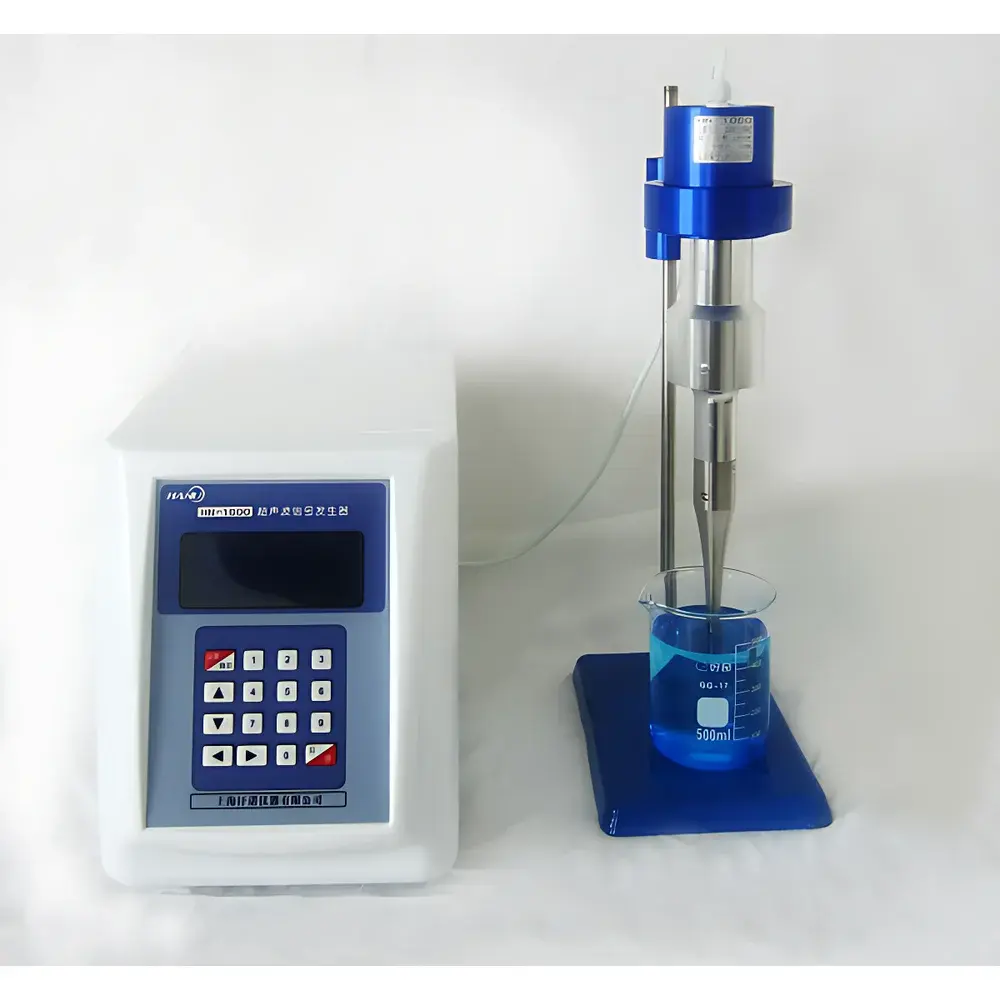
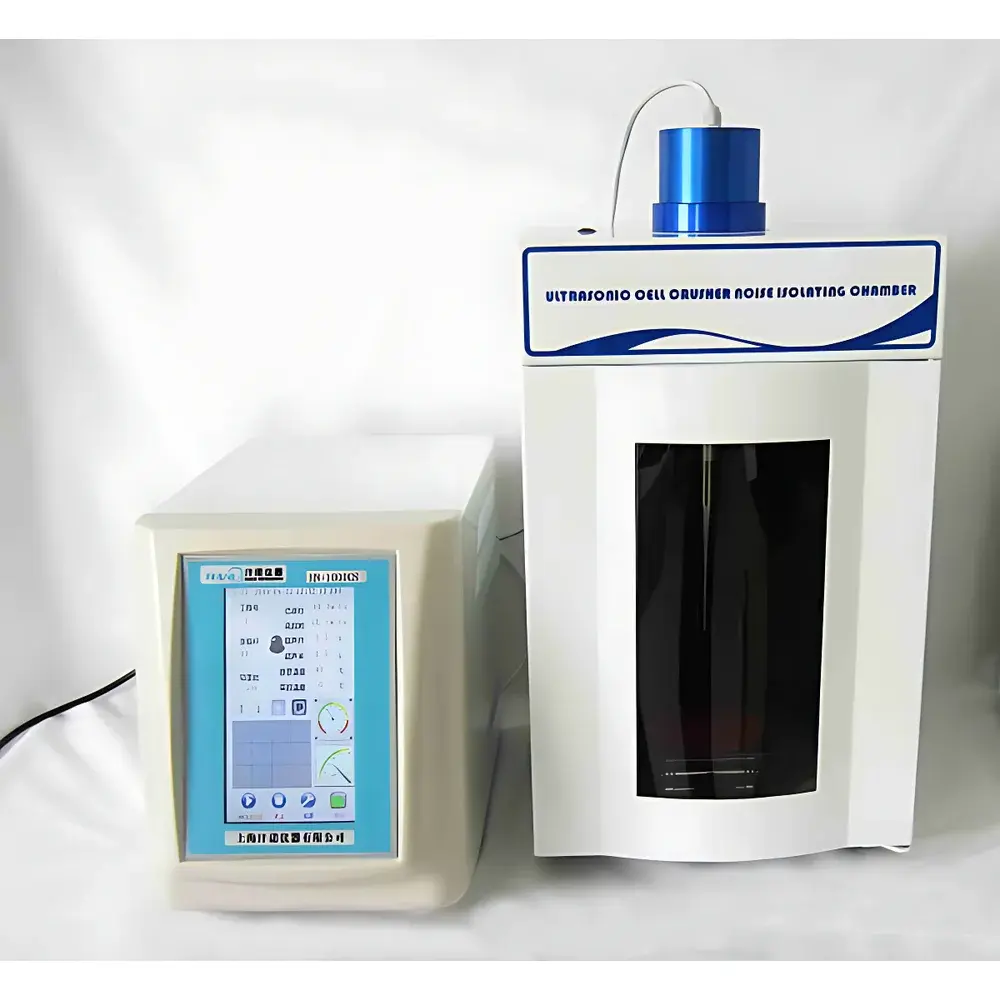
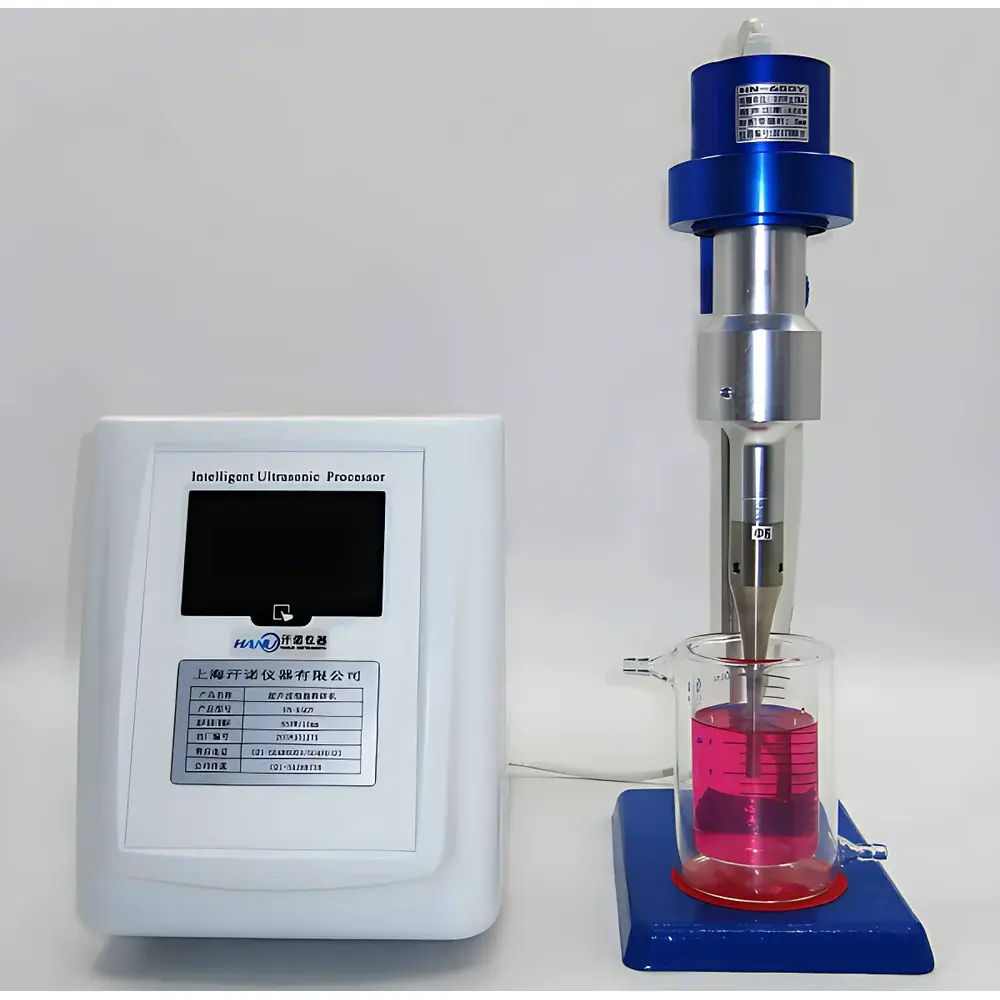
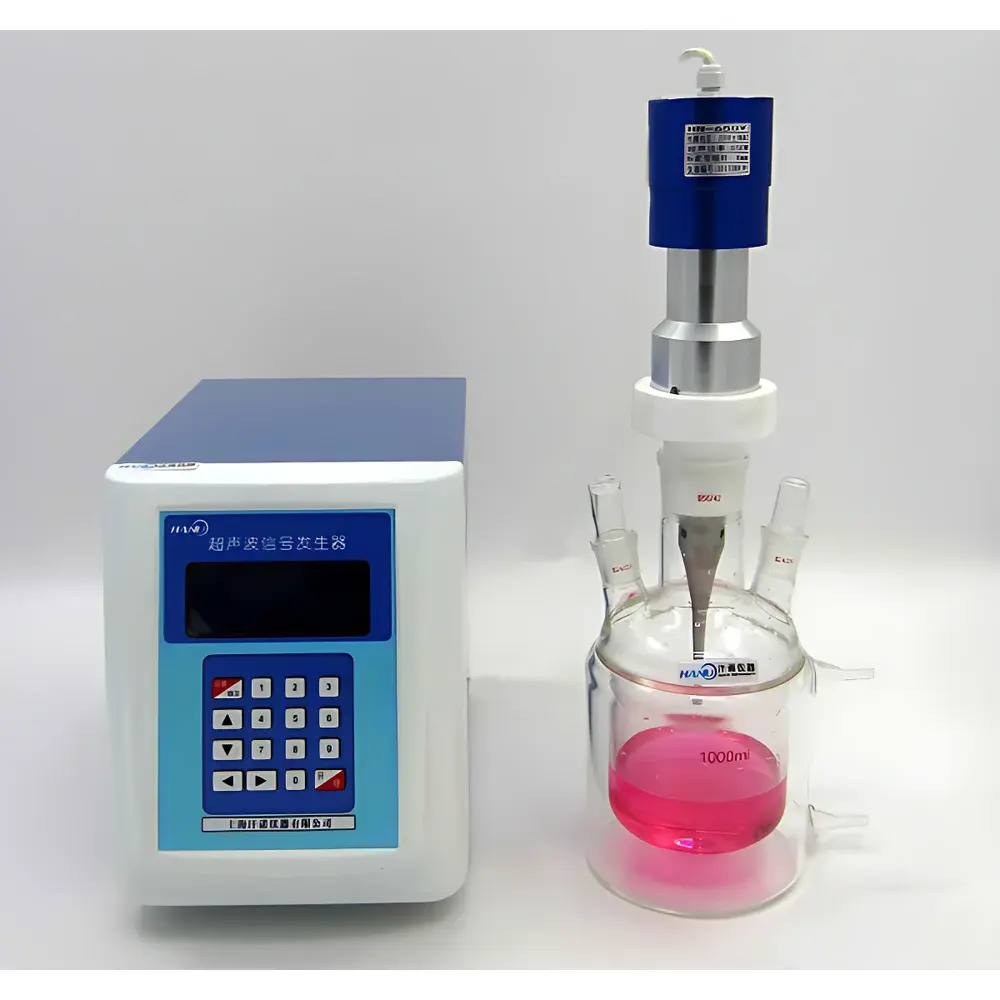
Hannuo HN-2000 High-Power Ultrasonic Cell Disruptor
| Brand | Hannuo |
|---|---|
| Origin | Shanghai, China |
| Manufacturer Type | Authorized Distributor |
| Country of Origin | China |
| Model | HN-2000 |
| Instrument Type | Ultrasonic Cell Disruptor |
| Ultrasonic Output Power | 2000 W |
| Operating Frequency | 20 kHz (auto-frequency tracking) |
| Temperature Control Range | −5 °C to 100 °C |
| Maximum Sample Volume | 2000 mL |
| Sample Capacity | Single-vessel processing |
| Control Interface | 4.3″ TFT Touchscreen |
| Programmable Memory | 20 Presets |
| Pulse Mode Interval | 0.1–99.9 s adjustable |
| Continuous/Pulse Operation Mode | Selectable |
| Probe Material | Ti-6Al-4V Titanium Alloy |
| Cooling Compatibility | Integrated interface for external recirculating chiller |
| Safety Features | Over-temperature, over-load, and fault auto-detection with audible/visual alerts |
Overview
The Hannuo HN-2000 High-Power Ultrasonic Cell Disruptor is an engineered platform for controlled acoustic cavitation-based sample processing in life science and nanomaterial research laboratories. It operates on the principle of high-intensity focused ultrasound (20 kHz), generating transient microcavitation bubbles in liquid media that collapse violently—producing localized shear forces, shockwaves, and microstreaming. This physical mechanism enables efficient disruption of cellular membranes, bacterial cell walls, and aggregated nanoparticles without chemical additives or thermal degradation when properly temperature-managed. Designed for reproducible, scalable, and protocol-driven workflows, the HN-2000 supports both batch-mode homogenization and continuous-flow-compatible configurations via optional accessories. Its architecture meets baseline operational requirements for GLP-compliant environments where traceable parameter logging, user access control, and thermal stability are critical.
Key Features
- 2000 W ultrasonic output power with real-time amplitude stabilization across variable load conditions—ensuring consistent energy delivery regardless of sample viscosity or volume changes.
- Auto-frequency tracking circuitry maintains resonance at 20 kHz ±0.5 kHz, minimizing transducer heating and maximizing conversion efficiency from electrical to mechanical energy.
- 4.3″ full-color TFT touchscreen interface with intuitive icon-based navigation; supports multi-level password protection (administrator/user modes) for audit-ready operation.
- Programmable memory stores up to 20 complete protocols—including power %, pulse duration/on-off ratio, total treatment time, and target temperature—with timestamped recall and export capability.
- Ti-6Al-4V titanium alloy probe (standard Φ22 mm, optional Φ25/Φ28/Φ32 mm) offers superior fatigue resistance, corrosion immunity in aqueous and mild organic solvents, and minimal metal ion leaching.
- Integrated temperature monitoring via Pt100 sensor embedded in the probe base, with closed-loop feedback to external chillers for precise thermal management between −5 °C and 100 °C.
- Modular expansion ports support seamless integration of recirculating chillers, magnetic stirrers, and dual-jacketed reactors—enabling synchronized sonication/stirring/cooling for nanoparticle dispersion stability studies.
Sample Compatibility & Compliance
The HN-2000 accommodates single-vessel processing of volumes from 200 mL to 2000 mL, compatible with glass, stainless steel, and PTFE-lined reaction vessels. It is routinely deployed for lysis of Gram-negative and Gram-positive bacteria (e.g., E. coli, B. subtilis), yeast (e.g., S. cerevisiae), mammalian cells (HEK293, CHO), plant tissues, and synthetic nanomaterials (metal oxides, carbon nanotubes, liposomes). All firmware and hardware design elements align with IEC 61000-6-3 (EMC emissions) and IEC 61010-1 (electrical safety for laboratory equipment). While not certified for clinical diagnostics under FDA 21 CFR Part 820, its parameter logging, user authentication, and error-traceability features support internal validation per ISO/IEC 17025 and USP endotoxin testing preparation guidelines.
Software & Data Management
No proprietary PC software is bundled; however, the device provides RS-232 and optional USB-to-serial interfaces for third-party SCADA or LIMS integration. Timestamped operational logs—including actual power delivered (W), instantaneous temperature (°C), elapsed time (hh:mm:ss), and fault codes—are stored internally and exportable as CSV files via USB flash drive. Each protocol execution generates a unique session ID, enabling retrospective correlation with downstream analytical data (e.g., DLS size distribution, SDS-PAGE band intensity, TEM morphology). Audit trail functionality complies with ALCOA+ principles for raw data integrity in regulated academic and industrial QC labs.
Applications
- Cell lysis and subcellular fractionation for proteomics and metabolomics sample prep.
- Nanoparticle deagglomeration and stable colloidal suspension formulation (e.g., ZnO, TiO₂, SiO₂ dispersions for coating or catalytic applications).
- Extraction of intracellular proteins, nucleic acids, and secondary metabolites from microbial and botanical sources.
- Emulsification of oil-in-water and water-in-oil systems for food-grade nanoemulsions and pharmaceutical nanoformulations.
- Surface functionalization assistance—enhancing covalent grafting efficiency of silanes or thiols onto nanocarriers via transient surface activation.
- Accelerated solvent extraction (ASE) for green chemistry workflows requiring reduced organic solvent volumes and shorter cycle times.
FAQ
What is the maximum recommended duty cycle for continuous operation?
For optimal transducer longevity and thermal stability, continuous mode is rated for ≤30 minutes per session with ≥10-minute cooling intervals. Pulse mode (e.g., 5 s on / 5 s off) enables extended sessions up to 2 hours without auxiliary cooling.
Can the HN-2000 be used with corrosive solvents such as chloroform or DMF?
Titanium alloy probes are chemically resistant to most polar and non-polar organic solvents; however, prolonged exposure to halogenated hydrocarbons or strong oxidizers (e.g., nitric acid) requires custom passivation or alternative probe materials—consult technical support prior to use.
Is temperature calibration traceable to NIST standards?
The built-in Pt100 sensor is factory-calibrated against a NIST-traceable reference bath (±0.3 °C accuracy at 25 °C); field recalibration is supported using external certified thermometers.
Does the system meet FDA 21 CFR Part 11 requirements for electronic records?
While the HN-2000 supports user authentication and immutable session logs, full Part 11 compliance requires supplementary validation documentation, electronic signature implementation, and IT infrastructure controls—typically managed at the institutional LIMS level rather than embedded in the instrument firmware.





