
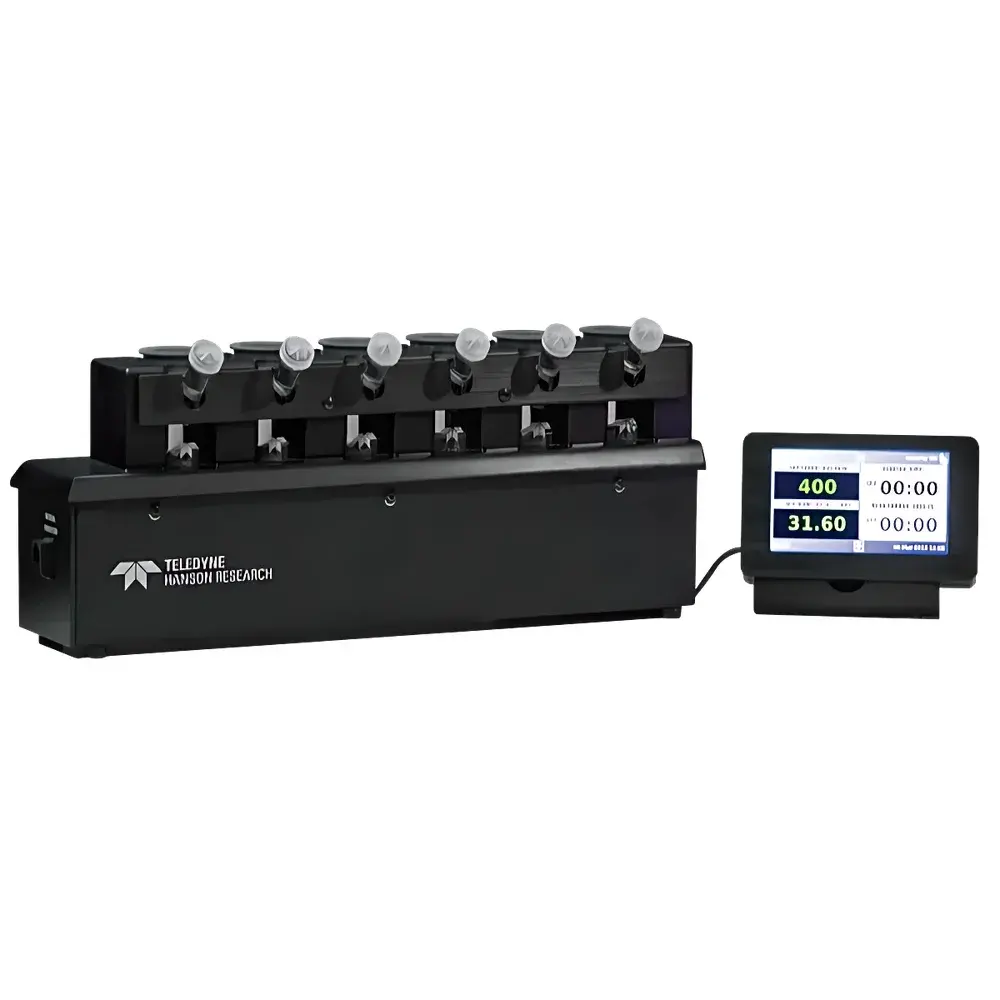
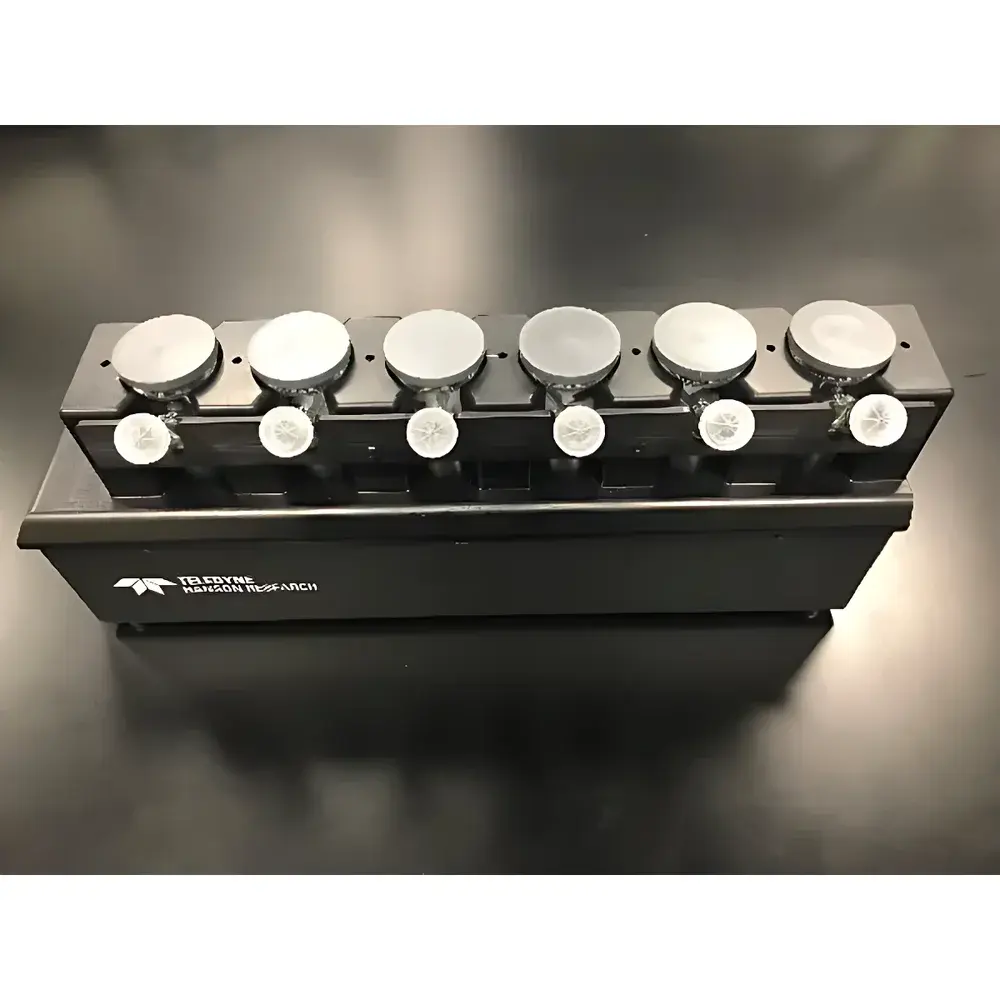
Hanson Phoenix DB-6 Transdermal Diffusion Tester
| Brand | Hanson |
|---|---|
| Origin | USA |
| Manufacturer Type | Authorized Distributor |
| Origin Category | Imported |
| Model | PHOENIX DB-6 |
| Pricing | Available Upon Request |
Overview
The Hanson Phoenix DB-6 Transdermal Diffusion Tester is a fully compliant, computer-controlled vertical diffusion cell system engineered for in vitro release testing (IVRT) and in vitro permeation testing (IVPT) of transdermal drug delivery systems. Based on the classic Franz diffusion cell principle—where a semi-permeable membrane separates donor and receptor compartments—the DB-6 implements six independent, vertically oriented diffusion cells operating in parallel under precisely regulated thermal and hydrodynamic conditions. Designed to meet current Good Manufacturing Practice (cGMP) and regulatory requirements for pharmaceutical development and quality control, the system delivers high reproducibility in dissolution/permeation kinetics, supporting method validation per ICH Q5A(R2), USP <724>, and FDA guidance for topical and transdermal products.
Key Features
- 6-cell parallel configuration: Enables simultaneous testing of six samples under identical environmental conditions, significantly improving throughput and inter-cell comparability.
- Dry-block heating system: Eliminates water baths and associated plumbing; provides rapid, uniform temperature control across all receptor chambers from 25 °C to 45 °C with typical stability within ±0.3 °C.
- Programmable magnetic stirring: Each cell integrates a custom-engineered stirrer insert driven by a brushless DC motor, delivering consistent mixing at 200–900 rpm; grooved impeller design prevents stagnant zones directly beneath the membrane.
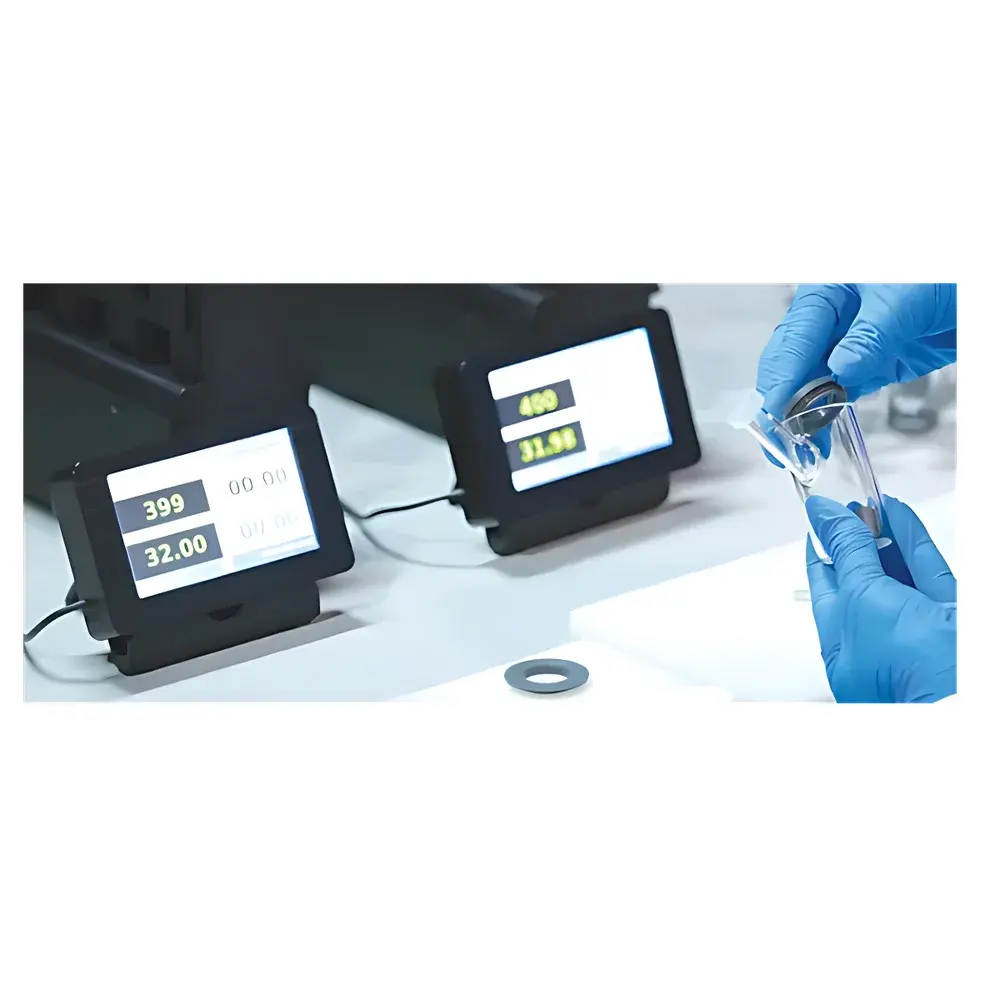
- Integrated bubble detection and removal: Illuminated mirror accessory enables visual identification of air bubbles trapped beneath the membrane; simple tilt-and-lift motion expels bubbles via the sampling arm port.
- Linux-based embedded controller: Features a color resistive touchscreen display with real-time monitoring of temperature, stir speed, elapsed time, and next sampling countdown; audible alerts precede scheduled sampling events.
- Modular scalability: DB-6 modules are mechanically and electrically compatible with the Phoenix RDS automated sampling platform—no retrofitting required for future automation upgrades.
Sample Compatibility & Compliance
The Phoenix DB-6 accommodates standard 1.3 cm² and 2.5 cm² Franz-type diffusion cells using commercially available membranes (e.g., Strat-M®, human epidermis, excised porcine skin, synthetic polymer membranes). It supports both static and flow-through receptor configurations and is routinely validated for use with aqueous, buffered, and surfactant-containing receptor media. Regulatory compliance includes full adherence to 21 CFR Part 11 requirements: electronic signatures, audit-trail-enabled event logging (including user actions, errors, calibration events, and maintenance records), role-based access control (up to 50 user accounts), automatic session timeout, failed-login lockout, real-time clock synchronization, and integrated self-diagnostic routines. System logs are stored in an embedded SQL database and exportable in CSV or PDF formats for GLP/GMP audits.
Software & Data Management
The DB-6’s Vision G2-compatible interface provides intuitive test setup, real-time parameter visualization, and post-run data review without external PC dependency. All operational parameters—including temperature setpoints, stir speeds, sampling intervals, and duration—are programmable and saved with timestamped metadata. The system maintains traceable records of instrument calibration history, user logins, alarm events, and test execution logs—all compliant with ALCOA+ principles (Attributable, Legible, Contemporaneous, Original, Accurate, Complete, Consistent, Enduring, Available). Data export supports integration with LIMS and statistical analysis tools. Optional USB or serial printer connectivity enables hard-copy reporting aligned with FDA 21 CFR Part 11 Annex 11 expectations.
Applications
- Development and optimization of transdermal patches, gels, creams, ointments, and sprays
- Comparative IVRT/IVPT studies for generic product bioequivalence assessment
- Stability-indicating release profiling under varying pH, temperature, and receptor medium compositions
- Membrane selection and validation studies (e.g., synthetic vs. biological membranes)
- Regulatory submission support for ANDAs, NDAs, and MAA dossiers requiring dissolution/permeation data
- Quality control release testing in cGMP manufacturing environments
FAQ
Does the DB-6 require external water circulation or bath maintenance?
No. Its dry-block heating architecture eliminates water baths, pumps, tubing, and temperature drift associated with liquid-based systems.
Can the DB-6 be used with non-standard membrane sizes or custom cell geometries?
Yes—while optimized for standard Franz cells, mechanical adapters and custom inserts can be fabricated to accommodate alternative configurations under engineering consultation.
Is remote monitoring or network connectivity supported?
The base DB-6 operates as a standalone unit; however, optional Ethernet or Wi-Fi modules enable remote status viewing and secure data export via HTTPS or SFTP protocols.
How is temperature calibration verified and documented?
The system performs automatic self-calibration of heater output and includes NIST-traceable calibration procedures with printable reports meeting ISO/IEC 17025 documentation standards.
What level of 21 CFR Part 11 compliance does the DB-6 provide out-of-the-box?
Full compliance is achieved—including electronic signatures, audit trails, user authentication, and data integrity safeguards—as verified by third-party validation packages available upon request.
Related Products






