
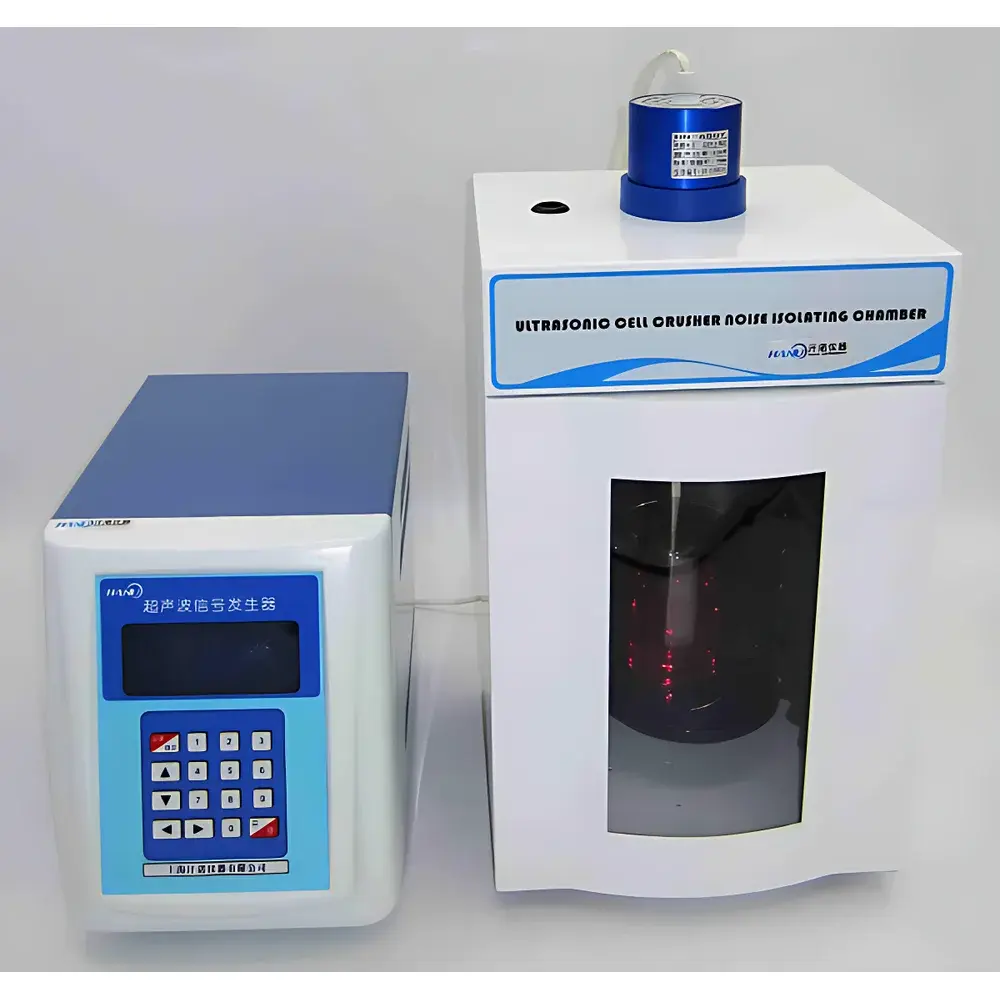
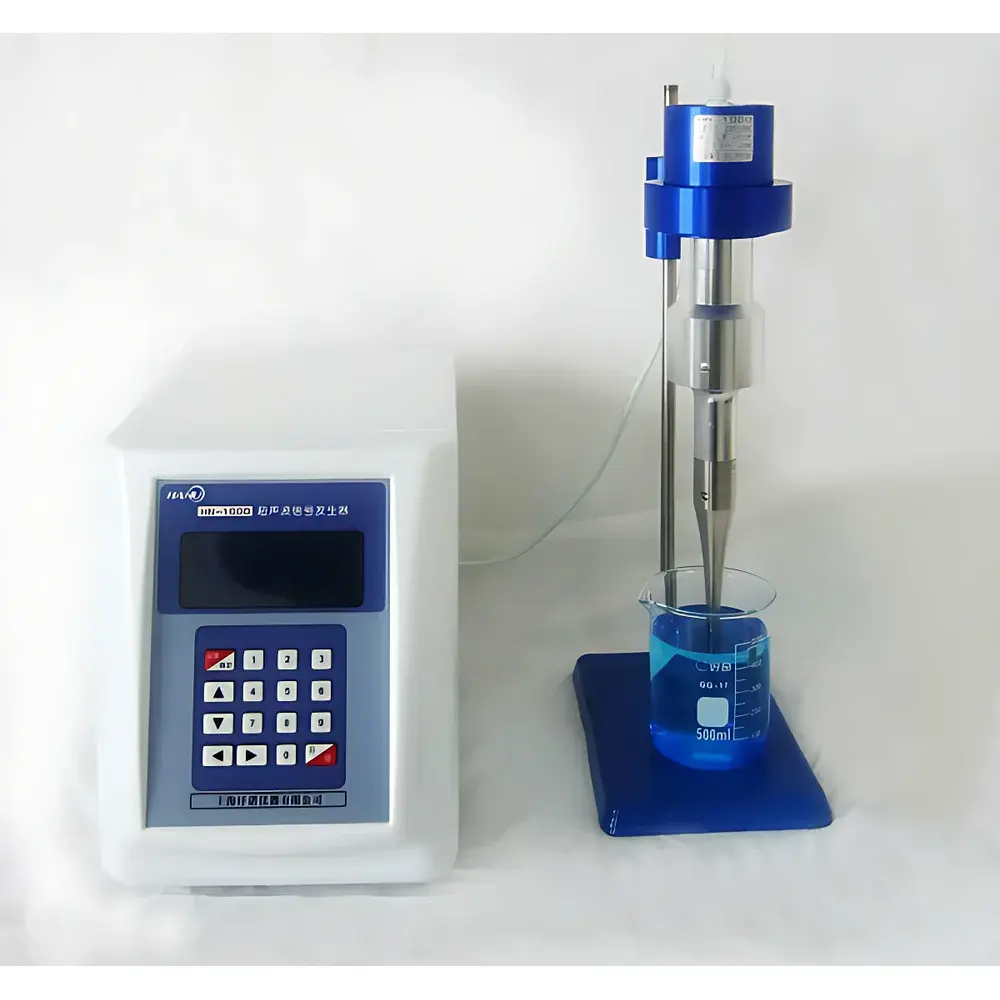
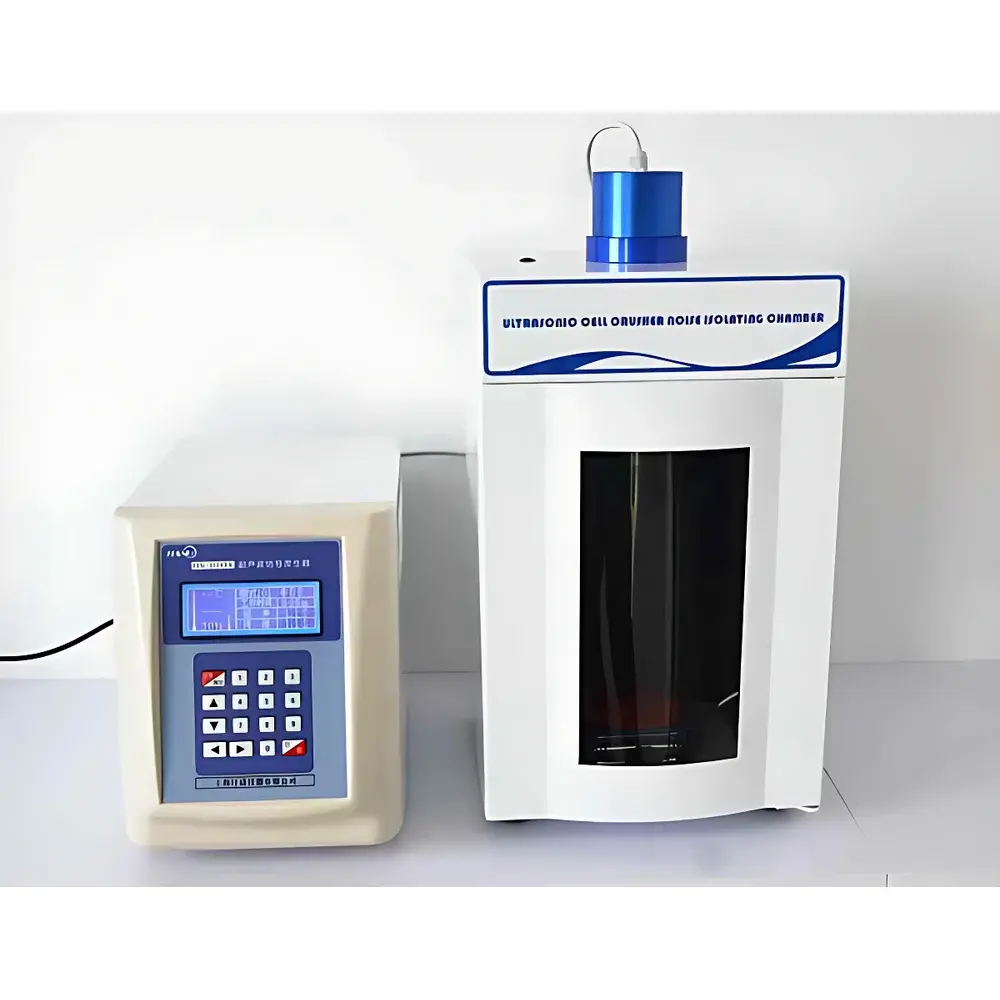
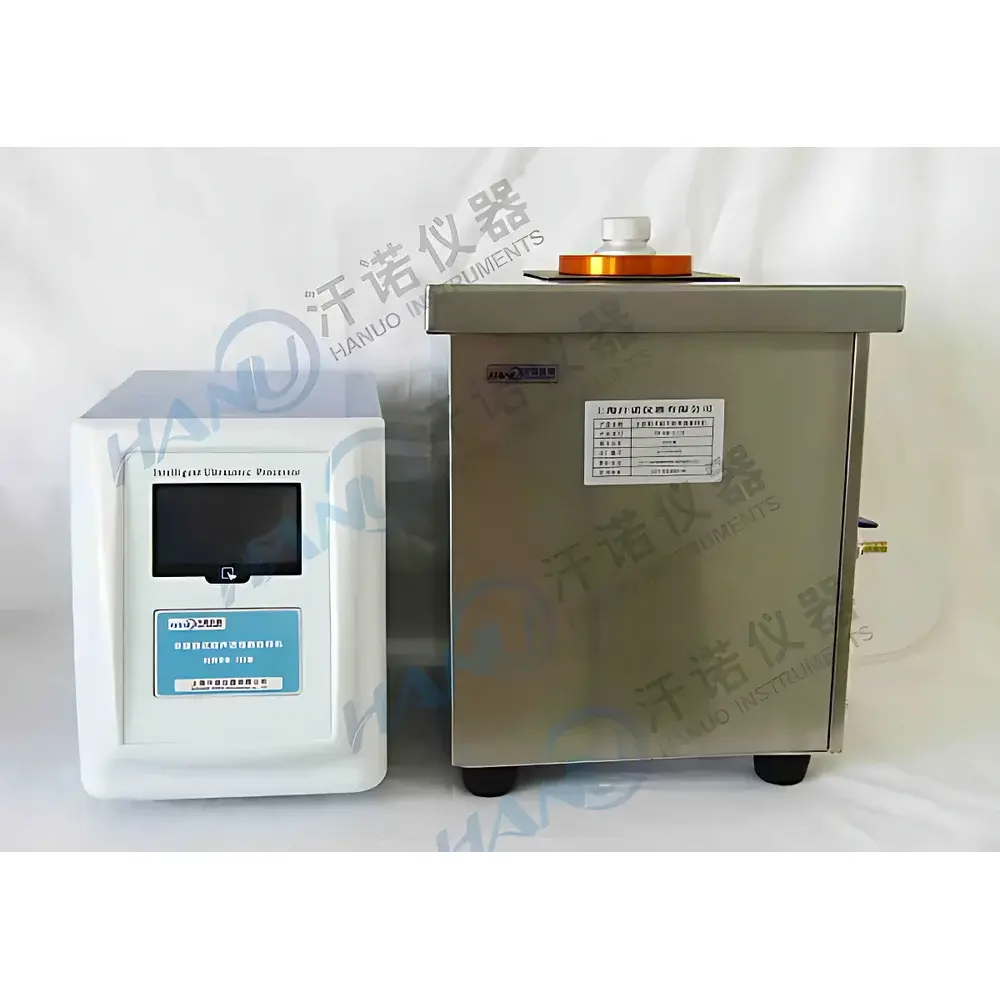
Hanuo HN-1200Y Liquid-Crystal Display Ultrasonic Cell Disruptor
| Brand | Hanuo |
|---|---|
| Origin | Shanghai, China |
| Manufacturer Type | Authorized Distributor |
| Product Category | Domestic |
| Model | HN-1200Y |
| Instrument Type | Ultrasonic Cell Disruptor |
| Ultrasonic Power Output | 1000 W (adjustable 1–100% duty cycle) |
| Operating Frequency Range | 19–23 kHz |
| Temperature Control Range | −5 °C to +100 °C |
| Maximum Sample Volume | 1000 mL |
| Single-Sample Processing Capacity | 1 unit per cycle |
| Standard Probe Diameter | Φ20 mm |
| Optional Probes | Φ10 mm, Φ15 mm, Φ22 mm |
Overview
The Hanuo HN-1200Y Liquid-Crystal Display Ultrasonic Cell Disruptor is an engineered solution for controlled, reproducible cell lysis and particle dispersion in life science and bioprocessing laboratories. It operates on the principle of high-intensity ultrasonic cavitation—where rapid pressure fluctuations in a liquid medium generate transient microbubbles that collapse violently, producing localized shear forces, shockwaves, and microstreaming sufficient to disrupt cellular membranes, solubilize inclusion bodies, or homogenize viscous suspensions. Designed for routine and scalable applications—from small-volume lysate preparation to mid-scale biomass processing—the HN-1200Y integrates real-time thermal management and digital process control to mitigate thermal denaturation and ensure sample integrity across repeated runs.
Key Features
- Large backlit LCD interface with intuitive menu navigation and real-time parameter display (power, frequency, temperature, elapsed time, duty cycle)
- Automatic frequency tracking circuitry maintains resonant coupling between generator and transducer under variable load conditions, optimizing energy transfer efficiency
- Integrated Peltier-based cooling/heating system with ±0.5 °C temperature stability over the full −5 °C to +100 °C range; programmable setpoint and alarm thresholds
- High-efficiency piezoelectric transducer with titanium alloy probe (standard Φ20 mm, optional Φ10/Φ15/Φ22 mm) delivering consistent amplitude output across power settings
- Microprocessor-controlled timing architecture supports dual-mode operation: continuous ultrasonication or pulsed mode with independently adjustable ON/OFF durations (1–99 s each)
- Onboard memory stores up to 50 user-defined protocols—including power profile, temperature setpoint, duration, and pulse parameters—for GLP-compliant method recall
- Acoustically damped enclosure constructed with multi-layer composite sound-absorbing materials, reducing ambient noise to ≤65 dB(A) at 1 m distance
- Amplitude auto-compensation algorithm dynamically adjusts drive voltage to maintain constant displacement amplitude despite changes in probe immersion depth or sample viscosity
Sample Compatibility & Compliance
The HN-1200Y accommodates a broad spectrum of biological and synthetic samples, including bacterial and yeast cultures (E. coli, S. cerevisiae), mammalian cell suspensions, plant tissue homogenates, liposome dispersions, and nanoparticle colloids. Its sealed probe design and temperature-regulated bath compatibility support both direct-probe and indirect (cup-horn) sonication configurations. The instrument complies with IEC 61000-6-3 (EMC emission standards) and IEC 61000-6-2 (immunity), and its operational firmware adheres to principles aligned with FDA 21 CFR Part 11 for electronic record integrity—supporting audit-trail-enabled data export via USB. While not certified for GMP manufacturing environments, it meets essential requirements for QC/QA workflows under ISO/IEC 17025-accredited laboratories when operated within validated protocols.
Software & Data Management
Data logging is performed internally with timestamped records of all active parameters (temperature, power %, frequency, cycle count). Export is supported via USB 2.0 to standard CSV format for integration into LIMS or statistical analysis platforms (e.g., JMP, GraphPad Prism). No proprietary software installation is required; exported files are natively readable in spreadsheet applications. Audit trail functionality captures operator ID (manually entered), protocol selection, start/stop timestamps, and any deviation alerts—enabling traceability per GLP documentation standards. Firmware updates are delivered via signed HEX file and verified checksum prior to installation.
Applications
- Preparative lysis of prokaryotic and eukaryotic cells for protein extraction, nucleic acid isolation, and organelle purification
- Disruption of biofilms and extracellular polymeric substances (EPS) in environmental microbiology studies
- Emulsification of oil-in-water systems for pharmaceutical nanoemulsion development
- Deagglomeration and size reduction of nanomaterials (e.g., graphene oxide, metal oxides) in aqueous or organic media
- Enhancement of enzymatic reaction kinetics through substrate surface activation
- Homogenization of high-viscosity biopolymer solutions (e.g., alginate, chitosan) prior to electrospinning or 3D bioprinting
FAQ
What is the maximum recommended sample volume for optimal cavitation efficiency?
For consistent energy distribution and thermal control, the HN-1200Y achieves best performance with volumes between 50 mL and 600 mL using the standard Φ20 mm probe. Volumes up to 1000 mL are supported but require extended treatment times and careful temperature monitoring.
Can the instrument operate continuously for more than 30 minutes?
Yes—continuous operation is permitted, provided the cooling system remains functional and sample temperature is actively maintained below 40 °C for thermolabile biomolecules. Duty cycling (e.g., 5 s ON / 3 s OFF) is recommended for >15 min sessions.
Is probe sterilization compatible with autoclaving?
The titanium alloy probe (Grade 5 Ti-6Al-4V) is autoclavable at 121 °C, 15 psi for 20 minutes. However, the transducer housing and cable assembly must never be exposed to steam or moisture.
Does the system support remote triggering or external TTL input?
No—HN-1200Y does not feature hardware I/O ports. All operations are initiated via front-panel controls or stored protocols.
How frequently should the probe tip be inspected for erosion?
Visual inspection is recommended after every 10 hours of cumulative use. Tip pitting or diameter reduction exceeding 5% warrants replacement to preserve cavitation uniformity and prevent cross-contamination.



