
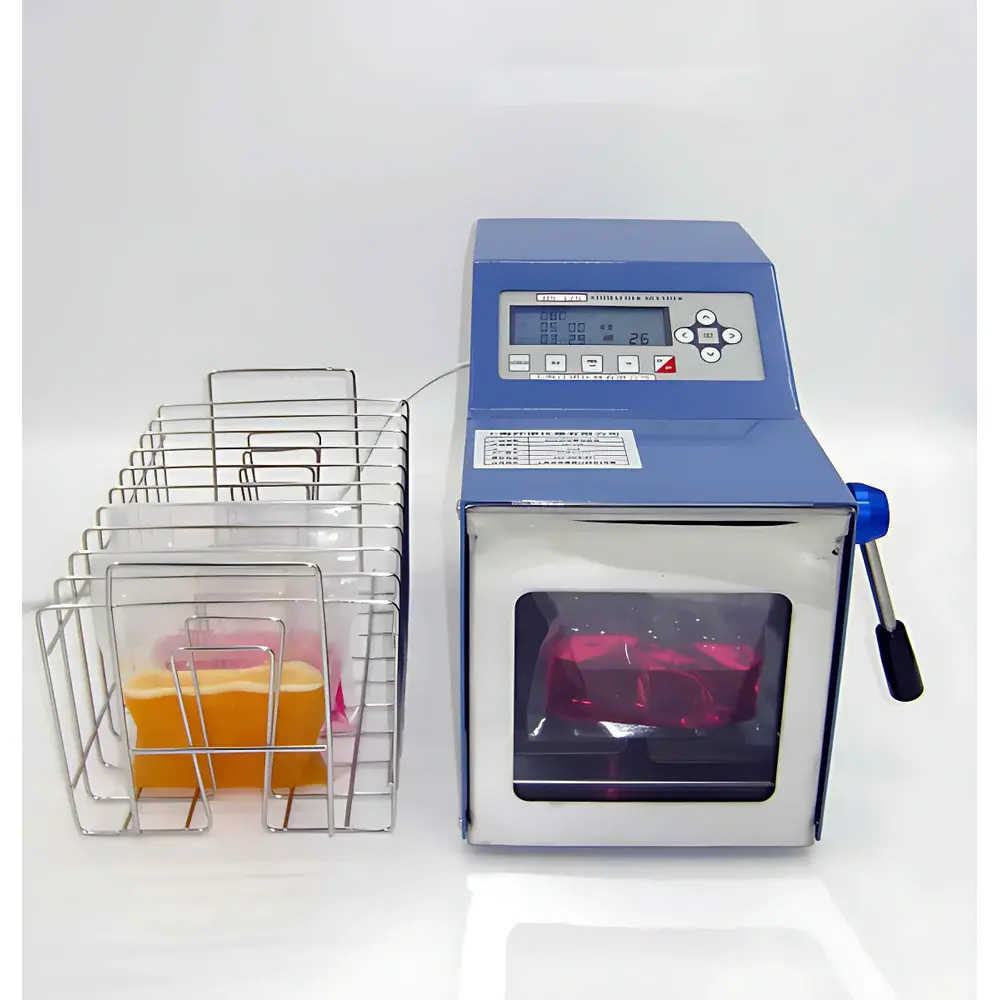
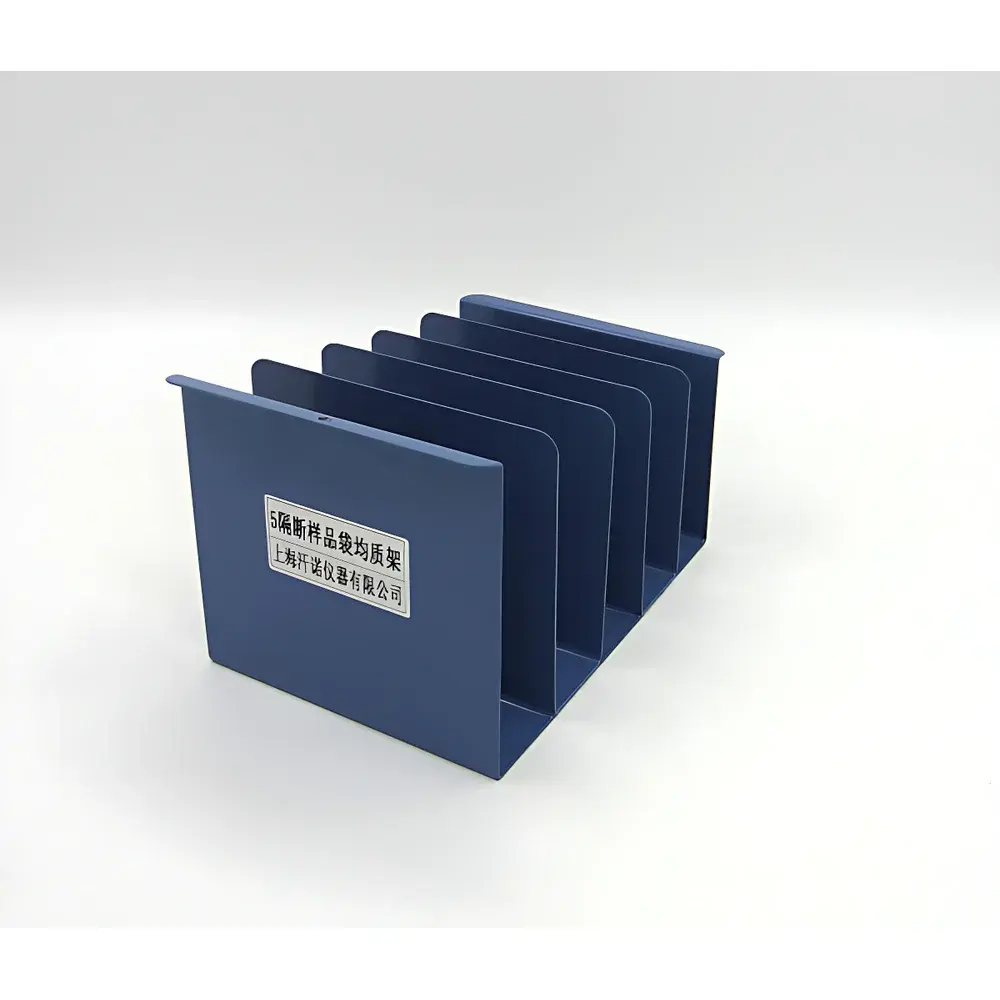
Hanuo HN-12N Stomacher-Type Aseptic Homogenizer
| Brand | Hanuo |
|---|---|
| Origin | Shanghai, China |
| Model | HN-12N |
| Instrument Type | Stomacher (Paddle-Beating) |
| Dimensions (W×D×H) | 280 × 440 × 260 mm |
| Sample Volume Range | 3–400 mL |
| Beating Time Range | 0.1–99 min |
| Power | 500 W |
| Beating Frequency | 3–12 beats/sec (real-time display) |
| Adjustable Beating Gap | 0–50 mm |
| Temperature Control Range | Ambient to 60 °C (with internal chamber temperature display) |
| UV Sterilization | 253.7 nm wavelength, 5-min cycle |
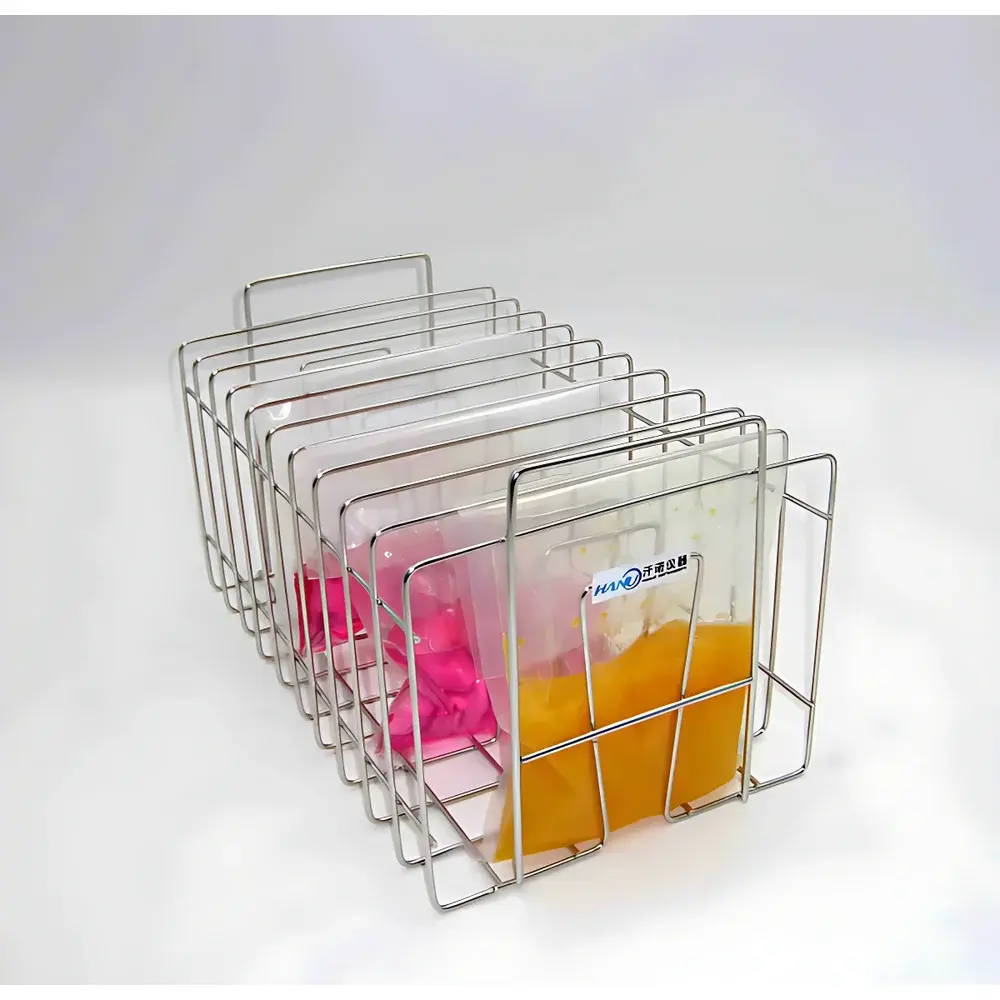
| Disposable Filter Bag Size | 17 × 30 cm |
| Programmable Steps | Multi-stage, up to 12 saved protocols |
| Display | Large LCD screen |
| Chamber Material | High-grade stainless steel |
| Door Design | Fully opening door with transparent viewing window |
| Sanitization | Integrated UV lamp in beating chamber |
| Compliance | Designed for ISO 6887-1, ISO 7218, ASTM D5659, and USP <61>/<62> microbiological testing workflows |
Overview
The Hanuo HN-12N Stomacher-Type Aseptic Homogenizer is an engineered solution for standardized, contamination-free sample preparation in microbiological analysis. Based on the stomacher (paddle-beating) principle, it applies controlled mechanical shear through rhythmic compression and release of a sealed, sterile sample bag against a fixed stainless-steel plate — generating uniform dispersion without blade contact, heat generation, or cellular lysis beyond intended disruption. This non-invasive homogenization mechanism ensures high recovery rates of viable microorganisms from complex matrices such as food, clinical tissue, pharmaceutical raw materials, and cosmetic formulations. The unit operates within ambient to 60 °C, supporting both room-temperature processing and mild thermal stabilization where required by protocol. Its all-stainless-steel chamber, fully opening front door, and integrated 253.7 nm UV-C lamp enable rapid pre-cycle decontamination — critical for labs performing sequential high-throughput assays under GLP or ISO 17025-accredited conditions.
Key Features
- Stainless-steel homogenization chamber with seamless welds and electropolished surface finish for corrosion resistance and ease of cleaning.
- Real-time digital display of beating frequency (3–12 beats/sec), elapsed time (0.1–99 min), and internal chamber temperature (ambient to 60 °C).
- Adjustable beating gap (0–50 mm) to accommodate varying bag thicknesses and optimize shear intensity across sample viscosities.
- Multi-stage programmability: Up to 12 user-defined protocols stored internally, each supporting independent settings for time, frequency, temperature, and UV activation.
- UV-C sterilization cycle (253.7 nm, 5-minute duration) activated prior to sample loading — validated per IEC 62471 for germicidal efficacy against Gram-negative and Gram-positive bacteria.
- Large backlit LCD interface with intuitive navigation; supports parameter lockout to prevent accidental modification during routine operation.
- Transparent polycarbonate viewing window enables real-time monitoring of bag integrity and homogenization progress without interrupting the cycle.
- Full-opening front access door facilitates rapid bag insertion, chamber inspection, and residue removal — compliant with FDA-recommended cleanability standards for shared-use equipment.
Sample Compatibility & Compliance
The HN-12N accommodates standard 17 × 30 cm sterile filter bags (polyethylene/nylon laminate), rated for volumes from 3 mL to 400 mL. It maintains compatibility with ISO 6887-1 (microbiological examination of food and animal feeding stuffs), ISO 7218 (general requirements for microbiological examinations), and ASTM D5659 (standard practice for homogenization of environmental samples). Its design eliminates direct contact between sample and instrument surfaces, eliminating cross-contamination risk and eliminating the need for post-run sterilization of internal components — aligning with USP and microbial limits testing requirements. All operational parameters are logged with timestamped records, supporting audit readiness for laboratories operating under 21 CFR Part 11-compliant data management frameworks.
Software & Data Management
While the HN-12N operates as a standalone benchtop instrument with embedded firmware, its parameter logging system captures cycle start/end timestamps, selected program ID, actual beating frequency, final chamber temperature, and UV activation status. These logs are retained in non-volatile memory for ≥1,000 cycles and can be exported via optional RS-232 or USB-to-serial interface (accessory kit available) for integration into LIMS or ELN platforms. Audit trails include operator ID entry (via alphanumeric keypad), enabling traceability per GLP Annex 11 and ISO/IEC 17025:2017 clause 7.11. No cloud connectivity or proprietary software installation is required — ensuring data sovereignty and minimizing IT validation burden in regulated environments.
Applications
- Preparation of homogenized suspensions for aerobic plate counts, coliform enumeration, and pathogen enrichment in food safety testing (e.g., ready-to-eat meals, dairy products, meat, produce).
- Recovery of viable microorganisms from pharmaceutical excipients, active ingredients, and finished dosage forms per USP and Ph. Eur. 5.1.4.
- Homogenization of clinical specimens including fecal swabs, wound exudates, and tissue biopsies prior to culture or molecular detection.
- Dispersion of cosmetic emulsions and preservative challenge test samples without altering preservative efficacy or inducing phase separation.
- Environmental sampling workflows involving soil, water, or air filter media where quantitative microbial recovery is essential.
FAQ
What types of sterile bags are compatible with the HN-12N?
Standard 17 × 30 cm polyethylene/nylon laminated filter bags with integrated mesh or membrane filters (pore size 100 µm or 40 µm) are recommended. Third-party bags meeting ISO 6887-1 dimensional and burst-pressure specifications may be used.
Is temperature control active during homogenization?
Yes — the Peltier-assisted heating system maintains setpoint temperature throughout the beating cycle, with real-time feedback from a calibrated NTC sensor mounted inside the chamber.
Can the UV sterilization function be disabled?
Yes — the UV lamp is manually activated via dedicated soft key and does not engage automatically unless selected in the current program or initiated independently.
Does the instrument meet electrical safety standards for laboratory use?
It complies with IEC 61010-1:2010 for safety requirements of electrical equipment for measurement, control, and laboratory use, including protection against electric shock and mechanical hazards.
How often should the UV lamp be replaced?
The low-pressure mercury lamp has a rated service life of ≥5,000 hours; replacement is recommended after 2 years of typical lab usage or when irradiance falls below 85% of initial output (verified using calibrated UV radiometer).
Related Products



