
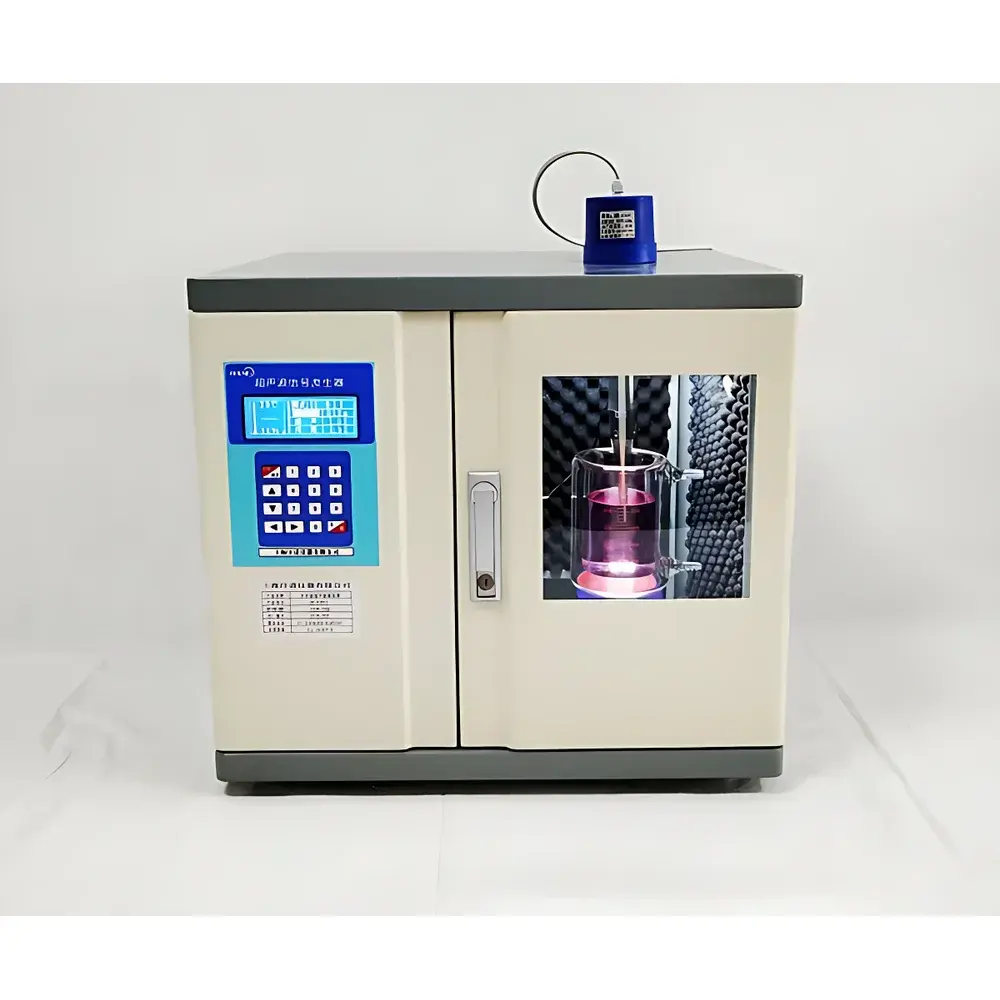
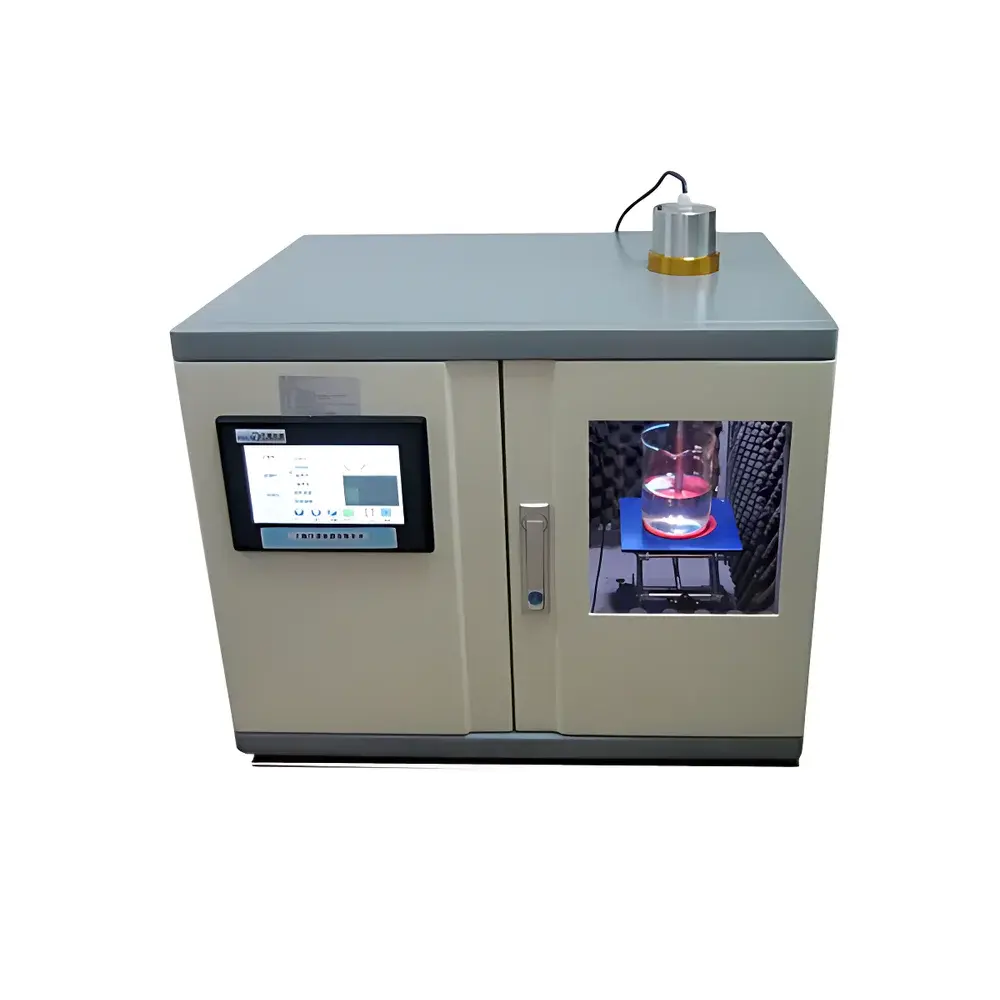
Hanuo HN-650CT Benchtop Temperature-Controlled Ultrasonic Extractor
| Brand | Hanuo |
|---|---|
| Origin | Shanghai, China |
| Model | HN-650CT |
| Ultrasonic Power Range | 100–3000 W |
| Ultrasonic Frequency | 20 kHz |
| Maximum Heating Power | 2 kW |
| Temperature Control Range | −5 to 100 °C |
| Sample Volume Capacity | 100–5000 mL |
Overview
The Hanuo HN-650CT Benchtop Temperature-Controlled Ultrasonic Extractor is an engineered solution for precise, reproducible solid-liquid extraction in research and analytical laboratories. It operates on the principle of high-intensity ultrasonic cavitation—where controlled acoustic energy generates transient microbubbles in the solvent medium; their implosive collapse delivers localized shear forces, pressure differentials, and microstreaming that disrupt cell walls and enhance mass transfer without thermal degradation. Unlike conventional reflux or Soxhlet methods, this system enables real-time temperature regulation during sonication—critical for thermolabile phytochemicals (e.g., flavonoids, alkaloids, terpenes) and labile biomolecules. Designed as a compact, benchtop platform, the HN-650CT integrates direct immersion probe (horn-type) ultrasonics with Peltier-assisted cooling and resistive heating, ensuring ±0.5 °C thermal stability across the full −5 to 100 °C operating range. Its modular architecture supports both static (batch) and optional recirculating configurations, making it suitable for method development, reference standard preparation, and small-batch natural product isolation under GLP-aligned workflows.
Key Features
- Intelligent 7-inch true-color touchscreen interface with intuitive parameter navigation and multilingual UI support (English, German, French, Spanish)
- Microprocessor-based ultrasonic generator with automatic frequency tracking (20 kHz ± 0.5 kHz) and digital power modulation (100–3000 W, 1% resolution)
- Real-time dynamic ultrasonic amplitude curve visualization, enabling process monitoring and endpoint determination
- Programmable extraction protocols with up to 10 user-defined methods, each supporting time, power, temperature, and pulse duty cycle parameters
- Comprehensive data security: password-protected access control (admin/user tiers), audit-trail-capable event logging, and non-volatile memory retention
- Integrated dual-mode thermal management: semiconductor-based cooling (−5 °C min) and 2 kW resistive heating (≤100 °C), both PID-regulated with independent sensor feedback
- Interchangeable titanium alloy sonotrodes (6, 8, 10, 12 mm diameter) with calibrated amplitude output and optional sterilizable designs for GMP-compliant environments
Sample Compatibility & Compliance
The HN-650CT accommodates a broad spectrum of sample matrices—including dried herbal powders, fresh plant tissues, microbial biomass, and food matrices—without restriction by solute polarity or molecular weight. It is compatible with volatile (e.g., ethanol, acetone, ethyl acetate) and non-volatile (e.g., water, glycerol, propylene glycol) solvents. All wetted parts are constructed from borosilicate glass (DIN ISO 3585) or electropolished 316L stainless steel, meeting USP Class VI biocompatibility requirements. The system complies with IEC 61000-6-3 (EMC emissions) and IEC 61010-1 (safety for laboratory equipment). Optional configurations include IP54-rated enclosures and integration-ready RS-485/Modbus RTU or Ethernet TCP/IP interfaces for centralized lab automation (LIMS/SCADA). While not certified per FDA 21 CFR Part 11 out-of-the-box, its audit trail, electronic signature, and role-based access modules support validation pathways for regulated QC/QA labs.
Software & Data Management
The embedded firmware supports CSV export of time-stamped operational logs (temperature, power, amplitude, duration) via USB flash drive. For advanced integration, optional PC software provides remote control, multi-instrument synchronization, and automated report generation compliant with ISO/IEC 17025 documentation standards. Data files include metadata headers (operator ID, method ID, timestamp, instrument serial number) and SHA-256 checksums to ensure integrity. All stored protocols and logs are encrypted at rest using AES-256, and firmware updates require signed digital certificates to prevent unauthorized modification—aligning with cybersecurity best practices for analytical instrumentation.
Applications
- Quantitative extraction of active pharmaceutical ingredients (APIs) from botanical raw materials per USP <711> and EP 2.8.27 guidelines
- Preparation of calibration standards for HPLC, GC-MS, and LC-MS/MS analysis of polyphenols, saponins, and essential oils
- Cell lysis and nucleic acid/protein recovery from microbial cultures and tissue homogenates
- Accelerated leaching studies for heavy metal analysis in environmental samples (EPA Method 3050B adaptation)
- Development of green extraction protocols aligned with ISO 14040 life cycle assessment frameworks
- Method transfer between R&D and QC laboratories due to consistent cavitation energy delivery and thermal profile repeatability
FAQ
What is the maximum recommended continuous operating time for the HN-650CT?
Continuous operation is rated for up to 90 minutes per cycle, followed by a mandatory 15-minute cooldown period to maintain transducer longevity and thermal stability.
Can the system be validated for GMP use?
Yes—when equipped with optional IQ/OQ documentation packages, electronic log export, and 21 CFR Part 11-compliant software add-ons, it supports qualification in pharmaceutical and nutraceutical manufacturing environments.
Is solvent compatibility verified for chlorinated hydrocarbons?
Chloroform and dichloromethane are supported only with optional PTFE-coated sonotrodes and sealed bath configurations; prolonged exposure may degrade standard titanium probes.
How is ultrasonic energy output calibrated and verified?
Calibration is performed using a NIST-traceable calorimetric method (ISO 20487:2018 Annex A) with periodic verification via radiachromic film dosimetry or calibrated hydrophone measurements.
Does the unit support external temperature probe input for sample-core monitoring?
Yes—an optional Pt100 RTD port allows direct insertion into the extraction vessel for independent sample temperature validation, decoupled from jacket-sensor readings.



