
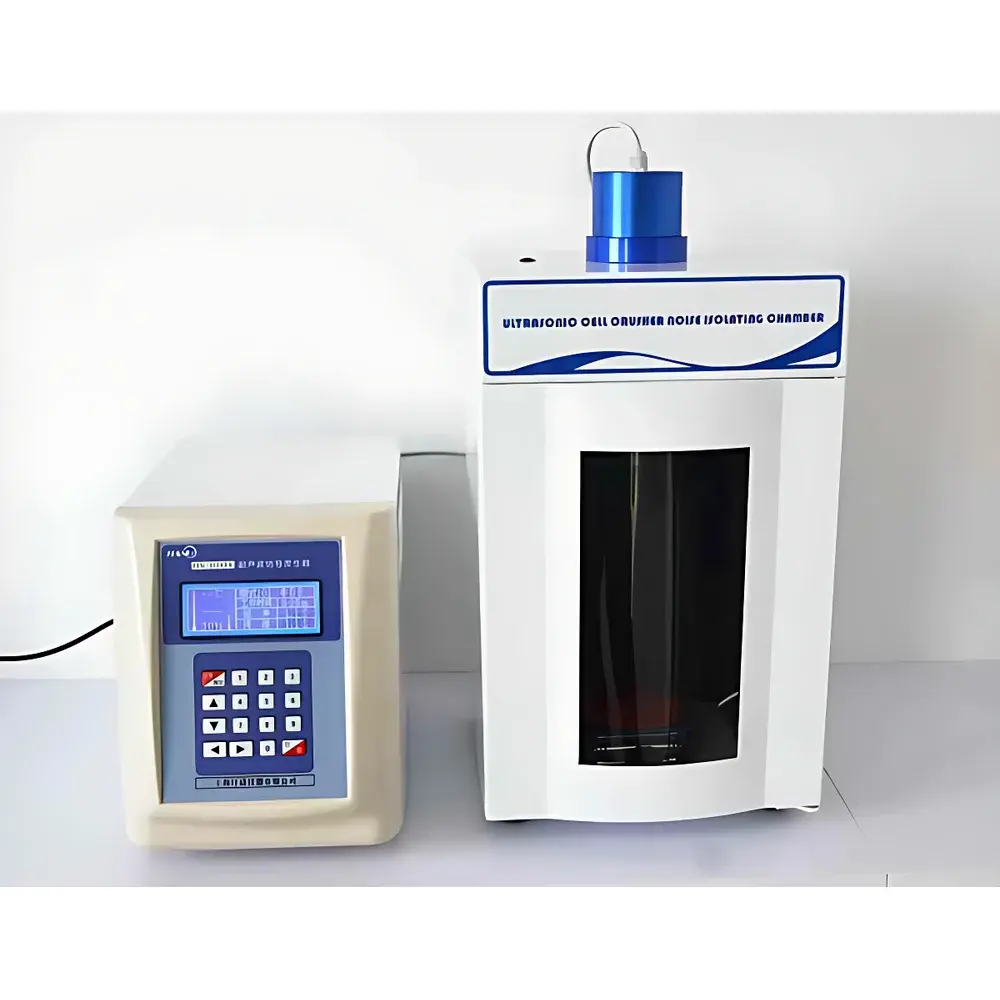
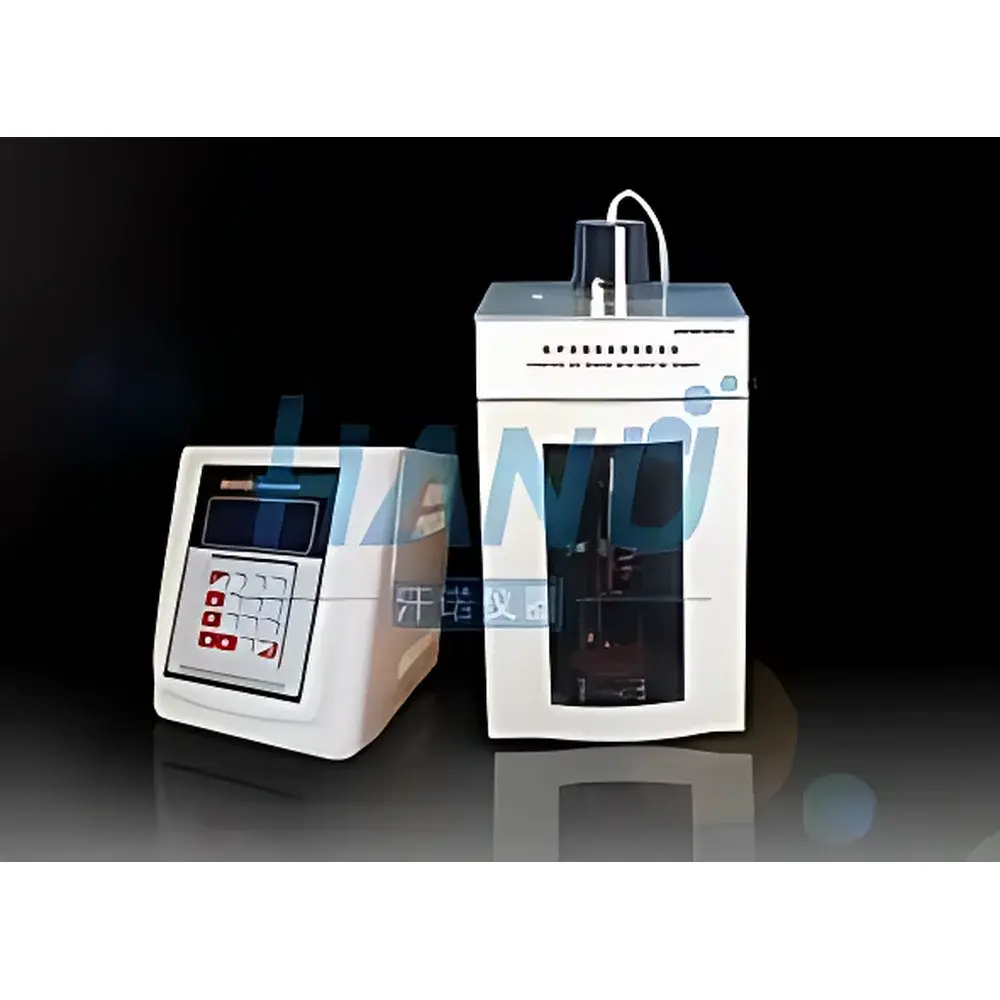
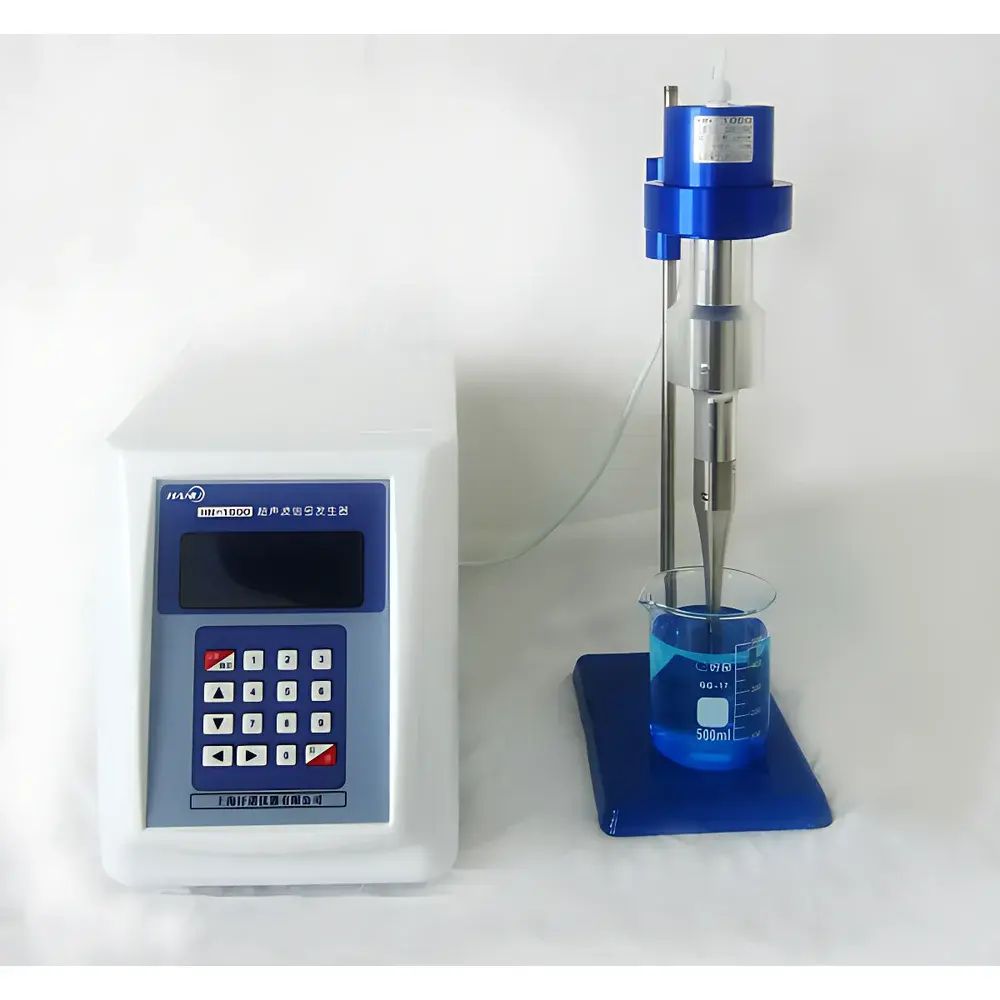
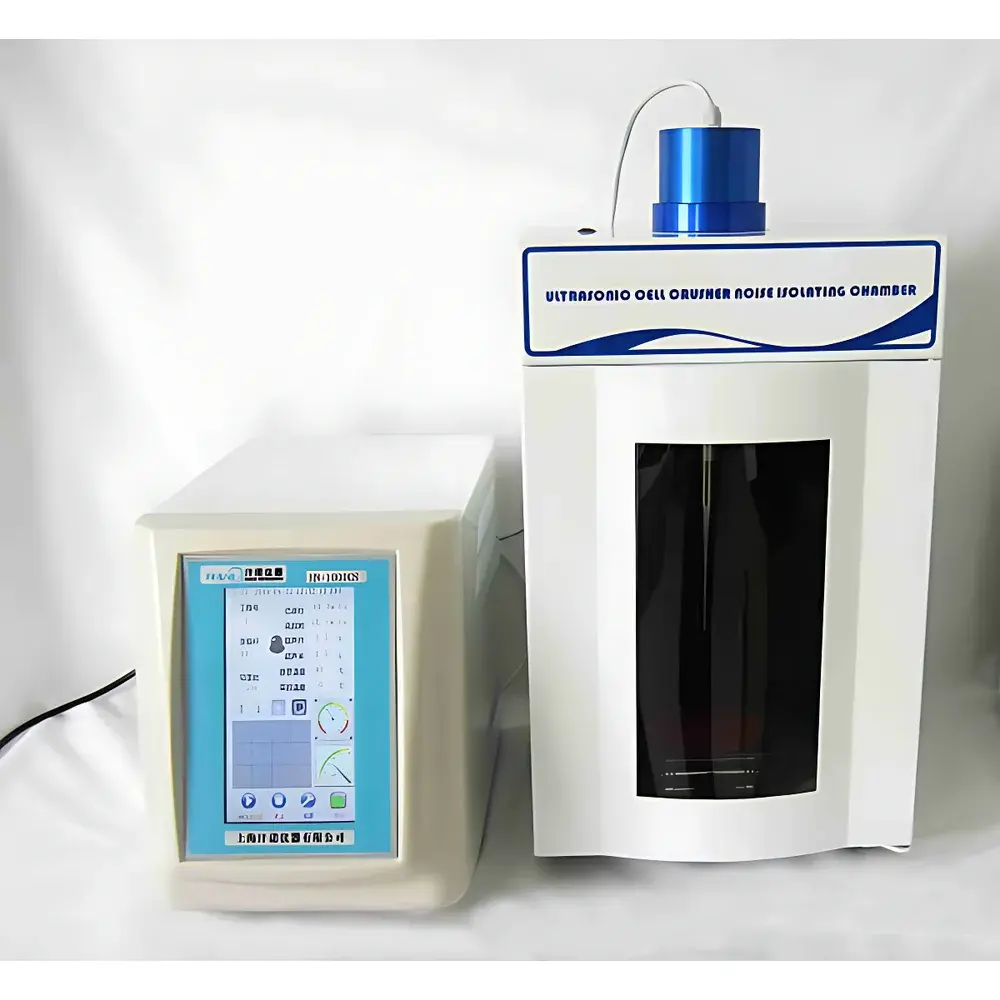
Hanuo HN98-IIIDL Temperature-Controlled Ultrasonic Cell Disruptor
| Brand | Hanuo |
|---|---|
| Origin | Shanghai, China |
| Manufacturer Type | Authorized Distributor |
| Product Category | Domestic |
| Model | HN98-IIIDL |
| Instrument Type | Ultrasonic Cell Disruptor |
| Ultrasonic Power | 1200 W |
| Operating Frequency | 20 kHz |
| Temperature Range | Ambient to 90 °C |
| Sample Volume Capacity | 1000 mL |
| Sample Throughput | Single sample per cycle |
Overview
The Hanuo HN98-IIIDL Temperature-Controlled Ultrasonic Cell Disruptor is an engineered solution for controlled mechanical lysis of biological cells and tissues via high-intensity ultrasonic cavitation. It operates on the principle of acoustic cavitation—where rapid pressure fluctuations in a liquid medium generate transient microbubbles that collapse violently, producing localized shear forces, microstreaming, and thermal transients sufficient to disrupt cellular membranes and subcellular structures. Designed specifically for reproducible, scalable, and thermally managed lysis, this instrument integrates real-time temperature monitoring and active cooling/heating control to prevent thermal denaturation of heat-sensitive biomolecules (e.g., enzymes, nucleic acids, recombinant proteins). Its 20 kHz resonant frequency ensures optimal energy transfer efficiency across viscous and heterogeneous samples, while the robust titanium alloy probe (Φ20 mm) delivers uniform amplitude distribution under variable load conditions—critical for batch-to-batch consistency in GMP-aligned upstream bioprocessing and academic research.
Key Features
- Integrated PID-based temperature control system with platinum RTD sensor (±0.3 °C accuracy), maintaining setpoint stability within ±1.5 °C across the full 20–90 °C range
- Microprocessor-controlled ultrasonic generator with automatic frequency tracking (19–23 kHz range) and real-time impedance compensation to sustain consistent cavitation intensity despite changing sample viscosity or volume
- Adjustable pulse mode (on/off duration from 0.1–99.9 s) and total runtime (1 s–99 h 59 min), enabling optimization for fragile organelles or resilient Gram-positive bacteria
- High-efficiency piezoelectric transducer with >85% electroacoustic conversion efficiency, coupled to a corrosion-resistant Ti-6Al-4V probe rated for continuous duty at 1200 W output
- 50 programmable method storage slots with timestamped parameter logging (power, duration, temperature, amplitude %)
- Acoustically damped enclosure lined with multi-layer viscoelastic composite material, reducing ambient noise to ≤65 dB(A) at 1 m distance
- Amplitude auto-regulation algorithm maintains constant tip displacement (±3% deviation) regardless of probe immersion depth or sample density changes
Sample Compatibility & Compliance
The HN98-IIIDL accommodates single-batch processing of up to 1000 mL aqueous or low-viscosity suspensions—including bacterial cultures (E. coli, Bacillus spp.), yeast (S. cerevisiae), mammalian cell lines (CHO, HEK293), plant tissue homogenates, and nanomaterial dispersions. Compatible with standard laboratory vessels (glass beakers, stainless steel jackets, ice-water baths) and optional temperature-controlled reactor chambers. Meets IEC 61000-6-3 (EMC emission limits) and IEC 61000-6-2 (immunity requirements). Supports audit-ready operation under GLP and GMP frameworks through optional 21 CFR Part 11-compliant software modules (user access logs, electronic signatures, immutable method records). Compliant with ISO 13485 design controls when deployed in medical device manufacturing support labs.
Software & Data Management
Embedded firmware supports USB data export (CSV format) of all operational parameters and thermal profiles. Optional PC-based Hanuo Ultrasonics Suite v3.2 provides graphical real-time monitoring, method validation reports (per ASTM E2500-13), and automated calibration verification logs. All stored methods include metadata fields for operator ID, sample ID, and QC reference codes—facilitating traceability in regulated environments. Audit trail functionality records all parameter modifications with timestamps and user credentials, satisfying FDA and EMA data integrity expectations.
Applications
- Lysis of microbial cells for plasmid DNA extraction and protein purification workflows
- Preparation of subcellular fractions (mitochondria, nuclei, membrane vesicles) with minimal proteolytic activation
- Nanoparticle dispersion and deagglomeration in pharmaceutical nanosuspensions (e.g., poorly water-soluble APIs)
- Extraction of intracellular metabolites and secondary plant compounds under non-thermal conditions
- Emulsification of oil-in-water systems for cosmetic and nutraceutical formulations
- Disruption of biofilms for antimicrobial efficacy testing (ASTM E2197-20)
FAQ
What is the maximum recommended continuous operating time per cycle?
Continuous operation is validated for up to 30 minutes at 100% amplitude; extended runs require ≥5-minute cooling intervals between cycles to preserve transducer longevity.
Can the instrument be integrated into automated liquid handling platforms?
Yes—RS-232 and TTL-level digital I/O ports enable external triggering and status feedback for integration with robotic workcells.
Is probe sterilization supported?
The Ti-6Al-4V probe is autoclavable (121 °C, 20 min, saturated steam); however, the transducer housing and electronics are not autoclave-compatible.
Does the system comply with environmental safety standards for ozone generation?
Ultrasonic cavitation in air-free aqueous media produces negligible ozone; no additional ventilation or ozone scrubbing is required per OSHA PEL guidelines.
How is amplitude calibrated and verified?
Calibration is performed using a NIST-traceable laser vibrometer; routine verification uses a certified reference probe and hydrophone-based power mapping per ASTM F2889-11.




