
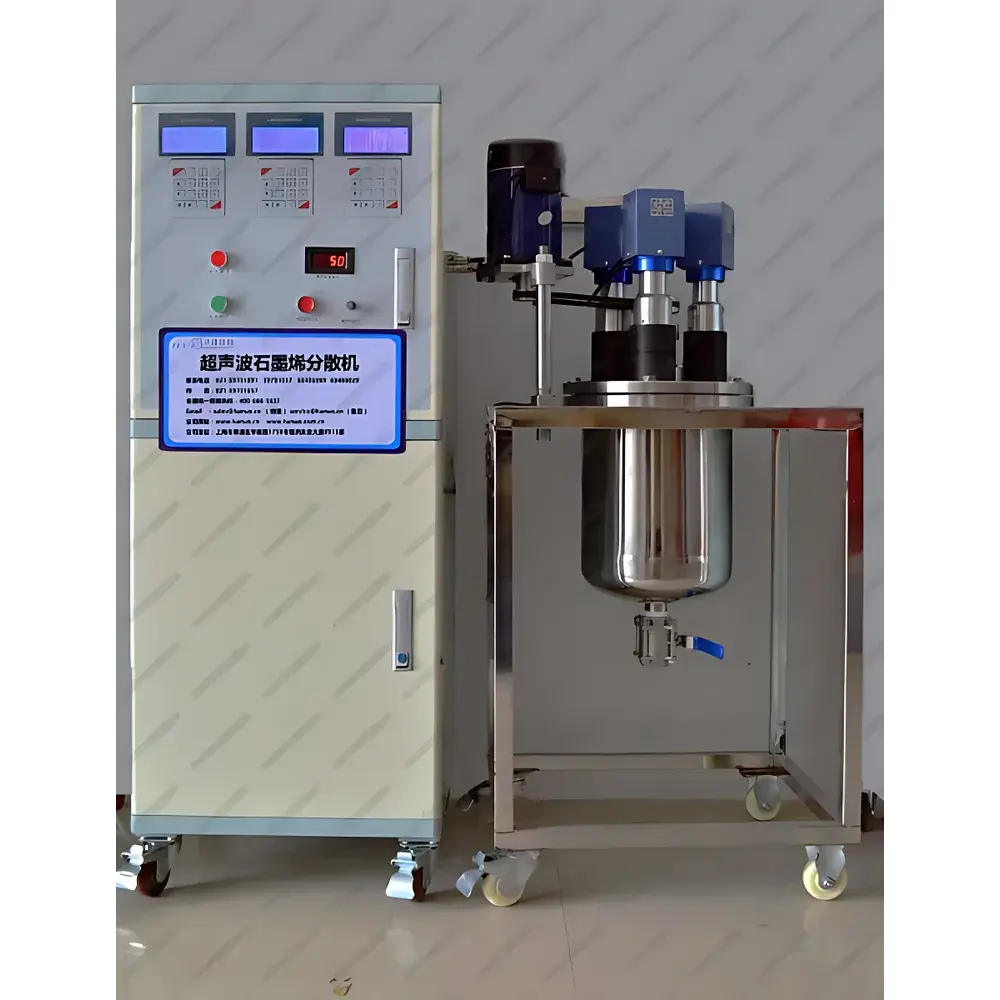
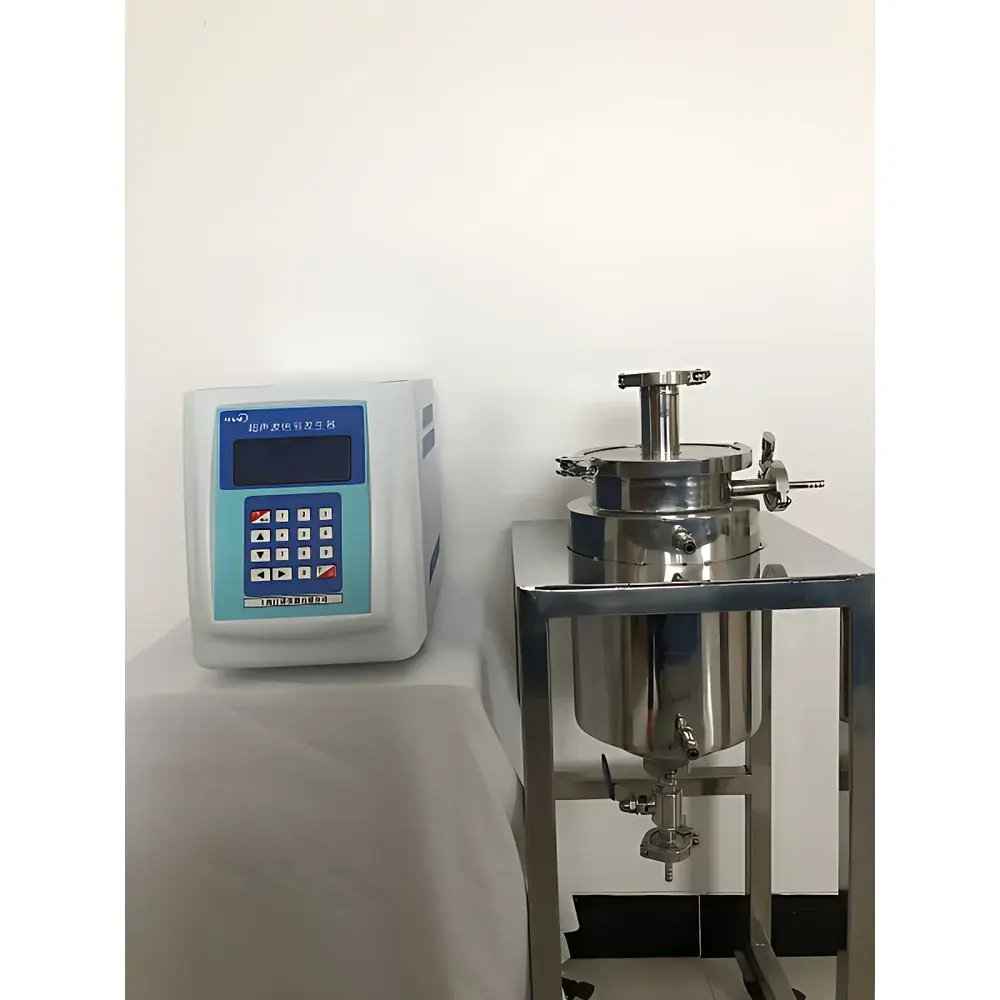
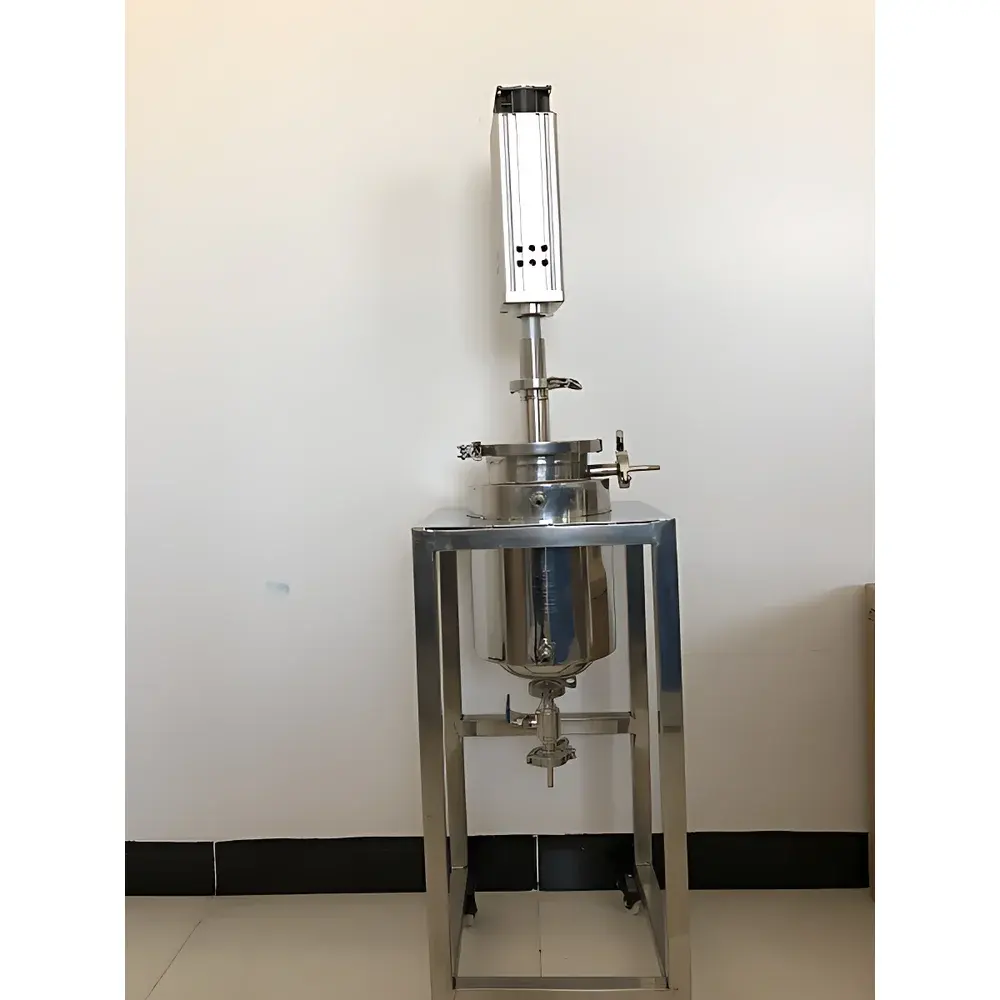
Hanuo HNCX-1500 Ultrasonic Liquid Processor
| Brand | Hanuo |
|---|---|
| Origin | Shanghai, China |
| Manufacturer Type | Authorized Distributor |
| Country of Origin | China |
| Model | HNCX-1500 |
| Max. Power | 1500 W |
| Operating Frequency | 20 kHz |
| Input Voltage | 220 V / 50 Hz (optional 110 V) |
| Amplitude Range | 10–100% |
| Sample Volume Capacity | 10–1000 mL |
| Probe Diameter Options | Φ10 / Φ15 / Φ20 mm |
| Probe Material | Titanium Alloy |
| Temperature Control | Jacketed Processing Chamber (compatible with external chiller) |
| Chamber Material | Stainless Steel or Borosilicate Glass (customizable) |
| Cooling Interface | Standardized coolant ports |
| Safety Features | Overtemperature and fault alarms |
| Display | Touchscreen interface |
| Communication | RS485/RS232 |
| Software | PC-based control & data logging suite |
| Acoustic Enclosure | Optional sound-dampening cabinet or benchtop mount |
Overview
The Hanuo HNCX-1500 Ultrasonic Liquid Processor is an engineered benchtop sonication system designed for precise, reproducible ultrasonic energy delivery in laboratory-scale applications. It operates on the principle of piezoelectric transduction: an integrated ultrasonic generator converts standard AC power into high-frequency electrical signals (20 kHz), which drive a titanium alloy transducer to produce mechanical vibrations. These vibrations are transmitted via a replaceable horn probe into the liquid medium, generating controlled acoustic cavitation—characterized by transient microbubble formation, growth, and violent collapse. This hydrodynamic phenomenon delivers localized shear forces, microstreaming, and shockwaves sufficient to disrupt cellular membranes, disintegrate aggregates, emulsify immiscible phases, and accelerate mass transfer without thermal degradation when coupled with active temperature management.
Key Features
- 1500 W nominal output power with digital amplitude control (10–100%) for fine-tuned energy delivery across diverse sample viscosities and volumes
- Titanium alloy probe (Φ10 / Φ15 / Φ20 mm options) offering high fatigue resistance, corrosion immunity, and consistent acoustic coupling
- Jacketed processing chamber constructed from electropolished stainless steel or optical-grade borosilicate glass—enabling integration with external chillers for strict thermal management (e.g., ≤4 °C during sensitive protein extraction)
- Integrated touchscreen HMI with real-time parameter monitoring: amplitude, elapsed time, temperature (via optional PT100 sensor), and system status
- Comprehensive safety architecture including overtemperature cutoff, impedance mismatch detection, and hardware-level fault interlocks
- RS485/RS232 serial interface supporting bidirectional communication with laboratory information management systems (LIMS) and automated workflows
- Modular design accommodating optional acoustic enclosures (ISO 7029-compliant noise reduction) and custom reactor geometries
Sample Compatibility & Compliance
The HNCX-1500 accommodates aqueous, organic, and viscous media within 10–1000 mL working volumes. Its probe-based configuration ensures compatibility with opaque, particulate-laden, or non-transparent suspensions where optical methods fail. The system supports Good Laboratory Practice (GLP) and Good Manufacturing Practice (GMP) workflows through audit-trail-capable PC software (21 CFR Part 11 compliant configuration available). Chamber materials meet USP Class VI and FDA 21 CFR 177.2600 standards for food-contact and pharmaceutical use. All electrical components conform to IEC 61010-1 for laboratory equipment safety.
Software & Data Management
The included PC control software provides remote operation, protocol scheduling, and time-stamped parameter logging (amplitude, duration, temperature, event flags). Export formats include CSV and XML for traceability in regulatory submissions. Version-controlled method templates enable cross-laboratory reproducibility. Data integrity safeguards include user authentication, electronic signatures, and immutable log files—fully aligned with ALCOA+ principles (Attributable, Legible, Contemporaneous, Original, Accurate, Complete, Consistent, Enduring, Available).
Applications
- Cell lysis and subcellular fractionation (bacterial, yeast, mammalian, plant tissues)
- Extraction of intracellular proteins, nucleic acids, and metabolites under non-denaturing conditions
- Liposome and nanolipid carrier formulation with narrow PDI (<0.2) and controlled encapsulation efficiency
- Botanical extraction of thermolabile phytochemicals (e.g., flavonoids, alkaloids) with enhanced yield vs. Soxhlet
- Dispersion of carbon nanotubes, graphene oxide, and metal-organic frameworks in polymer matrices
- Microemulsion and nanoemulsion preparation for topical and oral drug delivery systems
- Homogenization of high-viscosity polymer solutions prior to rheological or spectroscopic analysis
FAQ
What is the maximum continuous operating time at full power?
The system is rated for uninterrupted operation up to 90 minutes at 100% amplitude; extended protocols require duty-cycle modulation or active cooling.
Can the HNCX-1500 be integrated into a glovebox or fume hood?
Yes—the generator and transducer are IP20-rated; optional NEMA 4X enclosures and explosion-proof probe variants are available upon request.
Is validation documentation (IQ/OQ/PQ) provided?
Factory-issued IQ/OQ protocols and calibration certificates (traceable to NIST standards) are supplied; PQ support is offered as a consultancy service.
How does amplitude control differ from pulse mode?
Amplitude regulates instantaneous vibrational energy; pulse mode (ON/OFF cycling) modulates average power—both parameters are independently programmable for process optimization.
What maintenance intervals are recommended?
Transducer performance verification every 500 hours; probe tip inspection and torque recalibration every 200 hours; annual firmware updates and sensor calibration.





