
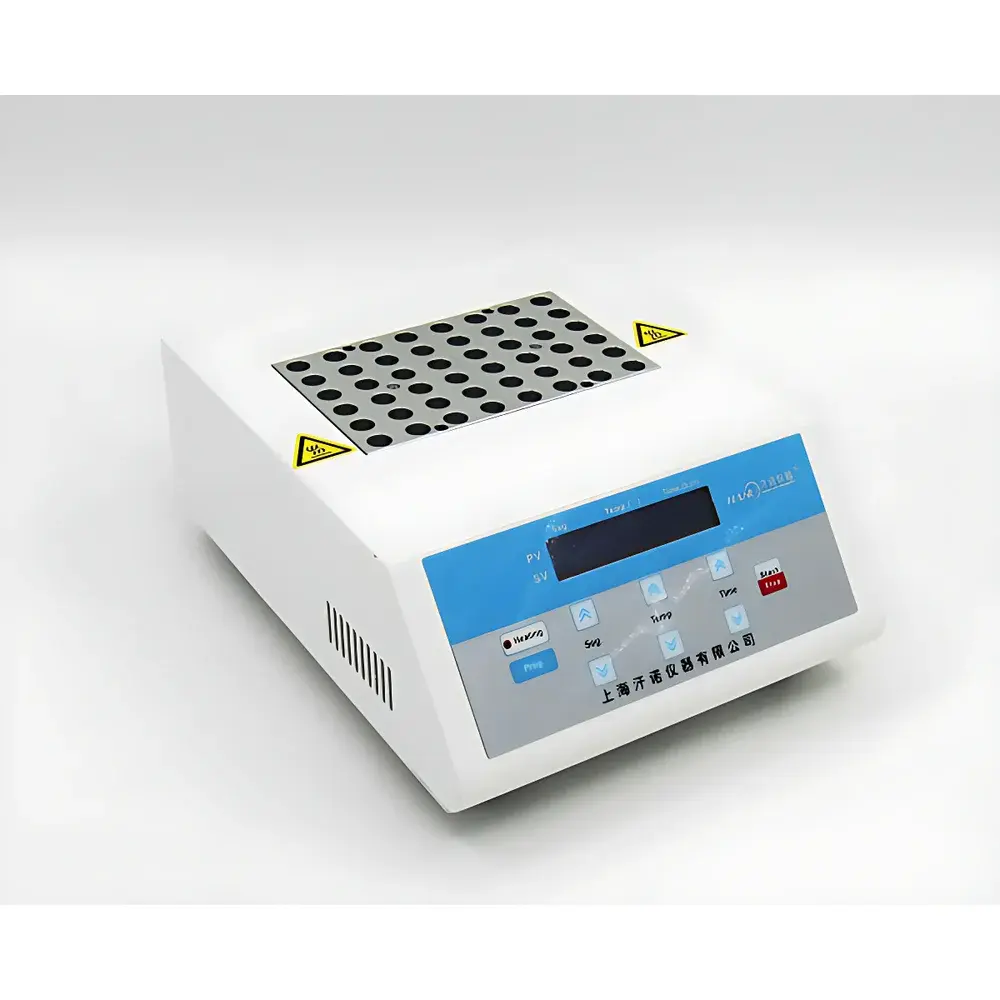
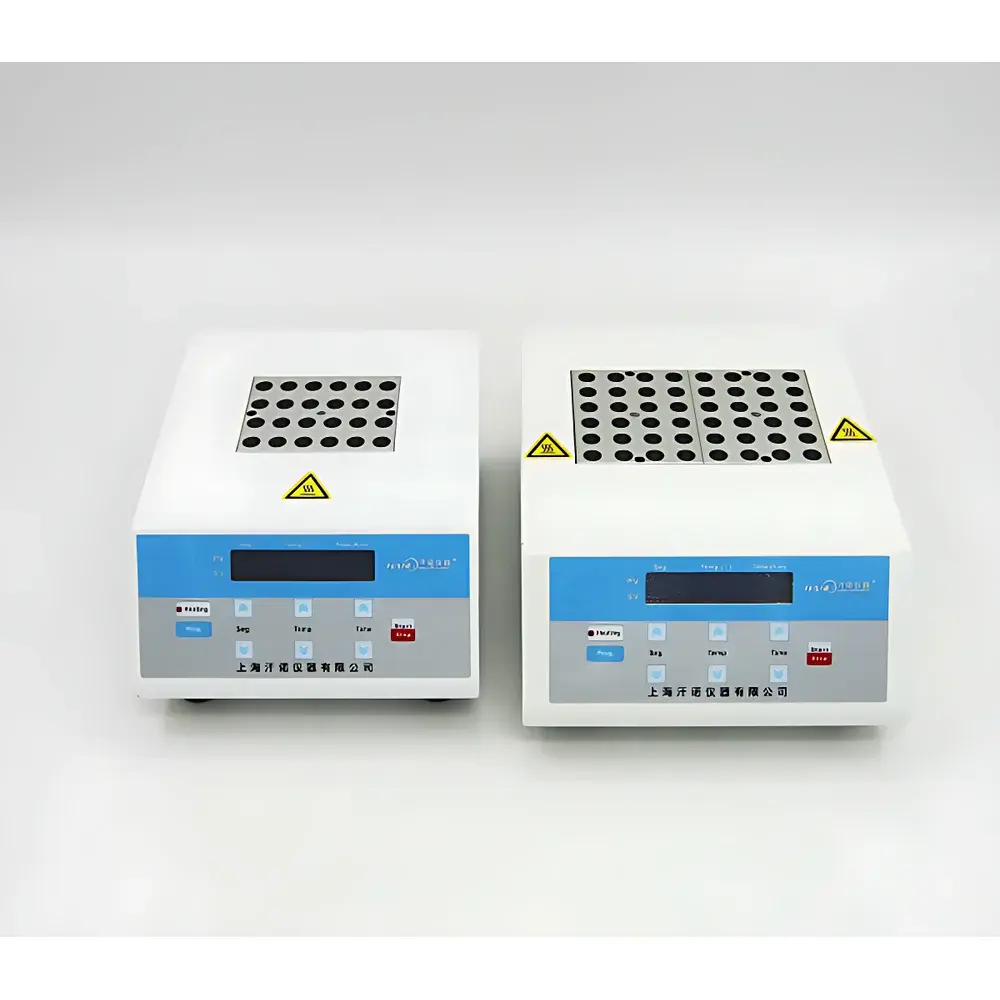
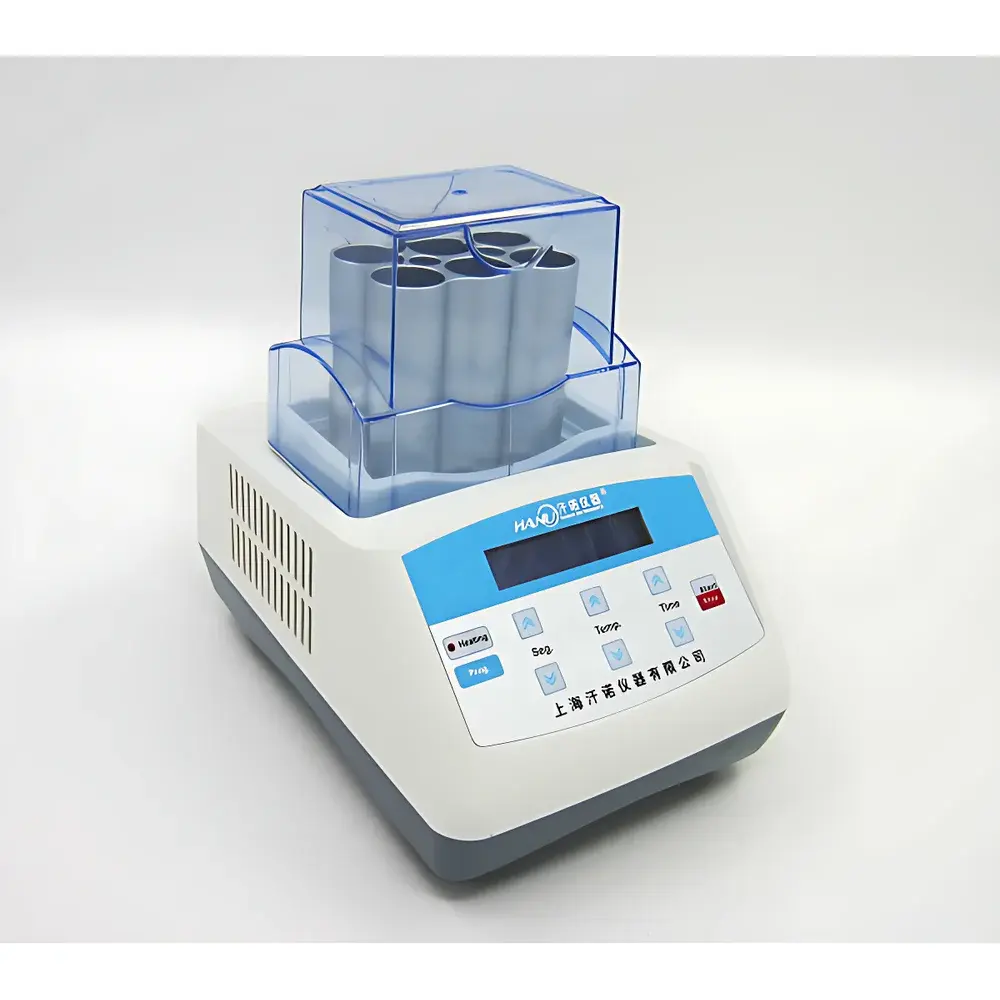
Hanuo HNDKT200-4 Four-Module Programmable Dry Block Heater
| Brand | Hanuo |
|---|---|
| Origin | Shanghai, China |
| Model | HNDKT200-4 |
| Temperature Range | Ambient +5 °C to 130 °C |
| Temperature Accuracy | ±0.5 °C |
| Display Resolution | 0.1 °C |
| Heating Time | ≤12 min (20 °C → 100 °C) |
| Power Consumption | 600 W |
| Dimensions | Not specified |
| Net Weight | 4 kg |
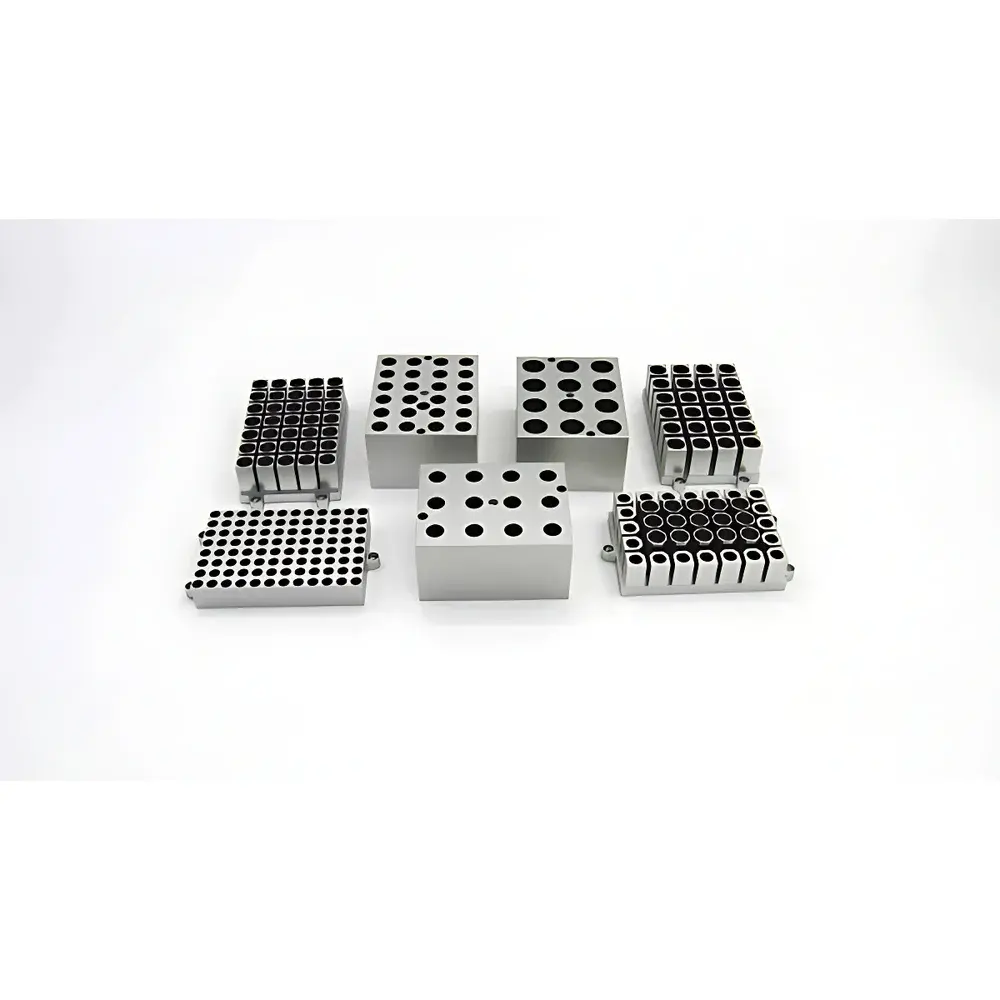
| Module Compatibility | 24–96 well configurations for 0.2–40 mm diameter tubes/vials |
| Safety | Built-in over-temperature protection, fuse (250 V / 3 A), auto-failure detection with audible alarm |
Overview
The Hanuo HNDKT200-4 Four-Module Programmable Dry Block Heater is an engineered thermal platform designed for precise, uniform, and reproducible heating of biological and chemical samples in research, clinical, and quality control laboratories. Unlike water baths, this dry block system utilizes resistive heating elements embedded beneath interchangeable aluminum blocks—ensuring rapid thermal response, zero contamination risk, and minimal maintenance. Its microprocessor-based temperature control architecture delivers stable setpoint maintenance across all four independently configurable modules, making it suitable for parallel processing of heterogeneous sample formats under identical thermal conditions. The device operates on a Peltier-free, conduction-based heating principle—optimized for applications requiring strict thermal fidelity without liquid-mediated heat transfer artifacts.
Key Features
- Four independent heating modules with simultaneous yet individually programmable temperature and time settings
- Dual-stage timer functionality: countdown timer with pause/resume capability and pre-set hold mode
- Real-time digital display showing both current temperature and remaining time (0.1 °C / 1 min resolution)
- Auto-calibration function for temperature offset correction, supporting traceable instrument validation
- Modular block design enabling rapid interchange of standardized aluminum blocks—compatible with common tube diameters from 0.2 mL PCR strips to 40 mm vials
- Integrated safety systems: over-temperature cutoff (hardware-limited), thermal fuse (250 V / 3 A), and self-diagnostic circuitry with audible alarm
- Energy-efficient operation with low acoustic emission (<35 dB(A)) and no moving parts or cooling fluids
- Front-panel membrane keypad with tactile feedback and anti-spill surface treatment
Sample Compatibility & Compliance
The HNDKT200-4 accommodates a broad spectrum of standard laboratory consumables—including 0.2 mL, 0.5 mL, 1.5 mL, and 2.0 mL microcentrifuge tubes; 96-well PCR plates; and cylindrical vials up to 40 mm in diameter. Each module supports uniform thermal distribution (≤ ±0.5 °C across block surface at 40 °C), validated per ISO/IEC 17025 calibration practices. While not certified to IEC 61010-1 as a standalone medical device, the unit meets general laboratory equipment safety requirements for Class II, Pollution Degree 2 environments. Its firmware architecture supports audit-ready operation when integrated into GLP/GMP workflows—particularly where temperature logging, user access control, and parameter change history are required for regulatory review (e.g., USP , FDA 21 CFR Part 11 compliant data handling via optional RS232/USB interface).
Software & Data Management
The HNDKT200-4 operates autonomously via its onboard controller but includes a standard RS232 serial port for external communication. Optional PC software enables remote configuration, real-time temperature monitoring, and timestamped data export in CSV format—supporting batch record generation for SOP-driven processes. All parameter changes (setpoints, durations, module activation states) are logged with date/time stamps and user ID fields when connected to networked lab information systems (LIMS). Firmware updates are performed via secure UART protocol, preserving calibration constants and historical logs during revision cycles.
Applications
- Thermal denaturation of nucleic acids and proteins prior to electrophoresis or mass spectrometry analysis
- Enzyme reaction incubation at defined temperatures (e.g., restriction digests, ligations, dephosphorylations)
- PCR tube pre-heating and post-amplification hold steps
- Serum coagulation studies requiring precise 37 °C incubation
- Standard curve preparation in ELISA and immunoassay workflows
- Sample thawing and stabilization protocols for cryopreserved cell lysates or recombinant proteins
- Controlled drying of thin-layer chromatography plates or filter membranes
FAQ
What is the maximum operating temperature and how is thermal stability maintained?
The unit achieves a maximum setpoint of 130 °C with sustained stability of ±0.5 °C across the entire block surface, verified using NIST-traceable platinum resistance thermometers.
Can multiple modules run at different temperatures simultaneously?
Yes—each of the four modules has independent PID-controlled heating circuits, allowing concurrent operation at distinct setpoints within the ambient +5 °C to 130 °C range.
Is calibration documentation available for quality assurance purposes?
Factory calibration certificates are provided with each unit; users may perform field verification using external reference probes and apply offset corrections via the front-panel menu.
How is cleaning and decontamination handled between runs?
Aluminum blocks are autoclavable (up to 121 °C, 20 min); surfaces tolerate 70% ethanol, isopropanol, and dilute sodium hypochlorite solutions—no residual moisture retention due to dry-block architecture.
Does the device support integration into automated laboratory workflows?
Yes—RS232 interface allows bidirectional command/response communication with robotic liquid handlers or LIMS platforms using ASCII-based SCPI-like syntax.



