
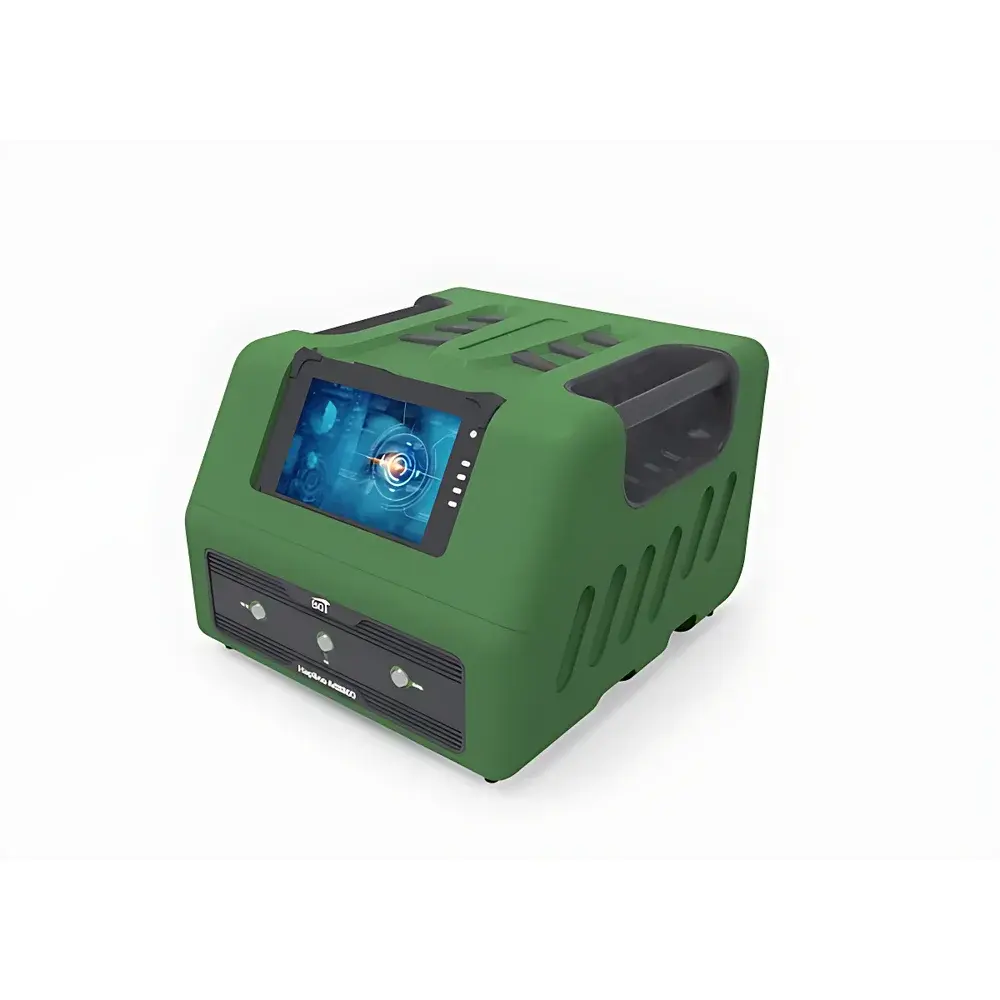
Hapline M8800 Portable GC-MS System for VOC Emergency Monitoring
| Brand | BCT |
|---|---|
| Origin | Beijing, China |
| Manufacturer Type | Direct Manufacturer |
| Country of Origin | Domestic (China) |
| Model | Hapline M8800 |
| Detection Target | Volatile Organic Compounds (VOCs) |
| Detection Mode | Dual-Mode (Real-Time Single-Quadrupole MS + Stationary GC-MS Quantification) |
| Weight | <40 kg |
| Vacuum System | Non-Mechanical (Turbomolecular + Ion Pump Hybrid) |
| Operating Interface | Detachable Touchscreen Control Panel (Local & Remote Operation Supported) |
| Data Transmission | Cloud-Integrated Platform with Real-Time Telemetry |
| Compliance | Designed to Support ASTM D6348, EPA TO-15/TO-17, and GB 50325–2020 Method Requirements |
Overview
The Hapline M8800 is a field-deployable gas chromatography–mass spectrometry (GC-MS) system engineered for rapid, on-site detection and characterization of volatile organic compounds (VOCs) in environmental emergency response, mobile surveying (fugitive emission mapping), and fixed-point continuous monitoring applications. Unlike conventional laboratory-based GC-MS instruments, the M8800 integrates miniaturized quadrupole mass spectrometry with a thermally modulated capillary GC column, enabling real-time single-spectrum acquisition at sub-second duty cycles. Its core architecture employs a hybrid vacuum system combining a compact turbomolecular pump with an ion pump—eliminating moving parts associated with traditional rotary vane pumps and significantly enhancing mechanical robustness during vehicle-mounted operation. The system operates under full electronic control, with automated calibration routines traceable to NIST-traceable VOC standards, supporting both qualitative screening and semi-quantitative analysis per ISO 16000-6 and US EPA Method TO-15 protocols.
Key Features
- Field-Optimized Dual-Mode Analytical Architecture: Combines real-time single-quadrupole mass spectral acquisition (for immediate plume tracking) with stationary GC-MS mode (for compound-specific retention time alignment and enhanced selectivity).
- Ultra-Lightweight Portable Design: Total system mass <40 kg, compliant with ISO 14001 field deployment guidelines for handheld or vehicle-integrated installation; includes integrated ergonomic carry handles and shock-absorbing mounting brackets.
- Modular Human-Machine Interface: Detachable 7-inch capacitive touchscreen panel supports local operation, remote control via Wi-Fi or LTE, and seamless transition between walk-around, vehicle-mounted, and tripod-fixed configurations.
- Low-Power, High-Duty-Cycle Operation: Average power draw <120 W; battery-backed operation supports ≥4 hours continuous acquisition without external power; thermal management optimized for ambient temperatures ranging from –10 °C to +45 °C.
- Embedded Calibration & Diagnostics: Onboard internal standard injection system (e.g., deuterated toluene, bromobenzene) enables automated response factor verification prior to each analytical run; real-time ion source health monitoring with auto-cleaning cycle scheduling.
Sample Compatibility & Compliance
The M8800 is validated for direct analysis of ambient air, stack effluent, soil headspace (via thermal desorption probe), and water vapor-phase samples (using permeation tube or dynamic sparging interfaces). It meets functional equivalency requirements for VOC speciation under Chinese national standard GB 50325–2020 Annex D, US EPA Compendium Method TO-15 (for canister sampling), and ASTM D6348–18 (for direct air analysis). Instrument firmware and data handling workflows are structured to support audit-ready metadata logging—including operator ID, GPS coordinates, barometric pressure, relative humidity, and instrument status flags—ensuring alignment with GLP documentation practices and facilitating future FDA 21 CFR Part 11-compliant validation upgrades.
Software & Data Management
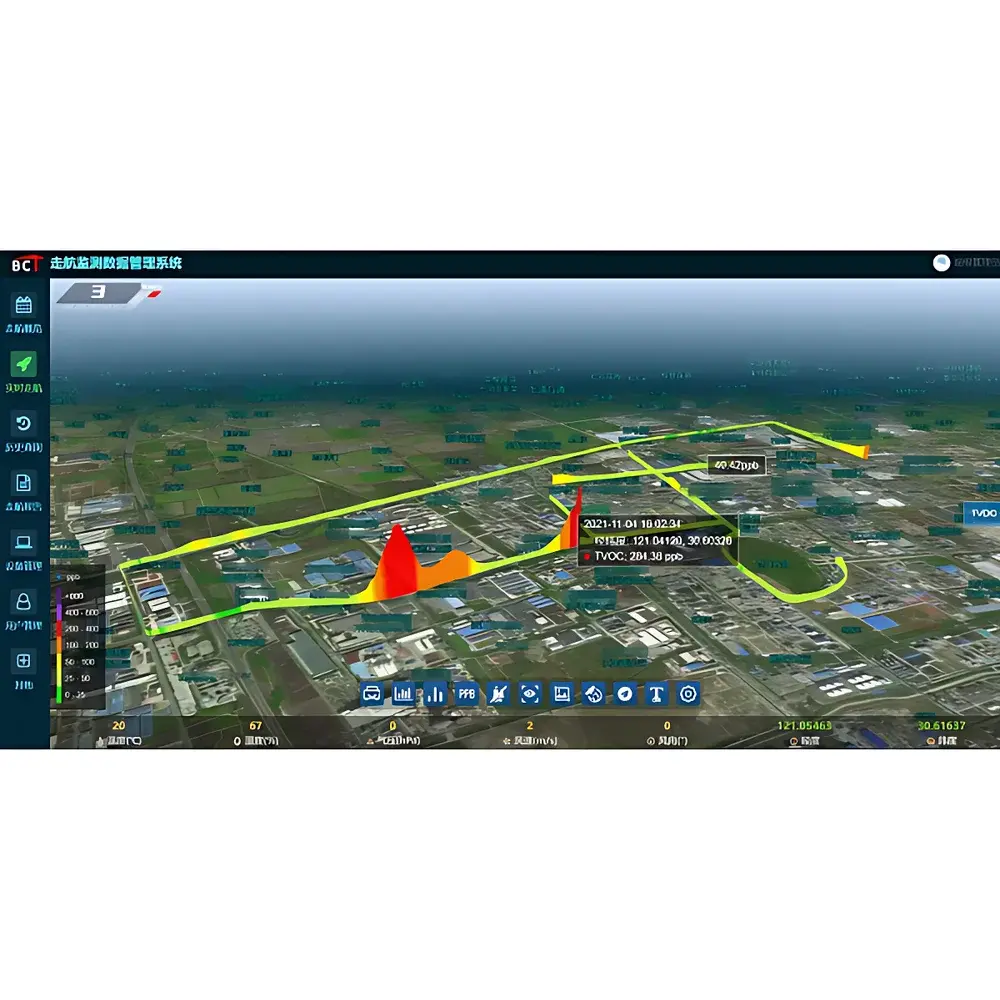
Acquisition and visualization are managed through Hapline CloudLink™ v3.2—a secure, role-based web platform accessible via browser or native iOS/Android client. Raw spectral data (m/z 35–300, 0.1 Da resolution) and processed chromatograms are stored in vendor-agnostic mzML format. Real-time georeferenced plume mapping utilizes onboard GNSS (GPS + BeiDou) with <5 m CEP accuracy; dynamic contour overlays update at 1 Hz during mobile surveys. All data transfers employ TLS 1.3 encryption; audit logs record user actions, method changes, and calibration events with immutable timestamps—supporting retrospective QA/QC review and regulatory submission preparation.
Applications
- Urban-scale VOC Hotspot Identification: Conduct systematic drive-by surveys across administrative districts to generate time-resolved spatial concentration matrices aligned with municipal air quality management frameworks (“One City, One Strategy”).
- Industrial Park Emission Source Attribution: Perform high-resolution transects around fence-line perimeters and intra-facility roadways to isolate emission signatures correlated with specific process units (e.g., solvent recovery, coating lines, wastewater treatment).
- Emergency Response Triage: Deploy within 5 minutes of arrival at chemical spill or industrial accident sites to identify acute toxicants (e.g., benzene, chloroform, acrylonitrile) and inform evacuation radius decisions.
- Regulatory Compliance Verification: Support periodic stack testing and fugitive emission audits under China’s “Blue Sky Defense Campaign” enforcement directives and local VOC emission permits.
FAQ
What VOC compounds can the M8800 detect and quantify?
The system is pre-configured for 89 priority VOCs listed in GB 50325–2020 and US EPA TO-15, including aliphatic hydrocarbons, aromatic compounds, halogenated solvents, and oxygenates. Custom libraries may be added via .mzXML import.
Is the M8800 compatible with existing laboratory LIMS or ERP systems?
Yes—CSV and XML export templates are provided for integration with third-party laboratory information management systems; API endpoints support automated ingestion into enterprise data lakes.
Does the instrument require routine maintenance by certified engineers?
Routine maintenance is limited to quarterly ion source cleaning and annual mass calibration; all procedures are documented in the Field Service Manual and supported remotely via augmented reality-assisted guidance.
Can the M8800 operate continuously for unattended monitoring?
When installed in a temperature-stabilized vehicle or sheltered enclosure, the system supports scheduled 24/7 acquisition with automated zero-air purging and internal standard injections every 2 hours.
How is data integrity ensured during wireless transmission?
All telemetry packets include SHA-256 checksums and sequence numbers; failed transmissions trigger automatic retransmission up to three times before local cache fallback.
Related Products







