
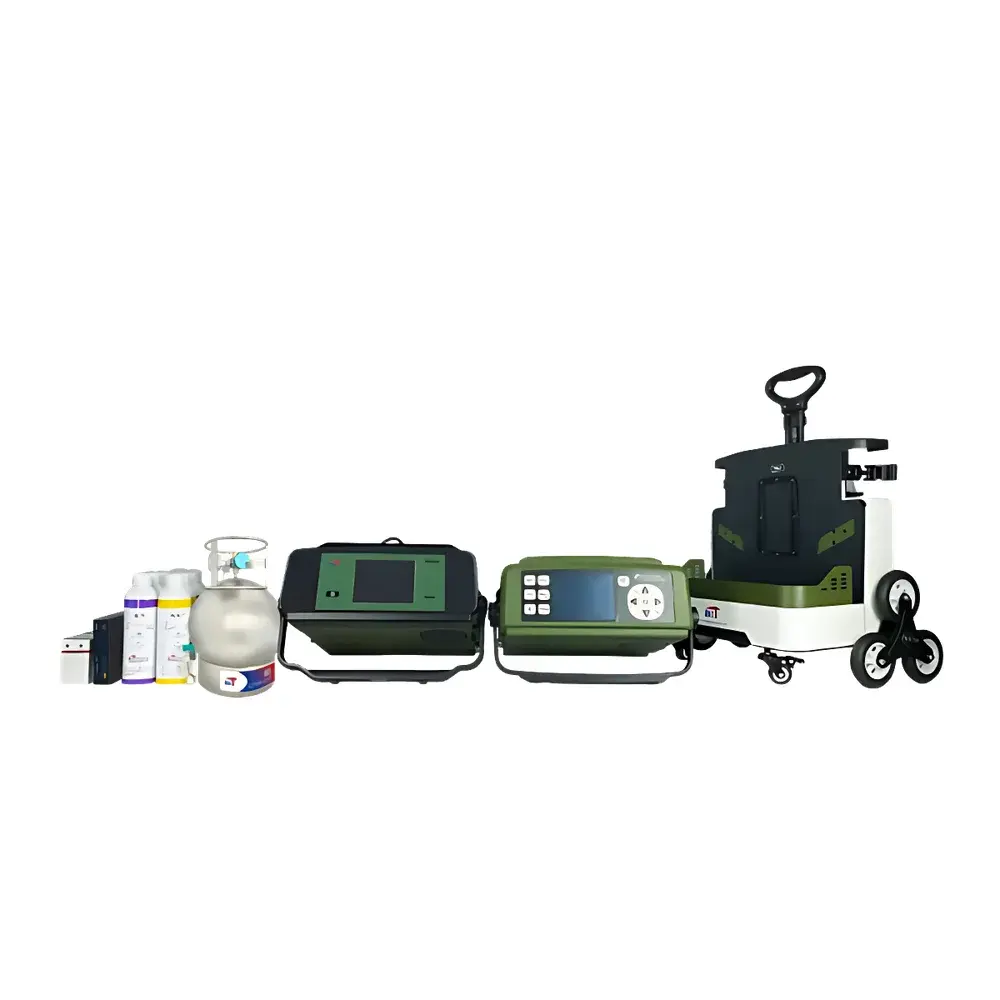
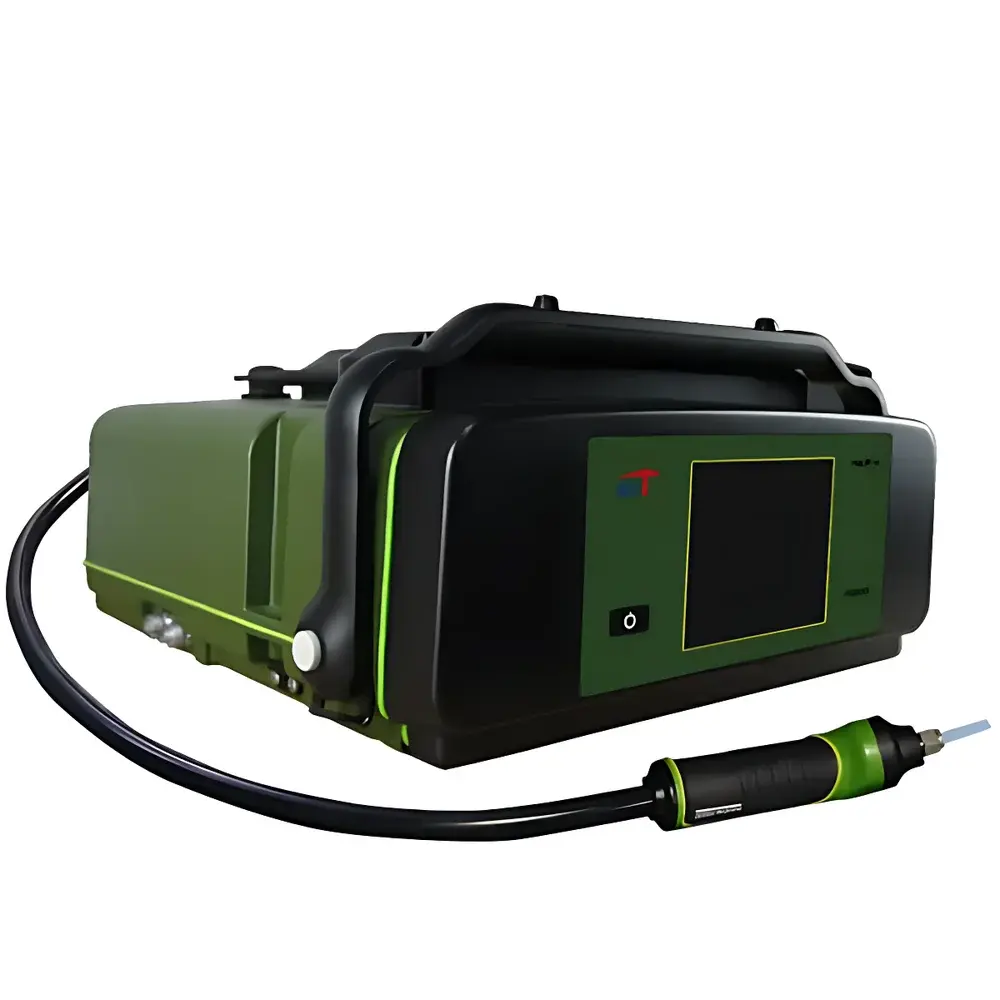
Hapline P8800 Portable Gas Chromatography-Mass Spectrometry System
| Brand | BCT |
|---|---|
| Origin | Beijing, China |
| Manufacturer Type | Original Equipment Manufacturer (OEM) |
| Product Origin | Domestic (China) |
| Model | Hapline P8800 |
| Instrument Type | Portable GC-MS |
| Power Supply | 220 V AC or internal/external DC battery (≤24 V, ≤30 W) |
| Compliance | HJ 1223–2021, HJ 1227–2021, HJ 1058–2019, Draft HJ Standard for VOCs in Stationary Source Emissions |
| Inlet Technology | Membrane Introduction (MI) |
| Enclosure Rating | IP55 |
| Vacuum System | Non-mechanical (e.g., turbomolecular or diffusion pump-free architecture) |
| Spectrometer Type | Quadrupole Mass Analyzer |
| Library Support | NIST MS Search Database |
Overview
The Hapline P8800 Portable Gas Chromatography-Mass Spectrometry (GC-MS) System is an integrated field-deployable analytical platform engineered for real-time identification and quantification of volatile and semi-volatile organic compounds (VOCs and SVOCs) in complex environmental matrices—including ambient air, water, soil headspace, and industrial effluents. Designed and manufactured by BCT (Beijing), the system implements a membrane introduction (MI) inlet configuration that enables direct, solvent-free sample introduction into the ion source without cryofocusing or thermal desorption, significantly reducing analysis time and eliminating carryover risks. Its quadrupole mass spectrometer operates under electron ionization (EI) mode, delivering unit-mass resolution and compatibility with the NIST Mass Spectral Search Program for high-confidence compound identification. Unlike laboratory-bound GC-MS instruments, the P8800 is purpose-built for emergency response, regulatory compliance monitoring, and on-site forensic screening—where operational robustness, low power demand, and rapid turnaround are critical.
Key Features
- True portable architecture: Compact footprint (≤25 kg), integrated battery operation (≥4 h runtime at ≤30 W power draw), and dual-power capability (220 V AC or 24 V DC input).
- Membrane introduction interface: Permits direct analysis of gaseous, aqueous, and headspace samples without pre-concentration or derivatization—enabling sub-minute response times and minimizing matrix interference.
- Non-mechanical vacuum system: Eliminates vibration-sensitive mechanical pumps; maintains stable ion transmission under dynamic field conditions (e.g., vehicle transport, uneven terrain).
- Ruggedized enclosure rated IP55: Certified protection against dust ingress and low-pressure water jets; operational range extends to −10 °C to +50 °C ambient temperature.
- Onboard data acquisition and processing: Real-time chromatogram generation, automated peak detection, spectral deconvolution, and NIST library matching—all executed during acquisition without external PC dependency.
- Regulatory alignment: Fully compliant with Chinese EPA method standards HJ 1223–2021 (ambient air VOCs), HJ 1227–2021 (water VOCs), and HJ 1058–2019 (ozone-depleting substances in polyurethane foam).
Sample Compatibility & Compliance
The Hapline P8800 supports direct analysis of unfiltered gas-phase samples, aqueous extracts via headspace equilibration, and solid-phase microextraction (SPME) desorbed volatiles. It accommodates target analytes across a molecular weight range of 35–500 Da, including but not limited to benzene, toluene, ethylbenzene, xylenes (BTEX), chlorinated solvents (e.g., chloroform, carbon tetrachloride), polycyclic aromatic hydrocarbons (PAHs), organophosphate flame retardants, and halogenated refrigerants (CFC-12, HCFC-22). All hardware and software workflows adhere to GLP principles, with audit-trail-enabled data logging, user-access controls, and electronic signature support aligned with FDA 21 CFR Part 11 requirements for regulated environments. Method validation documentation—including precision (RSD <15% for replicate injections), limit of detection (LOD ≤ 50 ppt for selected VOCs in air), and linearity (R² ≥ 0.995 over 3 orders of magnitude)—is provided per ICH Q2(R2) guidelines.
Software & Data Management
The embedded Hapline Control Suite v3.x provides intuitive touchscreen operation, method editor with customizable GC temperature ramps and MS scan parameters, and integrated reporting templates conforming to HJ-series standard output formats. Raw data (.raw) and processed results (.csv, .pdf) are stored on encrypted internal SSD with automatic backup to USB media. Software supports spectral library expansion beyond NIST, including custom-built libraries for industrial toxicants (TICs/TIMs) and odorant compounds. All data files contain embedded metadata—operator ID, GPS coordinates (via optional GNSS module), environmental sensor readings (T, RH, pressure), and instrument performance logs—ensuring full traceability for regulatory submissions and chain-of-custody documentation.
Applications
- Emergency response to chemical spills, industrial leaks, or clandestine lab investigations—providing immediate compound-level identification within minutes of deployment.
- Mobile ambient air quality monitoring for fugitive emissions tracking, odor complaint verification, and hotspot mapping using GPS-synchronized sampling.
- Field-based compliance verification for wastewater treatment plants, landfills, and petrochemical facilities under China’s “Blue Sky” and “Clear Water” action plans.
- Forensic environmental analysis: Detection of illicit additives, counterfeit materials, or degradation products in polymers, adhesives, and coatings.
- Research-grade field studies requiring spatially resolved VOC profiling—e.g., urban atmospheric chemistry, biogenic emission characterization, or indoor air quality surveys.
FAQ
What sample introduction methods does the Hapline P8800 support?
It utilizes membrane introduction (MI) for direct gas or headspace analysis; optional SPME and thermal desorption modules are available as accessories.
Is the system compatible with international regulatory frameworks such as ISO 17025 or ASTM D6348?
While optimized for Chinese HJ standards, its analytical performance meets the technical requirements of ASTM D6348 (for gaseous VOCs) and ISO 17025 clause 5.9 (method validation), subject to site-specific qualification.
Can raw data be exported for third-party reprocessing?
Yes—proprietary .raw files are convertible to open formats (mzML, NetCDF) via included converter utility, enabling reanalysis in commercial platforms (e.g., AMDIS, MassHunter, OpenChrom).
How is calibration maintained during extended field use?
The system includes automated tuning routines using perfluorotributylamine (PFTBA) and supports multi-point external calibration with certified gas standards traceable to NIM (National Institute of Metrology, China).
Does the instrument support remote diagnostics or firmware updates?
Yes—via secure TLS-encrypted Wi-Fi or Ethernet connection; updates are digitally signed and require administrator authentication to ensure integrity and compliance.
Related Products





