
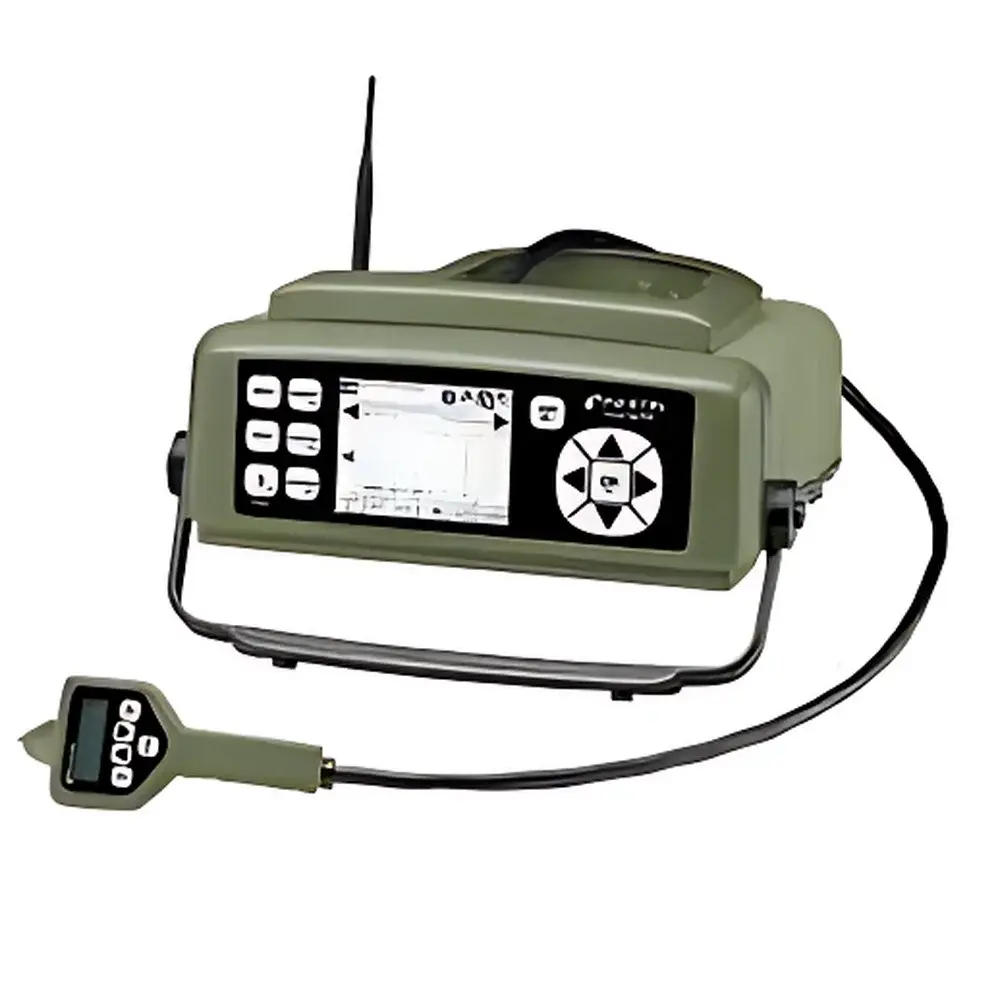
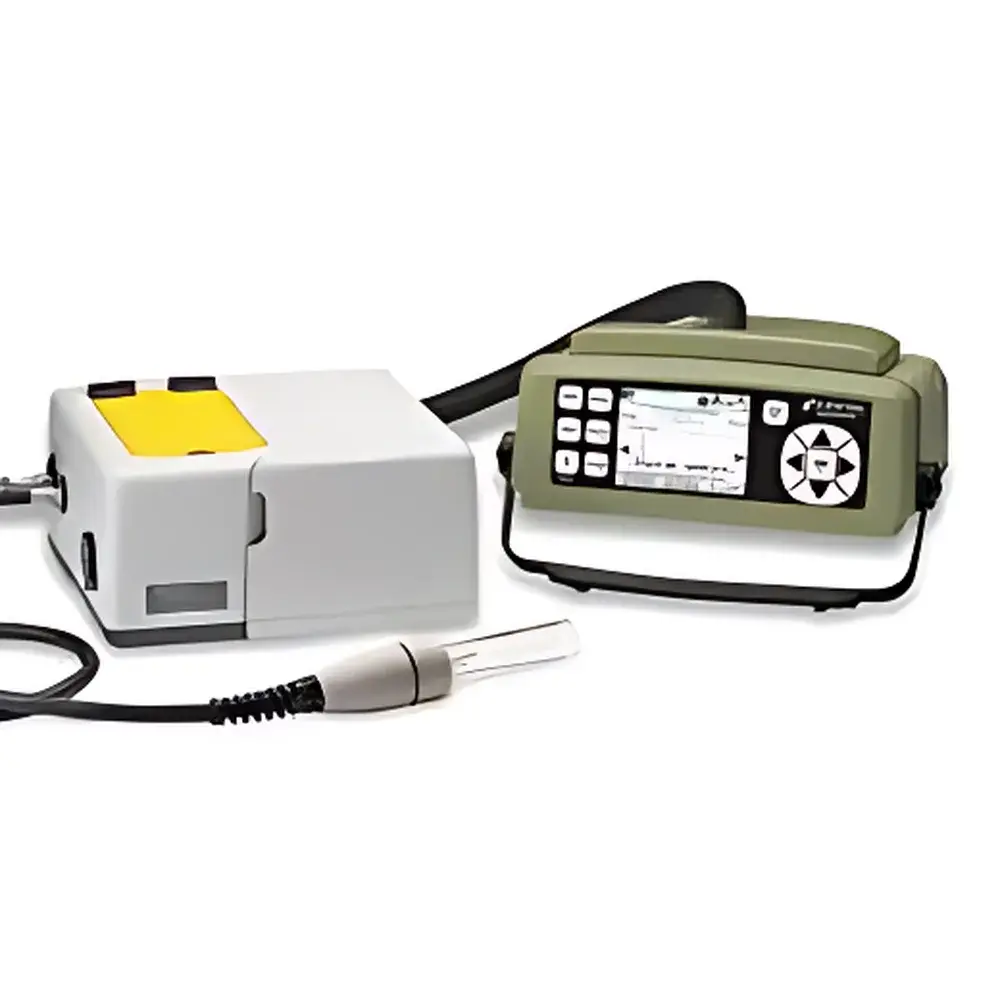
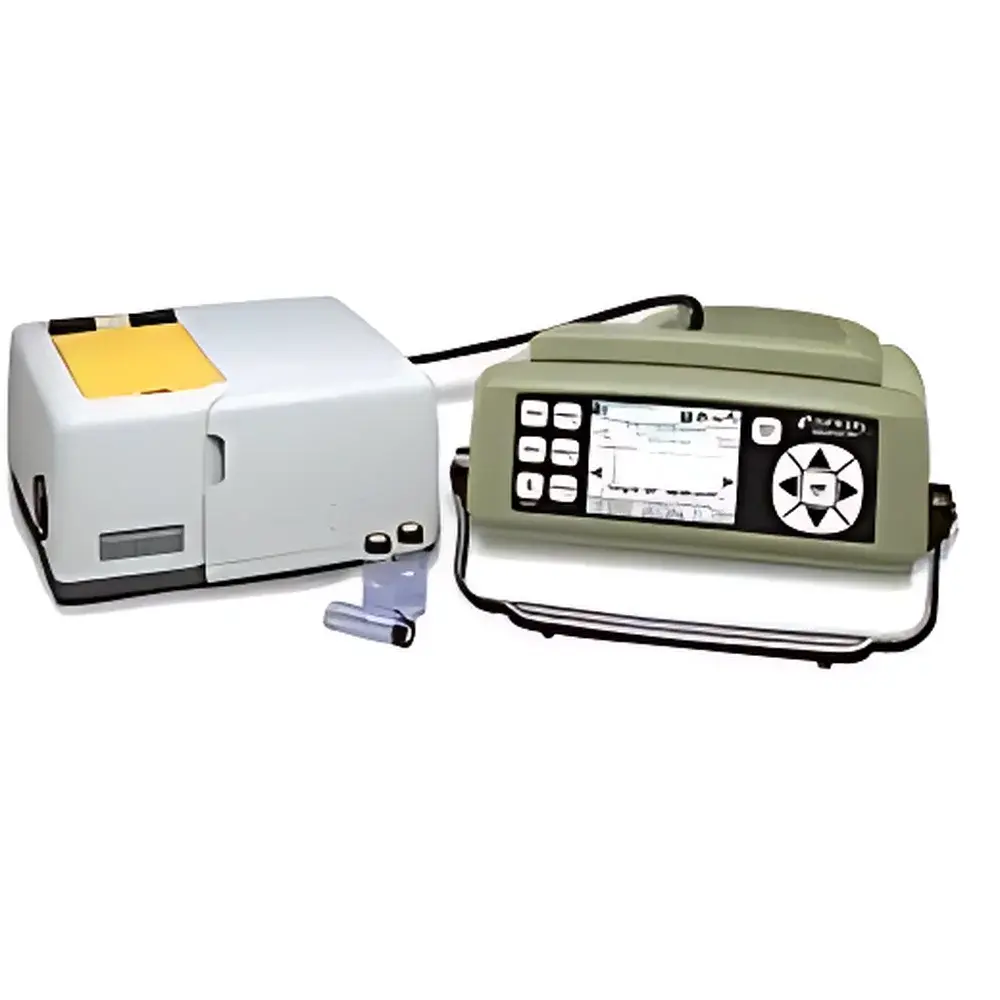
Hapsite ER Portable Gas Chromatography-Mass Spectrometry System
| Origin | USA |
|---|---|
| Manufacturer Type | Authorized Distributor |
| Origin Category | Imported |
| Model | Hapsite ER |
| Pricing | Available Upon Request |
Overview
The Hapsite ER Portable Gas Chromatography-Mass Spectrometry (GC-MS) System, developed by Inficon and distributed globally for field-deployable chemical analysis, is engineered for high-fidelity, real-time identification and quantification of volatile and semi-volatile organic compounds (VOCs/SVOCs) directly at the point of sampling. Utilizing low thermal mass (LTM) column heating technology coupled with a compact quadrupole mass spectrometer, the system delivers laboratory-grade analytical performance in a ruggedized, transportable platform. Its core measurement principle integrates gas-phase separation via capillary GC with electron ionization (EI) mass spectrometry, enabling compound-specific detection based on retention time and mass-to-charge (m/z) ratio. Designed explicitly for time-critical environmental monitoring and emergency response scenarios—including industrial spills, hazardous material incidents, CWA/TIC screening, and post-disaster air/water assessment—the Hapsite ER operates independently of fixed laboratory infrastructure while maintaining compliance with foundational analytical rigor required for regulatory decision support.
Key Features
- Integrated low thermal mass (LTM) GC column oven with rapid heating/cooling kinetics—enabling sub-minute temperature ramping and <5-minute total run times for targeted VOC analysis.
- Compact quadrupole mass spectrometer with unit-mass resolution (0.5–1.0 amu), operating in both full-scan (50–500 m/z) and selected ion monitoring (SIM) modes to optimize sensitivity and duty cycle.
- Non-evaporable getter (NEG) vacuum pump technology—eliminating oil-based pumping systems and ensuring stable high-vacuum operation (<1×10⁻⁵ Torr) without external power or maintenance during extended field deployment.
- Onboard rechargeable lithium-ion battery pack and integrated helium or hydrogen carrier gas cylinder—supporting ≥4 hours of continuous operation without external utilities.
- IP65-rated sealed enclosure with shock-absorbing chassis—certified for operation in ambient temperatures from −10 °C to +50 °C and relative humidity up to 95% non-condensing.
- Front-panel 7-inch resistive touchscreen interface with intuitive workflow-driven software navigation—requiring no external PC for basic acquisition, calibration, or report generation.
Sample Compatibility & Compliance
The Hapsite ER supports direct injection, headspace sampling, purge-and-trap, and micro-solid-phase extraction (μ-SPE) interfaces—enabling trace-level (ppt-range) detection of target analytes across diverse matrices including ambient air, soil headspace, water vapor, and swab extracts. It complies with ASTM D6348–22 (standard test method for determination of gaseous compounds by GC-MS), EPA Method TO-15 (determination of VOCs in ambient air), and ISO 16000-6 (indoor air quality—determination of VOCs). Data integrity meets GLP and GMP-aligned requirements through audit-trail-enabled software logging, user-access controls, and electronic signature support per FDA 21 CFR Part 11 when operated with validated workstation configurations.
Software & Data Management
The embedded instrument control and data processing software includes NIST MS Search 2.4 spectral library integration with AMDIS (Automated Mass Spectral Deconvolution and Identification System) for co-eluting peak resolution. Geotagged acquisition is enabled via built-in GPS module (accuracy ±3 m CEPT), automatically embedding latitude/longitude metadata into every raw data file (.CDF format). Data export supports USB 2.0 and 10/100 Mbps Ethernet connectivity; reports are generated in PDF/CSV formats with customizable templates compliant with incident reporting frameworks (e.g., NFPA 472, ICS-201). Remote diagnostics and firmware updates are supported over secure TLS-encrypted network sessions.
Applications
- Emergency response to chemical releases—including TICs (e.g., chlorine, phosgene), TIMs (e.g., benzene, styrene), and CWAs (e.g., sarin, VX analogs).
- Environmental site assessment—real-time screening of landfill emissions, industrial fence-line monitoring, and post-remediation verification.
- Fire investigation—detection of accelerants (e.g., gasoline, kerosene markers) in debris headspace.
- Military CBRN defense—mobile reconnaissance for battlefield contamination mapping and plume tracking.
- Public health surveillance—rapid VOC profiling in disaster-affected indoor environments (e.g., post-flood mold volatiles, fire-damaged building off-gassing).
FAQ
What carrier gases are compatible with the Hapsite ER?
Helium and hydrogen are supported; hydrogen offers faster analysis and improved sensitivity for many VOCs, while helium provides broader method transfer compatibility.
Does the system require routine calibration for field use?
Yes—daily tuning using perfluorotributylamine (PFTBA) is recommended for mass axis and sensitivity verification; automated calibration routines are accessible via touchscreen.
Can the Hapsite ER be used for quantitative analysis?
Yes—external standard, internal standard, and standard addition methods are supported; calibration curves can be stored and recalled per method folder.
Is remote instrument control possible?
Yes—via Ethernet connection using the optional Hapsite Workstation software running on Windows 10/11 PCs with .NET Framework 4.8.
How is data security maintained during field operations?
All user actions, method changes, and acquisition events are logged with timestamps and operator IDs; encrypted local storage prevents unauthorized access to raw data files.





