
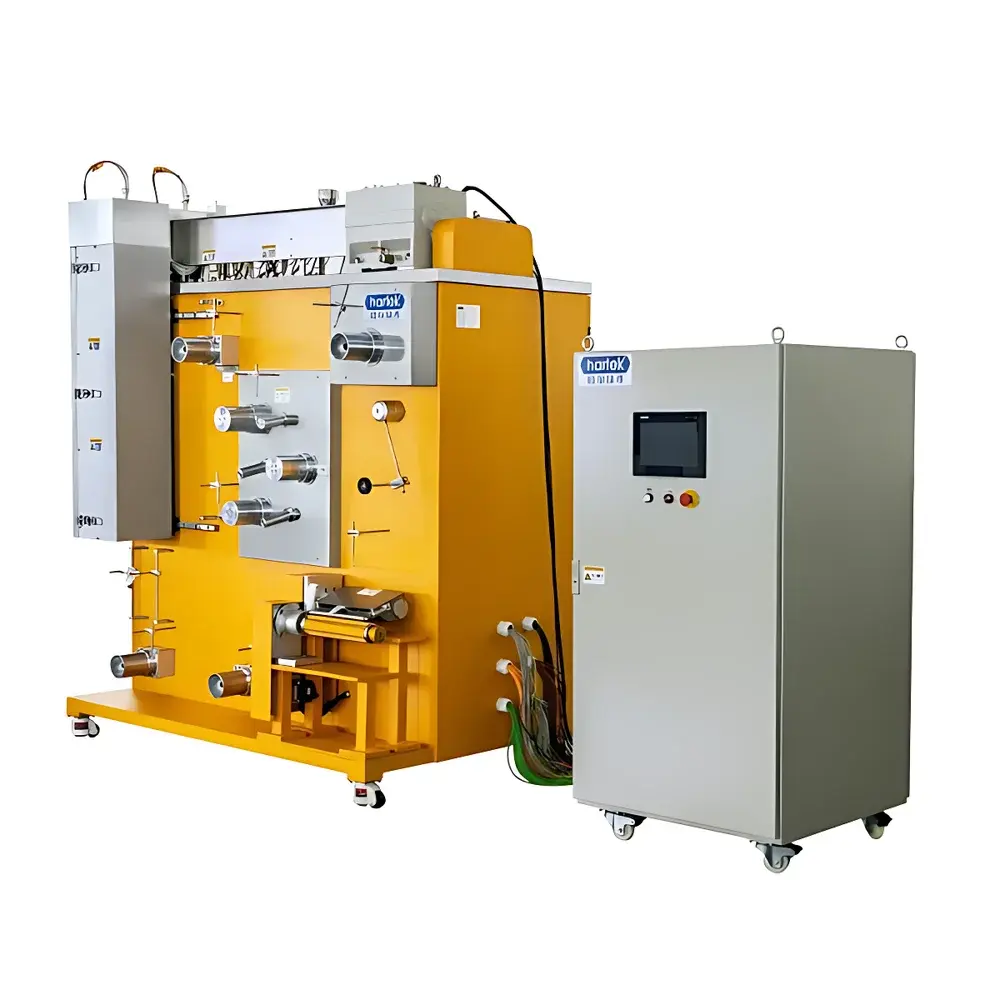
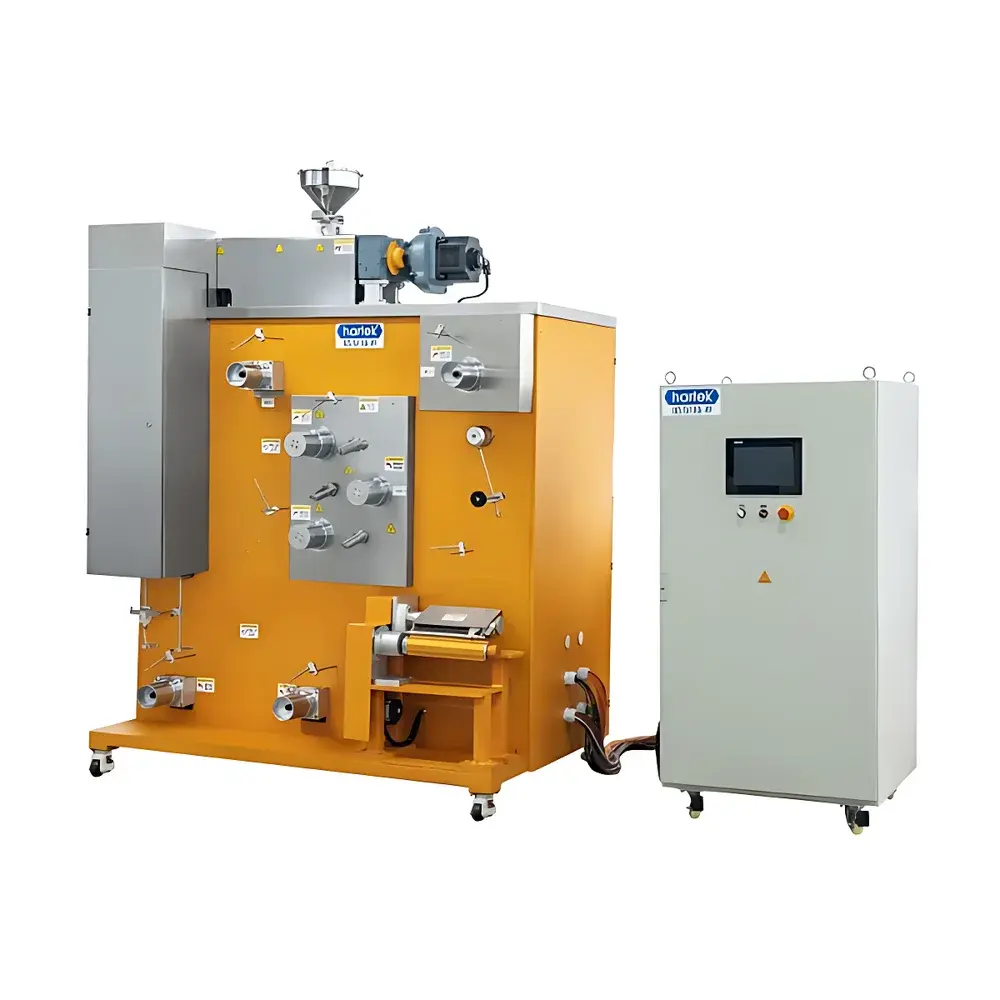
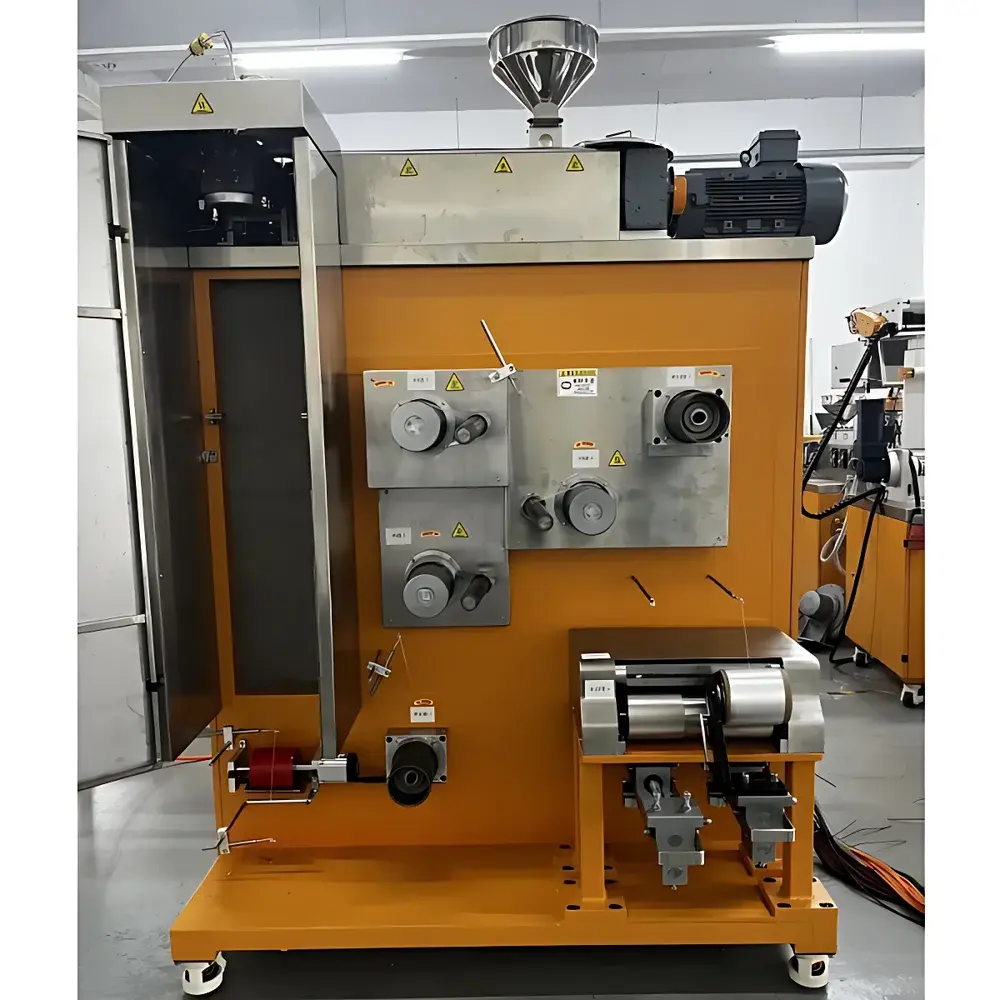
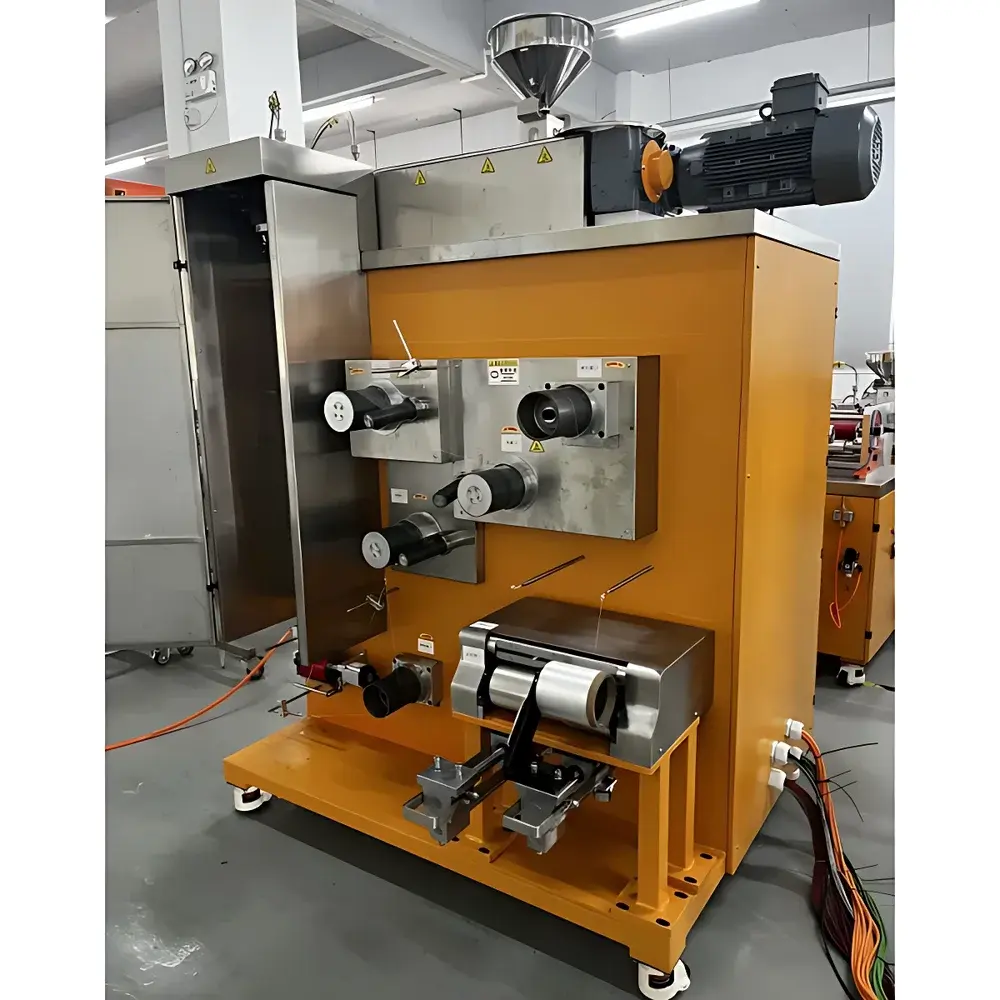
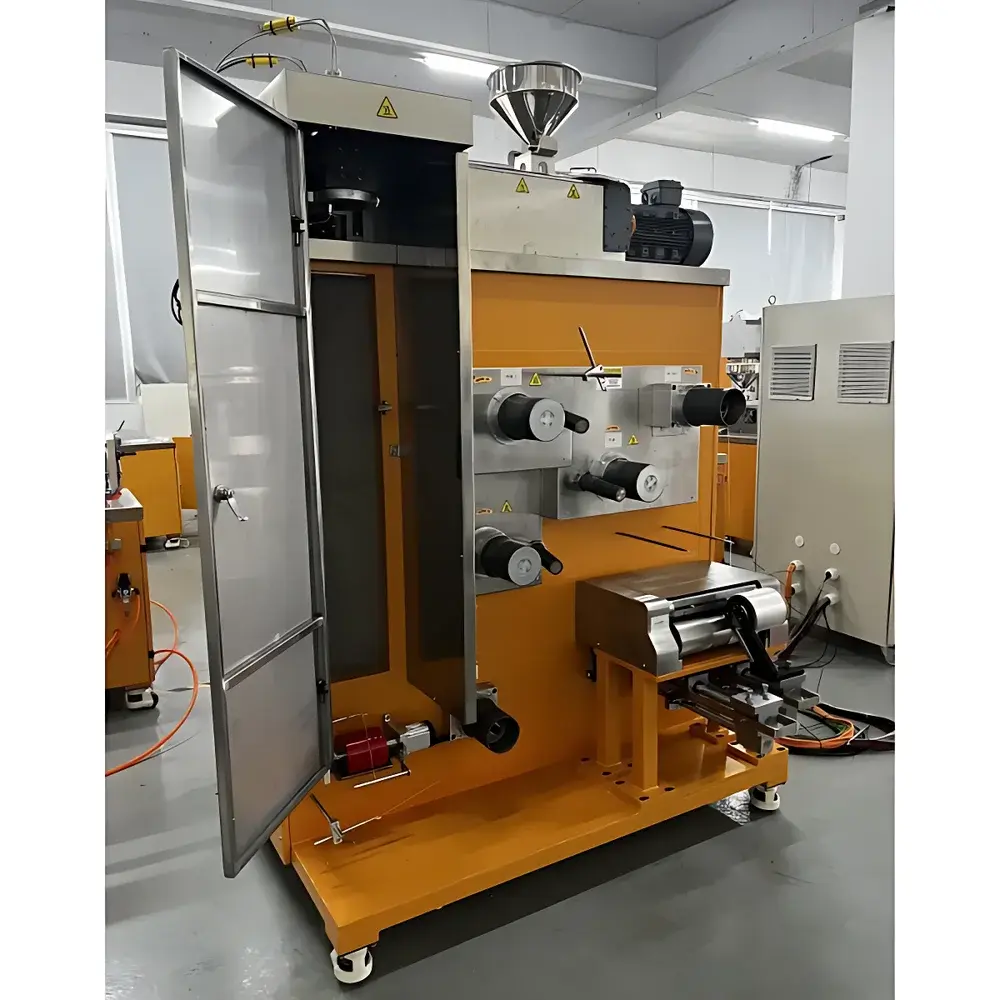
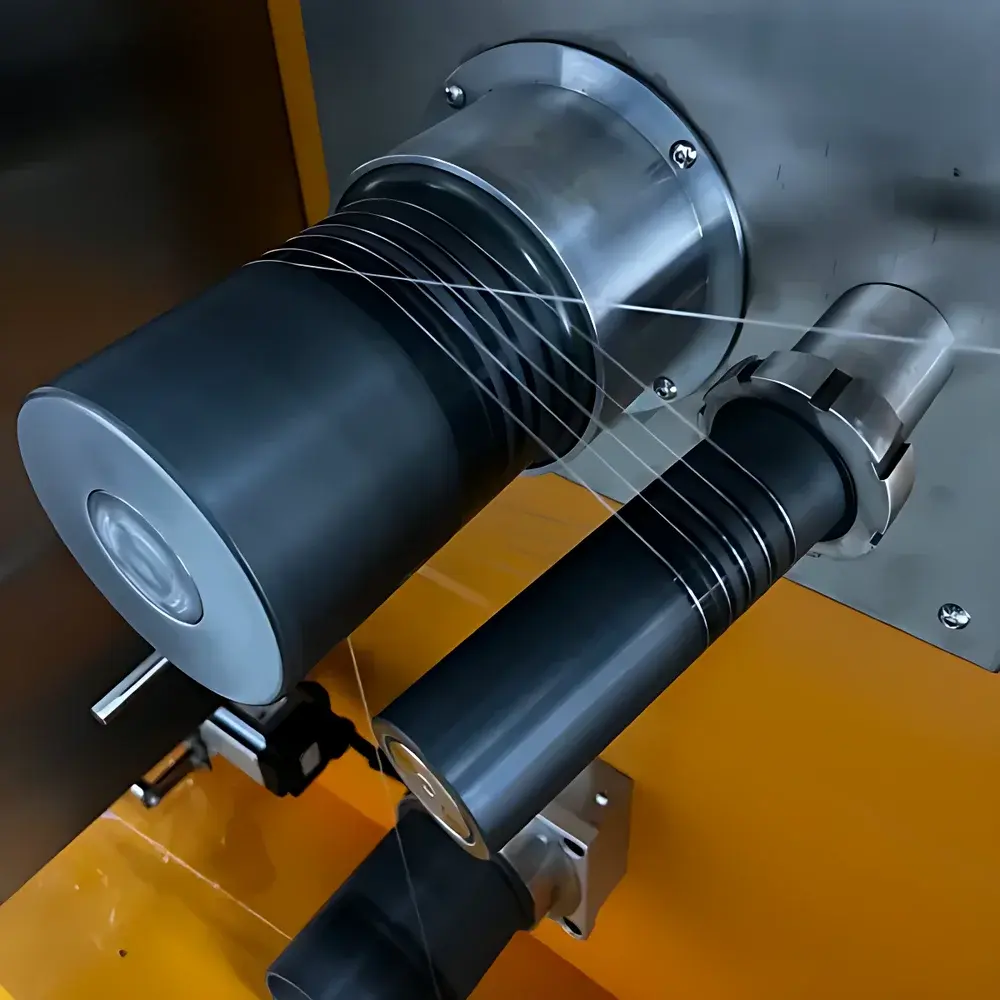
Hartek HTES-20S Benchtop Melt Spinning System
| Brand | Hartek |
|---|---|
| Origin | Guangdong, China |
| Manufacturer Type | Direct Manufacturer |
| Country of Origin | China |
| Model | HTES-20S |
| Price Range | USD 14,000 – 28,000 |
| Screw Diameter | 20 mm |
| Screw L/D Ratio | 28:1 |
| Max. Operating Temperature | 350 °C (optional 450 °C) |
| Temp. Control Accuracy | ±1 °C |
| Melt Pressure Range | 0–35 MPa |
| Pressure Measurement Accuracy | ±0.01 MPa |
| Screw Speed | 116 rpm |
| Motor Power | 3 kW |
| Output Capacity | 0.5–3 kg/h |
| Footprint | 1518 × 1028 × 1878.5 mm |
Overview
The Hartek HTES-20S Benchtop Melt Spinning System is an engineered laboratory-scale extrusion and fiber formation platform designed for controlled polymer melt processing under reproducible thermal and rheological conditions. Based on single-screw extrusion principles coupled with precision metering and quenching modules, the system enables full-cycle melt spinning—from polymer feeding and plasticization through metered die extrusion, air-gap attenuation, and solid-state fiber collection. Its compact footprint and modular architecture make it suitable for academic polymer science labs, R&D centers developing specialty fibers, and quality assurance teams validating new resin formulations prior to pilot-scale trials. Unlike industrial spinning lines, the HTES-20S operates at gram-to-kilogram hourly throughput levels while maintaining strict control over residence time distribution, shear history, and thermal gradients—critical parameters influencing crystallinity, orientation, and tensile performance in synthetic filaments.
Key Features
- Single-screw extruder with 20 mm barrel diameter and 28:1 length-to-diameter ratio, optimized for uniform melting and minimal thermal degradation of thermoplastics including PET, PA6, PP, PTT, and bio-based polyesters.
- Precision temperature control across four independent heating zones (±1 °C stability), with optional high-temp configuration supporting up to 450 °C for engineering polymers such as polyetherimide (PEI) or polyphenylene sulfide (PPS).
- Integrated melt pressure transducer (0–35 MPa range, ±0.01 MPa accuracy) enabling real-time monitoring of viscoelastic resistance during extrusion—essential for detecting resin batch variability or filter clogging events.
- Human-machine interface (HMI) with programmable logic controller (PLC) logic, supporting stepwise ramp profiles, parameter logging, and alarm-triggered shutdown protocols compliant with ISO 13849-1 functional safety guidelines.
- Modular quenching section accommodating adjustable air-gap height (100–500 mm), variable cross-flow air velocity (0–5 m/s), and interchangeable spinneret plates (standard 24–96-hole configurations, custom orifice geometries available).
- Motor-driven take-up unit with closed-loop speed control (0.1–1000 m/min), tension feedback integration, and optional online diameter measurement via laser micrometry (add-on).
Sample Compatibility & Compliance
The HTES-20S supports a broad spectrum of thermoplastic granules and flakes, including but not limited to polyethylene terephthalate (PET), polyamide 6 (PA6), polypropylene (PP), polybutylene terephthalate (PBT), polylactic acid (PLA), and thermoplastic polyurethane (TPU). It is compatible with masterbatches containing pigments, flame retardants, antimicrobials, or conductive fillers—provided feedstock exhibits sufficient flowability and thermal stability below 450 °C. The system conforms to CE machinery directive 2006/42/EC and meets electromagnetic compatibility (EMC) requirements per EN 61000-6-2/6-4. All electrical components carry UL recognition where applicable. For regulated environments, optional audit-ready data logging (timestamped, user-ID tagged, tamper-evident) aligns with GLP and GMP documentation expectations per FDA 21 CFR Part 11 when paired with validated software.
Software & Data Management
The embedded HMI provides local real-time visualization of extruder torque, melt temperature profiles, pressure differentials, screw speed, and winding tension. Raw process data (sampled at 1 Hz) is exportable in CSV format via USB port. Optional Hartek SpinControl™ PC software extends functionality with multi-channel trend analysis, comparative batch reporting, statistical process control (SPC) charts (X-bar/R), and automated report generation compliant with ISO/IEC 17025 documentation standards. All software modules support role-based access control, electronic signatures, and change history tracking—enabling traceability from raw material lot to fiber sample ID.
Applications
- Development and optimization of pre-oriented yarn (POY) and fully drawn yarn (FDY) processes for textile-grade polyester and nylon filaments.
- Rapid prototyping of medical-grade monofilaments (e.g., sutures, braided scaffolds) using USP Class VI-compliant resins under clean-bench-compatible operation.
- Fundamental studies on structure–property relationships: correlating extrusion parameters (shear rate, residence time, quench rate) with crystallinity (DSC/XRD), birefringence, and tensile modulus (ASTM D2256).
- Validation of recycled polymer streams—assessing melt stability, gel formation, and spinnability of post-consumer PET flake blends prior to commercial recycling line commissioning.
- Educational use in polymer engineering curricula for hands-on demonstration of melt rheology, die swell, neck-in phenomena, and solid-state drawing mechanics.
FAQ
What polymer types are compatible with the HTES-20S?
The system is validated for standard thermoplastics including PET, PA6, PP, PBT, PLA, and TPU. High-temperature variants (450 °C option) extend compatibility to PEI, PPS, and polyetherketone (PEK), subject to screw metallurgy verification.
Can the HTES-20S produce bicomponent or hollow fibers?
Yes—custom-designed spinnerets with dual-channel or annular orifices are supported; however, co-extrusion requires optional auxiliary gear pump module (HTES-PUMP-20) and separate temperature-controlled feed hoppers.
Is remote monitoring or integration with LIMS possible?
Standard Ethernet port enables Modbus TCP communication for SCADA-level integration. LIMS interfacing is achievable via Hartek SpinControl™ API (RESTful JSON endpoints) with TLS 1.2 encryption and OAuth 2.0 authentication.
What maintenance intervals are recommended?
Screw/barrel inspection every 500 operational hours; ceramic heater replacement every 2,000 hours; pressure transducer recalibration annually or after 10,000 cycles—per ISO/IEC 17025 calibration management guidance.
Does Hartek provide application support for new polymer systems?
Yes—customers receive complimentary startup protocol development (including drying, temperature ramp, and quench settings) for first three resin types, plus access to Hartek’s global polymer processing database (v.2024.3) containing >120 validated spinning recipes.






