
OK-HC-901 Programmable Sand and Dust Test Chamber
| Brand | OK Instruments |
|---|---|
| Origin | Guangdong, China |
| Manufacturer Type | OEM/ODM Manufacturer |
| Country of Origin | China |
| Model | OK-HC-901 |
| Silica Content of Test Dust | 97–99% SiO₂ |
| Blow-Dust Concentration | 0.1–10.6 ± 7 g/m³ |
| Blow-Dust Air Velocity | 8.9 ± 1.2 m/s |
| Blow-Sand Concentration | 1.1 ± 0.25 g/m³ to 2.2 ± 0.5 g/m³ |
| Blow-Sand Air Velocity | 0–29 m/s |
Overview
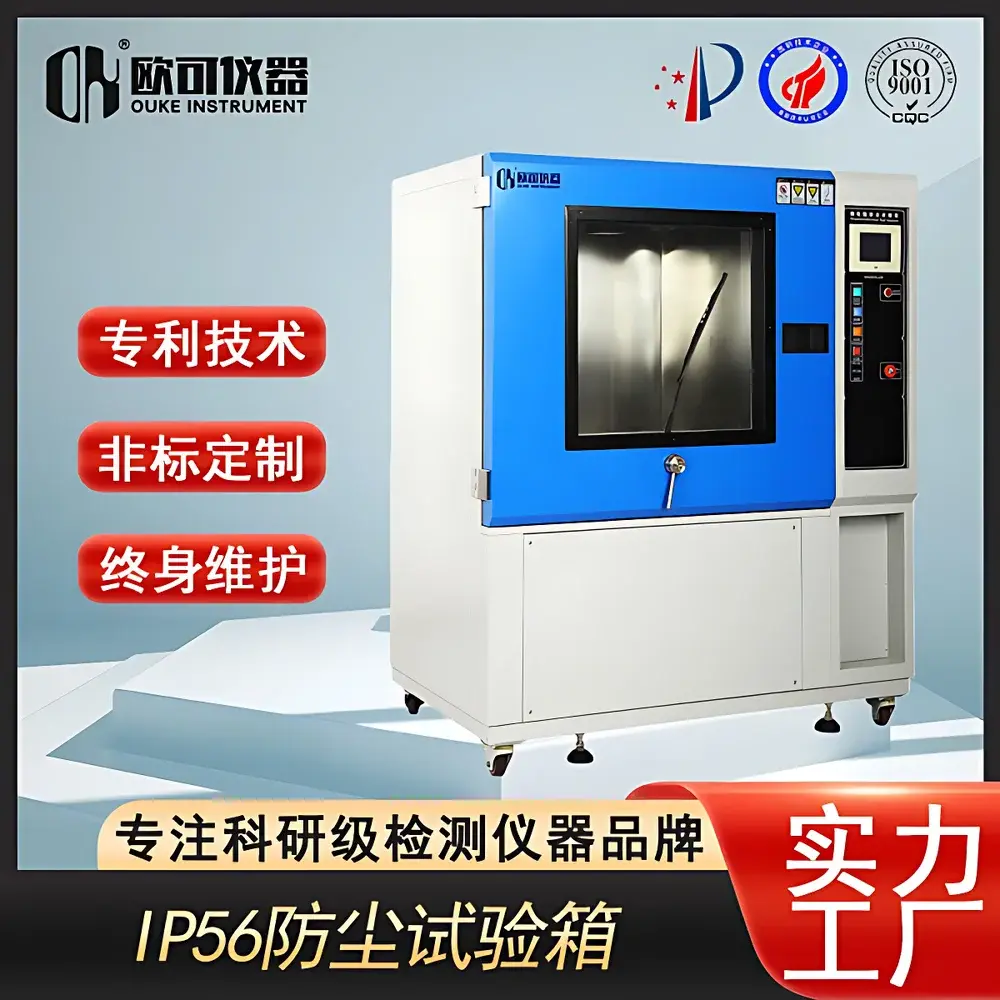
The OK-HC-901 Programmable Sand and Dust Test Chamber is an engineered environmental simulation system designed to evaluate the ingress protection (IP) performance of enclosures against airborne particulates under controlled, repeatable conditions. It operates on the principles of aerodynamic suspension and directed particle impingement—leveraging calibrated airflow dynamics to replicate real-world desert, industrial, or off-road dust and sand exposure scenarios. The chamber complies with internationally recognized test standards including IEC 60529 (IP5X and IP6X), GB/T 4208, ISO 20653 (Road Vehicles – Degrees of Protection Against Ingress of Solid Objects and Water), and MIL-STD-810G Method 510.6 (Sand and Dust). Its dual-mode operation supports both blow-dust (low-velocity, suspended particulate exposure) and blow-sand (high-velocity, abrasive impact) testing protocols within a single integrated platform.
Key Features
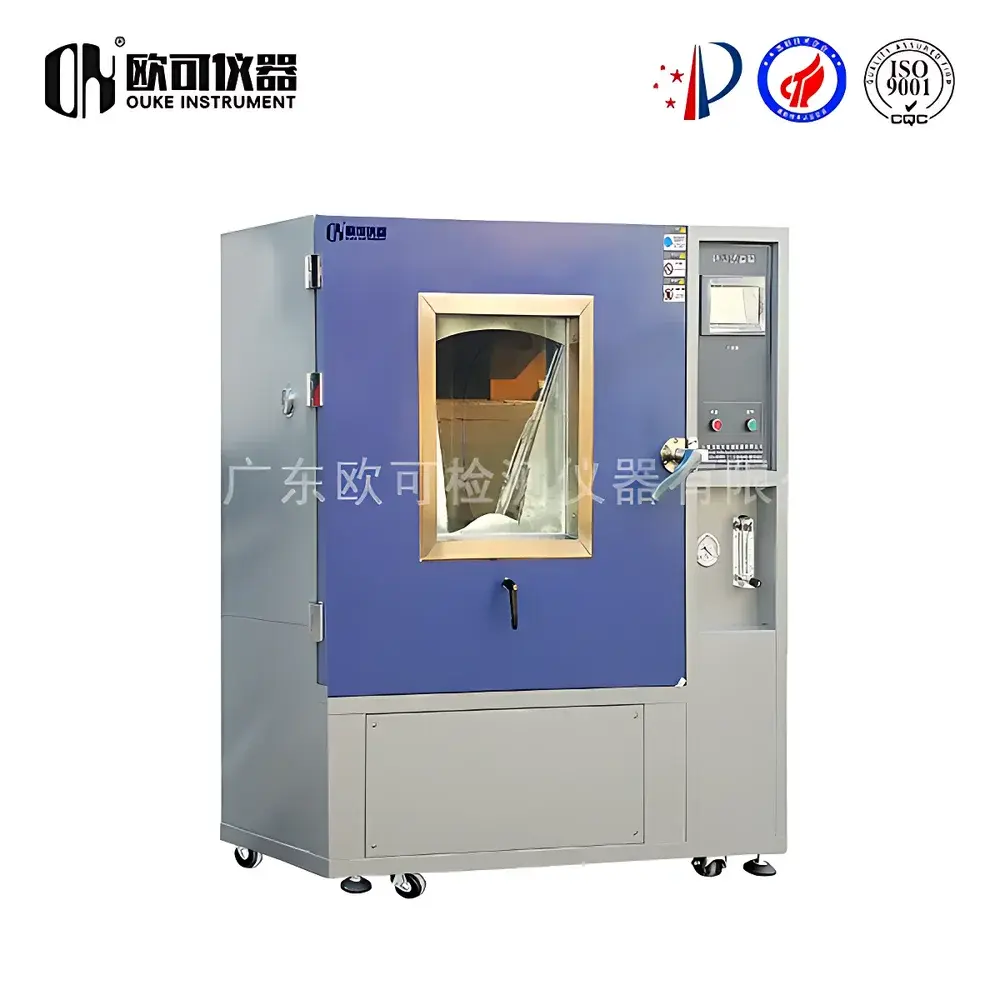
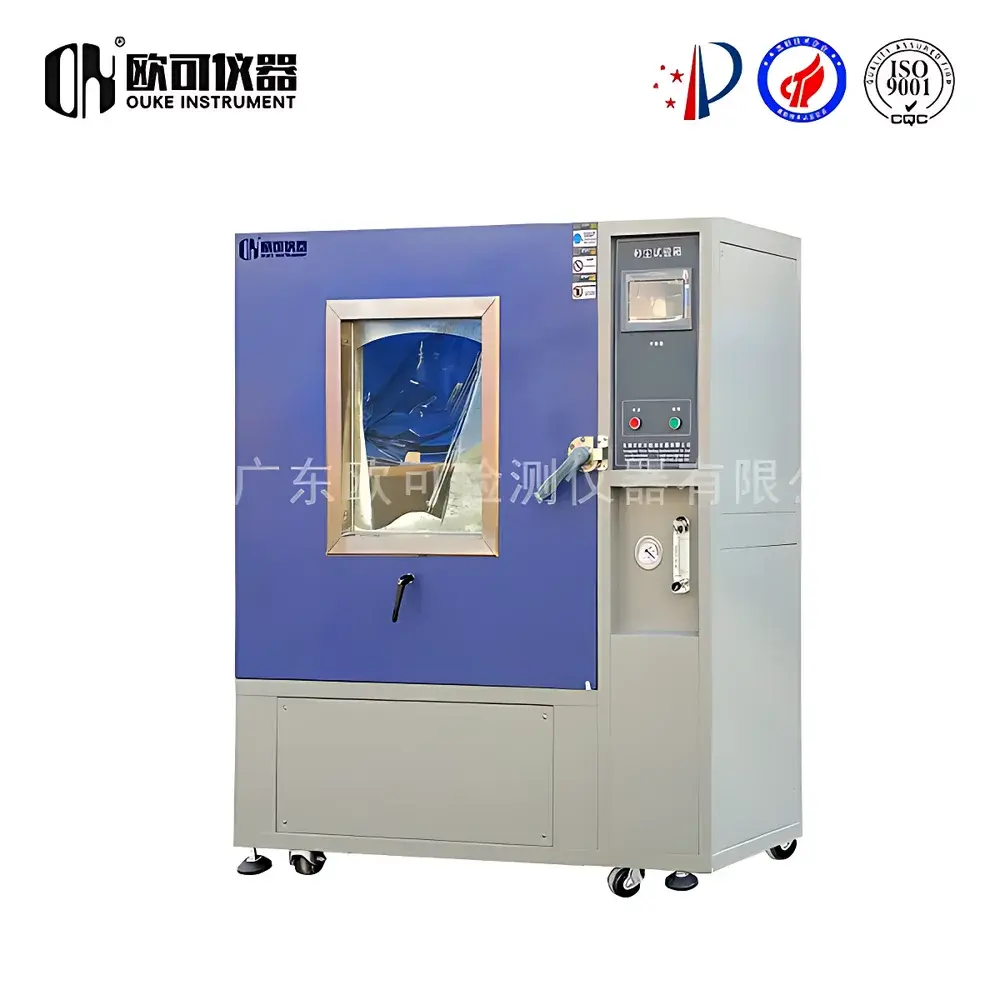
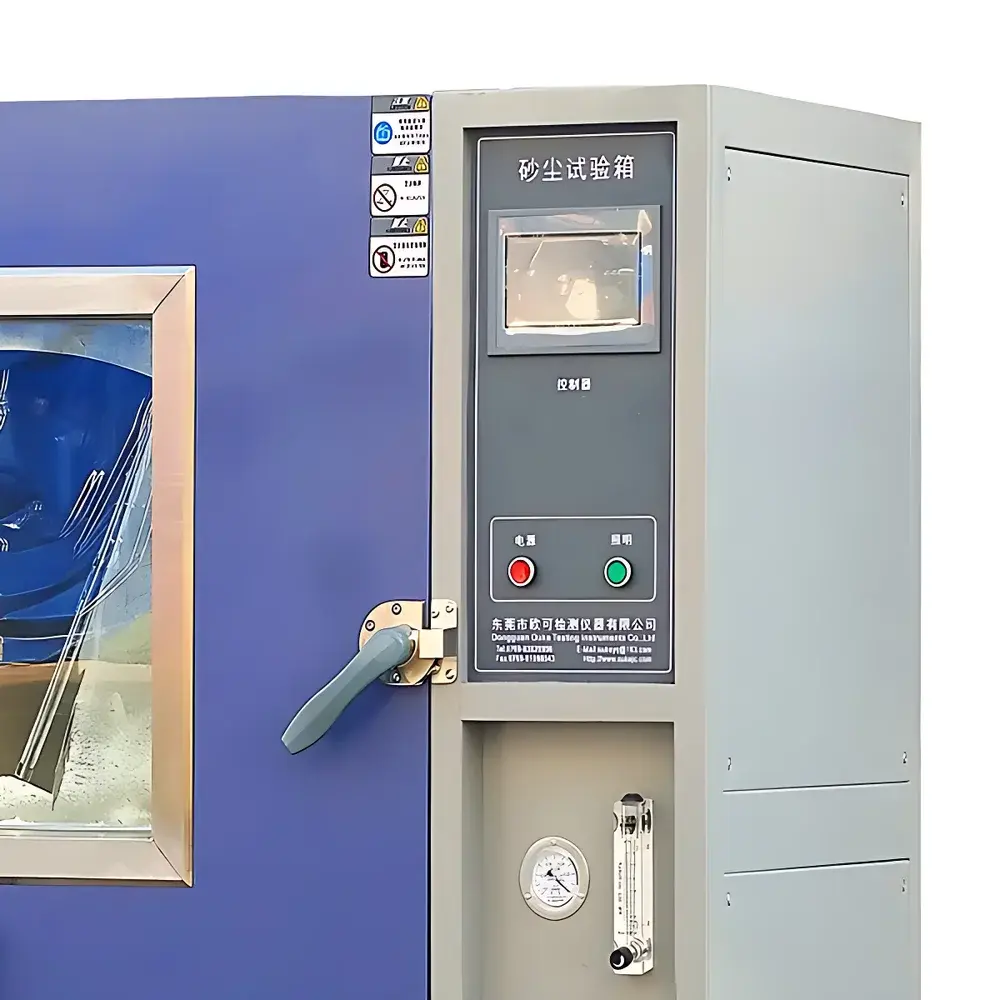
- Programmable PLC-based control system with 7-inch color touchscreen interface for precise parameter setting and real-time monitoring of air velocity, dust concentration, test duration, and cycle sequencing.
- Dual operational modes: adjustable blow-dust mode (8.9 ± 1.2 m/s, 0.1–10.6 ± 7 g/m³) and high-velocity blow-sand mode (0–29 m/s, 1.1 ± 0.25 to 2.2 ± 0.5 g/m³), enabling compliance with both IP5X (limited dust ingress) and IP6X (dust-tight) validation requirements.
- Integrated rotating sample turntable (360° continuous rotation, load capacity up to 50 kg), programmable speed (1–10 rpm), ensuring uniform particulate exposure across all surfaces during IP6X testing per IEC 60529 Clause 14.2.3.
- Stainless-steel interior chamber (SUS304) with smooth, non-porous finish and reinforced observation window (tempered borosilicate glass with anti-scratch coating) for safe visual inspection without compromising seal integrity.
- Closed-loop dust circulation system featuring high-efficiency cyclonic separator, multi-stage filtration (HEPA + activated carbon pre-filter), and automatic dust recovery mechanism—minimizing operator intervention and maintaining stable concentration profiles over extended test durations.
- Calibrated silica-based test dust supply (97–99% crystalline SiO₂, particle size distribution compliant with Arizona Road Dust A2 or ISO 12103-1 A4 specifications) with gravimetric dosing accuracy ≤ ±3% of setpoint.
Sample Compatibility & Compliance
The OK-HC-901 accommodates samples up to 900 mm × 900 mm × 900 mm (W × D × H) and supports electrical power feedthroughs (optional) for in-situ functional evaluation during testing. It meets structural and procedural requirements for third-party certification audits under ISO/IEC 17025-accredited laboratories. All operational parameters—including airflow velocity, dust mass concentration, and rotational timing—are traceable via internal data logging (timestamped, non-volatile memory) and exportable in CSV format. The system design incorporates interlocked door safety switches, differential pressure monitoring, motor overload protection, and emergency stop circuitry—ensuring full alignment with IEC 61000-4-27 and EN 60204-1 safety directives.
Software & Data Management
The embedded controller firmware supports configurable test profiles, multi-step sequences (e.g., alternating blow-dust/blow-sand phases), and automatic pass/fail flagging based on user-defined thresholds. Data logs include time-stamped records of measured air velocity (hot-wire anemometer), dust concentration (laser scattering sensor), chamber temperature (±0.5 °C), and rotational position. Exported datasets are compatible with LIMS integration and support audit-ready reporting per GLP and GMP documentation frameworks. Optional Ethernet/WiFi connectivity enables remote monitoring and centralized fleet management across multiple chambers in shared lab environments.
Applications
This chamber is routinely deployed in R&D and QA/QC labs for evaluating the environmental resilience of automotive lighting assemblies, EV battery enclosures, outdoor telecom cabinets, military-grade connectors, aerospace avionics housings, and industrial IoT sensors. Typical use cases include verification of sealing gasket integrity under cyclic abrasion, assessment of optical lens haze accumulation, validation of thermal management filter clogging resistance, and qualification of ingress protection for smart city infrastructure deployed in arid regions. It also serves as a critical tool for failure mode analysis (FMEA) in dust-induced contact resistance increase, MEMS sensor drift, and relay contact erosion.
FAQ
Does the OK-HC-901 support automated calibration verification?
Yes—integrated sensor self-diagnostic routines and optional NIST-traceable calibration kits enable periodic verification of airflow and concentration measurement subsystems.
Can the chamber operate continuously for extended durability testing?
It is rated for uninterrupted operation up to 72 hours per cycle, with thermal management and dust filtration systems designed for sustained particulate loading without performance degradation.
Is Arizona Test Dust (A2/A4) compatible with the dust delivery system?
Yes—the metering and dispersion subsystem is validated for use with ISO 12103-1 certified Arizona Road Dust grades A2 (coarse) and A4 (fine), as well as custom silica blends meeting 97–99% SiO₂ purity requirements.
What safety certifications does the unit carry?
The chamber conforms to CE marking requirements (EMC Directive 2014/30/EU and Low Voltage Directive 2014/35/EU), and its electrical architecture complies with UL 61010-1 third-party recognition criteria.
Is humidity control available as an option?
A humidity conditioning module (range: 10–70% RH, ±3% RH accuracy) can be factory-integrated to simulate combined hot-dry or hot-humid sandstorm environments per MIL-STD-810G Method 510.6, Change 1.



