
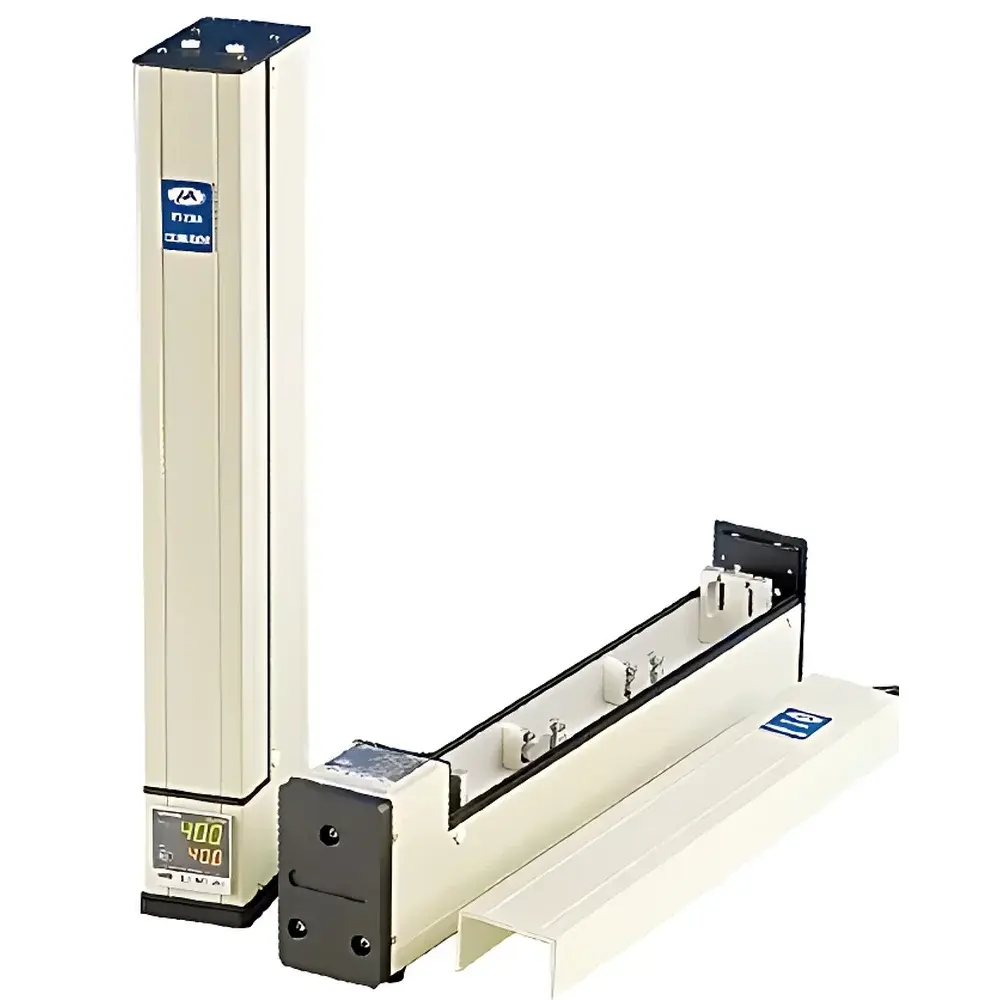
HengAo HT-230A Column Oven for HPLC Systems
| Brand | Tianjin HengAo |
|---|---|
| Origin | Tianjin, China |
| Manufacturer Type | Direct Manufacturer |
| Model | HT-230A |
| Temperature Control Range | Ambient +5°C to 80°C |
| Cooling | None (Heating-Only) |
| Control Accuracy | ±0.1°C |
| Heating Technology | TPC & Thin-Film Heater |
| Controller | Imported PID Digital Temperature Controller |
| Safety Features | Over-Temperature Alarm, Open-Circuit Protection |
| Mounting | Modular Side-Mount Design for HPLC Stacks |
| Orientation | Vertical or Horizontal Installation |
| Port Configuration | Inlet/Outlet Ports on Top, Bottom, Left, and Right |
Overview
The HengAo HT-230A Column Oven is a precision-engineered heating-only thermal management system designed specifically for high-performance liquid chromatography (HPLC) and ultra-high-performance liquid chromatography (UHPLC) platforms. Unlike ambient-compensated enclosures or passive insulation sleeves, the HT-230A actively maintains column temperature via a closed-loop PID-controlled heating architecture—enabling consistent thermal equilibrium across analytical and preparative columns. Temperature stability directly influences retention time reproducibility, peak symmetry, and selectivity in reversed-phase, HILIC, and ion-exchange separations. By eliminating ambient drift and minimizing axial temperature gradients along the column length, the HT-230A supports method robustness required under ICH Q2(R2) and USP <621> guidelines. Its modular footprint integrates seamlessly into standard HPLC stacks—positioned adjacent to pumps and detectors—without requiring structural reconfiguration of existing benchtop layouts.
Key Features
- PID digital temperature controller with imported sensing elements ensures ±0.1°C thermal stability over the full operating range (ambient +5°C to 80°C)
- TPC (Thick-Film Printed Circuit) and thin-film resistive heating elements deliver uniform thermal distribution and extended service life (>10,000 hours MTBF)
- Four-directional fluid port access (top, bottom, left, right) minimizes extra-column volume and suppresses band broadening caused by tubing-induced dispersion
- Bi-directional mounting capability: vertically upright for space-constrained HPLC racks or horizontally卧放 (flat orientation) for integrated instrument aesthetics and ergonomic servicing
- Dual safety circuitry includes independent over-temperature cutoff (hardware-latched alarm at 90°C) and heater open-circuit detection with visual/audible alert
- Front-panel LED display with intuitive button interface enables rapid setpoint entry, real-time temperature readout, and status diagnostics without software dependency
Sample Compatibility & Compliance
The HT-230A accommodates standard stainless-steel, PEEK, and fused-silica HPLC columns ranging from 2.1 mm to 4.6 mm ID and up to 250 mm length. It supports both analytical-scale (e.g., 150 × 4.6 mm, 5 µm C18) and narrow-bore configurations (e.g., 50 × 2.1 mm, 1.7 µm BEH C18), with mechanical clamping optimized for low-vibration retention. No active cooling mechanism is integrated; therefore, it complies with ISO 17025:2017 clause 6.4.3 for equipment suitability when used within its specified heating-only envelope. The unit meets CE electromagnetic compatibility (EMC) Directive 2014/30/EU and Low Voltage Directive 2014/35/EU. While not certified to FDA 21 CFR Part 11, its deterministic analog control architecture allows full audit-trail documentation when paired with validated LIMS or CDS systems supporting GLP/GMP workflows.
Software & Data Management
The HT-230A operates as a standalone hardware module with no embedded firmware, network interface, or proprietary driver requirement. Temperature setpoints and real-time readings are managed exclusively via the front-panel interface—eliminating cybersecurity risks associated with connected instrumentation. For laboratories implementing electronic records per ALCOA+ principles, external data loggers (e.g., Omega OM-DAQPRO-5300) may be connected to the analog 0–5 V output signal (calibrated to 0–100°C) for time-stamped traceability. All operational parameters—including power-on duration, alarm events, and thermal ramp profiles—are retained in non-volatile memory and retrievable via serial diagnostic mode (RS-232 optional accessory).
Applications
- Method development and transfer where column temperature is a critical quality attribute (CQA), particularly in pharmaceutical impurity profiling per ICH Q5C
- Stabilizing retention times across multi-day sequence runs under variable laboratory HVAC conditions
- Enabling elevated-temperature separations for viscous mobile phases (e.g., >40% acetonitrile/water blends) without compromising column backpressure integrity
- Supporting gradient elution consistency in LC-MS coupling by reducing solvent vaporization at the column outlet
- Extending column lifetime through controlled thermal cycling avoidance during system idle periods
FAQ
Does the HT-230A support refrigeration or sub-ambient operation?
No. The HT-230A is a heating-only column oven. Its operational range begins at ambient +5°C and extends to 80°C. For sub-ambient applications, a separate thermoelectric or compressor-based column chiller is required.
Can the HT-230A be integrated with third-party HPLC control software?
Not natively. It lacks USB, Ethernet, or GPIB interfaces. Integration requires external analog-to-digital conversion and custom scripting within the host CDS platform.
What column dimensions are mechanically supported?
Standard 1/16″ OD stainless-steel or PEEK tubing up to 250 mm length and 4.6 mm ID. Coiled columns must maintain ≥5 cm minimum bend radius to avoid flow restriction.
Is calibration certificate included with shipment?
A factory-as-tested verification report (not NIST-traceable) is provided. Users performing regulated work should conduct initial and periodic calibration using a calibrated platinum RTD probe per ASTM E74-22 Annex A1.
How does the four-port design reduce extra-column volume?
By enabling direct inlet/outlet routing without 90° adapters or extended tubing loops, the configuration limits dwell volume to ≤15 µL—critical for UHPLC systems operating below 100 µL/min flow rates.





