
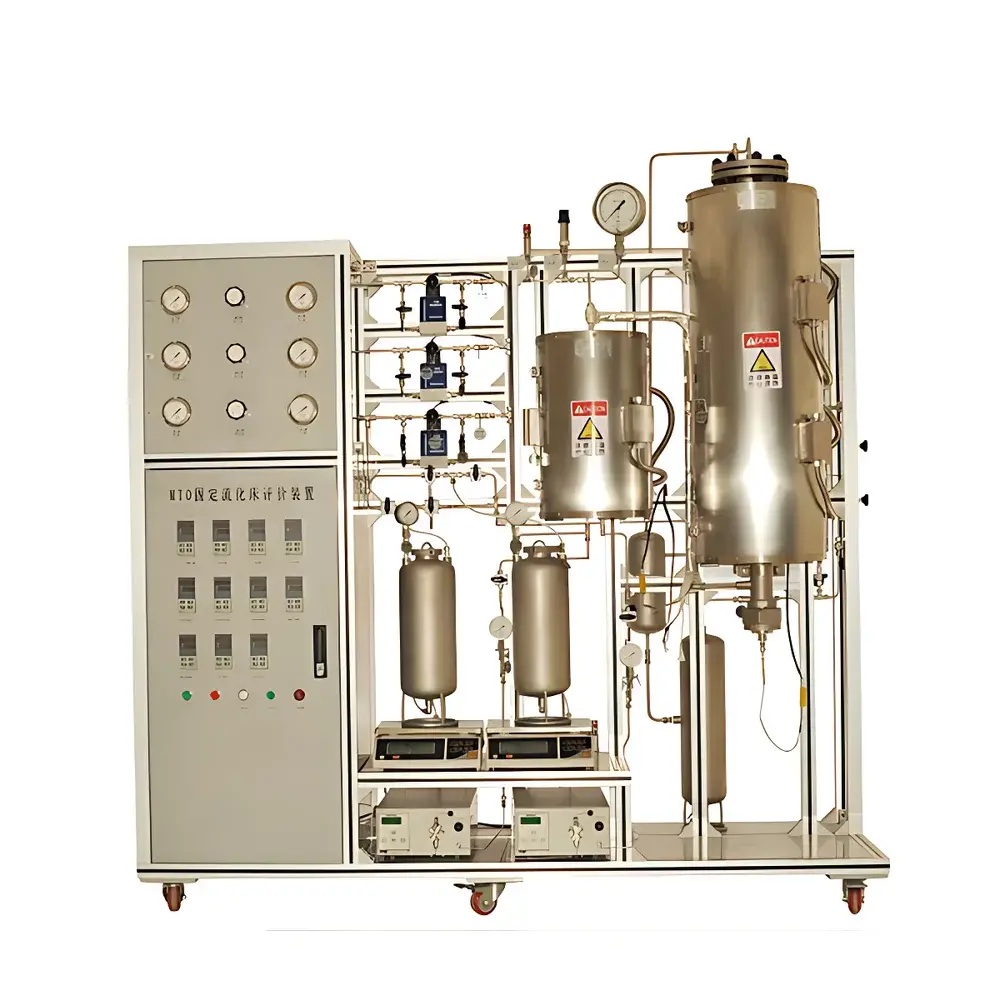
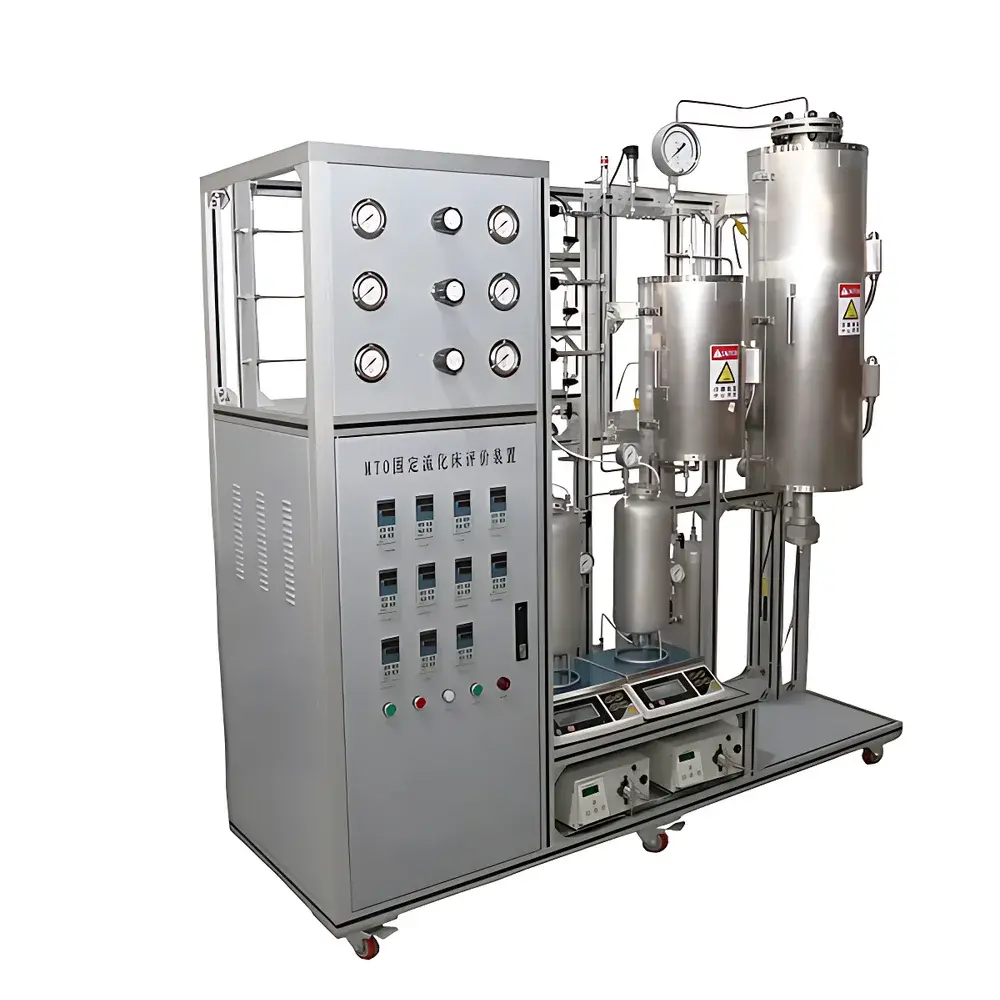
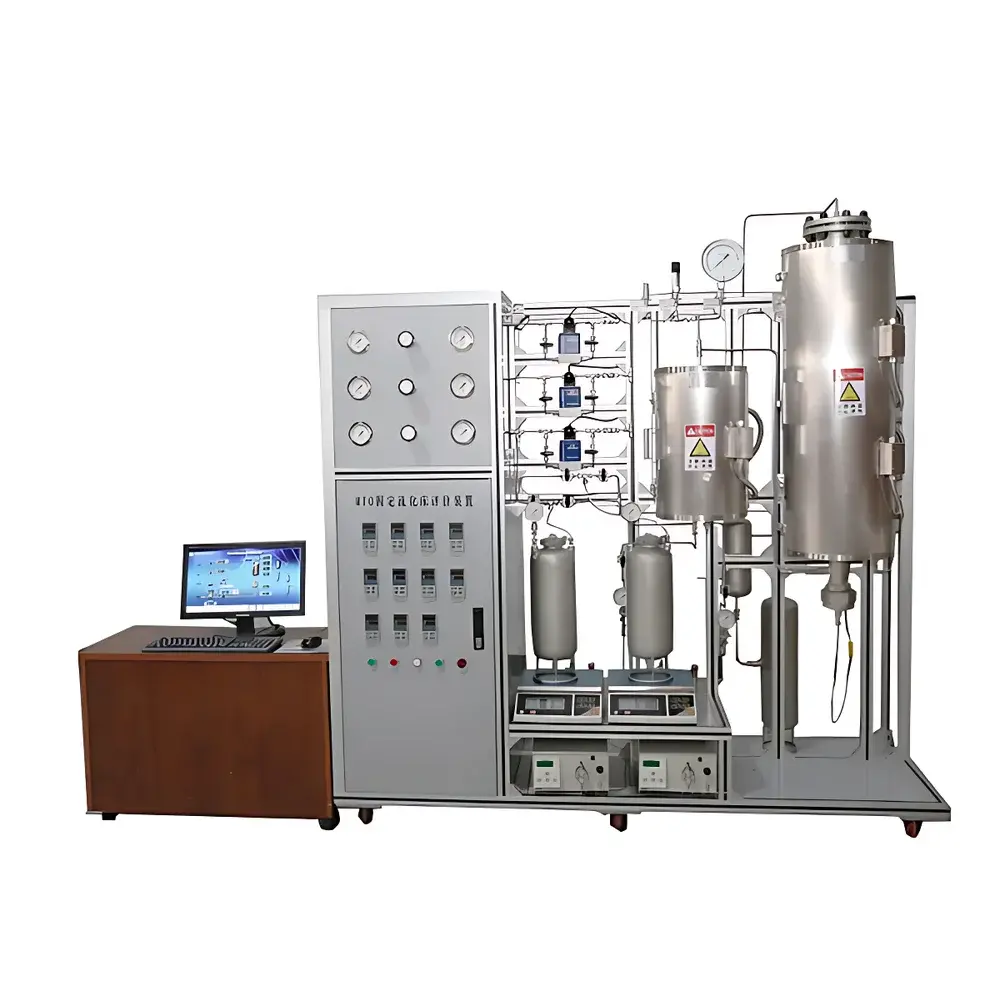
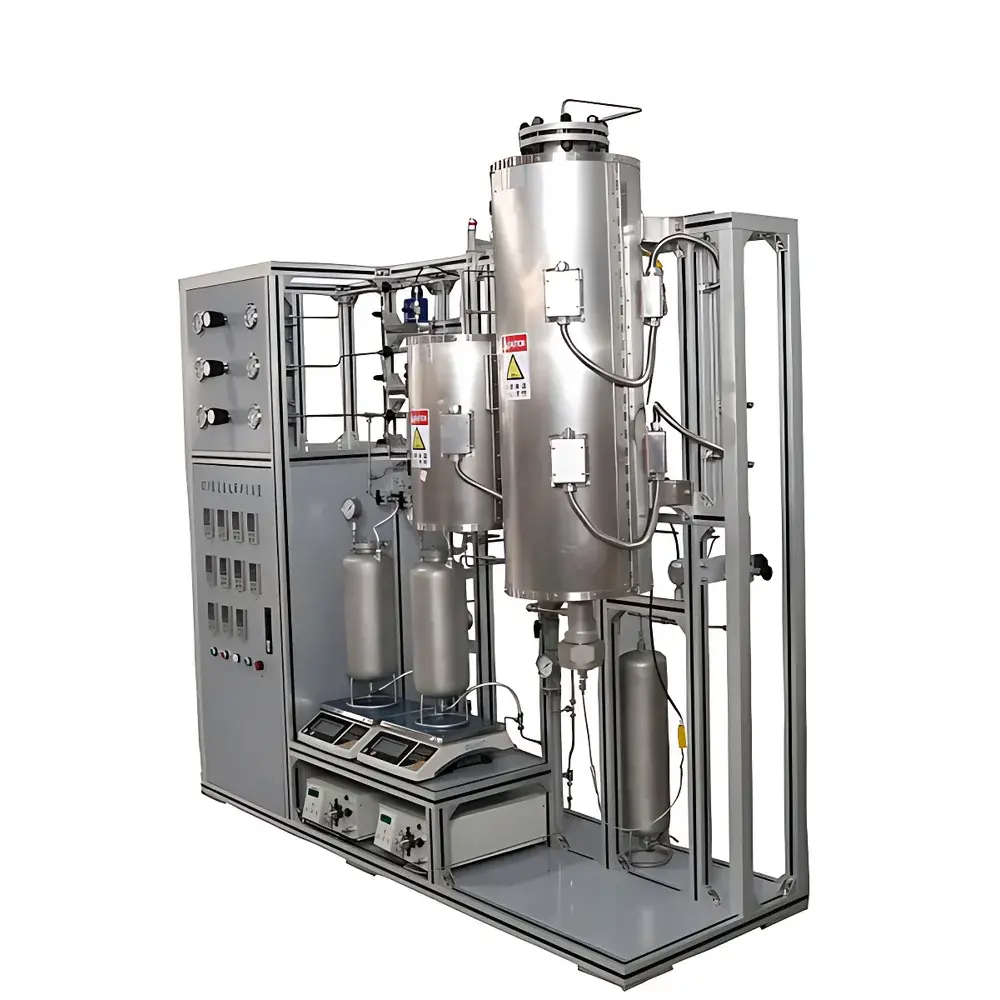
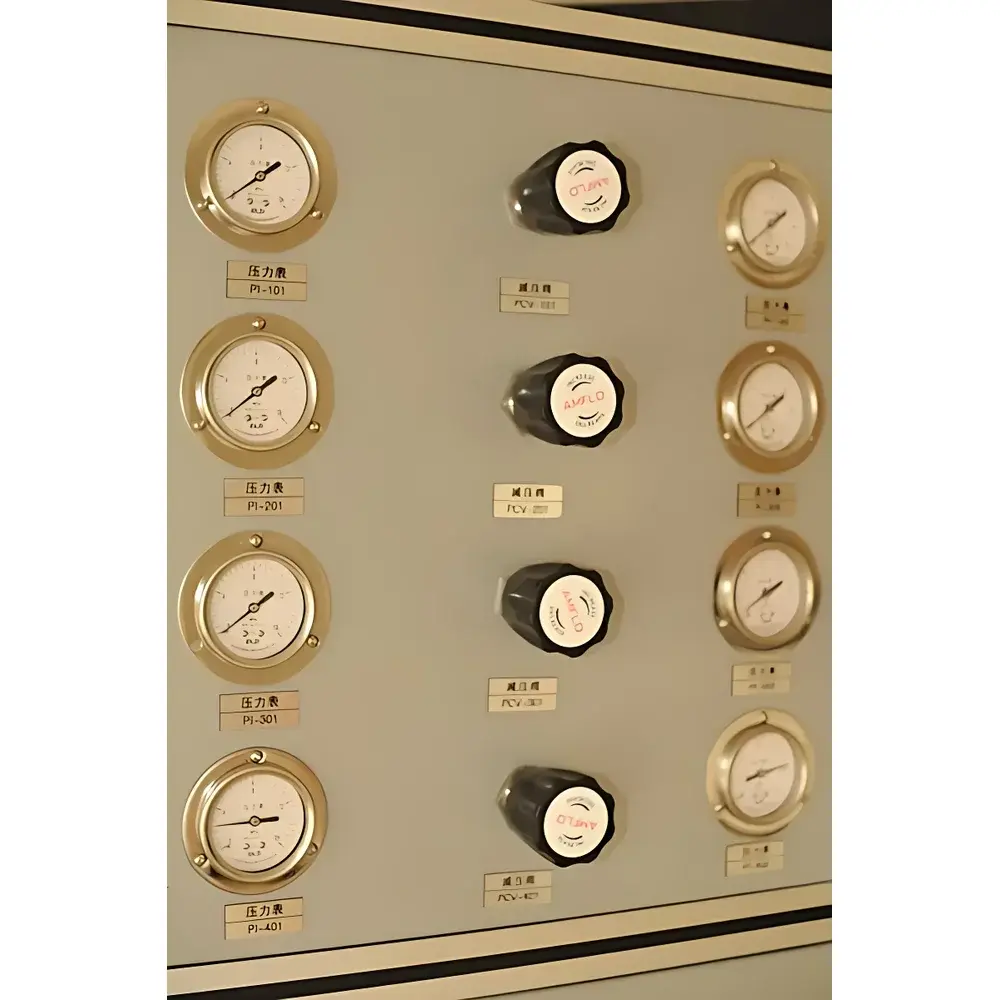
Hengjiu HJMTO Fixed-Bed Fluidized Catalytic Reactor System
| Brand | Hengjiu (Henven) |
|---|---|
| Origin | Beijing, China |
| Manufacturer Type | Direct Manufacturer |
| Model | HJMTO |
| Catalyst Loading Capacity | 150 g |
| Maximum Operating Temperature | 700 °C |
| Maximum Operating Pressure | 1.5 MPa |
| Gas Flow Range | 0–500 mL/min |
| Construction Material | Corrosion-Resistant Alloy (HF-Compatible) |
| Control Interface | Integrated Industrial LCD Touchscreen |
| Automation Level | Fully Automated with Closed-Loop Sensor Feedback |
| Temperature Zoning | Multi-Segment Programmable Linear Ramp & High-Stability Isothermal Hold |
| Safety Systems | Independent Dual-Channel Temperature/Pressure Monitoring with Threshold-Based Alarm and Auto-Intervention |
Overview
The Hengjiu HJMTO Fixed-Bed Fluidized Catalytic Reactor System is a purpose-engineered laboratory-scale evaluation platform designed for mechanistic studies, catalyst screening, and process parameter optimization in methanol-to-olefins (MTO) chemistry. Unlike conventional fixed-bed reactors, the HJMTO integrates controlled fluidization dynamics within a segmented fixed-catalyst bed architecture—enabling precise simulation of industrial-scale hydrodynamic and thermal boundary conditions while retaining catalyst structural integrity. The system operates on a hybrid principle: it maintains catalyst particles in a quasi-fluidized state under precisely regulated gas velocity and pressure gradients, thereby enhancing interphase mass transfer and minimizing hot-spot formation during exothermic MTO conversion. Its core reactor vessel is fabricated from HF-resistant superalloy (e.g., Hastelloy C-276 or equivalent), validated for continuous exposure to anhydrous hydrogen fluoride—a critical requirement for zeolite-based MTO catalyst activation and regeneration protocols. All wetted surfaces comply with NACE MR0175/ISO 15156 standards for sour service environments.
Key Features
- Corrosion-engineered reactor assembly with full compatibility for hydrogen fluoride (HF), HCl, and other aggressive process gases—validated per ASTM G31 immersion testing protocols.
- Multi-zone electrically heated reactor tube with independent PID-controlled segments (up to 5 zones), supporting linear ramp rates from 0.1 to 10 °C/min and isothermal stability of ±0.5 °C over 96-hour continuous operation.
- Integrated high-fidelity sensor suite: Pt100 RTDs (IEC 60751 Class A) at 3 axial positions; piezoresistive pressure transducers (0–2.5 MPa, ±0.1% FS); mass flow controllers (Brooks 5850E or equivalent, NIST-traceable calibration).
- Dedicated Renmai Fluidization Management System (RFMS)—a deterministic real-time control firmware layer that synchronizes gas distribution, backpressure regulation, and thermal profiling based on live sensor fusion inputs.
- Fail-safe architecture featuring redundant temperature and pressure monitoring channels, hardware-level emergency shutdown (ESD) logic, and automatic vent-and-purge sequence initiation upon threshold violation.
- Rigid monocoque stainless-steel frame (AISI 304, electropolished finish) with IP54-rated operator panel, compliant with IEC 61000-6-2 EMC immunity requirements.
Sample Compatibility & Compliance
The HJMTO accommodates powdered, extrudate, or pelletized solid catalysts—including SAPO-34, ZSM-5, and modified beta-zeolites—with nominal particle size distributions ranging from 20–200 µm. Its fluidization regime is tunable across Geldart Group B and D classifications via adjustable superficial gas velocity (0.01–0.5 m/s). All process documentation—including calibration certificates, material traceability reports, and FAT/SAT protocols—adheres to ISO/IEC 17025:2017 laboratory competence criteria. The system supports GLP-compliant data acquisition when paired with optional 21 CFR Part 11–enabled software modules (audit trail, electronic signature, role-based access control).
Software & Data Management
The embedded Linux-based HMI runs Renmai OS v4.2, offering intuitive touchscreen navigation with multi-language support (English, German, Chinese). Real-time data streams (temperature, pressure, flow, differential pressure across catalyst bed) are logged at 10 Hz into SQLite databases with configurable retention policies. Export formats include CSV, HDF5, and ASTM E1447-compliant .tdms. Optional integration with LabVIEW™, MATLAB® Runtime, or DeltaV™ DCS environments is available via Modbus TCP or OPC UA interfaces. Raw sensor outputs undergo on-board linearization, cold-junction compensation, and zero-drift correction prior to storage.
Applications
- Kinetic modeling of MTO reaction pathways under industrially relevant WHSV (0.5–10 h⁻¹) and P/T conditions.
- Catalyst deactivation profiling via time-on-stream (TOS) analysis with integrated online GC sampling port (optional).
- Hydrothermal stability assessment of hierarchical zeolites under cyclic steaming conditions (up to 700 °C, 100% steam partial pressure).
- Fluidization hydrodynamics validation using pressure fluctuation spectral analysis (standardized per ISO 4572).
- Process safety evaluation including runaway reaction calorimetry coupling (compatible with Mettler Toledo RC1mx interface).
FAQ
Is the reactor certified for hydrogen fluoride service?
Yes—the entire process train (reactor tube, fittings, valves, and flow paths) is constructed from HF-resistant alloys and independently verified per NACE MR0175/ISO 15156 Annex A requirements.
Can the system operate under vacuum or inert purge conditions?
Yes—integrated backpressure regulator and dual-range pressure control enable operation from 10 mbar (absolute) to 1.5 MPa, with automated nitrogen/argon purge sequences programmable via HMI.
What level of automation does the Renmai Fluidization Management System provide?
RFMS executes closed-loop control of fluidization quality index (FQI), bed expansion ratio, and interstitial velocity in real time using pressure gradient differentials and capacitance-based voidage sensing (optional add-on).
Are calibration records and material certifications included with delivery?
Yes—each unit ships with full FAT documentation, NIST-traceable sensor calibration certificates, mill test reports (MTRs) for all pressure-retaining components, and ISO 9001-compliant manufacturing records.
Does the system support remote monitoring and diagnostics?
Yes—via optional Ethernet/Wi-Fi module with TLS 1.2-secured web interface, enabling secure remote access to live trends, alarm history, and diagnostic logs without compromising network isolation requirements.



