
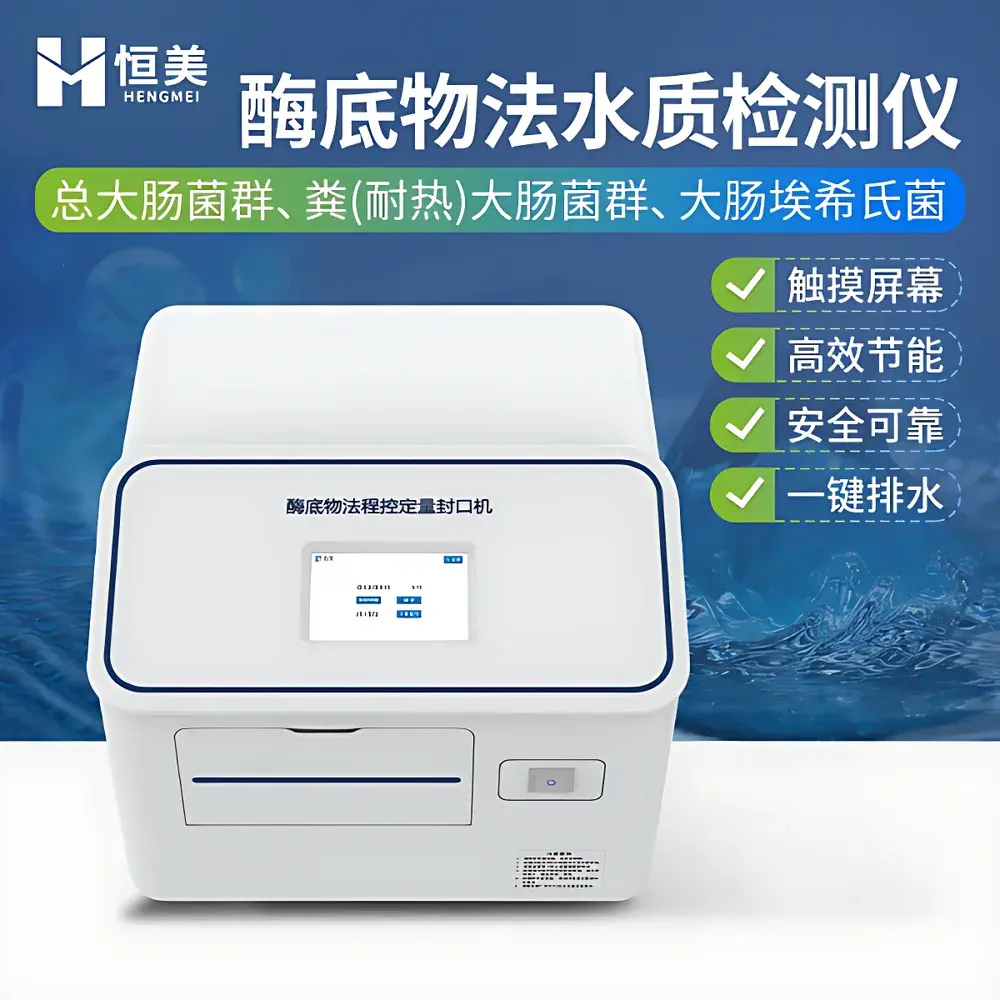
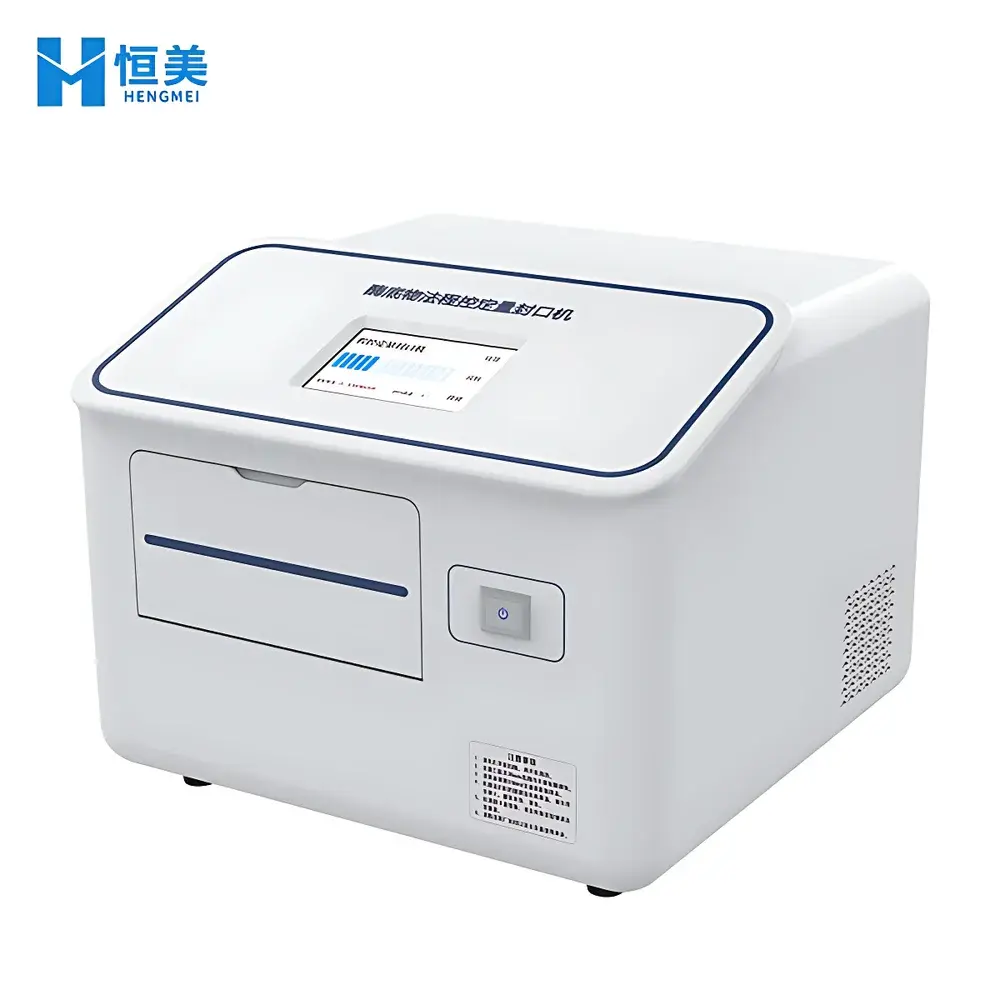
Hengmei HM-FKJ Programmable Quantitative Sealer for Enzyme-Substrate Method Microbial Detection in Water
| Brand | Hengmei |
|---|---|
| Origin | Shandong, China |
| Manufacturer Type | OEM Manufacturer |
| Product Category | Domestic |
| Model | HM-FKJ |
| Instrument Type | Benchtop |
| Sample Types | Drinking water, raw water, bottled water, reclaimed water, secondary supply water, distribution system water, wastewater, food processing water, livestock water, medical water |
| Detection Range | 1–2419.6 MPN/100 mL |
| Detection Speed | 24-hour incubation |
| Detection Accuracy | High reproducibility per ISO 9308-1 and EPA 1604 equivalents |
| Weight | 14.2 kg |
| Dimensions (L×W×H) | 42 × 41 × 33 cm |
| Preheating Time | ≤3 min |
| Noise Level | <48 dB(A) |
| External Housing Temperature | <40 °C |
| Sealing Time | ≤12 s per 51-well or 97-well Quanti-Tray®-compatible plate |
| Operating Voltage | AC 220 V ±10%, 50 Hz |
| Ambient Operating Temperature | −10 °C to 50 °C |
Overview
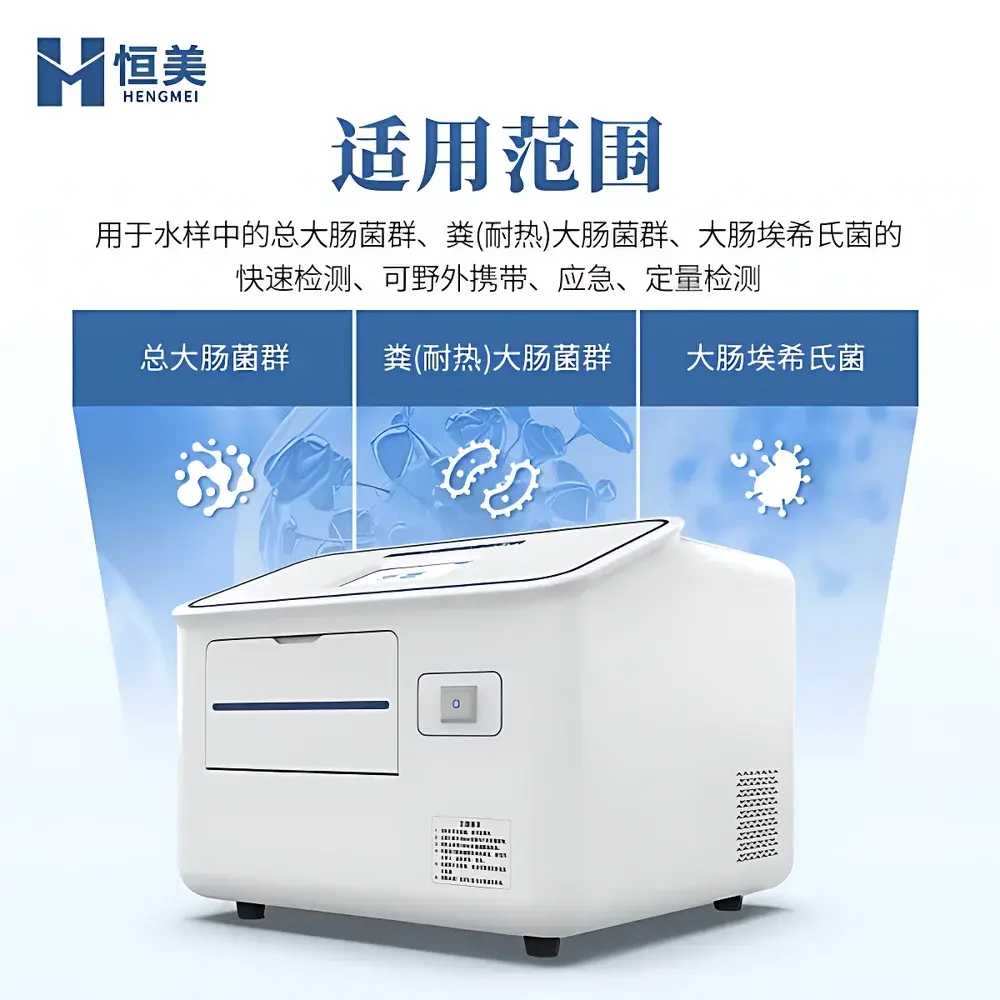
The Hengmei HM-FKJ Programmable Quantitative Sealer is an engineered benchtop instrument designed specifically for the enzyme-substrate method (ESM) of microbial enumeration in water samples. It performs precise, thermally controlled heat sealing of standardized 51-well and 97-well quantitative detection trays—compatible with internationally recognized Quanti-Tray®-format plates—enabling rapid, reproducible quantification of total coliforms, thermotolerant (fecal) coliforms, and Escherichia coli via chromogenic and fluorogenic substrate hydrolysis. Unlike membrane filtration or multi-tube fermentation, ESM relies on enzymatic activity (β-galactosidase for coliforms; β-glucuronidase for E. coli) under defined incubation conditions (36 ±1 °C or 44.5 ±0.2 °C), producing colorimetric (yellow) or fluorescent (UV-excitable) endpoints directly correlated to viable cell concentration. The HM-FKJ eliminates manual sealing variability, ensures uniform thermal contact across all wells, and supports full compliance with ISO 9308-1, ISO 16266, EPA Method 1604, and Chinese national standards including GB/T 5750.12–2023 and HJ 1001–2018.
Key Features
- Programmable dual-mode sealing optimized for both 51-well (0–200 MPN/100 mL) and 97-well (0–2419.6 MPN/100 mL) quantitative trays, with automatic parameter recall and real-time temperature feedback control.
- Intuitive 5.7-inch TFT touch interface with multilingual support (English default), on-screen error diagnostics, step-by-step operation guidance, and built-in audit trail logging for GLP/GMP traceability.
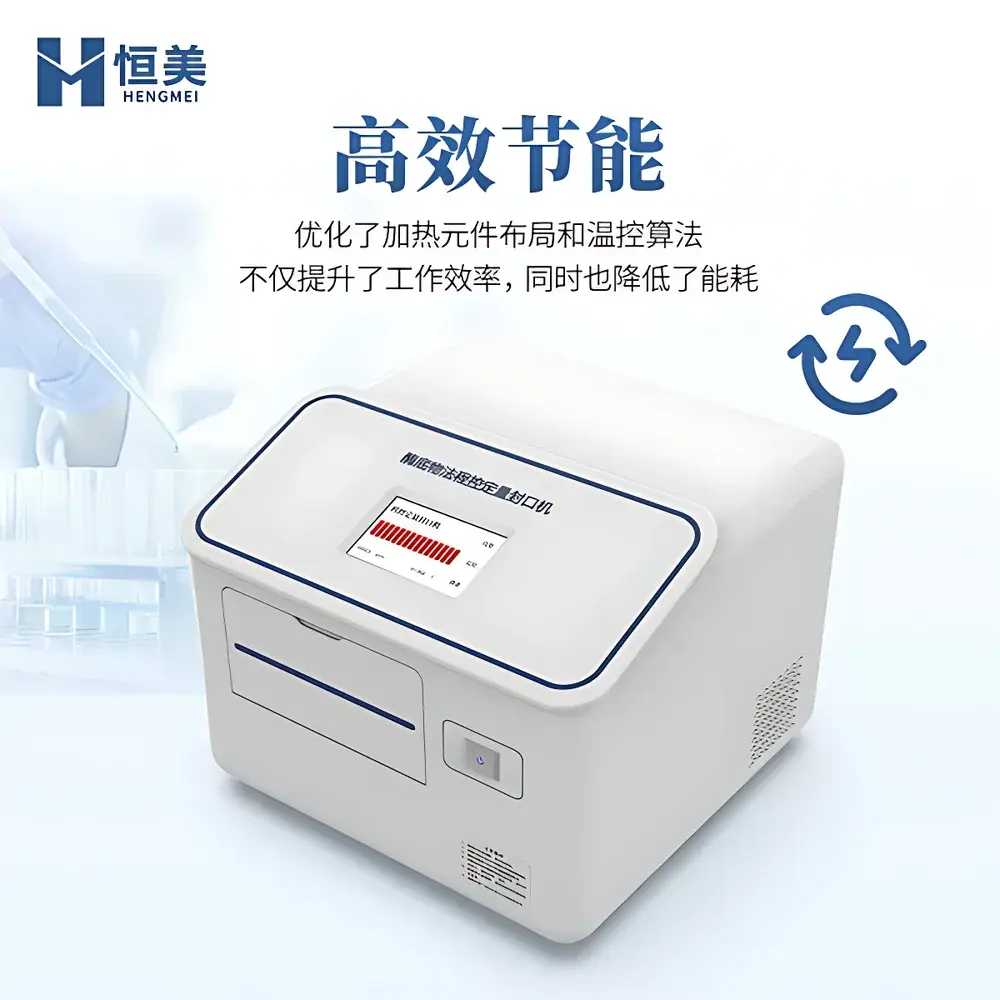
- Energy-efficient heating architecture featuring low-thermal-mass ceramic rollers and adaptive PID temperature regulation—achieving stable sealing surface temperature (±0.5 °C) within ≤3 minutes and reducing power consumption by >30% versus legacy resistive systems.
- Robust mechanical design with reinforced aluminum alloy chassis, non-slip rubber feet, and insulated external housing (<40 °C surface temperature during continuous operation).
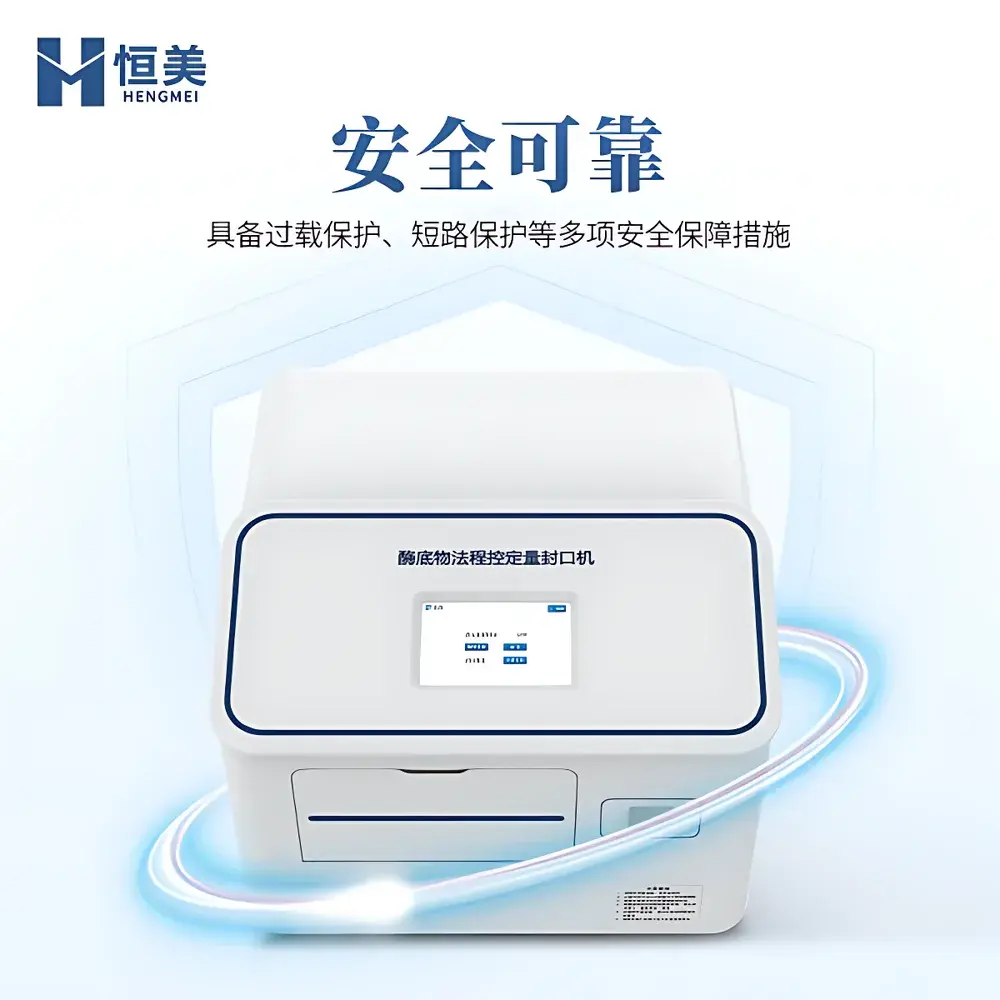
- Integrated safety protocols including overcurrent protection, short-circuit cutoff, auto-shutdown on lid-open detection, and thermal runaway prevention.
- One-touch functions: tray counter reset, energy-saving standby activation, emergency cooling purge, and cleaning mode for residue-free maintenance between batches.
Sample Compatibility & Compliance
The HM-FKJ supports a broad spectrum of aqueous matrices without pre-filtration or dilution: potable water, groundwater, surface water, treated wastewater, bottled mineral water, cooling tower water, aquaculture effluent, and pharmaceutical process water. Its sealing performance has been validated for use with ONPG-MUG-based minimal media (e.g., Colilert®, Enterolert® equivalents) and meets critical regulatory requirements for environmental and public health laboratories. It fulfills the instrumental specifications outlined in GB/T 5750.12–2023 (Method 2: Enzyme-Substrate Technique), CJ/T 51–2018 (Thermotolerant Coliforms), HJ 1001–2018 (Total Coliforms, Fecal Coliforms, and E. coli), and aligns with ISO/IEC 17025 documentation expectations for equipment qualification. Sealed trays demonstrate zero leakage or well deformation after 24 h incubation at 36 °C or 44.5 °C, ensuring integrity of MPN statistical interpretation per ASTM D5392–93 guidelines.
Software & Data Management
The HM-FKJ operates standalone but integrates seamlessly into laboratory information management systems (LIMS) via optional RS-232 or USB-to-serial output. All sealing events—including date/time stamp, tray type selected, operator ID (configurable), ambient temperature, and final sealing temperature—are stored locally in non-volatile memory for ≥10,000 cycles. Audit logs comply with FDA 21 CFR Part 11 requirements when paired with validated LIMS software, supporting electronic signature capability and immutable record retention. Firmware updates are performed via secure USB drive with version-controlled checksum verification. No cloud connectivity or proprietary drivers required—ensuring data sovereignty and compatibility with air-gapped lab networks.
Applications
- Routine compliance monitoring of municipal drinking water supplies per national regulatory frameworks (e.g., China’s Ministry of Ecology and Environment and National Health Commission mandates).
- Emergency response testing during flood events, pipeline breaches, or suspected contamination incidents—field-deployable with portable power inverters (12 V DC input option available).
- Quality assurance in beverage bottling plants, dairy processing facilities, and pharmaceutical water systems where rapid turnaround (<24 h) is essential for release decisions.
- Academic and research laboratories conducting comparative microbiological method validation studies, including inter-laboratory proficiency testing under ISO/IEC 17043.
- Environmental consulting firms performing watershed assessments, recreational water quality surveys, and wastewater treatment efficacy evaluations.
FAQ
Does the HM-FKJ require sterile environment operation?
No. Unlike membrane filtration, ESM with HM-FKJ sealing does not require laminar flow hoods or Class II biosafety cabinets. Ambient lab conditions are sufficient due to sealed-tray containment and substrate specificity.
Can it seal trays from other manufacturers?
Yes—provided they conform dimensionally and thermally to standard 51-well or 97-well Quanti-Tray® specifications (ISO 9308-1 Annex B). Validation testing is recommended for non-Hengmei-branded plates.
What maintenance is required?
Daily wipe-down of sealing rollers with lint-free ethanol cloth; biweekly calibration verification using NIST-traceable temperature probe; annual preventive service including roller alignment check and firmware update.
Is training provided?
Yes—Hengmei offers remote video-based operator certification (2 hours) and on-site installation/commissioning with IQ/OQ documentation support upon request.
How is MPN calculation handled?
The HM-FKJ itself does not compute MPN values. Users apply standard MPN tables (e.g., APHA Table 9221-VI) or validated spreadsheet tools to the number of positive wells recorded post-incubation—consistent with ISO 9308-1 Clause 8.3.
Related Products



