
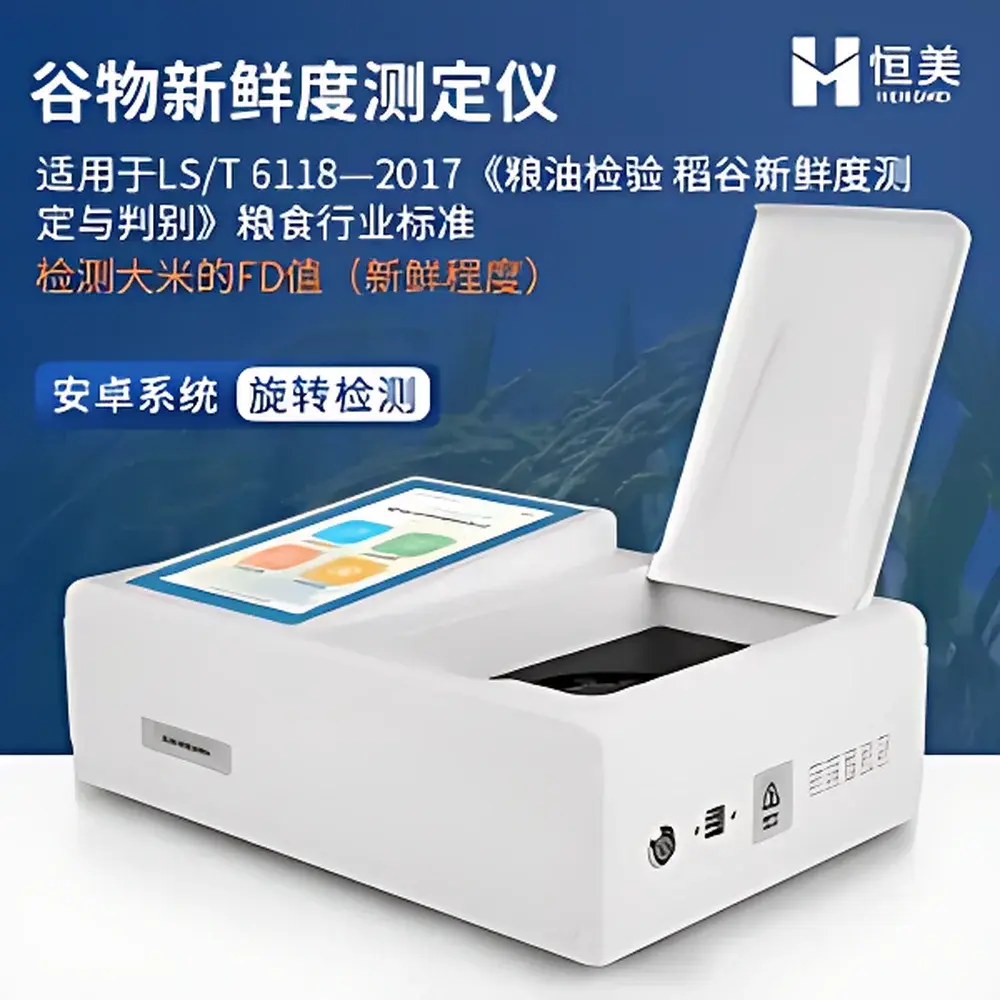

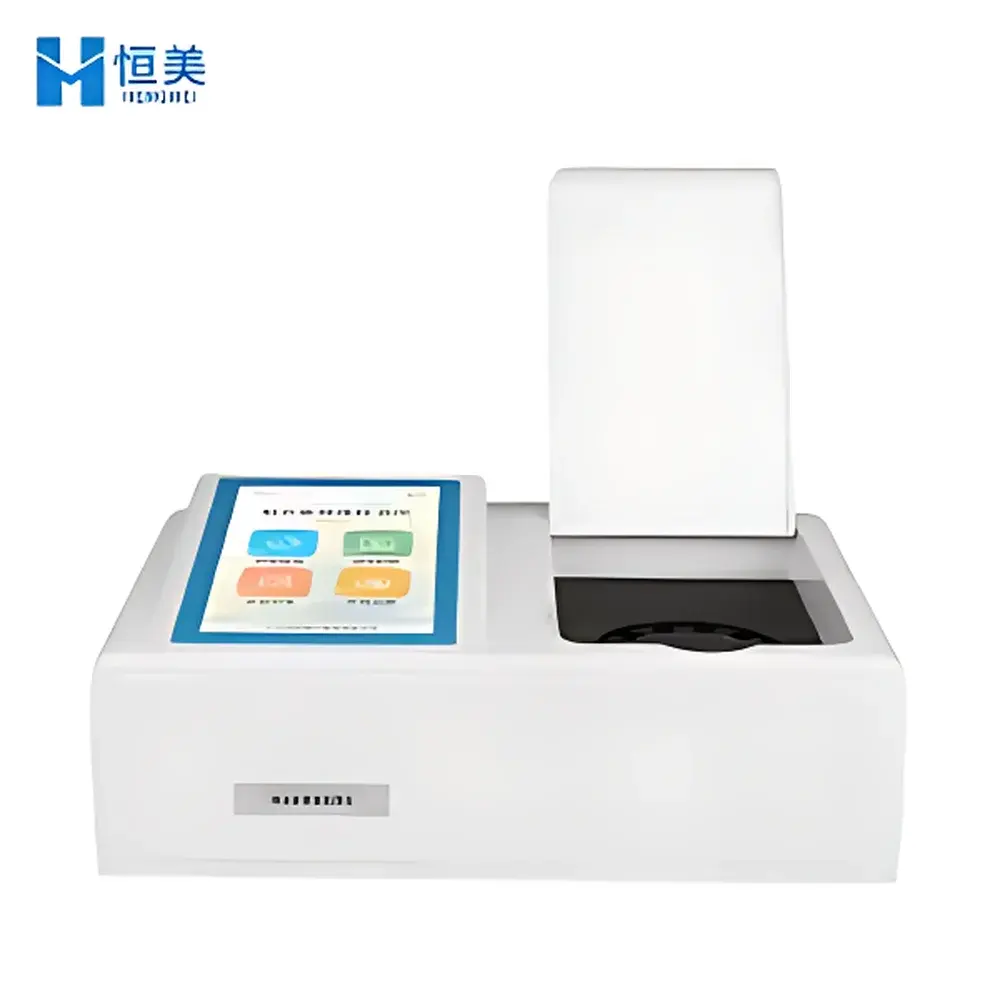
Hengmei HM-GW Rice Freshness Analyzer
| Brand | Hengmei |
|---|---|
| Origin | Shandong, China |
| Manufacturer Type | Direct Manufacturer |
| Country of Origin | China |
| Model | HM-GW |
| Instrument Type | Portable |
| Analysis Time | ≥1 min per 12 samples |
| Sample Weight | 0.5–2 g |
| Measurement Range | 0–100 FD units |
| Repeatability | ≤±2 FD units |
| Operating Temperature | 18–25 °C |
| Operating Humidity | <80% RH (non-condensing) |
| Display | 5-inch capacitive touchscreen |
| Power Supply | AC 200–240 V, 50/60 Hz |
| Detection Principle | Colorimetric quantification of aldehyde/ketone compounds generated during rice aging |
| Compliance | LS/T 6118–2017 |
Overview
The Hengmei HM-GW Rice Freshness Analyzer is a dedicated, portable benchtop instrument engineered for objective, quantitative assessment of rice freshness in accordance with LS/T 6118–2017, the official People’s Republic of China grain industry standard for “Grain and Oil Inspection – Determination and Evaluation of Rice Freshness.” Unlike subjective sensory evaluation or indirect storage-age proxies, this analyzer employs a validated colorimetric methodology grounded in the biochemical degradation pathway of stored paddy rice. During post-harvest aging, lipid peroxidation in rice kernels generates low-molecular-weight aldehydes and ketones—primarily hexanal and malondialdehyde—which react stoichiometrically with proprietary reagents (Rice Freshness Reagent, supplied as part of the system). The resulting chromogenic complex exhibits absorbance intensity linearly proportional to the concentration of oxidation products. The HM-GW precisely measures this absorbance at optimized wavelengths using a stable LED-optical detection module and converts it into an FD (Freshness Degree) score on a standardized 0–100 scale—where higher values indicate greater freshness. Designed for deployment in dynamic operational environments—including grain silos, rice milling facilities, regional quality control laboratories, and commodity inspection stations—the instrument delivers field-grade reliability without sacrificing metrological integrity.
Key Features
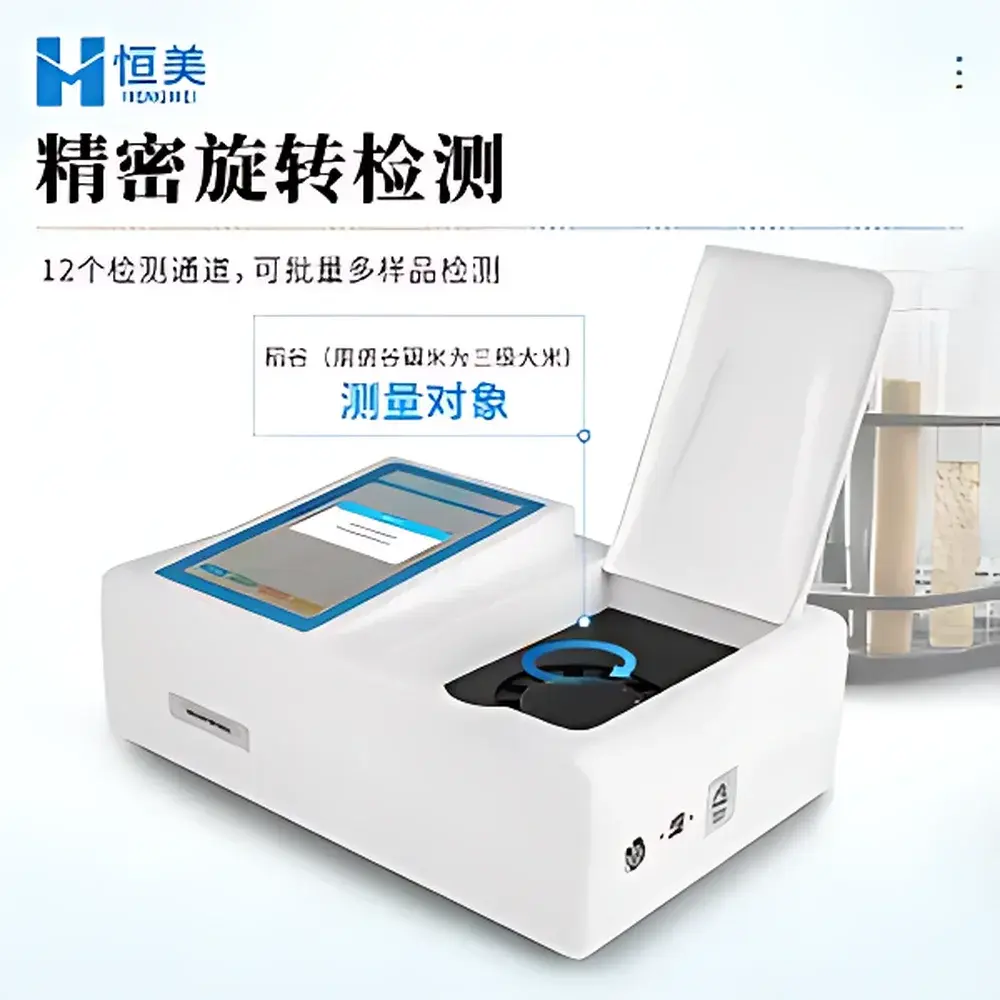
- 12-channel parallel detection architecture enables simultaneous analysis of up to 12 pre-processed rice samples per cycle, significantly improving throughput in high-volume screening workflows.
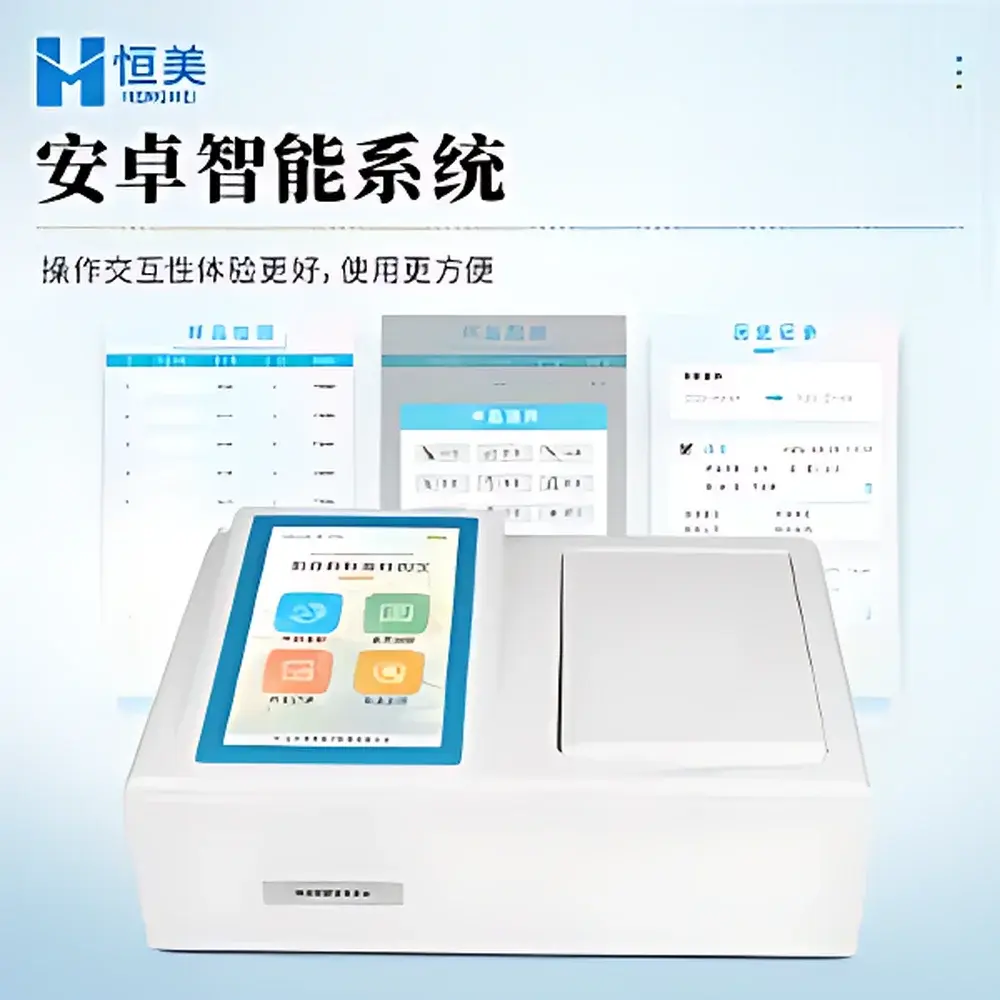
- Integrated Android 7.1 operating system with intuitive graphical user interface (GUI), supporting multi-touch navigation, contextual help prompts, and real-time result visualization on a 5-inch capacitive LCD display.
- Onboard thermal printer provides immediate hard-copy documentation of FD scores, sample IDs, timestamps, and operator credentials—fully traceable for internal QA audits.
- Wireless connectivity via Wi-Fi and Bluetooth 4.2 allows seamless synchronization with enterprise LIMS or cloud-based data platforms; USB 2.0 port supports driver-free data export to external storage media.
- Self-contained sample preparation accessories—including calibrated micro-centrifuge tubes, vortex mixer adapter, and centrifugation rotor—ensure consistent homogenization and phase separation prior to optical measurement.
- Environmentally compliant assay chemistry: spent reagent solutions meet municipal wastewater discharge criteria and require no hazardous waste handling protocols.
Sample Compatibility & Compliance
The HM-GW is specifically validated for milled rice (Grade III, per GB/T 1354–2018) derived from paddy rice subjected to standardized husking and polishing. Raw paddy must be processed using approved laboratory-scale砻谷碾米 equipment prior to analysis. The method excludes brown rice, parboiled rice, glutinous rice varieties, and extruded or fortified products due to matrix interference effects on chromophore formation kinetics. All performance specifications—including repeatability (≤±2 FD units), measurement range (0–100), and linearity—are verified under controlled ambient conditions (18–25 °C, <80% RH, non-condensing). The system conforms to LS/T 6118–2017 for method validation, reporting format, and pass/fail thresholds. While not certified to ISO/IEC 17025, its documented uncertainty budget and calibration traceability support GLP-aligned usage in regulated grain supply chains.
Software & Data Management
Embedded firmware includes audit-trail functionality compliant with basic data integrity principles: all measurements are timestamped, user-authenticated (via configurable login), and immutably logged with raw absorbance values, processed FD scores, and instrument status flags. Data files follow CSV and XML export formats compatible with Microsoft Excel, JMP, and industry-standard statistical process control (SPC) software. Optional cloud integration enables role-based access control, automated report generation, trend charting across storage batches, and deviation alerting based on configurable FD thresholds. Local database retention supports ≥100,000 test records with automatic rollover archiving.
Applications
- Grain elevator intake inspection: rapid triage of incoming paddy lots to prioritize storage rotation and prevent blending of aged stock.
- Rice mill quality assurance: monitoring freshness decay during intermediate storage between husking and packaging stages.
- Commodity trading verification: objective documentation of freshness claims for domestic and export contracts governed by LS/T 6118–2017 clauses.
- Research applications: kinetic studies of lipid oxidation under varying temperature/humidity regimes; validation of antioxidant treatments in post-harvest preservation trials.
- Regulatory surveillance: supporting provincial grain bureaus in periodic market surveillance programs targeting adulterated or mislabeled aged rice.
FAQ
What sample preparation is required prior to analysis?
Paddy rice must first be dehulled and milled to Grade III white rice per GB/T 1354–2018. Exactly 0.5–2.0 g of milled rice is weighed into a supplied reaction tube, mixed with 1.0 mL Rice Freshness Reagent, vortexed for 30 s, then centrifuged at 3,000 × g for 2 min to clarify the supernatant.
Is the assay interfered by common rice contaminants or additives?
Yes. Samples containing mold mycotoxins (e.g., aflatoxin B1), synthetic antioxidants (BHA/BHT), or coating agents (e.g., talc, glucose syrup) may suppress or enhance chromophore formation. Such samples require method verification or exclusion per LS/T 6118–2017 Annex C.
How frequently must the optical system be calibrated?
Factory calibration is valid for 12 months under normal use. A daily blank calibration using reagent-only solution is mandatory before each analytical session; optional interval verification with NIST-traceable FD reference standards is recommended every 30 days.
Can FD values be correlated to shelf-life predictions?
No. FD is a relative index tied to LS/T 6118–2017’s empirical correlation with sensory panel assessments—not a predictive kinetic model. It reflects current oxidative state only, not future degradation rate.
Does the instrument meet FDA 21 CFR Part 11 requirements?
The HM-GW does not include electronic signature capability or full Part 11 audit trail features (e.g., biometric authentication, sealed electronic records). It satisfies baseline ALCOA+ principles for data attribution and retention but requires supplementary procedural controls for GMP-regulated environments.






