
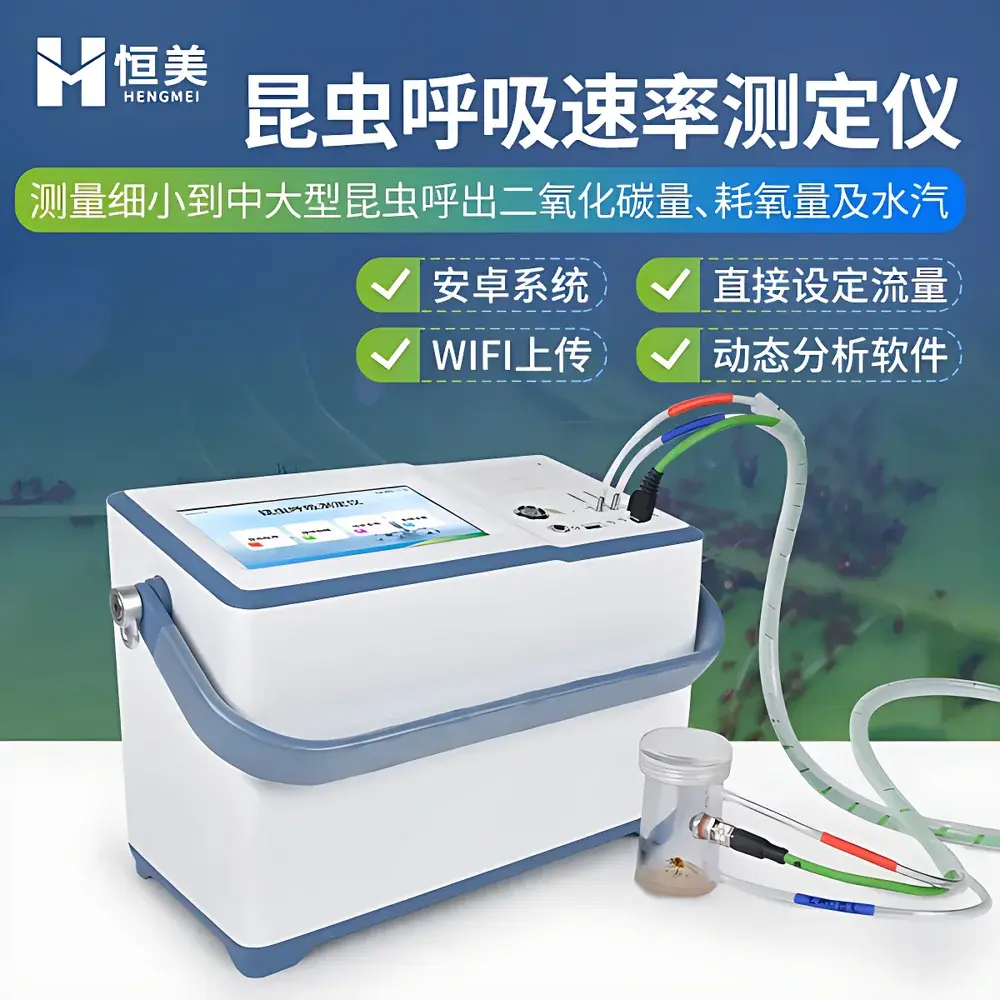
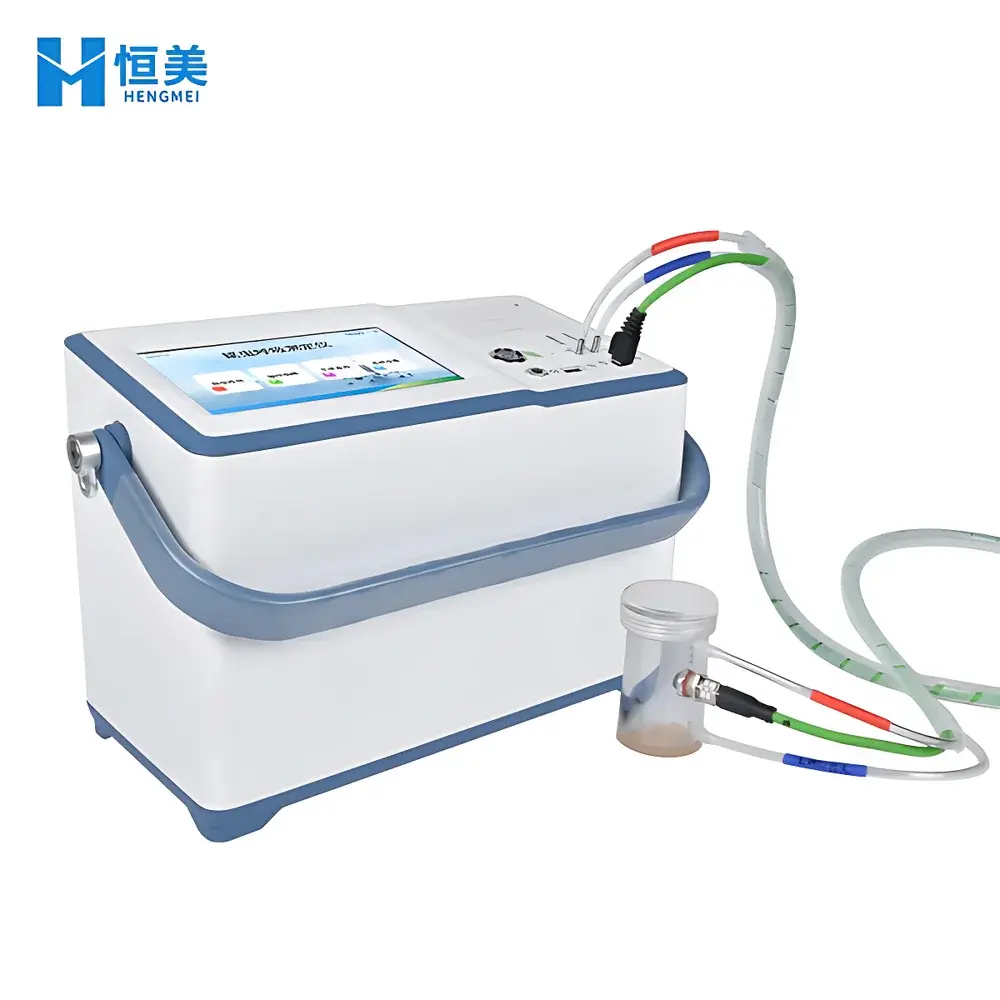
Hengmei HM-KC Insect Respirometry System for CO₂/O₂ Metabolic Rate Measurement
| Brand | Hengmei |
|---|---|
| Origin | Shandong, China |
| Manufacturer Type | Direct Manufacturer |
| Model | HM-KC |
| CO₂ Analysis Principle | Dual-Wavelength NDIR |
| CO₂ Range | 0–5% |
| CO₂ Resolution | ≤0.1 ppm |
| CO₂ Accuracy | ±1% FS |
| O₂ Range | 0–100% |
| O₂ Resolution | 0.0001% |
| O₂ Accuracy | ±0.1% FS |
| Flow Control Range | 5–1000 mL/min |
| Flow Resolution | 1 mL/min |
| Flow Accuracy | ±2% |
| Response Time (CO₂) | <1 s |
| 24-h Drift (CO₂) | <0.02% FS |
| Sample Compatibility | Drosophila, Aphids, Nematodes, Spiders, Lepidopteran Larvae/Pupae, Bees, Grasshoppers, Soil Invertebrates |
Overview
The Hengmei HM-KC Insect Respirometry System is a closed- or open-flow respirometry platform engineered for precise, real-time quantification of metabolic gas exchange in small and medium-sized arthropods and soil invertebrates. It operates on the fundamental principles of differential gas analysis—measuring dynamic changes in oxygen consumption (VO₂) and carbon dioxide production (VCO₂) to calculate standard metabolic rate (SMR), routine metabolic rate (RMR), respiratory quotient (RQ = VCO₂/VO₂), and related energetic parameters. The system employs dual-wavelength non-dispersive infrared (NDIR) detection for high-sensitivity CO₂ measurement and electrochemical or paramagnetic sensing (configurable per OEM specification) for O₂, ensuring minimal cross-sensitivity and stable baseline performance under variable ambient humidity. Its integrated air-drying module and automatic CO₂ zeroing routine mitigate water vapor interference and sensor drift—critical for long-duration experiments in tropical or high-humidity ecological field settings or controlled-environment chambers.
Key Features
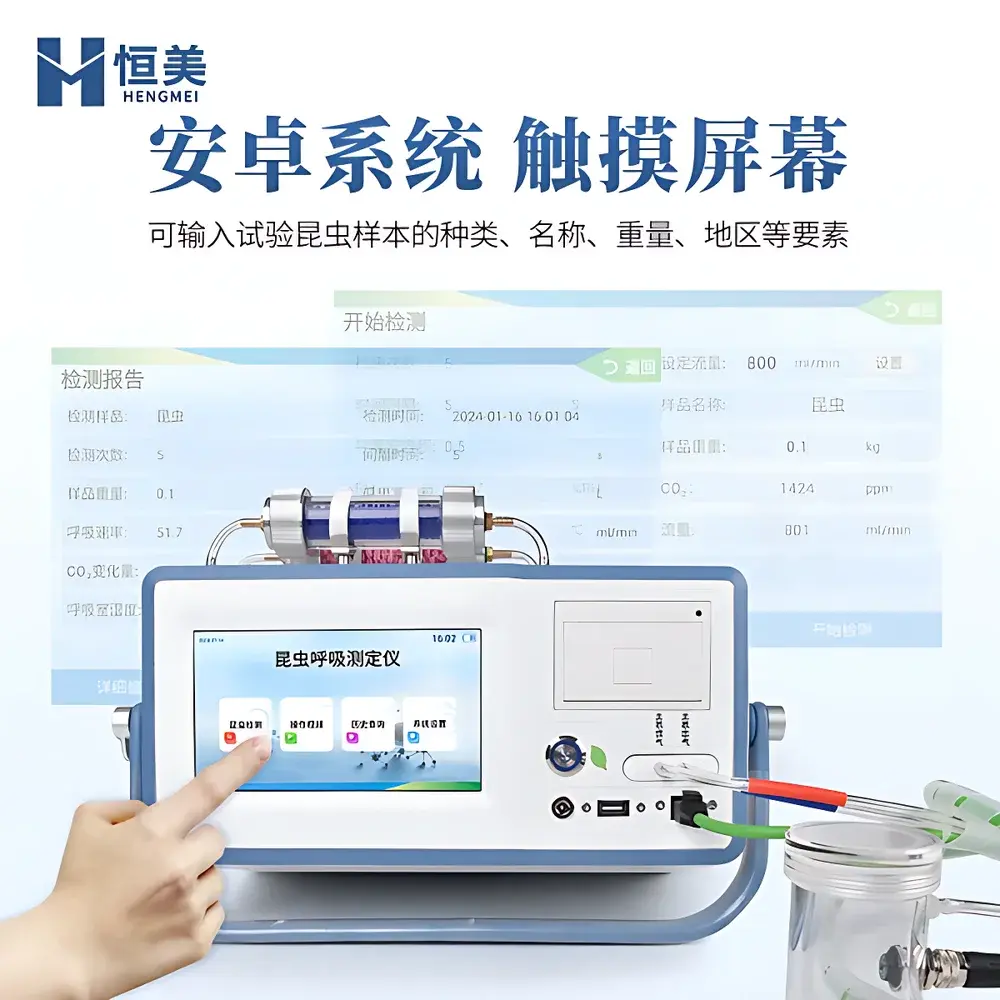
- Embedded Android operating system with 7-inch capacitive touchscreen interface—enabling intuitive experimental setup, live trace visualization, and parameter adjustment without external computing hardware
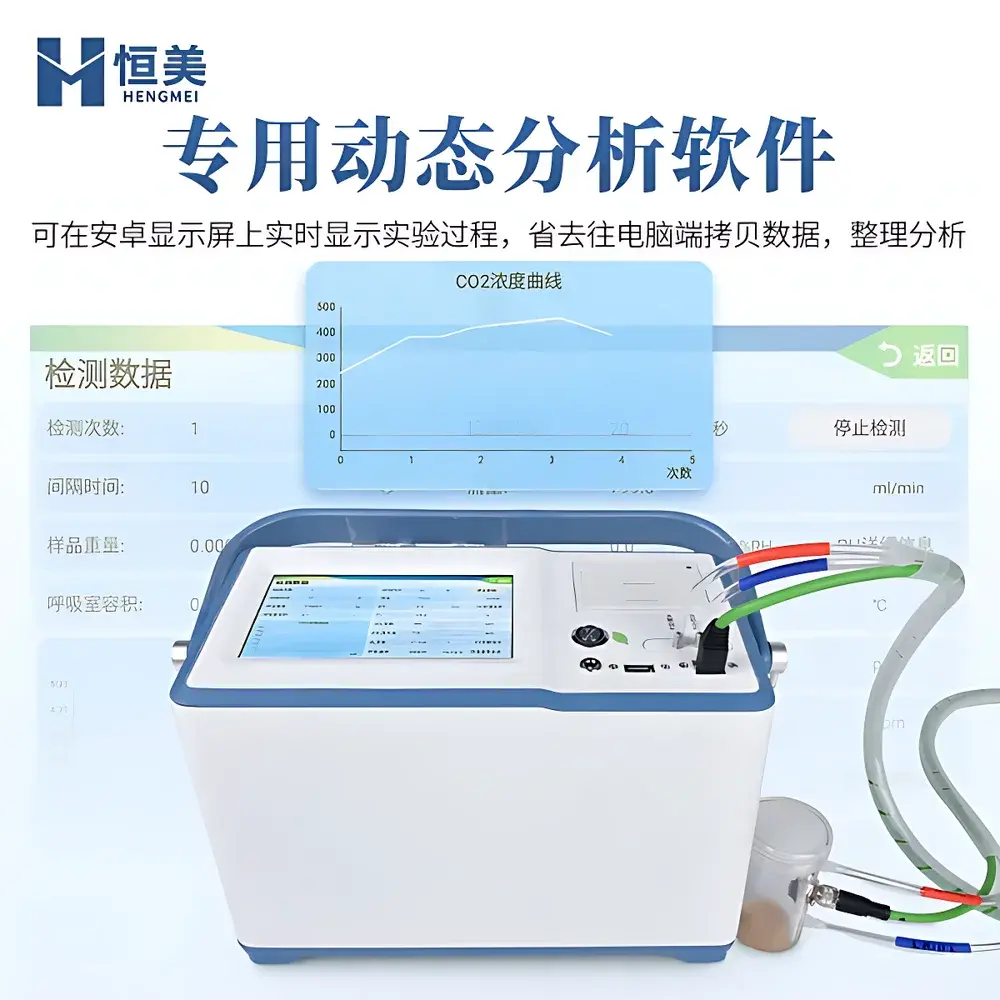
- On-device dynamic respirometry software that computes VO₂, VCO₂, RQ, and normalized rates (e.g., µL CO₂/mg/h) in real time; supports user-defined normalization (mass, surface area, developmental stage)
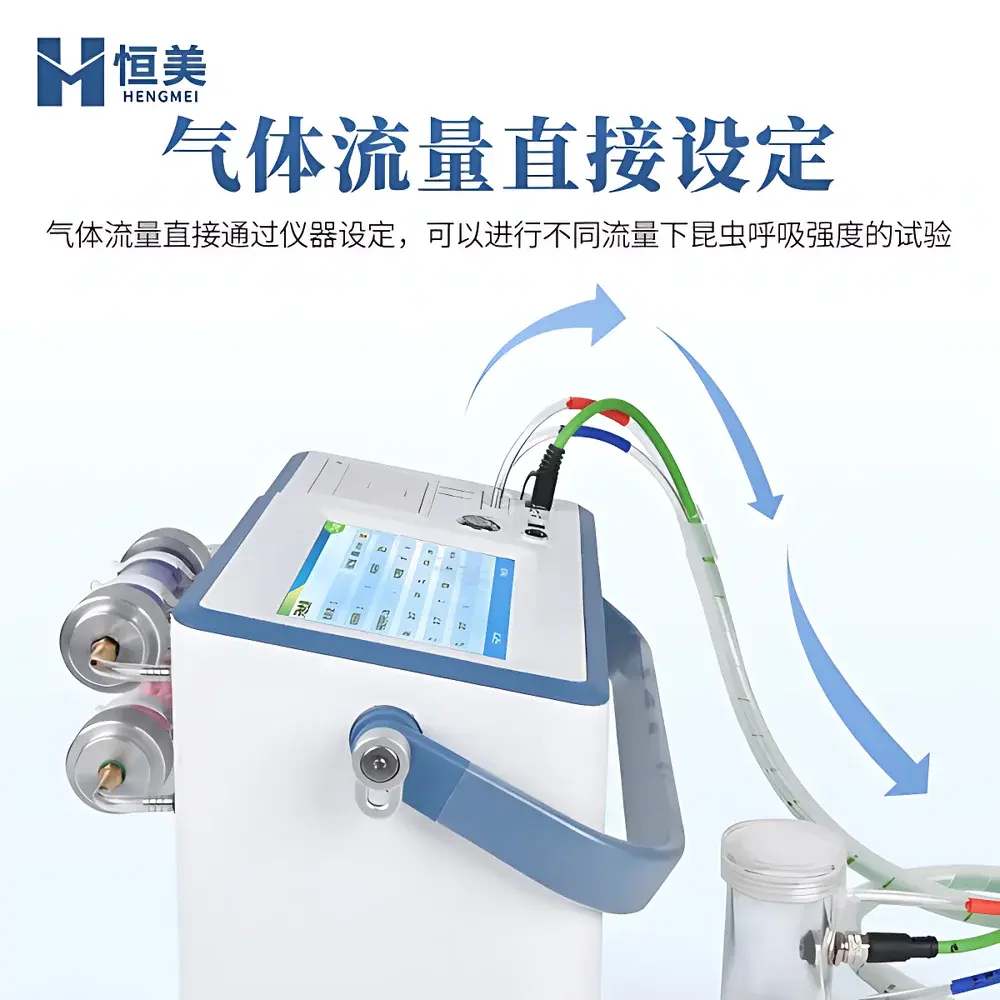
- Programmable mass flow controller (5–1000 mL/min range) with ±2% accuracy and 1 mL/min resolution—facilitating flow-rate-dependent metabolic assays and factorial scope testing
- Integrated GPS module for georeferenced metadata tagging—essential for comparative field studies across microclimatic gradients or contaminated sites
- Dual connectivity architecture: local Wi-Fi and LTE 4G enable secure, encrypted data streaming to cloud-hosted repositories compliant with ISO/IEC 27001 information security standards
- 16 GB internal storage capacity (expandable via USB OTG) accommodates >100,000 timestamped, multi-channel gas concentration records with full audit trail (date/time, flow setpoint, ambient T/RH if optional sensors added)
- Direct thermal printing capability with embedded report generation—including sample ID, weight, collection location, assay duration, and derived metabolic indices
- Self-calibrating CO₂ sensor with automated zero-reference cycle using scrubbed ambient air—reducing manual intervention and enhancing inter-laboratory reproducibility
Sample Compatibility & Compliance
The HM-KC system is validated for use with model organisms and ecologically relevant taxa including Drosophila melanogaster adults and larvae, Aphis gossypii, Apis mellifera, nymphal and adult Orthoptera, Lepidoptera pupae and caterpillars, collembolans, nematodes (Caenorhabditis elegans), spiders, and soil-dwelling enchytraeids. Respiratory chambers are modular and chemically inert (borosilicate glass or PTFE-lined), supporting both short-term acute exposure trials and extended chronic assays (up to 96 h). The platform conforms to core methodological frameworks described in ASTM E2937-21 (Standard Guide for Respirometric Assays in Ecotoxicology) and aligns with OECD Test No. 218 (Terrestrial Plant Test: Vegetative Vigor) and No. 221 (Earthworm Reproduction Test) for indirect metabolic endpoint interpretation. While not FDA 21 CFR Part 11–certified out-of-box, its audit-log structure, electronic signature support (via Android biometric login), and immutable data export meet GLP documentation requirements when deployed within validated laboratory workflows.
Software & Data Management
Data acquisition, visualization, and post-processing occur natively on the device via a purpose-built Android application built on Java/Kotlin with SQLite backend. Raw analog signals from CO₂ and O₂ analyzers are digitized at ≥10 Hz (user-configurable), timestamped to millisecond precision using synchronized NTP or GNSS time sources, and stored with full metadata context. Export formats include CSV (tabular time-series), PDF (annotated summary reports), and JSON-LD (for semantic interoperability with FAIR-aligned data repositories such as Zenodo or ENA). Cloud synchronization uses TLS 1.3 encryption; uploaded datasets retain SHA-256 checksums for integrity verification. Optional API access enables integration with institutional LIMS platforms or custom Python/R analysis pipelines via RESTful endpoints.
Applications
- Functional genomics: Quantifying metabolic phenotypes in Drosophila mutant strains under normoxia/hypoxia or dietary manipulation
- Ecological physiology: Assessing thermal performance curves (TPCs) and Q₁₀ coefficients in aphid clones across elevational transects
- Agroecotoxicology: Measuring sublethal metabolic depression in beneficial arthropods (e.g., predatory mites) following neonicotinoid exposure
- Pollution ecology: Linking soil metal bioavailability (Pb, Cd) to mitochondrial uncoupling in enchytraeid worms via elevated RQ
- Disease vector energetics: Characterizing flight-cost differentials between insecticide-resistant and susceptible Anopheles mosquitoes
- Climate change biology: Testing plasticity in aerobic scope of alpine grasshoppers under simulated warming scenarios
FAQ
What sample sizes can the HM-KC accommodate?
The system supports individuals ranging from ~0.1 mg (first-instar Drosophila larvae) to ~200 mg (adult bumblebees), with chamber volumes scalable from 1–50 mL. Custom chamber fabrication services are available for non-standard taxa.
Is calibration traceable to international standards?
Yes—CO₂ calibration uses NIST-traceable certified gas mixtures (0.1%, 1%, and 3% CO₂ in N₂); O₂ calibration employs dry air (20.95% O₂) and nitrogen zero gas, both certified to ISO 6141.
Can the system operate unattended in remote field locations?
Fully. With optional solar-charged power bank (12 V DC input supported), 4G-enabled data upload, and GPS-tagged logging, it functions autonomously for >72 h without physical intervention.
Does the software support batch processing of multiple trials?
Yes—the onboard application allows grouping of replicate runs by treatment, automatic outlier detection (using IQR-based filtering), and export of summary statistics (mean ± SD, CV%) per cohort.
How is humidity managed during long-term measurements?
The integrated desiccant-based drying system maintains dew point ≤−20°C at the analyzer inlet, preventing condensation-induced signal noise and enabling stable operation at ambient RH up to 95%.






