
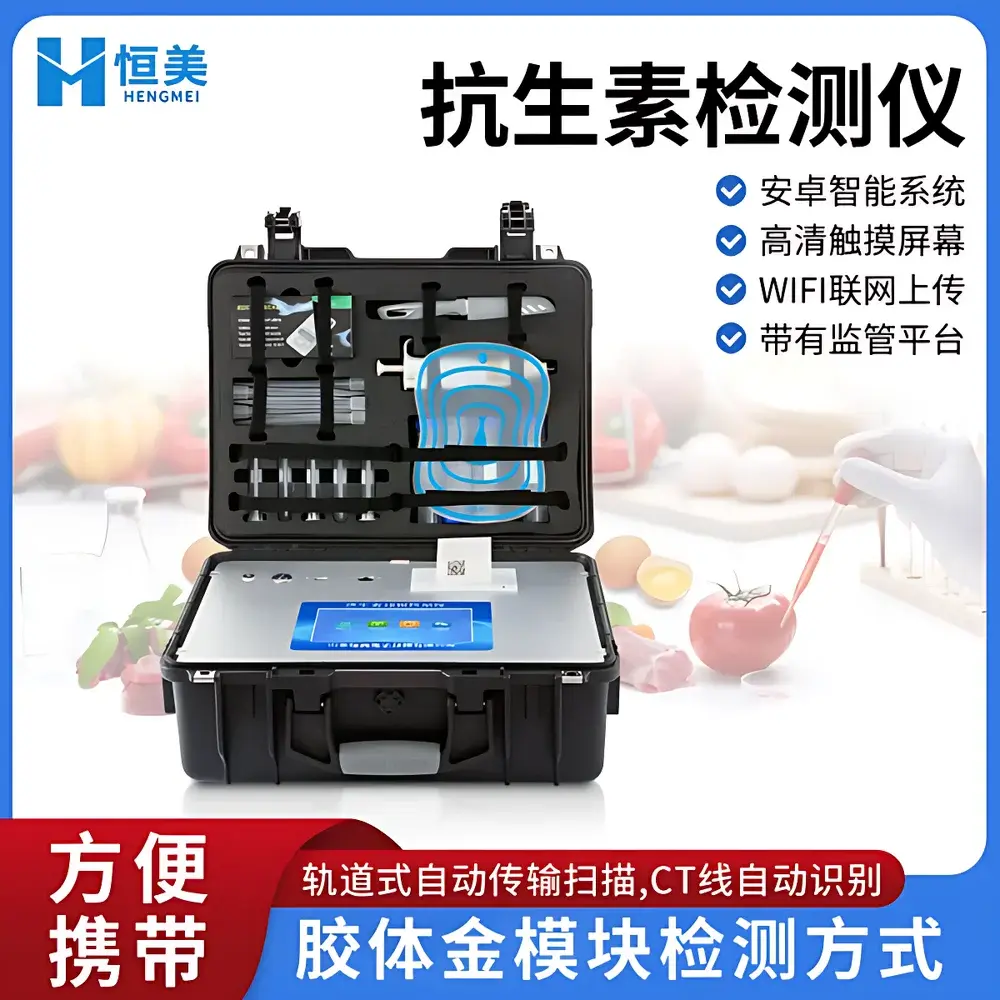
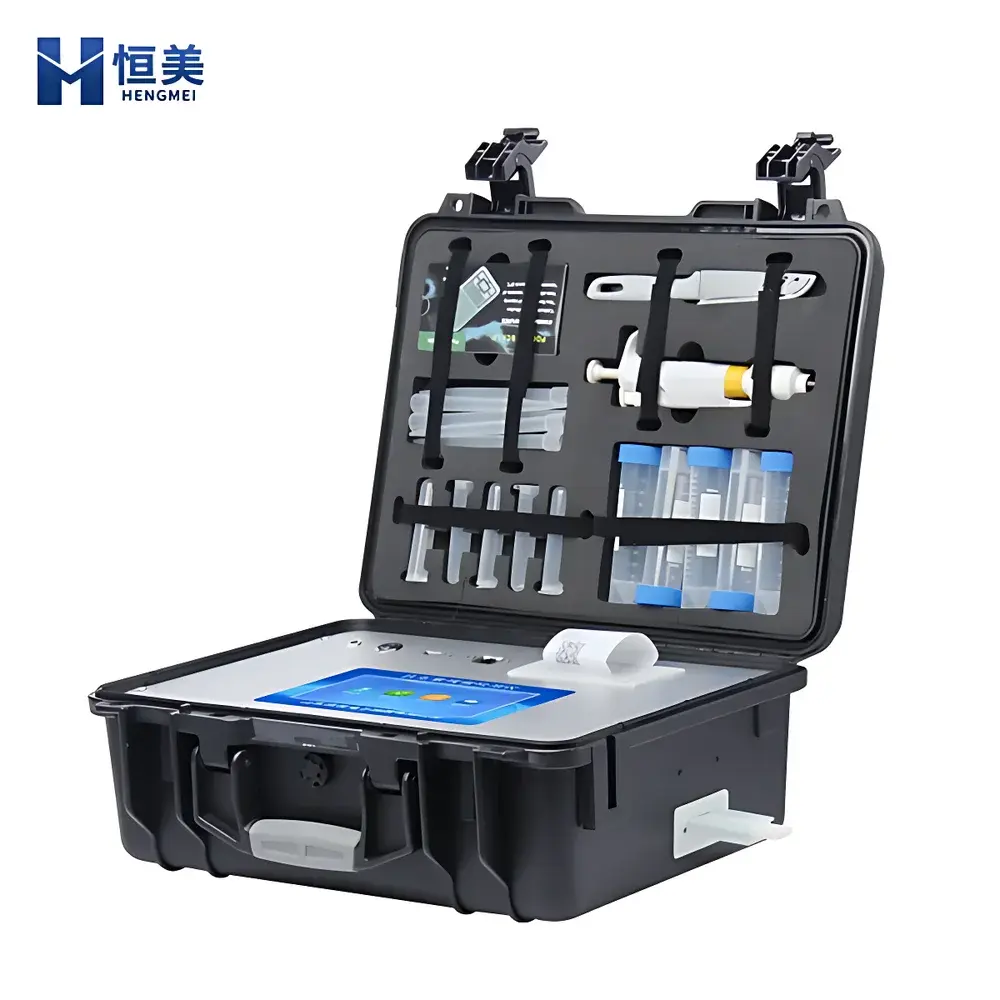
Hengmei HM-KSS Antibiotic Residue Detection System with Integrated Colloidal Gold Immunochromatographic Assay Platform
| Brand | Hengmei |
|---|---|
| Origin | Shandong, China |
| Manufacturer Type | Direct Manufacturer |
| Region Classification | Domestic (China) |
| Model | HM-KSS |
| Price | USD 1,100 (FOB Qingdao) |
Overview
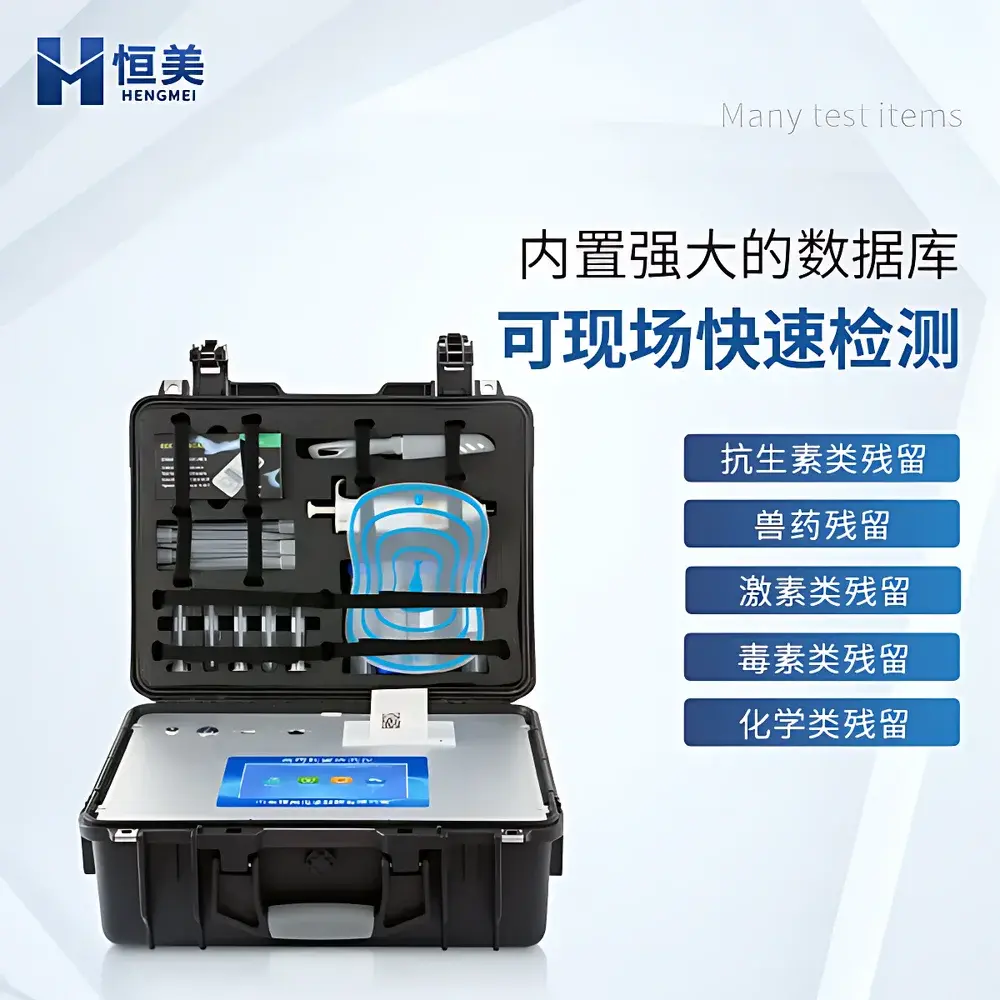
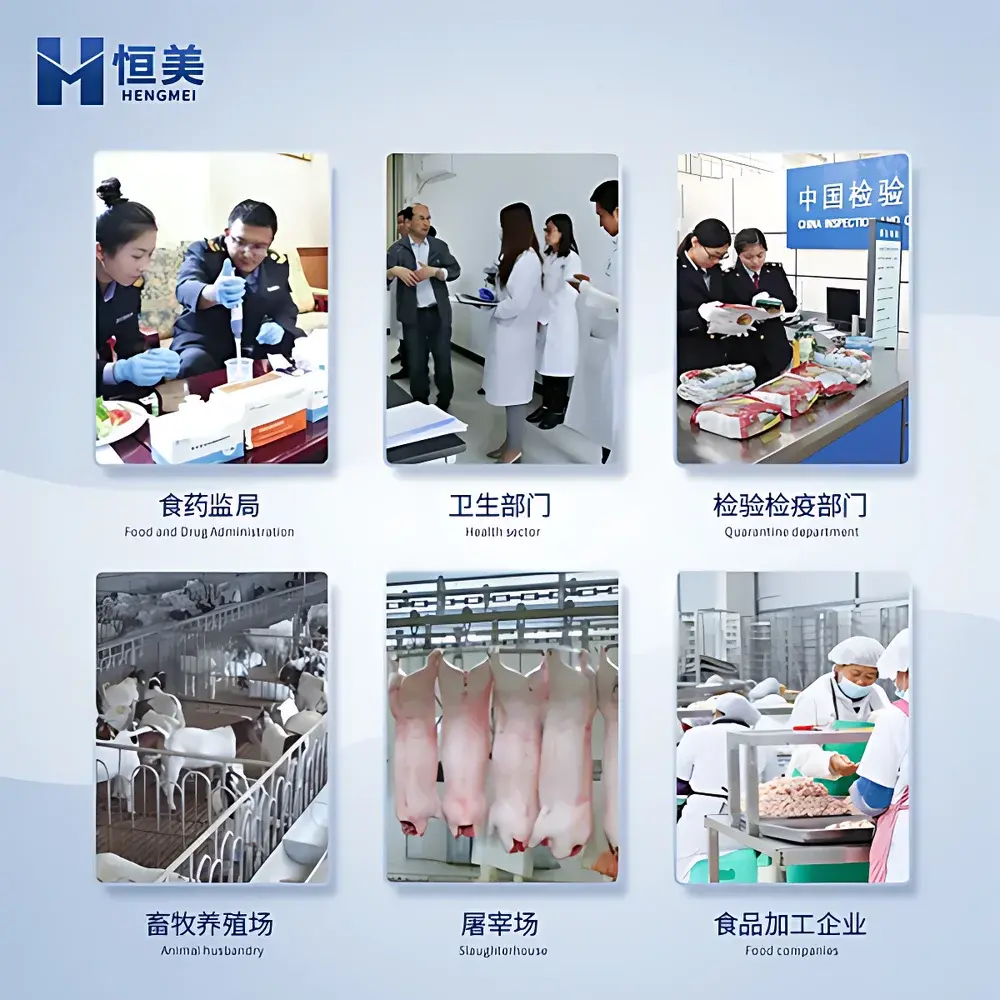
The Hengmei HM-KSS Antibiotic Residue Detection System is a field-deployable, multi-modal analytical platform engineered for rapid, on-site screening of antibiotic and veterinary drug residues in food of animal origin. It operates primarily on the principle of colloidal gold immunochromatographic assay (CGIA), a lateral-flow immunoassay technology widely adopted in regulatory laboratories and field inspection units for its speed (≤10 min per test), minimal sample preparation, and quantitative or semi-quantitative readout capability. The system integrates optical densitometry with embedded reference calibration algorithms to convert test line (T-line) and control line (C-line) signal intensities into concentration estimates relative to preloaded regulatory thresholds (e.g., EU MRLs, Chinese GB standards, and Codex Alimentarius limits). Designed for compliance-driven environments—including food safety supervision agencies, slaughterhouses, aquaculture facilities, and feed mills—the HM-KSS supports decentralized testing without sacrificing traceability or data integrity.
Key Features
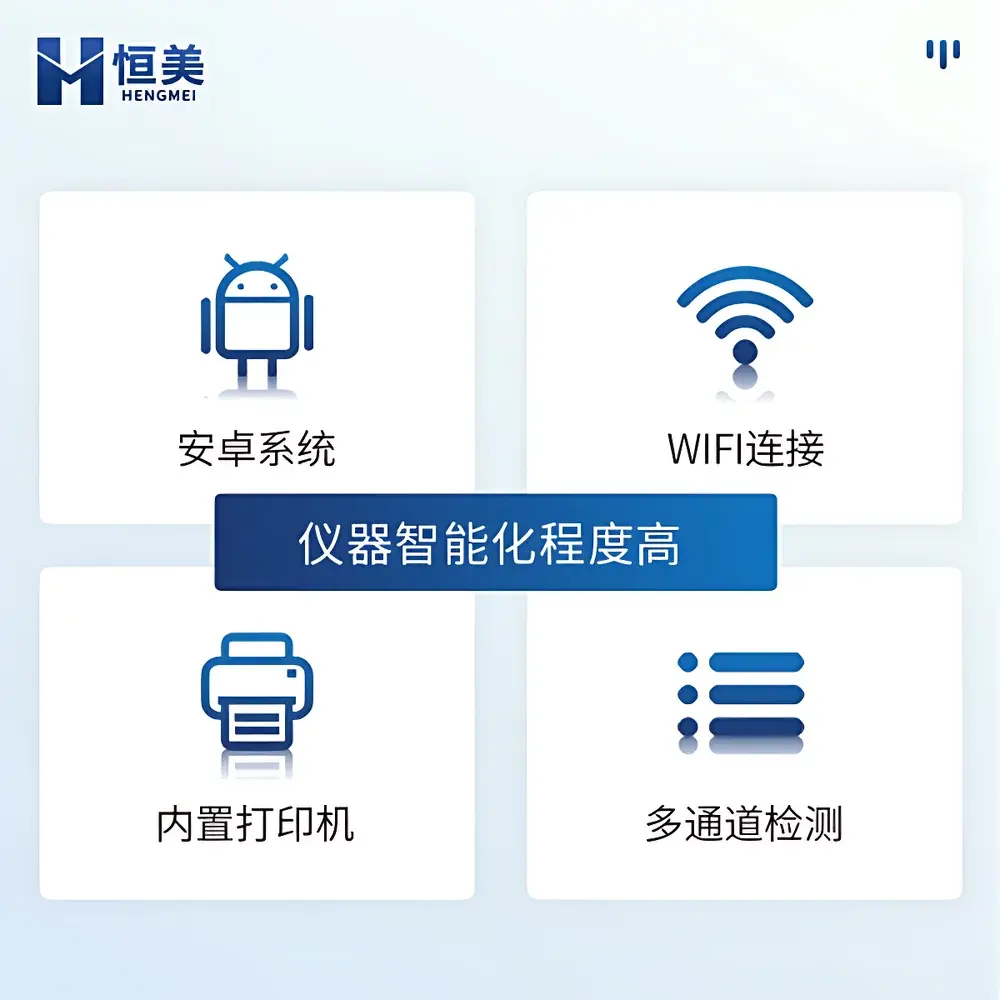
- Triple-module architecture: Simultaneous operation of antibiotic residue detection, pesticide residue screening, and colloidal gold immunochromatographic analysis within a unified Android-based software interface.
- Industrial-grade ABS enclosure: Lightweight (≤3.2 kg), impact-resistant, and IP54-rated for dust and splash resistance—optimized for mobile labs, roadside checkpoints, and farm-gate inspections.
- ARM Cortex-A7 RK3288 quad-core processor (1.88 GHz) with 2 GB RAM and 16 GB eMMC storage ensures stable concurrent task execution, including real-time image capture, optical density calculation, and encrypted data transmission.
- 7-inch capacitive touch display with localized Chinese UI; supports English language firmware via optional configuration.
- Multi-connectivity stack: Ethernet port, dual-band Wi-Fi (802.11 a/b/g/n), and integrated 4G LTE module enable secure, audit-compliant data upload to centralized food safety surveillance platforms (e.g., China’s National Food Safety Risk Monitoring Information System).
- Auto-calibrating optical engine: High-sensitivity CMOS sensor with programmable LED excitation (525 nm ±5 nm), automatic brightness compensation, and thermal drift suppression (<0.5% signal variation over 8 h continuous operation).
- Intelligent strip handling: Motorized track-based cartridge transport with auto-eject functionality and precise CT-line recognition—eliminating manual alignment and reducing operator-dependent variability.
- Built-in regulatory database: Preloaded with >120 MRL entries across tetracyclines, sulfonamides, fluoroquinolones, chloramphenicol, nitrofurans, aminoglycosides, β-lactams, and antiparasitics (e.g., diclazuril, halofuginone); updates delivered via OTA or USB.
Sample Compatibility & Compliance
The HM-KSS accepts raw and processed matrices including muscle tissue (pork, beef, poultry), liver, kidney, milk, eggs, honey, aquaculture water, and feed extracts following standardized extraction protocols (e.g., AOAC 2007.01 for tetracyclines; EN 14925:2017 for nitrofuran metabolites). All assays are validated per ISO/IEC 17025:2017 requirements for qualitative screening methods. The instrument’s data management framework supports ALCOA+ principles (Attributable, Legible, Contemporaneous, Original, Accurate, Complete, Consistent, Enduring, Available) and enables full audit trails for GLP/GMP-aligned workflows. While not FDA 21 CFR Part 11-certified out-of-the-box, the system provides configurable user access controls (role-based login, password complexity enforcement), electronic signature prompts, and immutable result logs exportable as CSV or Excel (.xlsx)—facilitating internal validation against Part 11 Annex A criteria.
Software & Data Management
The proprietary Hengmei SmartTest™ software (v4.2+) runs natively on Android 8.1 and delivers end-to-end digital workflow management: from sample registration (auto-incremented ID, customizable metadata fields) to result interpretation (threshold-based pass/fail flagging, % inhibition calculation) and reporting (PDF + QR-coded certificate with timestamp, operator ID, and instrument serial number). Data synchronization uses TLS 1.2–encrypted HTTPS POST requests to cloud or on-premise servers. Local storage retains ≥200,000 test records with time-stamped metadata. USB 2.0 host port allows direct export to FAT32-formatted drives; no driver installation required. Firmware upgrades are performed via signed .bin files verified through SHA-256 checksum validation.
Applications
- Routine surveillance at border inspection posts for imported meat and dairy products
- Pre-slaughter screening in intensive livestock operations to prevent violative residues
- Verification testing in HACCP-critical control points of meat processing lines
- Field verification of withdrawal periods in aquaculture farms using enrofloxacin or florfenicol
- Emergency response during foodborne outbreak investigations involving suspected antimicrobial contamination
- Contract laboratory support for third-party certification bodies conducting BRCGS or IFS Food audits
FAQ
Does the HM-KSS require external calibration standards for each test?
No. The system performs automatic optical zeroing and reference line normalization using built-in calibration strips prior to each assay batch. External standards are optional for method verification.
Can the instrument store custom MRL thresholds for non-Chinese regulatory frameworks?
Yes. Users may import CSV-formatted limit tables aligned with EU Commission Regulation (EU) No 37/2010 or US FDA tolerances via USB or network share.
Is the colloidal gold reader compatible with lateral flow assays from third-party manufacturers?
Yes. The optical path and scanning algorithm are agnostic to card brand; compatibility has been confirmed with BioNote, Randox, Romer Labs, and Charm Sciences lateral flow devices.
What power sources are supported during extended off-grid operation?
The unit operates on 12 V DC input (vehicle cigarette socket), includes a rechargeable 6 Ah Li-ion battery (≥6 h runtime at 25°C), and supports uninterrupted operation via AC adapter (100–240 V, 50/60 Hz).
How is data security ensured during wireless transmission?
All Wi-Fi and 4G transmissions use AES-256 encryption; server authentication is enforced via X.509 certificates. Local database encryption (AES-128) is enabled by default.





