
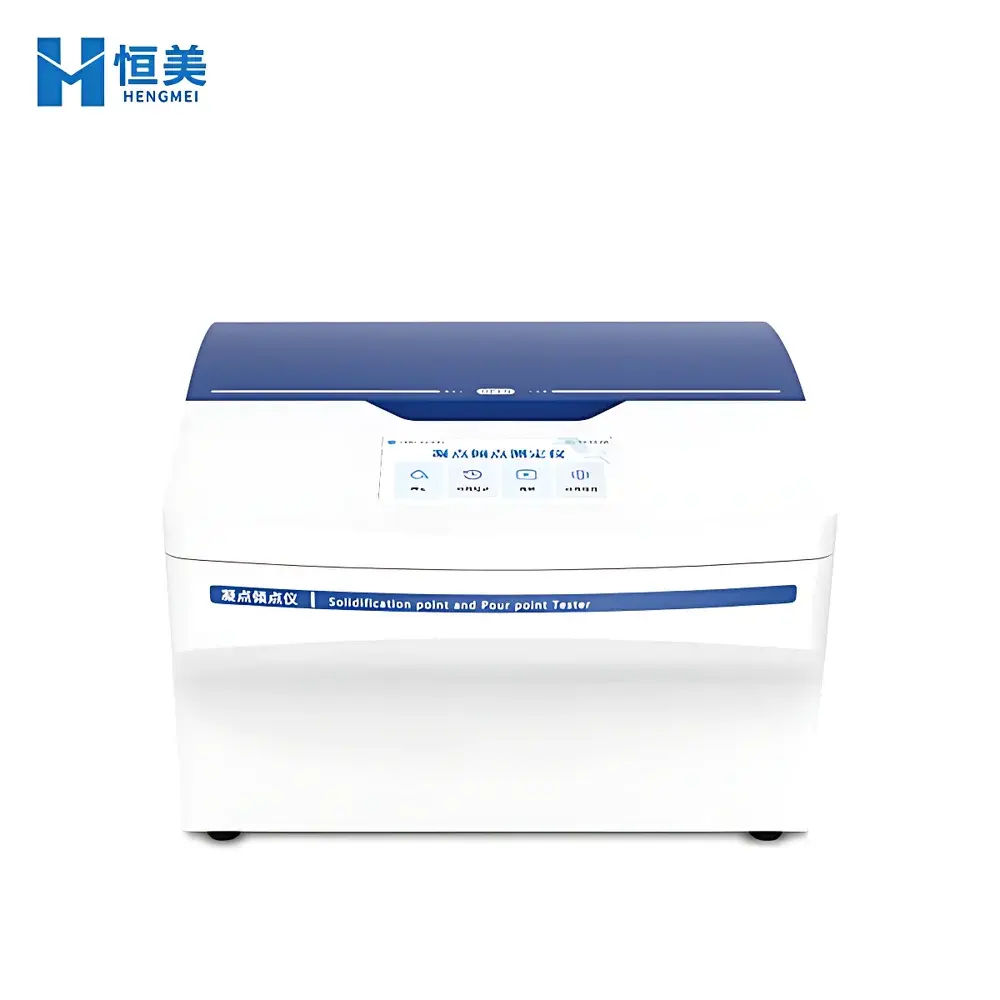
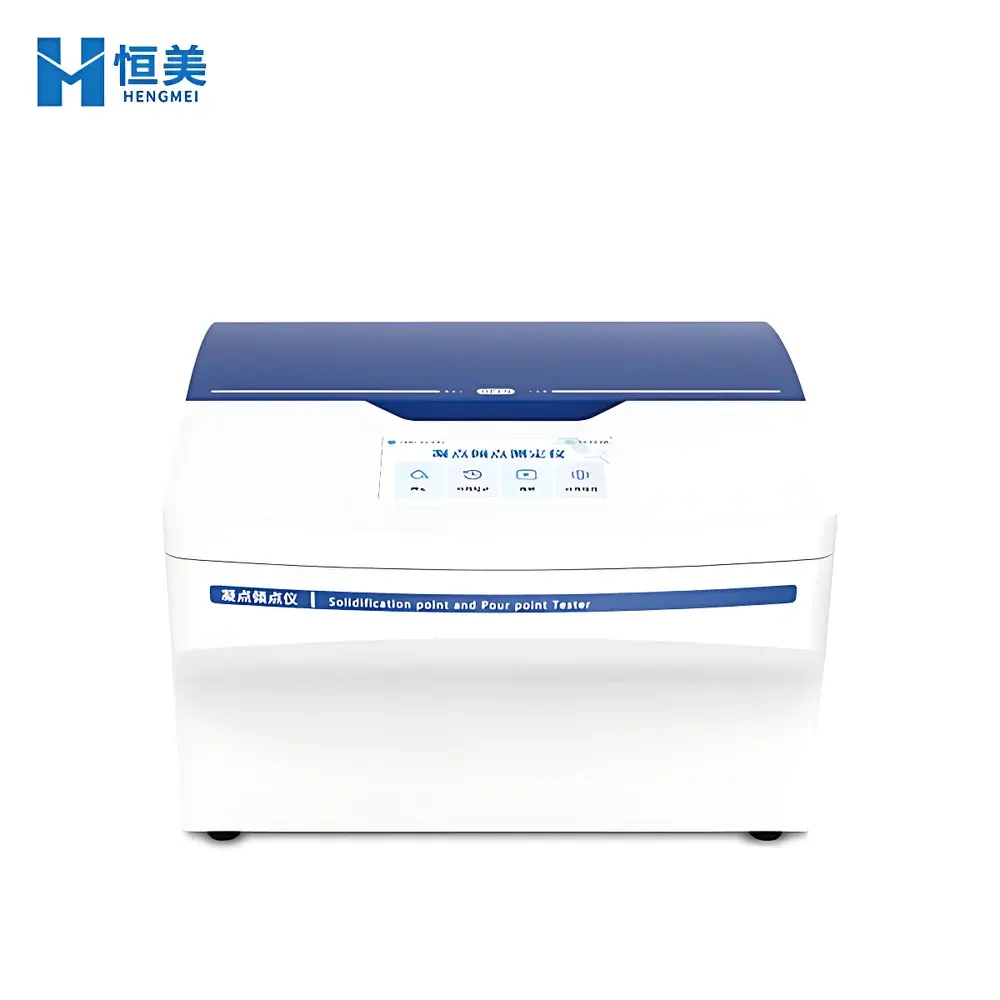
Hengmei HM-NQ Automatic Pour Point and Cloud Point Tester for Petroleum Products
| Brand | Hengmei |
|---|---|
| Origin | Shandong, China |
| Manufacturer Type | Direct Manufacturer |
| Country of Origin | China |
| Model | HM-NQ |
| Price | USD 2,500 (approx.) |
| Temperature Range | −70 °C to +51 °C |
| Compliant Standards | GB/T 510, ISO 3016, ASTM D97, ASTM D6749, SN/T 3017 |
| Detection Method | Automated Pneumatic Pressure Method |
| Sample Volume | 4.5 mL |
| Test Interval | 1 °C |
| Repeatability | ±1 °C |
| Temperature Sensor | Class A PT100 |
| Temperature Accuracy | ±0.1 °C |
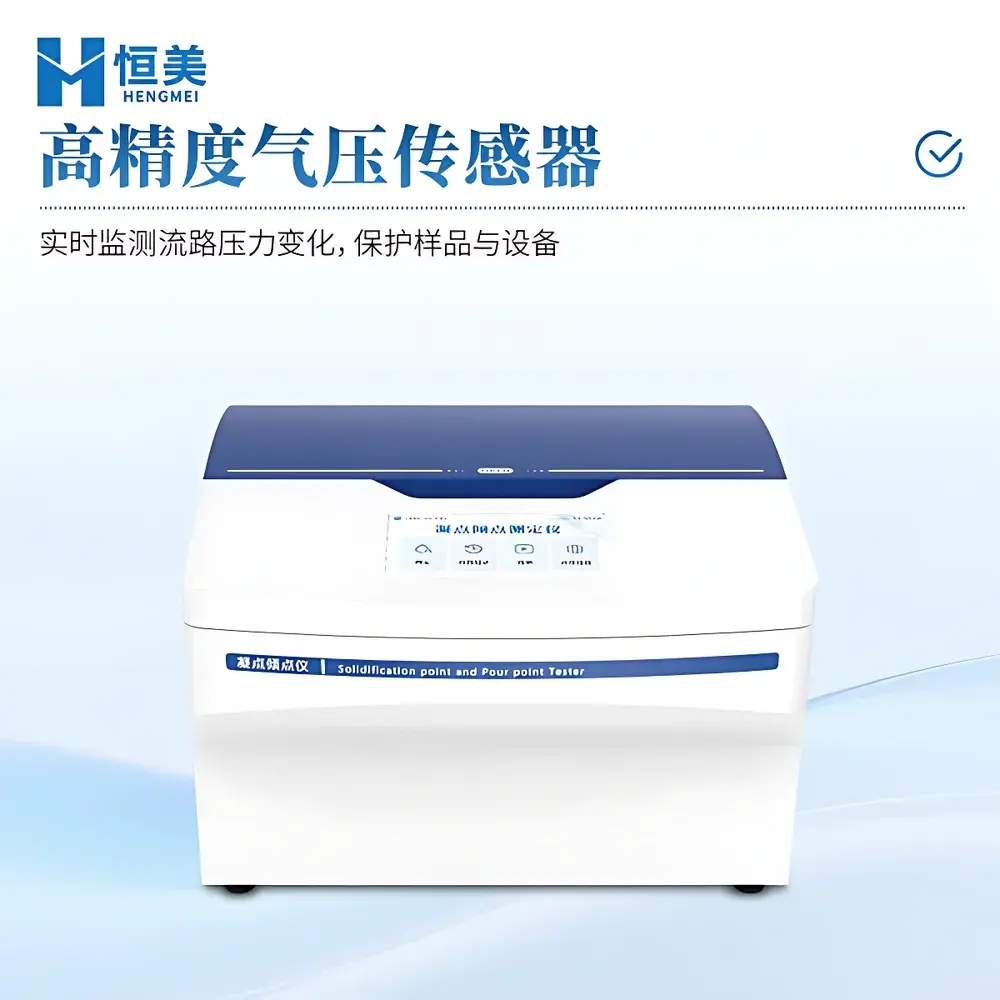
| Applied Test Pressure | 310 Pa |
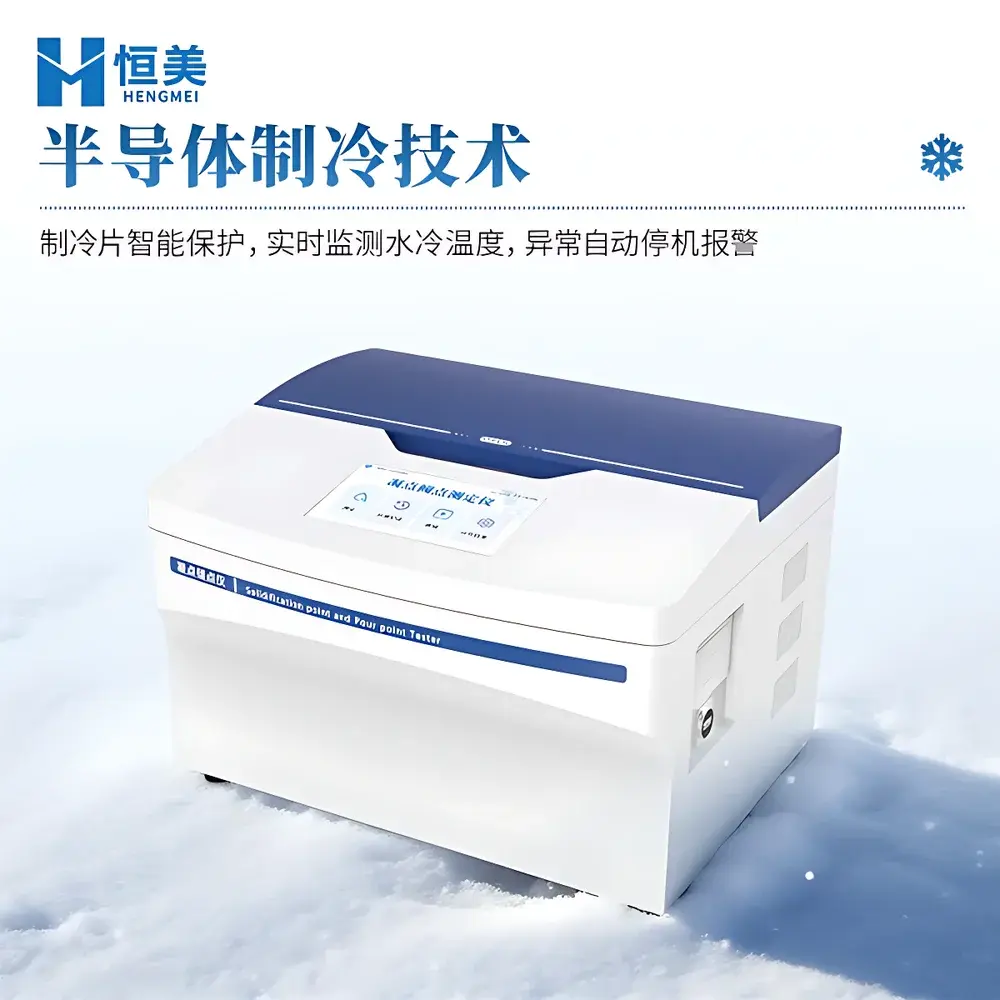
| Cooling Method | Semiconductor-based Thermoelectric Cooling |
| Heating Rate | 1–3 °C/min |
| Cooling Rate | 3–4 °C/min (from ambient to −40 °C), 0.8–1.1 °C/min near pour point |
| Display | 7-inch HD Touchscreen (1024×600) |
| OS | Android-based Embedded System |
| Data Storage | Unlimited (eMMC-dependent) |
| Connectivity | Cloud Upload, USB Export, Thermal Printer Support |
| Power Supply | AC 220 V ±10%, 50 Hz ±5% |
| Max Power Consumption | ≤350 W |
| Dimensions (L×W×H) | 440×370×390 mm |
| Net Weight | 19 kg |
Overview
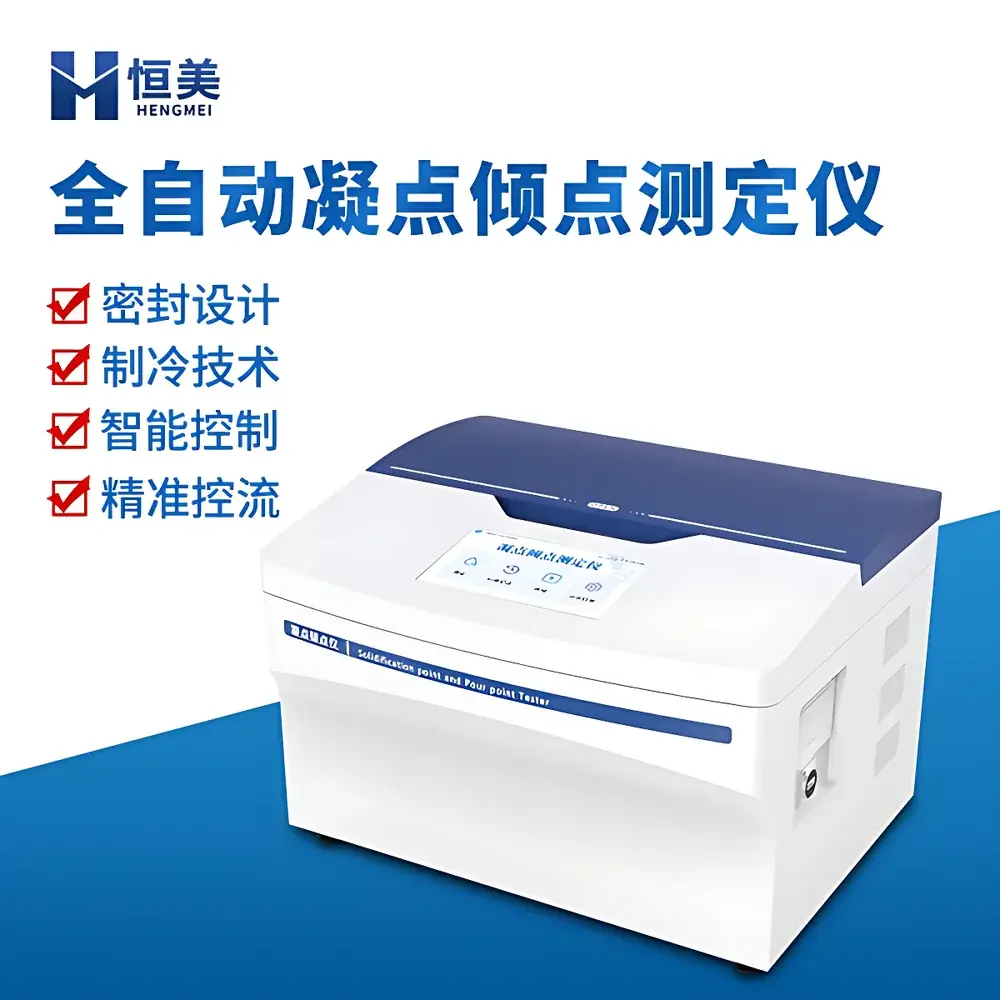
The Hengmei HM-NQ Automatic Pour Point and Cloud Point Tester is a fully integrated, standards-compliant instrument engineered for precise determination of the pour point and cloud point of petroleum products—including crude oils, distillates, lubricants, and biodiesel blends—under controlled low-temperature conditions. It operates on the automated pneumatic pressure detection principle, which replicates the physical behavior defined in ASTM D97, ISO 3016, and GB/T 510: as the sample cools, the instrument applies regulated air pressure (310 Pa) at 1 °C decrements starting from 15 °C above the anticipated pour point. A cessation of flow under pressure—detected via high-sensitivity pneumatic transducers—indicates the pour point. The system’s thermoelectric cooling architecture enables stable, programmable ramping across the full range of −70 °C to +51 °C, with dual-stage rate control (3–4 °C/min for bulk cooling; 0.8–1.1 °C/min near transition zones) to ensure thermal equilibrium and measurement fidelity.
Key Features
- Automated pneumatic detection system eliminating manual tilt observation—fully compliant with ASTM D97 and ISO 3016 procedural equivalence.
- Intelligent semiconductor cooling with real-time water-cooling loop monitoring and over-temperature shutdown protection.
- Ergonomic elbow-clamp sealing mechanism with automatic leak detection and audible/visual alarm for integrity assurance.
- Segmented temperature ramp control: high-rate cooling (−3 to −4 °C/min) for rapid descent, followed by precision-controlled slow ramp (−0.8 to −1.1 °C/min) through critical phase-transition regions.
- Class A PT100 sensor array with ±0.1 °C accuracy and 1 °C test interval resolution, validated across certified reference materials at −16.5 °C and −50 °C.
- 7-inch HD capacitive touchscreen interface running a dedicated Android-based embedded OS with bilingual (English/Chinese) UI, real-time temperature curve visualization, and live parameter overlay.
Sample Compatibility & Compliance
The HM-NQ accepts standard 4.5 mL sample volumes in ASTM D97-compatible glass tubes. It supports transparent and opaque hydrocarbon liquids with kinematic viscosities up to 100,000 cSt at 40 °C, including paraffinic, naphthenic, and synthetic base stocks. All operational protocols adhere strictly to the test sequence, timing, and observational criteria specified in GB/T 510, ISO 3016, ASTM D97, ASTM D6749 (for automated pour point), and SN/T 3017. Instrument validation documentation includes traceable calibration certificates for temperature and pressure subsystems, supporting GLP-compliant laboratory workflows and audit readiness per ISO/IEC 17025 requirements.
Software & Data Management
Data acquisition, analysis, and reporting are managed through an embedded application with local eMMC storage (capacity dependent on unit configuration). Each test generates a timestamped record containing raw temperature-pressure profiles, detected transition points, operator ID, and environmental metadata. Export options include CSV via USB and encrypted HTTPS upload to secure cloud platforms. Audit-trail functionality logs all user actions—including method edits, calibration events, and result overrides—with immutable timestamps. Thermal printer output provides immediate hardcopy reports conforming to internal QA templates or customizable formats aligned with ISO 17025 reporting clauses.
Applications
This instrument is routinely deployed in refinery QC labs, third-party testing facilities, and lubricant formulation centers to assess low-temperature operability of diesel fuels (EN 590, ASTM D975), jet fuels (ASTM D1655), marine distillates (ISO 8217), and industrial lubricants (ASTM D2500 for cloud point). Its reproducibility (±1 °C) and wide dynamic range support R&D studies on wax crystallization inhibition, additive efficacy evaluation, and cold-flow improver screening. In regulatory contexts, HM-NQ-generated data satisfies reporting requirements for product certification under China’s GB standards, EU fuel directives, and U.S. EPA compliance programs.
FAQ
What standards does the HM-NQ fully comply with for pour point testing?
It meets the procedural and performance requirements of ASTM D97, ISO 3016, GB/T 510, ASTM D6749, and SN/T 3017.
Does the instrument require vacuum pumping or manual gas charging before testing?
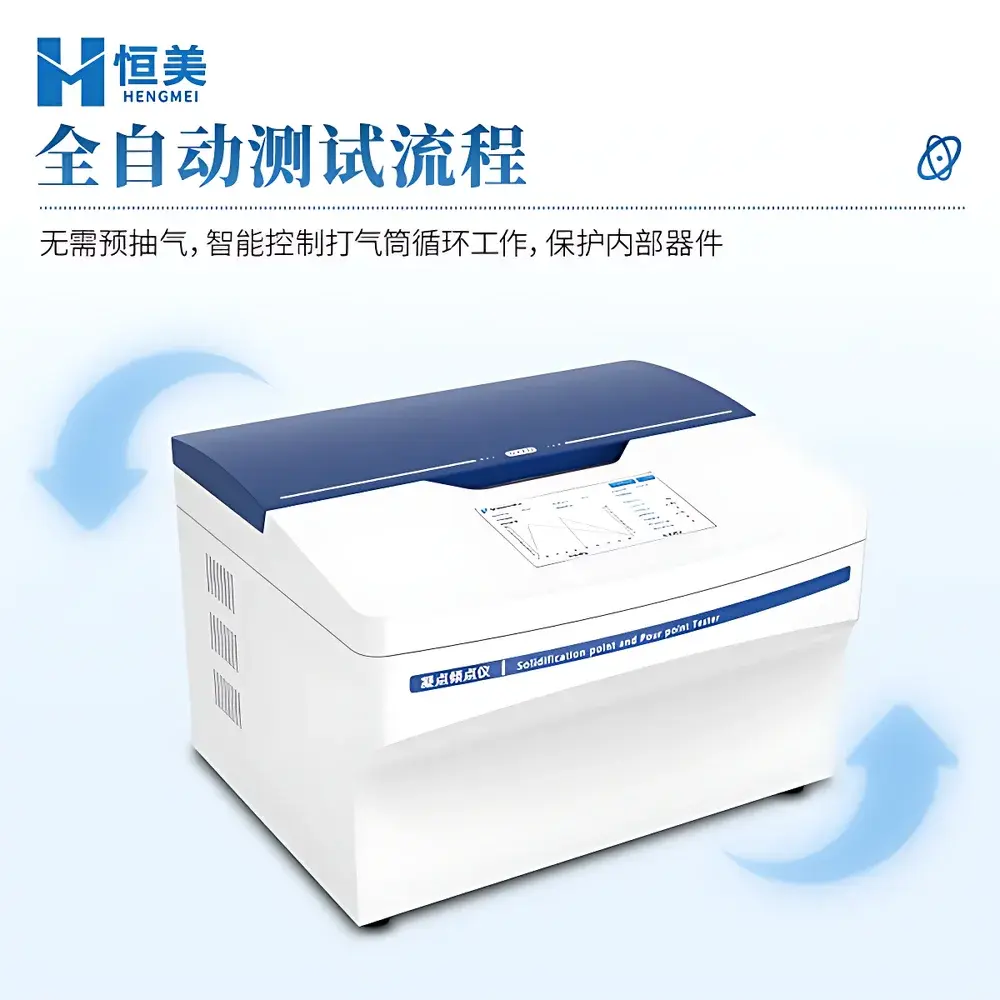
No—its integrated smart air pump cycles automatically without pre-evacuation, minimizing operator intervention and mechanical wear.
How is temperature uniformity maintained during the critical −10 °C to −40 °C range?
Via active semiconductor cooling with closed-loop feedback from dual PT100 sensors, coupled with adaptive ramp-rate modulation to prevent thermal overshoot.
Can test methods be customized for non-standard cooling rates or pressure thresholds?
Yes—the embedded OS allows creation and saving of user-defined protocols, subject to internal safety limits and traceability logging.
Is remote diagnostics or firmware update supported?
Firmware updates are performed via USB; remote diagnostic access is available through optional enterprise network integration modules compliant with IEC 62443-3-3.





