
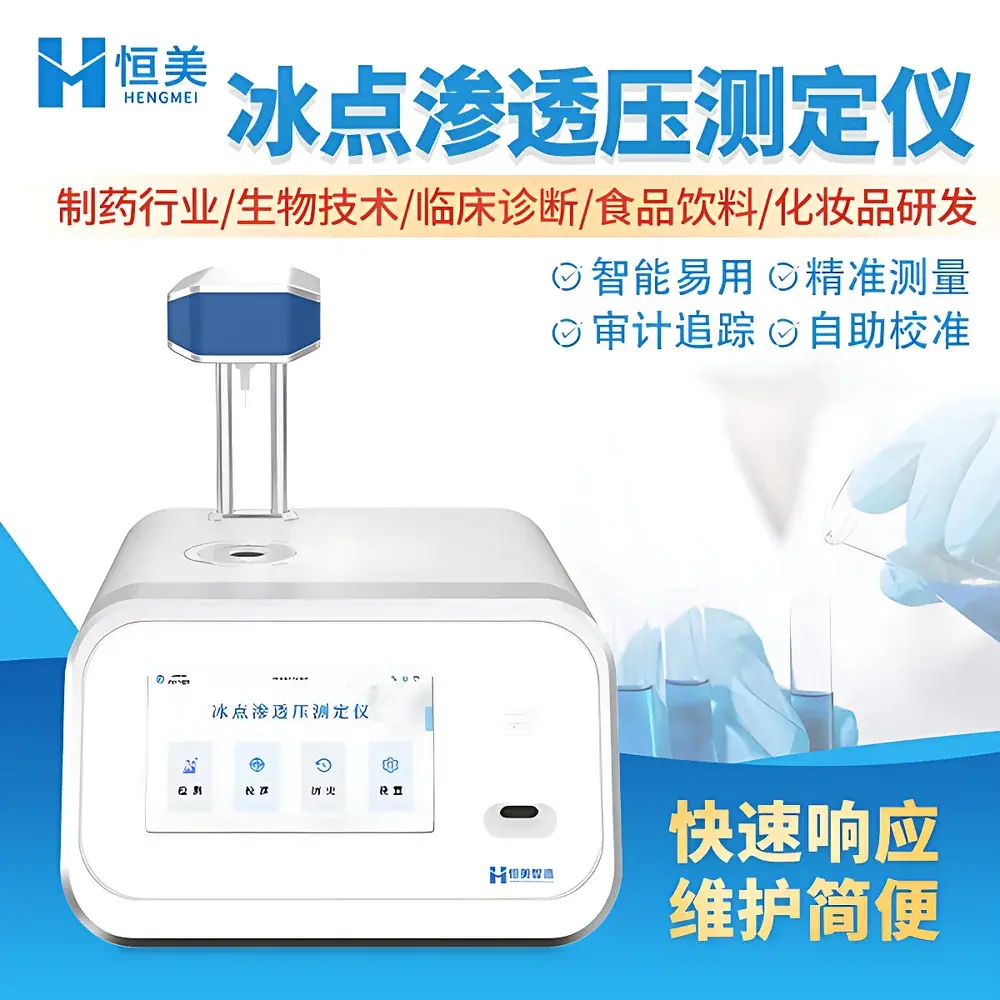
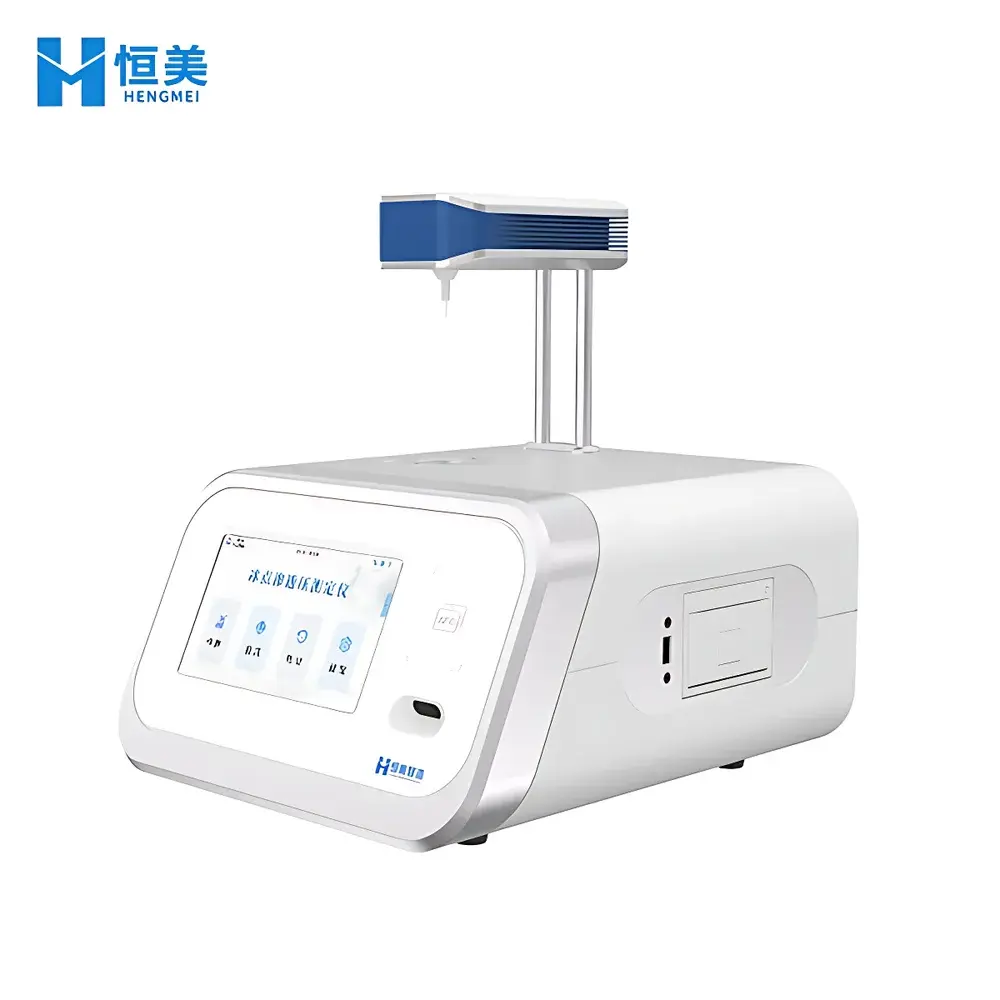
Hengmei HM-STY1 Cryoscopic Osmometer for Pharmaceutical and Clinical Applications
| Brand | Hengmei |
|---|---|
| Origin | Shandong, China |
| Manufacturer Type | Direct Manufacturer |
| Country of Origin | China |
| Model | HM-STY1 |
| Price | USD 4,500 (FOB) |
| Measurement Principle | Cryoscopic Depression of Freezing Point |
| Compliance | JJG 1089–2013, Chinese Pharmacopoeia 2025, ISO 17511 (traceability framework), USP <785> |
| Detection Speed | Up to 50 samples/h |
| Range | 0–3000 mOsmol/kg |
| Sample Volume | 50–100 µL |
| Resolution | 0.005 mOsmol/kg |
| Accuracy | ±6 mOsmol/kg (≤400) or ±1.5% (>400) |
| Repeatability | ≤2 mOsmol/kg (≤400) or CV ≤0.75% (>400) |
| Stability | ≤2 mOsmol/kg (at 300 mOsmol/kg, 8-h drift) |
| Cooling Time | ≤5 min |
| Operating Environment | 5–35°C, 5–80% RH (non-condensing), <2000 m altitude |
| Dimensions (D×W×H) | 360 × 300 × 240 mm |
| Weight | 7 kg |
| Data Interface | USB 2.0, 10/100 Mbps Ethernet, Wi-Fi 802.11 b/g/n, optional 4G LTE |
| Onboard Printer | Thermal, 57 mm paper roll |
| Power Input | 100–277 VAC, 50/60 Hz, 220 W max |
Overview
The Hengmei HM-STY1 Cryoscopic Osmometer is an engineered solution for precise, traceable measurement of osmolality in aqueous biological and pharmaceutical solutions. It operates on the fundamental thermodynamic principle of freezing point depression (Raoult’s law), where the magnitude of temperature depression below 0 °C is directly proportional to the total concentration of solute particles (osmoles) per kilogram of solvent. This method delivers intrinsic accuracy without reliance on calibration curves derived from reference standards alone—making it inherently suitable for regulatory-grade quality control in GMP-compliant environments. Designed specifically for high-integrity applications in injectables, ophthalmic solutions, dialysates, and cell culture media, the HM-STY1 integrates a high-stability Peltier cooling module, multi-point thermal monitoring, and a calibrated platinum resistance thermometer (PT1000-class) to resolve sub-millikelvin thermal transitions during nucleation and crystallization. Its architecture conforms to the metrological requirements of JJG 1089–2013 and aligns with pharmacopeial specifications including the Chinese Pharmacopoeia (2025 Edition) and USP <785>, ensuring data integrity across audit trails and laboratory information management systems (LIMS).
Key Features
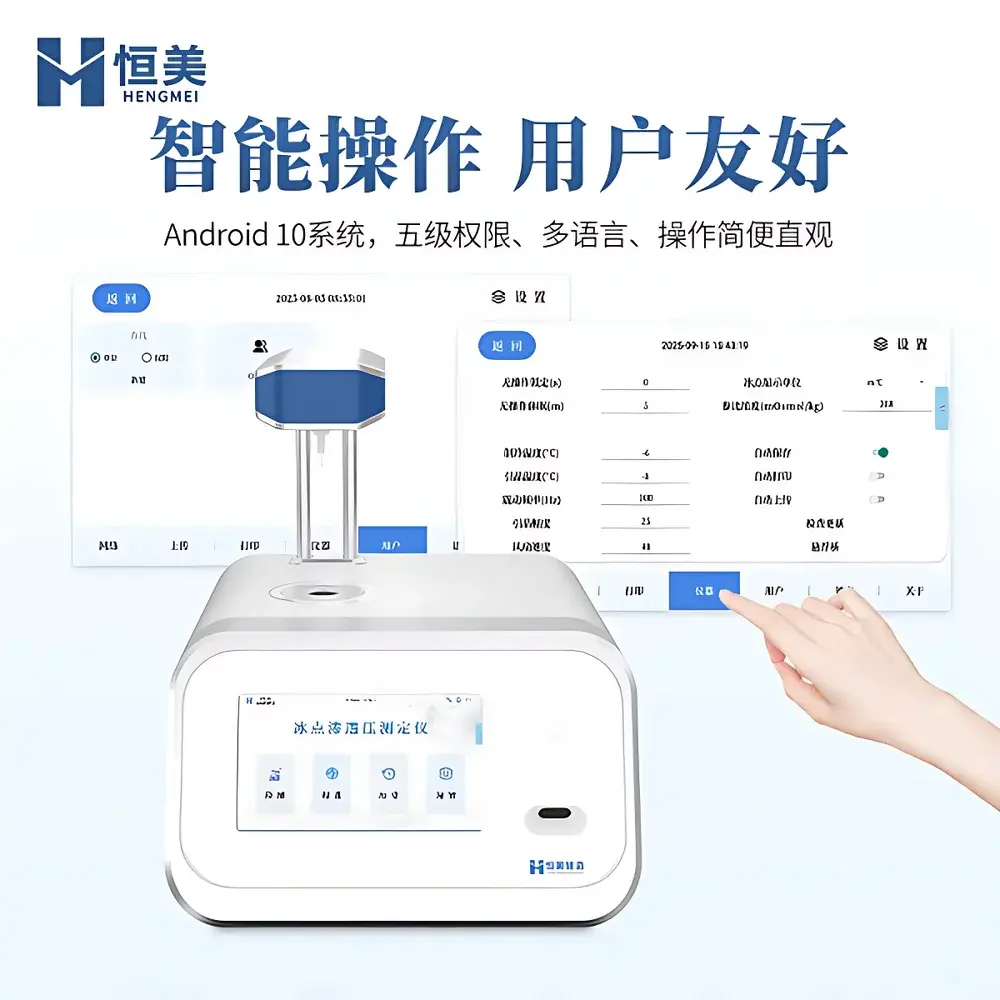
- Android 10-based embedded OS with five-tier user access control (administrator, QA, analyst, technician, guest), supporting role-based permissions and GLP-compliant electronic signatures.
- Cryoscopic detection with dual thermal sensing: primary sample probe + auxiliary chamber temperature monitoring to suppress supercooling artifacts and ensure consistent ice nucleation.
- Two operational modes: Precision Mode (≈70 s/sample, optimized for ≤±2 mOsmol/kg repeatability at low concentrations) and High-Throughput Mode (≤60 s/sample, validated for routine QC within ±1.5% error above 400 mOsmol/kg).
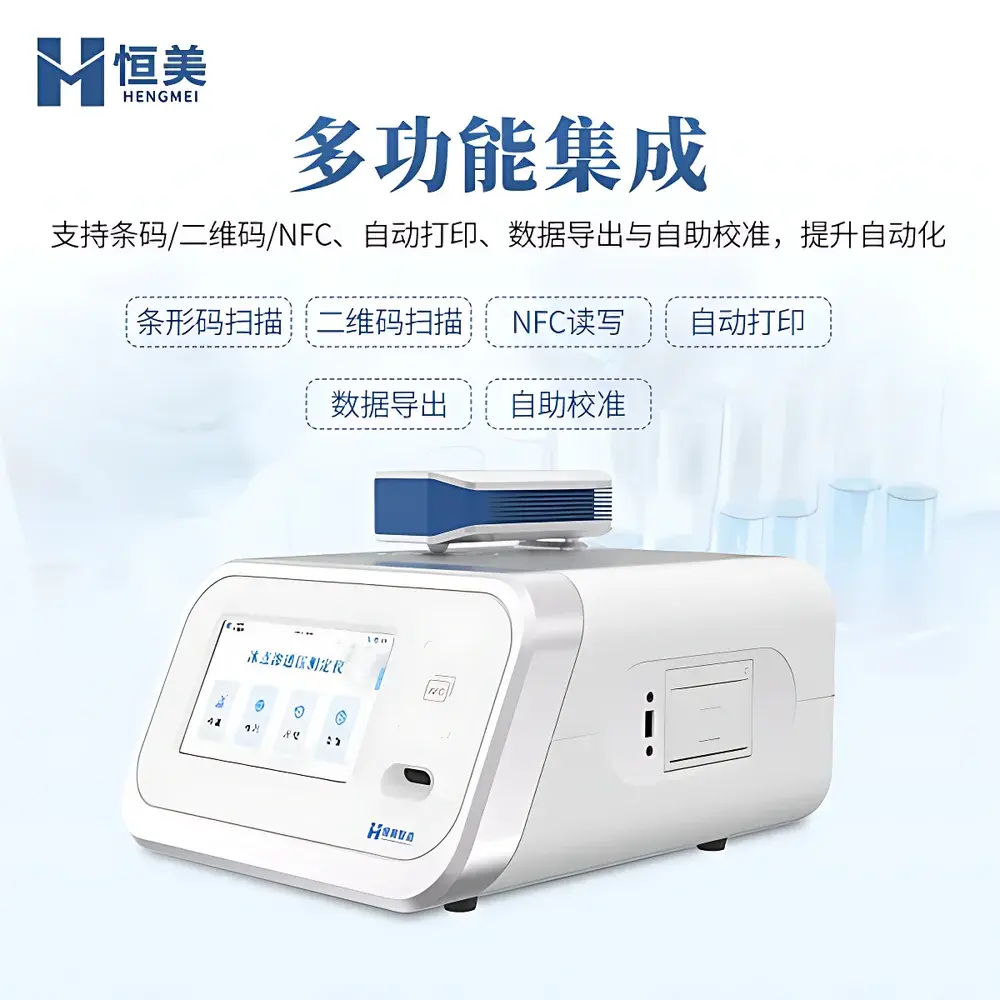
- Integrated thermal printer (57 mm width) with auto-print trigger options—configurable per assay type, user profile, or result flag (e.g., out-of-specification alerts).
- Barcode/QR/NFC reader support enables automated sample ID association, eliminating manual entry errors and enabling full chain-of-custody documentation.
- On-device calibration capability using NIST-traceable NaCl standards (e.g., 0, 200, 600, 1000, 2000 mOsmol/kg); no external service visit required for routine recalibration.
- Expandable internal storage: default capacity supports ≥200,000 complete measurement curves (including raw thermograms) and ≥10 days of system event logs; upgradeable via microSD slot.
- Robust mechanical design with removable, autoclavable probe assembly and chemically resistant fluid pathways—minimizing carryover and enabling rapid decontamination between high-risk samples (e.g., blood-derived products).
Sample Compatibility & Compliance
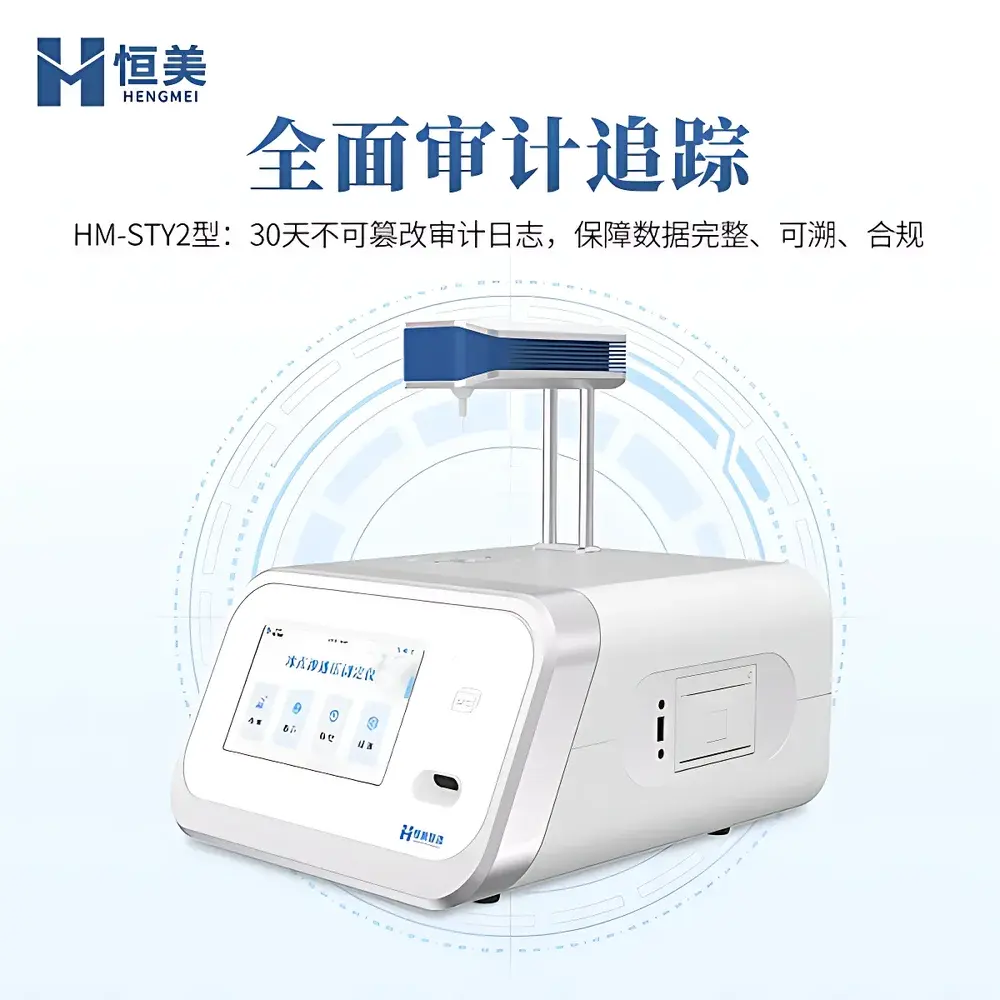
The HM-STY1 accepts a broad spectrum of low-viscosity aqueous matrices without dilution or pretreatment: sterile ophthalmic solutions (e.g., artificial tears, anti-glaucoma agents), parenteral preparations (IV admixtures, lyophilized reconstitutes), dialysis concentrates, urine and serum ultrafiltrates, microbial culture supernatants, and cosmetic toners. It excludes highly viscous, non-aqueous, or volatile-solvent-based formulations (e.g., ethanol-containing tinctures, silicone oils). All measurements comply with ISO/IEC 17025–2017 analytical validity criteria when operated under documented SOPs. The instrument’s firmware embeds audit trail functionality meeting FDA 21 CFR Part 11 requirements—including immutable timestamps, operator ID logging, and change history for calibration parameters and test methods. Full compliance documentation (Design Qualification, Installation Qualification, Operational Qualification templates) is provided with each unit for GMP validation projects.
Software & Data Management
Data export is supported via USB mass storage mode (CSV, PDF report, raw .DAT thermogram files), Ethernet/Wi-Fi network transfer (SFTP or HTTP POST to LIMS), and optional 4G-enabled cloud sync. The onboard software includes built-in statistical process control (SPC) tools: real-time X-bar & R chart generation, trend analysis over time, and automatic out-of-trend (OOT) alerting based on user-defined control limits. Audit logs record every critical action—including login/logout events, calibration modifications, result deletions, and printer activation—with SHA-256 hashing to prevent tampering. Software updates are delivered as signed firmware packages verified via public-key cryptography prior to installation.
Applications
- Pharmaceutical manufacturing: Release testing of ophthalmic drops, nasal sprays, injectables, and hemodialysis fluids per ICH Q5C stability protocols.
- Biologics development: Monitoring osmolality shifts during upstream processing (e.g., fed-batch bioreactor runs) and downstream formulation (lyophilization cycle optimization).
- Clinical laboratories: Quantitative assessment of urine osmolality for renal concentrating ability evaluation and serum osmolality calculation in toxicology screening.
- Academic research: Osmotic stress studies in plant tissue culture, cryopreservation media optimization, and nanoparticle dispersion stability analysis.
- Food & cosmetics QA: Verification of isotonicity in functional beverages and ocular-compatible skincare formulations.
FAQ
What regulatory standards does the HM-STY1 meet for pharmaceutical use?
It satisfies JJG 1089–2013 (Chinese national verification regulation), Chinese Pharmacopoeia 2025 General Chapter <0412>, USP <785>, and supports alignment with EU Annex 11 and FDA 21 CFR Part 11 through configurable audit trail and electronic signature features.
Can the instrument measure viscous samples like syrups or gels?
No—only low-viscosity aqueous solutions (<10 cP) are compatible. Viscous or particulate-laden samples require centrifugation or filtration prior to analysis to avoid probe fouling and thermal lag errors.
Is external calibration certification included with purchase?
Each unit ships with a factory-issued Certificate of Conformance and a NIST-traceable calibration report for the temperature sensor array, valid for 12 months from date of manufacture.
How is data integrity ensured during network transmission?
All network-based data transfers use TLS 1.2 encryption; SFTP credentials are stored in hardware-secured key vaults, and payloads are digitally signed before upload.
Does the HM-STY1 support integration with major LIMS platforms?
Yes—via ASTM E1384-compliant HL7 v2.5.1 messaging or custom RESTful API endpoints; pre-built connectors available for Thermo Fisher SampleManager, LabVantage, and Waters Empower.





