
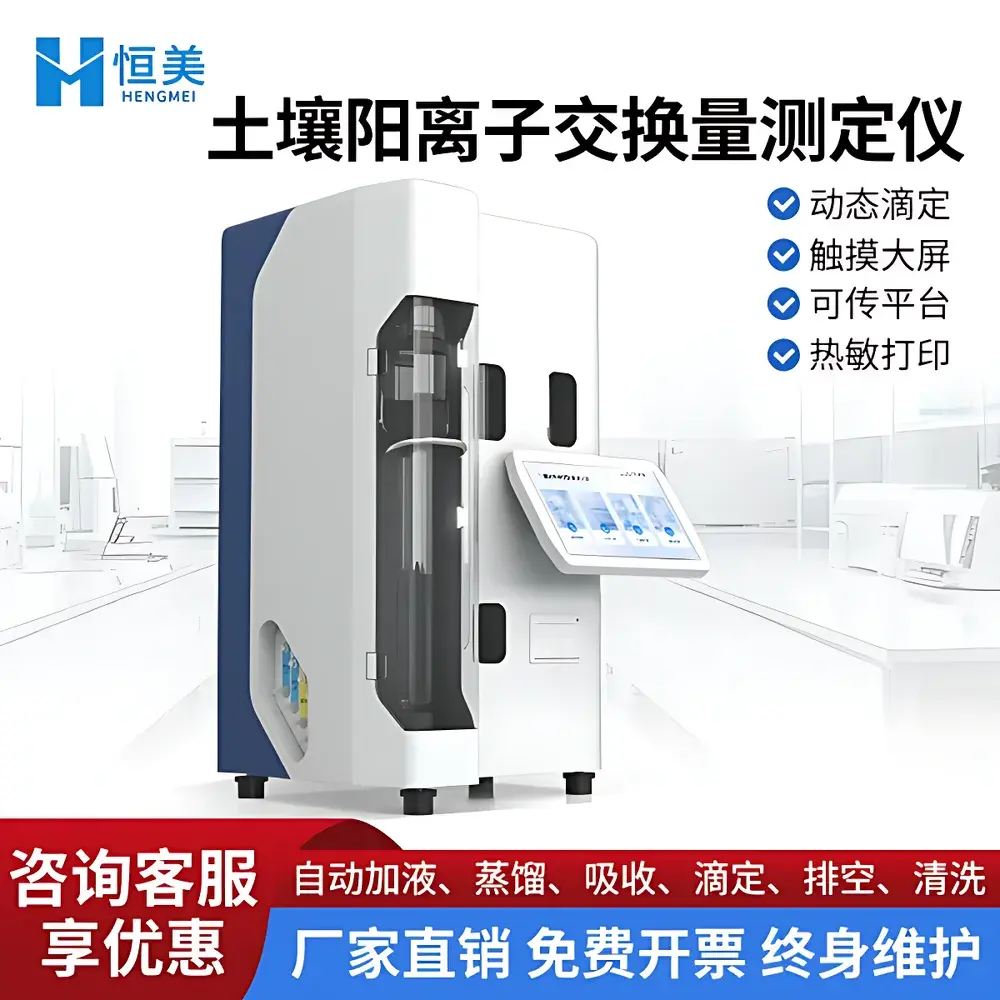
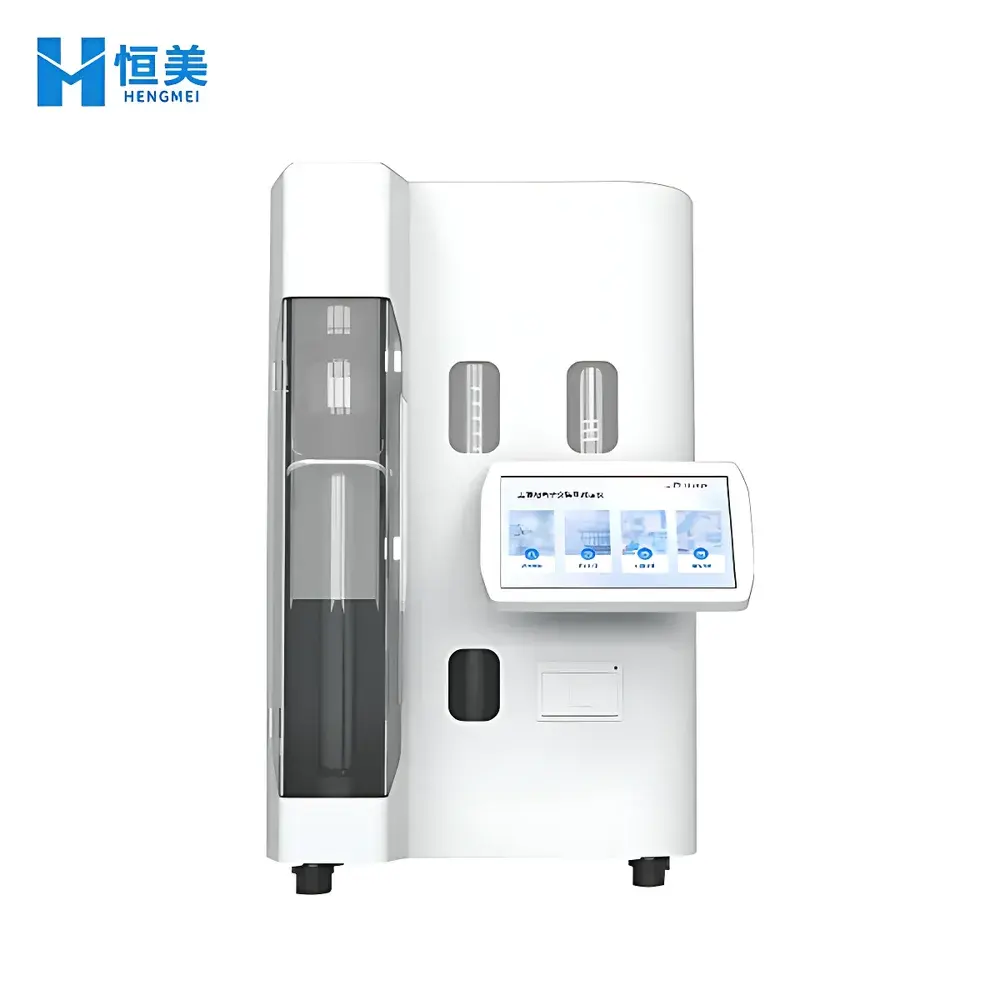
Hengmei HM-TYL3 Automated Soil Cation Exchange Capacity (CEC) Analyzer
| Brand | Hengmei |
|---|---|
| Origin | Shandong, China |
| Manufacturer Type | Direct Manufacturer |
| Country of Origin | China |
| Model | HM-TYL3 |
| Measurement Range | 0.1–240.0 mg N |
| Sample Capacity | ≤8.0 g (solid), ≤30.0 mL (liquid) |
| Titration Precision | ≤0.001 µL/step |
| Minimum Titration Volume | 0.5 µL/step |
| Titration Mode | Dynamic (simultaneous distillation & titration) |
| Accuracy | ≤1% error |
| Repeatability | RSD ≤0.5% |
| Analysis Time | 3–10 min per pre-digested sample |
| Power Consumption | ≤1500 W |
| Dimensions | 405 × 465 × 690 mm |
| Weight | 19 kg |
| Operating Temperature | 10–35 °C |
| Relative Humidity | ≤85% RH |
| Voltage | 220 V, 50 Hz |
| Touchscreen | 10.1″ Android 10 interface |
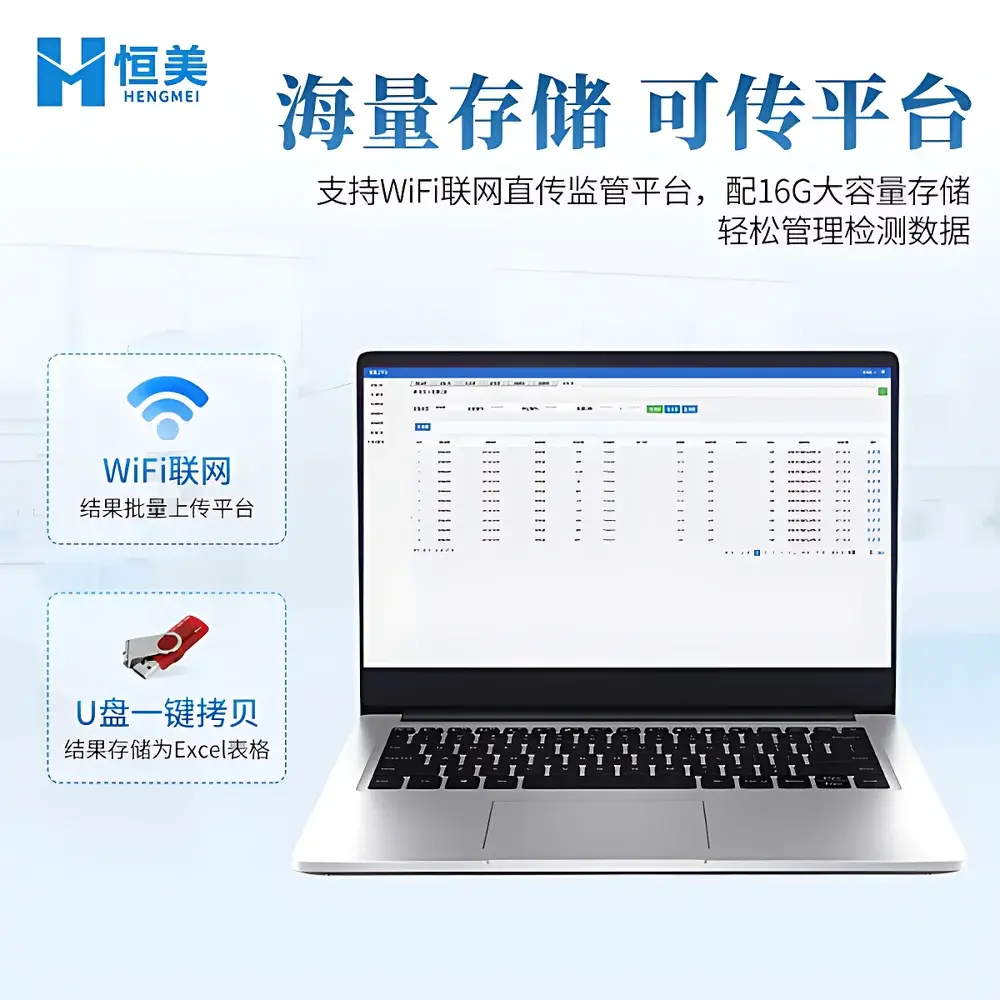
| Data Storage | 16 GB (≥5 million records) |
| Connectivity | Wi-Fi enabled |
| Output | Excel export via USB, thermal report printing, batch upload capability |
| Safety Features | Condensate flow monitoring with low-flow alarm, evaporator level/temperature/pressure protection, corrosion-resistant components, automated waste discharge and system cleaning |
Overview
The Hengmei HM-TYL3 Automated Soil Cation Exchange Capacity (CEC) Analyzer is a fully integrated, laboratory-grade instrument engineered for precise quantification of cation exchange capacity in soil and sediment matrices. It implements the standardized ammonium acetate saturation method—aligned with LY/T 1243–1999 (“Determination of Cation Exchange Capacity in Forest Soils”)—to deliver traceable, reproducible results under controlled analytical conditions. The system operates on a sequential electrochemical–distillative principle: soil samples are saturated with 1 mol/L ammonium acetate, excess reagent is removed by ethanol washing, MgO is added to liberate bound NH₄⁺ as NH₃ gas during alkaline distillation, and the evolved ammonia is captured in boric acid solution prior to potentiometric or colorimetric acid titration. This gravimetrically referenced nitrogen-to-CEC conversion ensures compliance with internationally recognized soil fertility assessment protocols.
Key Features
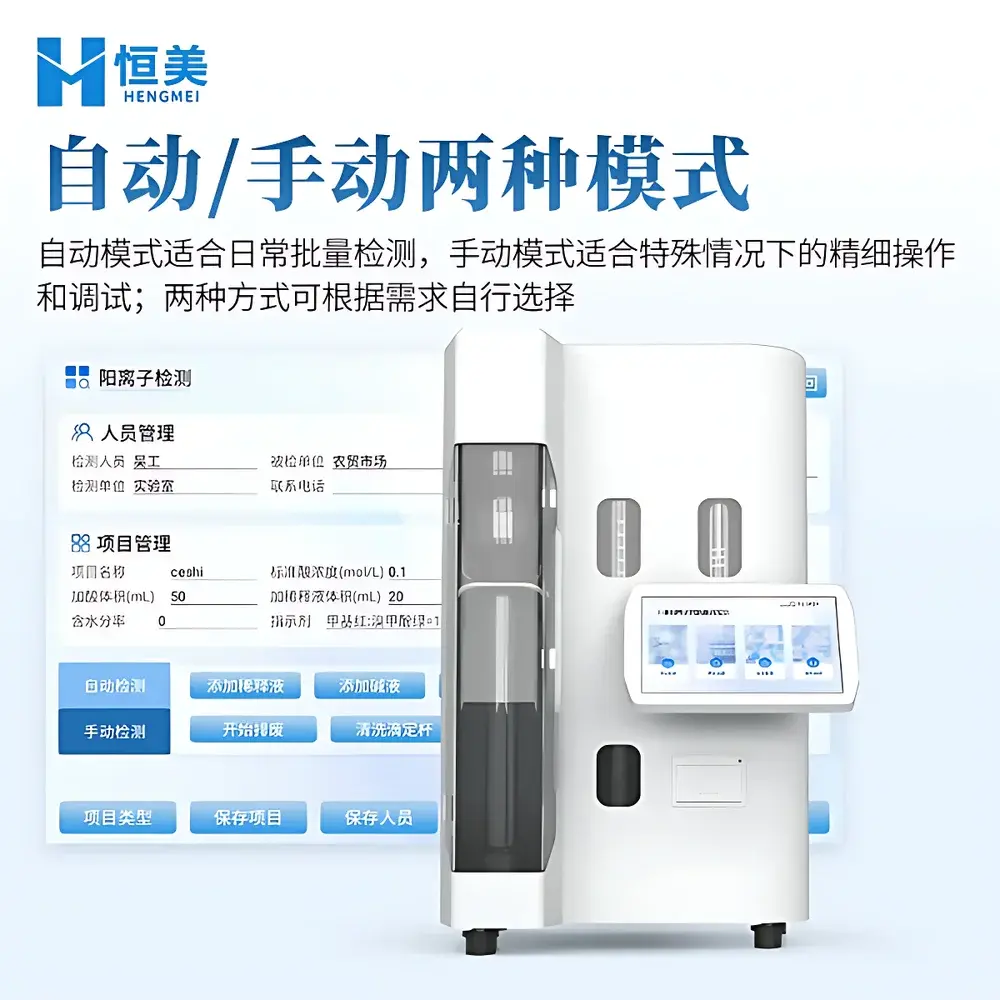
- 10.1-inch industrial-grade touchscreen running Android 10 OS, supporting intuitive workflow navigation and multi-user access control
- Dynamic titration architecture enabling real-time titrant delivery synchronized with distillation—reducing total analysis time by 30–50% versus conventional static methods
- High-resolution micro-dosing pump with ≤0.001 µL/step precision and 0.5 µL minimum dispensing volume, ensuring sub-milligram nitrogen quantification fidelity
- Integrated condensate management system featuring real-time flow rate monitoring, low-flow acoustic alarm, and automatic shutoff to conserve cooling water
- Triple-layer safety interlock for evaporator operation: liquid level sensor, temperature threshold cutoff, and pressure relief valve activation
- Chemically resistant fluidic pathway constructed from PTFE, borosilicate glass, and 316 stainless steel—designed for long-term exposure to ammonium acetate, ethanol, and strong alkali
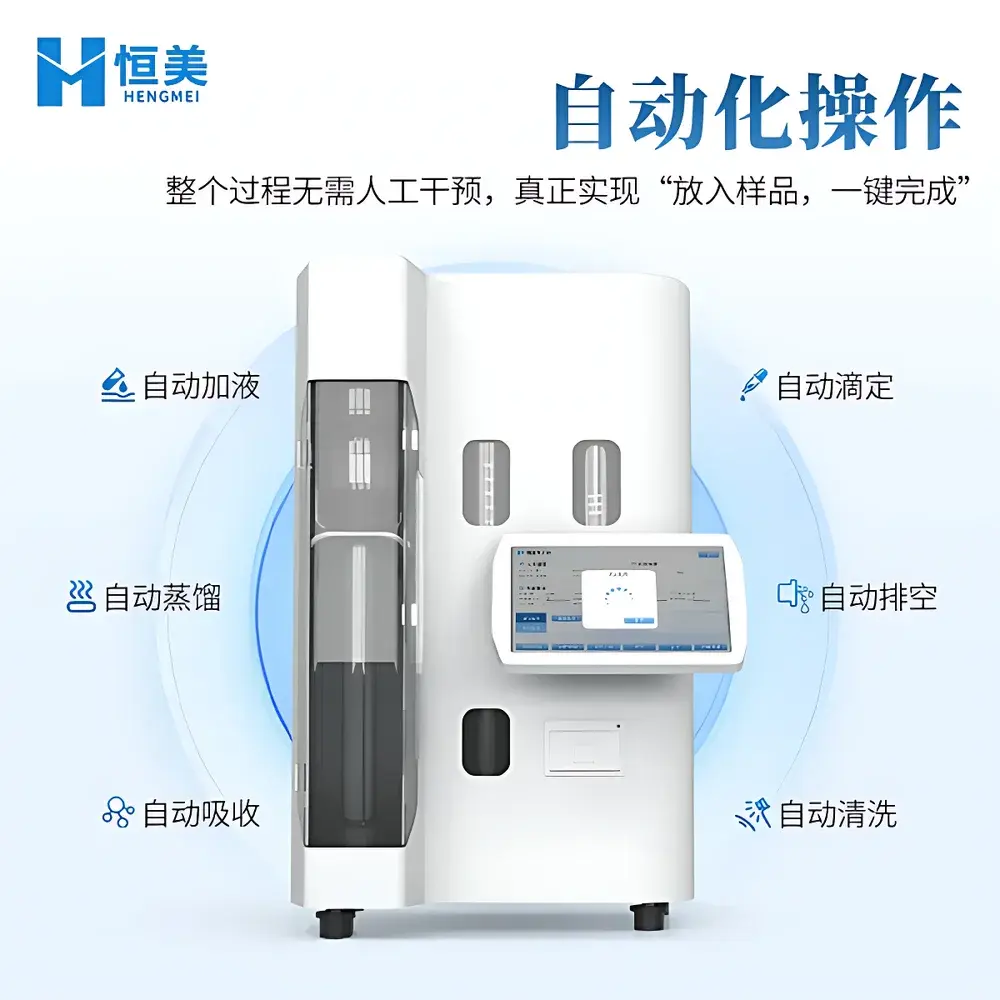
- Automated post-analysis sequence including waste evacuation, internal rinse cycles, and air-drying of distillation traps to minimize carryover and cross-contamination
- Thermal line printer with auto-report generation upon completion; supports customizable header templates and GLP-compliant metadata stamping (date/time/operator ID)
Sample Compatibility & Compliance
The HM-TYL3 accommodates solid soil samples up to 8.0 g and aqueous extracts or leachates up to 30.0 mL, making it suitable for routine agricultural testing, environmental site assessments, and regulatory soil screening programs. Its operational methodology conforms to LY/T 1243–1999 and is technically compatible with parallel implementation of ISO 11260:1994 (soil CEC by ammonium acetate extraction) and ASTM D4373–22 (standard test method for CEC of soils). All critical process parameters—including distillation time, condensate flow rate, titrant volume, and endpoint detection—are logged with timestamped audit trails, satisfying basic requirements for GLP documentation and internal quality assurance frameworks.
Software & Data Management
Data acquisition and reporting are managed through an embedded Linux-based application layer interfaced with Android 10 middleware. Each analysis generates a structured CSV/Excel file containing raw titration curves, calculated NH₃-N mass, stoichiometric CEC value (cmolc/kg), and instrument status flags. Files are stored locally on the 16 GB eMMC drive (retaining ≥5 million records) and can be exported directly to USB mass storage devices without external software. Wi-Fi connectivity enables secure HTTP(S) transmission to centralized LIMS or government environmental monitoring platforms—supporting TLS 1.2 encryption and configurable API endpoints. System logs include operator login history, calibration events, and maintenance alerts, facilitating traceability during internal audits.
Applications
- Routine assessment of soil fertility and nutrient-holding capacity in agronomic laboratories
- Regulatory compliance testing for contaminated land remediation projects requiring CEC-based attenuation modeling
- Research studies evaluating clay mineralogy, organic matter content, and pH-dependent exchange behavior
- Quality control of soil amendments, biochars, and engineered sorbents used in phytoremediation
- Forestry and ecological survey programs where base saturation and buffering capacity inform species selection
FAQ
What standard methods does the HM-TYL3 support?
It is validated for LY/T 1243–1999 and functionally aligned with ISO 11260 and ASTM D4373.
Can the instrument be integrated into an existing LIMS environment?
Yes—via Wi-Fi-enabled RESTful API or direct USB file transfer; custom field mapping is supported.
Is user calibration required before each run?
No—system self-calibration occurs at startup; acid standardization is performed manually per ISO 8655 guidelines prior to batch analysis.
How is data integrity ensured during extended unattended operation?
All measurements are written to non-volatile memory with CRC-32 checksum validation; power-loss recovery resumes from last stable checkpoint.
Does the system meet electrical safety and EMC requirements for EU laboratories?
It complies with IEC 61010-1 (safety) and IEC 61326-1 (EMC); CE marking documentation available upon request.
Related Products







