
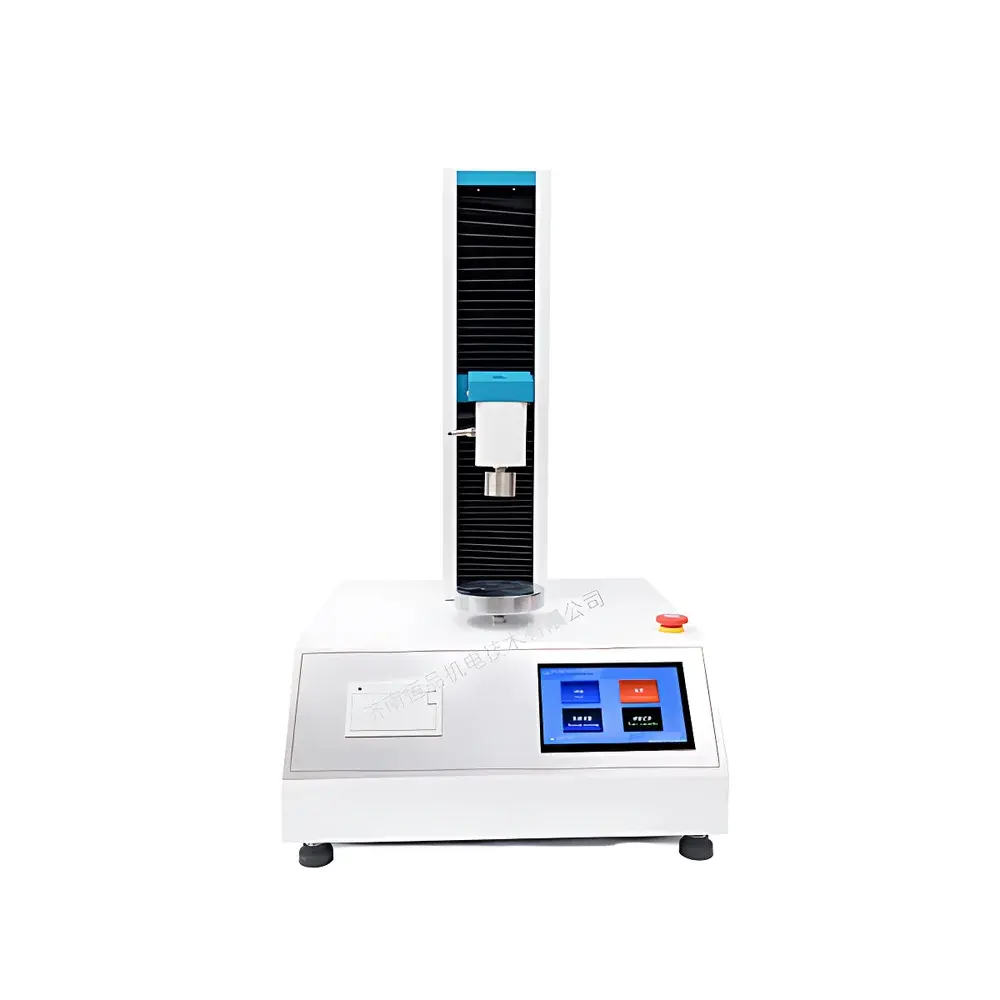
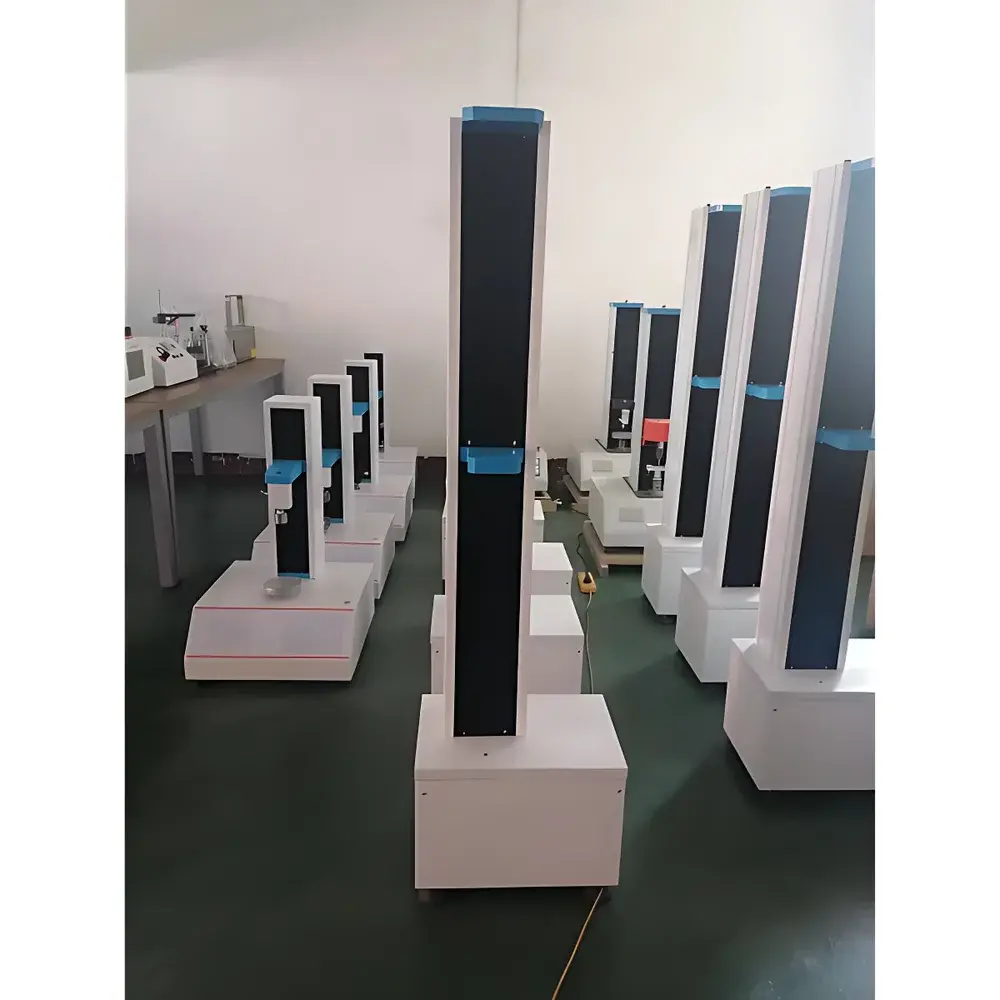
Hengpin HP603 Single-Particle Compression Tester
| Brand | Hengpin (Jinan Hengpin Instrument Co., Ltd.) |
|---|---|
| Origin | Shandong, China |
| Manufacturer Type | Direct Manufacturer |
| Model | HP603 |
| Force Capacity | 500 N (optional load cells: 100 N, 200 N, 1000 N, 2000 N, 5000 N) |
| Resolution | 0.01 N |
| Accuracy | ±0.1 N |
| Test Mode | Fracture Strength Measurement |
| Speed Range | 1–500 mm/min (adjustable in real time) |
| Speed Accuracy | ±0.1 mm/s |
| Dimensions (W×D×H) | 540 × 280 × 1250 mm |
| Weight | ~55 kg |
| Power Supply | AC 220 V ±10%, 50 Hz |
Overview
The Hengpin HP603 Single-Particle Compression Tester is an electromechanical force-measurement system engineered for precise, repeatable quantification of compressive fracture strength in discrete, free-standing granular specimens. It operates on the principle of quasi-static uniaxial compression: a motor-driven precision crosshead applies controlled, linear displacement to a calibrated load cell via a high-rigidity screw-driven actuator, while simultaneously recording real-time force (N) and displacement (mm) data. Designed specifically for single-entity mechanical characterization—rather than bulk material testing—the instrument enables deterministic evaluation of structural integrity, brittleness, and failure thresholds in fragile or heterogeneous particles where macro-scale testing yields non-representative results. Its architecture adheres to fundamental metrological requirements for mechanical testing per ISO 7500-1 (static calibration of force-proving instruments) and ASTM E4 (load verification of testing machines), ensuring traceability and inter-laboratory comparability.
Key Features
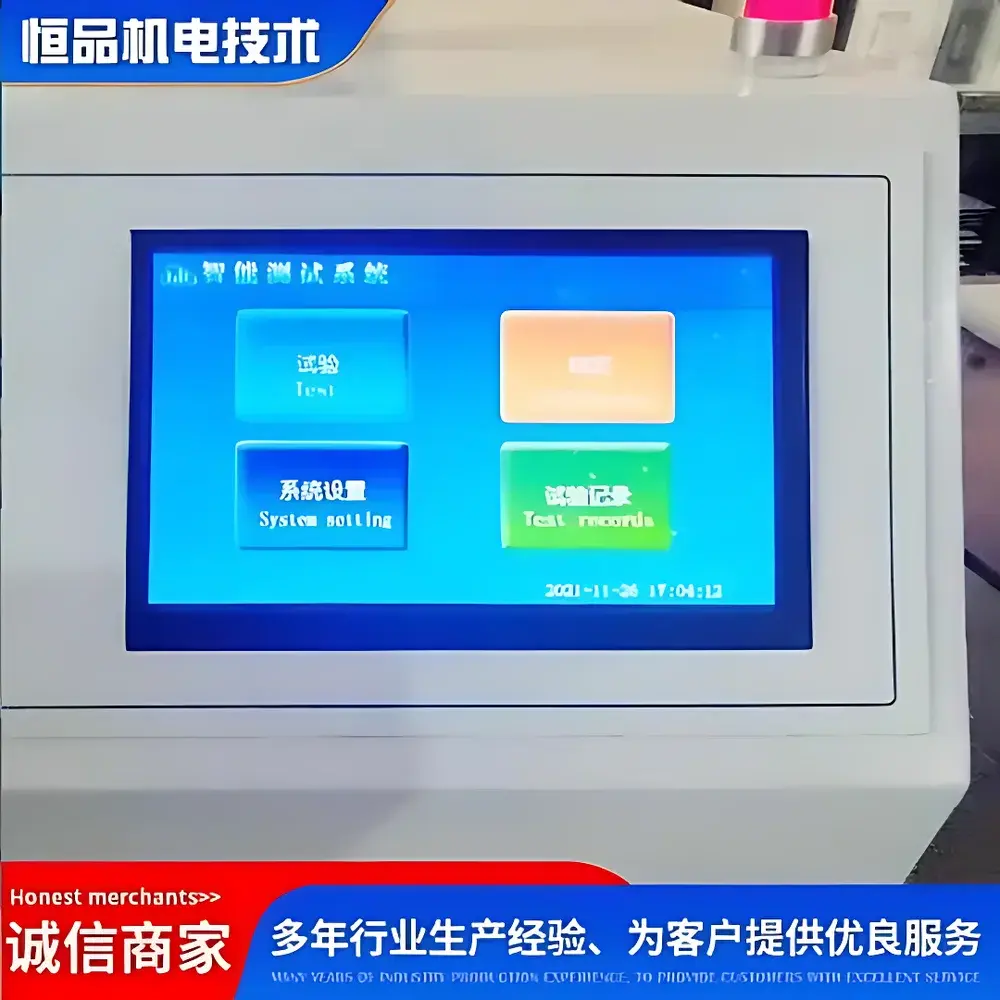
- High-resolution touchscreen interface with real-time graphical display of force-displacement curves, instantaneous test speed, and deformation metrics—enabling immediate visual assessment of yield point, peak load, and post-fracture behavior.
- Digitally controlled servo-motor drive with integrated planetary gearbox and preloaded ball screw mechanism, delivering smooth, backlash-free motion across the full 1–500 mm/min speed range with programmable acceleration/deceleration profiles.
- Modular load cell configuration supporting five standard capacity options (100 N to 5000 N), each factory-calibrated to ISO/IEC 17025-accredited standards; resolution maintained at 0.01 N across all ranges.
- Two-stage speed control logic: independent pre-contact approach velocity (e.g., 50 mm/min) and post-contact compression rate (e.g., 1 mm/min) to minimize inertial artifacts and ensure consistent loading conditions at initial contact.
- Automated return-to-origin function triggered upon test completion, minimizing operator intervention and enhancing throughput in high-volume QC environments.
- Onboard thermal-printer module with direct output of test ID, peak force, displacement at fracture, and statistical summaries (n ≥ 3); supports manual annotation and batch labeling.
Sample Compatibility & Compliance
The HP603 accommodates spherical, ellipsoidal, or irregularly shaped particles with diameters ranging from 0.5 mm to 25 mm and aspect ratios ≤ 3:1. Verified applications include diamond grits (mesh #20–#200), sintered tungsten carbide pellets, pharmaceutical coated seeds (e.g., brassica, soybean), agglomerated cat litter granules, polymer microspheres, rubber compounding additives, and ceramic oxide agglomerates. All test fixtures are machined from hardened stainless steel (AISI 440C) with parallelism tolerance < 2 µm over 25 mm span. The system meets mechanical safety requirements per EN ISO 12100 and incorporates emergency stop circuitry compliant with IEC 60204-1. Data acquisition firmware supports audit-trail generation for GLP/GMP-regulated environments, including timestamped operator ID, calibration status flags, and version-controlled test method parameters.
Software & Data Management
Embedded firmware stores up to 10,000 test records locally with metadata (date/time, operator, sample ID, load cell ID, speed profile). USB export enables CSV-formatted data transfer for downstream analysis in MATLAB, Python (NumPy/Pandas), or statistical packages (JMP, Minitab). Optional PC-based software (Hengpin TestSuite v3.2) provides advanced curve fitting (Weibull modulus estimation), pass/fail thresholding against user-defined specification limits (e.g., USP <1092> for coated seed durability), and automated report generation compliant with FDA 21 CFR Part 11 requirements—including electronic signatures, change history logs, and role-based access controls.
Applications
- Quality control of abrasive grits in superhard material manufacturing (ISO 6344-2, ISO 8486-2).
- Durability validation of film-coated agricultural seeds per OECD TG 208 and national seed certification protocols.
- Mechanical screening of catalyst pellets and adsorbent beads in chemical process development.
- Research into fracture mechanics of brittle crystalline materials (e.g., quartz, silicon carbide) under confined compression.
- Formulation optimization of pet litter clumping agents through controlled crush resistance profiling.
- Validation of 3D-printed micro-scaffolds and pharmaceutical granules for oral solid dosage forms.
FAQ
What particle size range is supported?
The standard fixture accommodates particles 0.5–25 mm in maximum dimension; custom platens are available for sub-millimeter or oversized specimens.
Can the system perform cyclic or creep tests?
No—this is a dedicated single-cycle fracture tester; it does not support dwell periods, load holding, or multi-cycle fatigue protocols.
Is third-party calibration documentation included?
Yes—each unit ships with a manufacturer’s calibration certificate traceable to CNAS-accredited reference standards; optional UKAS-certified recalibration services are available.
How is compliance with regulatory data integrity requirements addressed?
Firmware implements ALCOA+ principles: data is immutable post-acquisition, timestamps are hardware-generated, and all parameter changes are logged with operator ID and reason code.
What maintenance is required?
Annual verification of load cell linearity and crosshead alignment is recommended; no routine lubrication of the ball screw is necessary due to sealed pre-greased design.



