
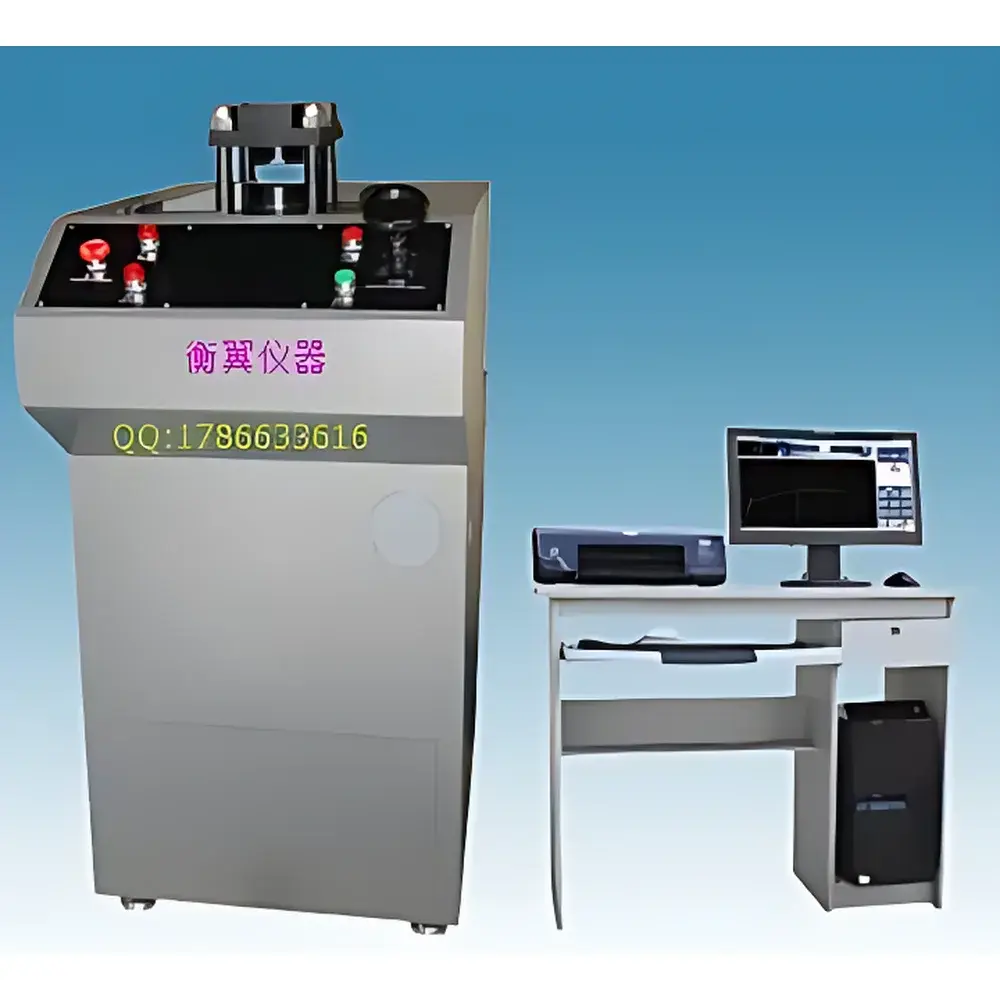
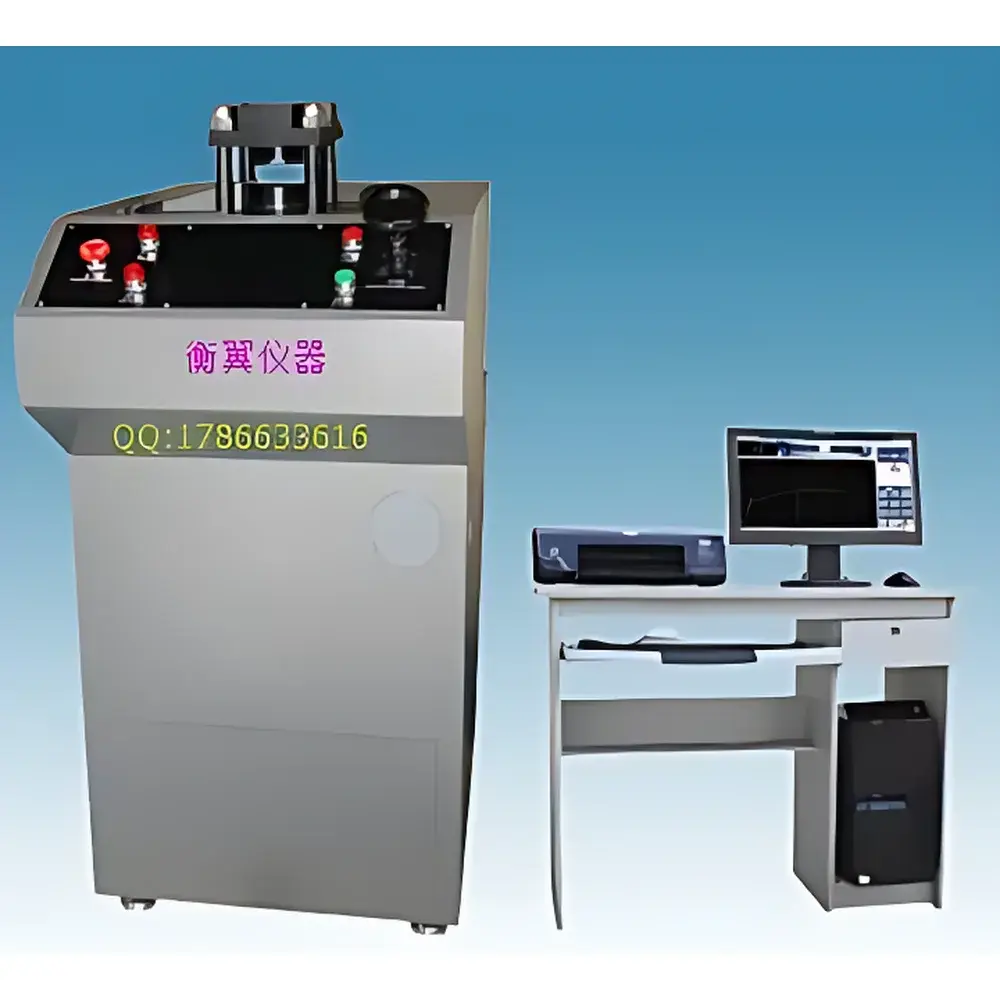
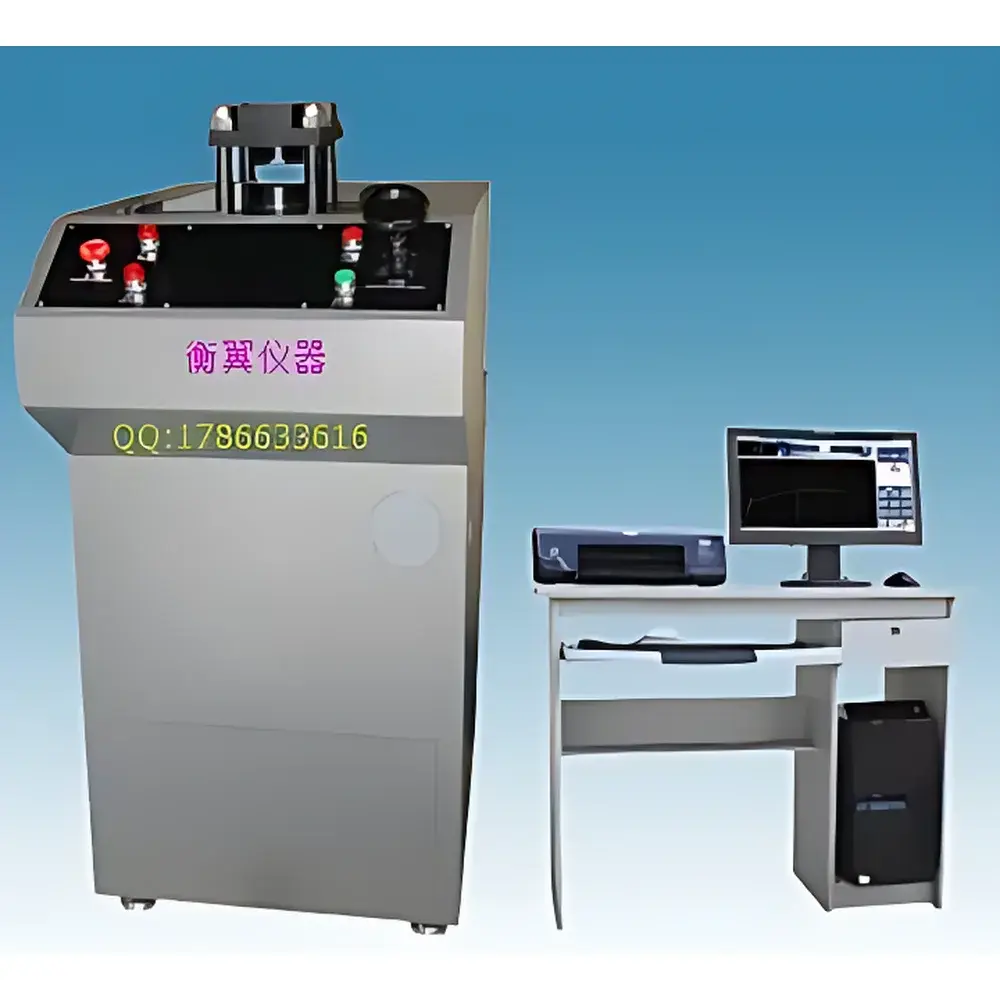
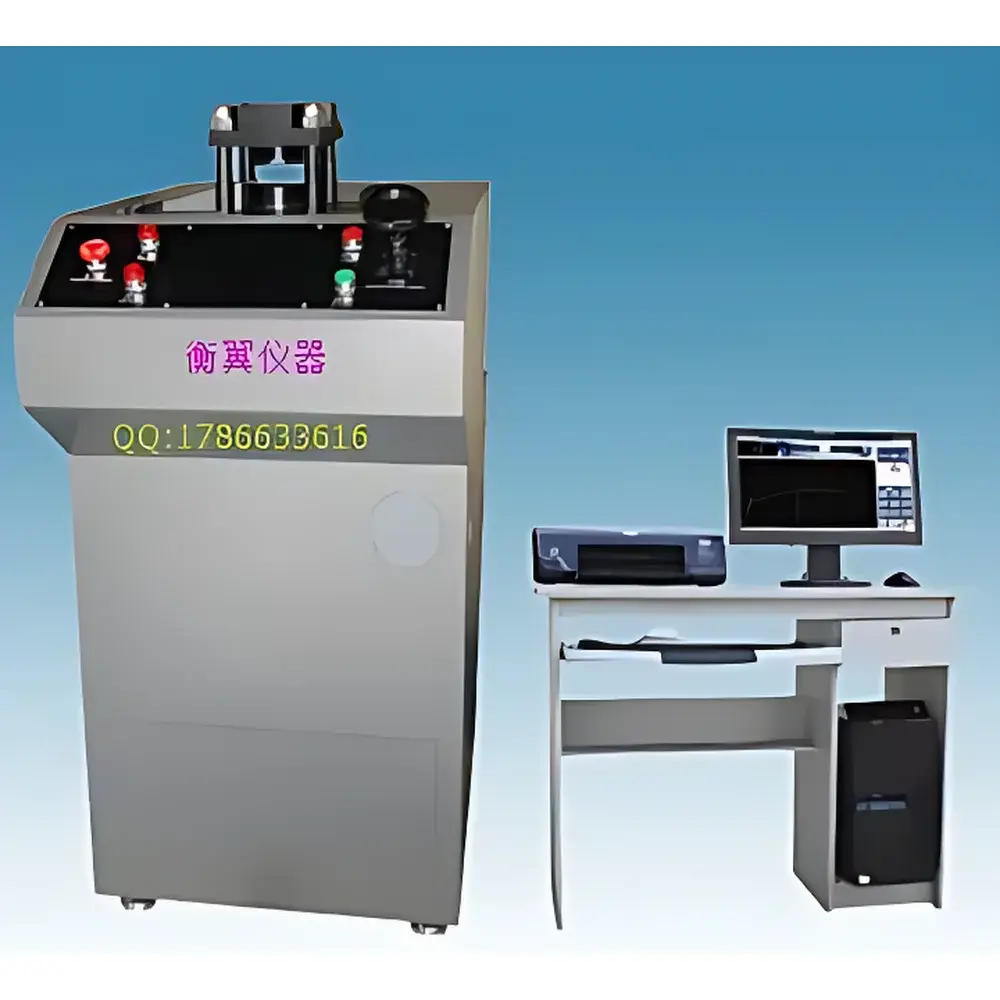
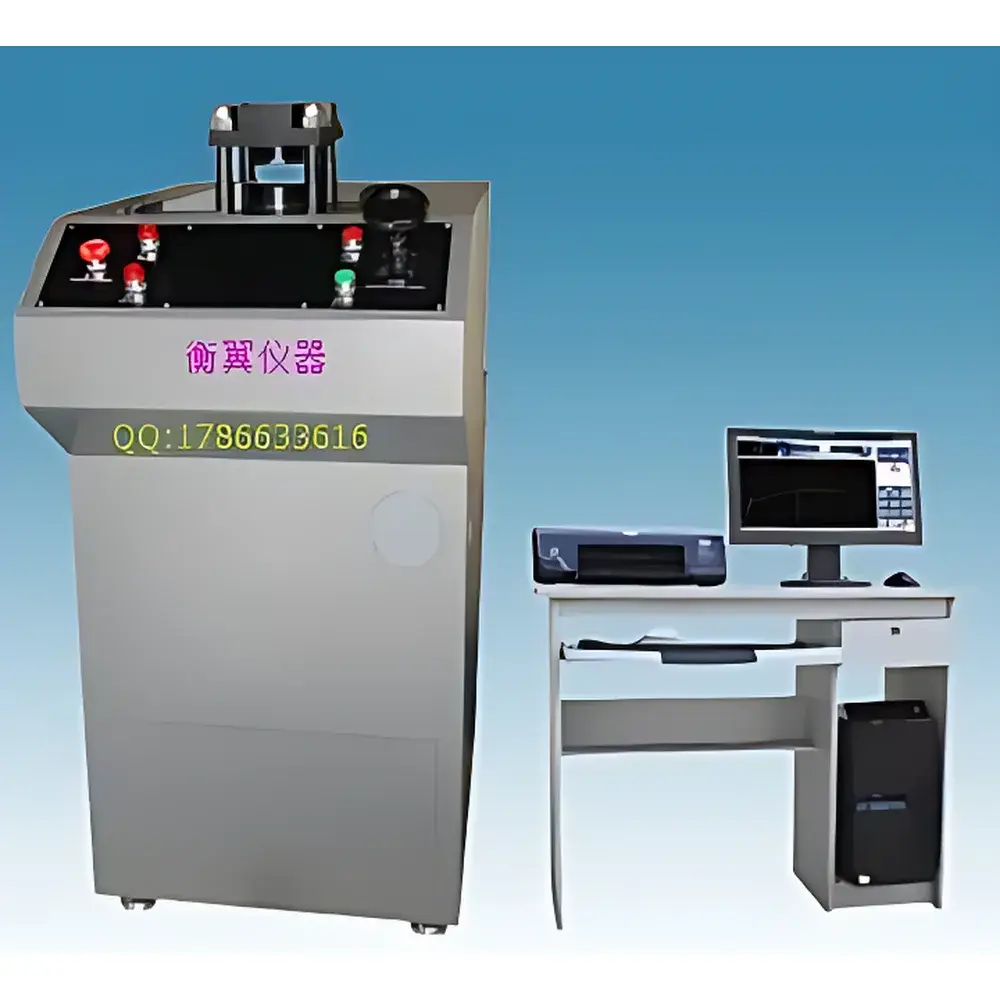
Hengyi HY(BT)-60B Computer-Controlled Erichsen Cupping Testing Machine
| Brand | Hengyi / Hengyitest |
|---|---|
| Origin | Shanghai, China |
| Manufacturer Type | Direct Manufacturer |
| Regional Origin | Domestic (China) |
| Model | HY(BT)-60B |
| Instrument Type | Fully Automatic |
| Max Test Force | 60 kN |
| Force Measurement Range | 0.2–60 kN |
| Force Accuracy | ±1% |
| Test Speed | 2–100 mm/min (constant-rate control) |
| Punch Diameter | φ20 ± 0.05 mm |
| Specimen Thickness Capacity | 0.05–2 mm |
| Clamping Piston Stroke | 40 mm |
| Cupping Depth Resolution | 0.01 mm |
| Control System | PC-based with proprietary amplifier & high-precision optical encoder |
| Compliance | GB/T 4156–2023 (revised from GB 4156–1984), GB/T 5125–2008 (revised from GB 5125–1985) |
Overview
The Hengyi HY(BT)-60B Computer-Controlled Erichsen Cupping Testing Machine is a precision mechanical testing system engineered for quantitative evaluation of the ductility and deep-drawing behavior of metallic sheet materials under biaxial tensile stress. Based on the standardized Erichsen cupping principle—where a hemispherical punch progressively deforms a clamped circular specimen until through-thickness cracking occurs—the instrument measures the critical cupping depth (Erichsen value, IE) as an index of formability. Unlike legacy hydraulic systems constrained by fluid compressibility and pressure transducer drift, the HY(BT)-60B employs a servo-motor-driven loading mechanism with closed-loop velocity feedback, enabling true constant-rate displacement control across its full speed range (2–100 mm/min). This architecture eliminates rate-dependent hysteresis and improves repeatability in comparative material qualification workflows common in automotive stamping, appliance manufacturing, and aerospace sheet metal procurement.
Key Features
- Servo-electric actuation system delivering precise, programmable crosshead motion without hydraulic oil maintenance or thermal drift.
- High-stiffness load frame with integrated wheel-spoke type load cell (replacing conventional hydraulic sensors), calibrated to ±1% full-scale accuracy per ISO 7500-1 Class 1 requirements.
- Optical grating-based displacement transducer for cupping depth measurement with 0.01 mm resolution—traceable to national metrological standards.
- Dual-range force sensing (0.2–60 kN) optimized for both ultra-thin foils (down to 0.05 mm thickness) and structural gauges up to 2 mm.
- PC-based control interface with proprietary firmware supporting real-time curve plotting, multi-curve overlay, batch test management, and automated report generation in PDF/Excel formats.
- Compliance-ready data audit trail: timestamped raw data files, operator ID logging, and parameter change history—aligned with GLP documentation practices for internal QA labs.
Sample Compatibility & Compliance
The HY(BT)-60B accommodates flat, circular specimens (typically Ø100 mm) cut from rolled or annealed metallic sheets—including low-carbon steels, stainless grades, aluminum alloys (e.g., AA5052, AA6016), copper, and titanium foils. Its adjustable clamping system ensures uniform contact pressure distribution across variable thicknesses (0.05–2 mm), mitigating edge buckling artifacts. The machine implements the core geometric and procedural requirements of GB/T 4156–2023 (equivalent to ISO 20482:2022) for ferrous metals and GB/T 5125–2008 (harmonized with ASTM E643–21 Annex A1) for nonferrous materials. While not certified to ISO/IEC 17025, its measurement uncertainty budget supports routine in-house verification against certified reference specimens traceable to NIM (National Institute of Metrology, China).
Software & Data Management
The embedded control software runs on a dedicated industrial PC with Windows OS and provides a deterministic real-time acquisition layer sampling at ≥1 kHz. All test parameters—including punch displacement, applied load, and time—are logged synchronously with 64-bit floating-point precision. Export functions support CSV for third-party statistical analysis (e.g., Minitab, JMP) and XML for LIMS integration. Audit logs record user login sessions, method modifications, calibration events, and result approvals—enabling partial alignment with FDA 21 CFR Part 11 electronic record requirements when deployed with supplementary IT governance controls (e.g., domain authentication, encrypted backups). No cloud connectivity is implemented; data residency remains fully on-premise.
Applications
- Quality conformance testing of incoming coil stock in Tier-1 automotive suppliers verifying drawing limits prior to press shop release.
- Developmental assessment of new alloy tempers or surface treatments (e.g., Zn–Ni electroplating, Al–Si hot-dip coatings) where cupping resistance correlates with post-forming corrosion performance.
- Process validation of continuous annealing line parameters (temperature soak time, cooling rate) via correlation between IE values and r-value anisotropy measurements.
- Failure root cause analysis in stamping lines—differentiating material-related ductility deficits from die geometry-induced strain localization.
- Educational use in metallurgy laboratories for teaching fundamental concepts of plastic instability, necking onset, and Hill’s anisotropic yield criteria.
FAQ
Does the HY(BT)-60B comply with ASTM E643 or ISO 20482?
It implements the essential mechanical configuration and test execution logic of both standards but is formally validated against Chinese national standards GB/T 4156 and GB/T 5125. Cross-referencing to ISO/ASTM is supported via documented equivalency mapping in the user manual.
Can it test specimens thinner than 0.1 mm?
Yes—its high-sensitivity load cell and low-friction clamping design enable stable testing down to 0.05 mm thickness, provided specimens are handled with anti-static tweezers and mounted on rigid backing plates to prevent handling deformation.
Is third-party calibration certification available?
Hengyi offers optional factory calibration with NIST-traceable load and displacement standards; however, end-users must arrange local metrology lab verification to satisfy ISO/IEC 17025 accreditation requirements for accredited testing facilities.
What maintenance is required beyond routine cleaning?
Annual recalibration of the optical encoder and load cell is recommended; lubrication of the punch guide bushings every 500 test cycles using ISO VG 32 mineral oil; no hydraulic fluid changes or seal replacements are necessary.
Can test methods be password-protected?
Yes—the software supports role-based access control (administrator/operator) with configurable method edit permissions and digital signature enforcement for final result approval.



