
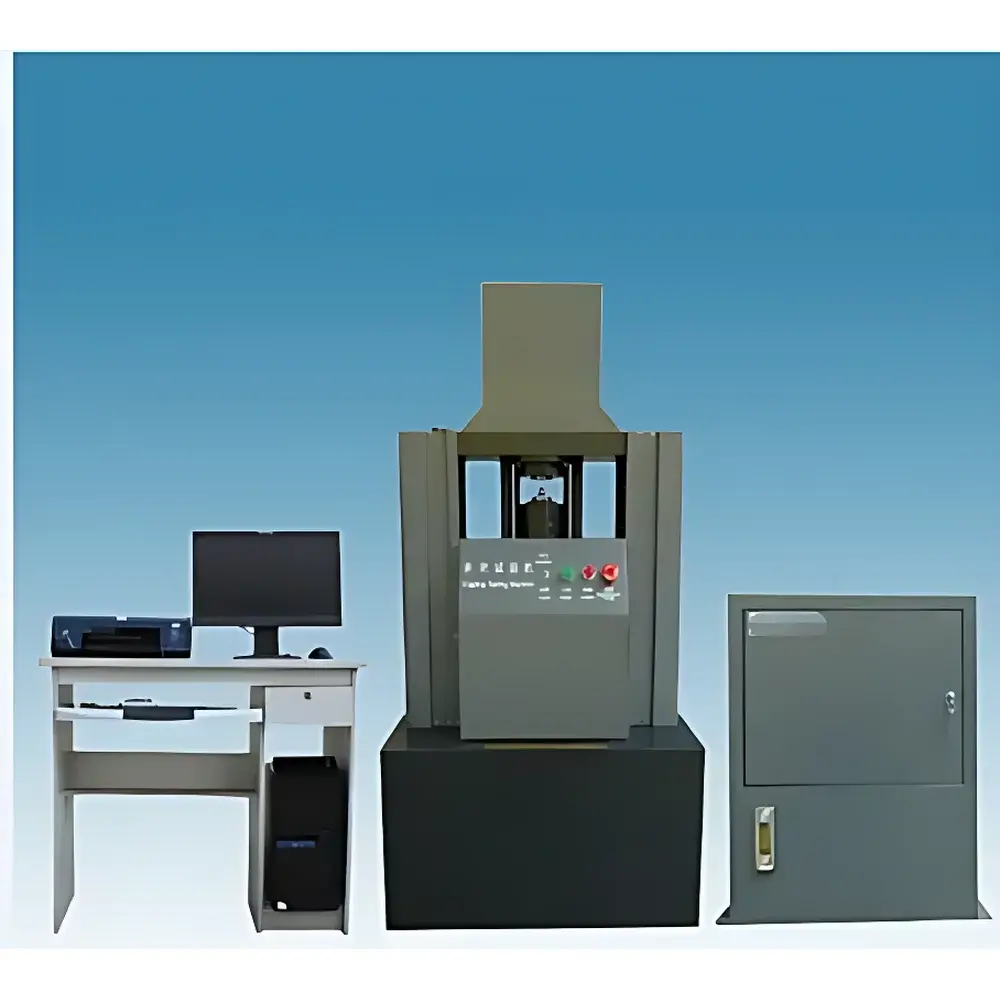
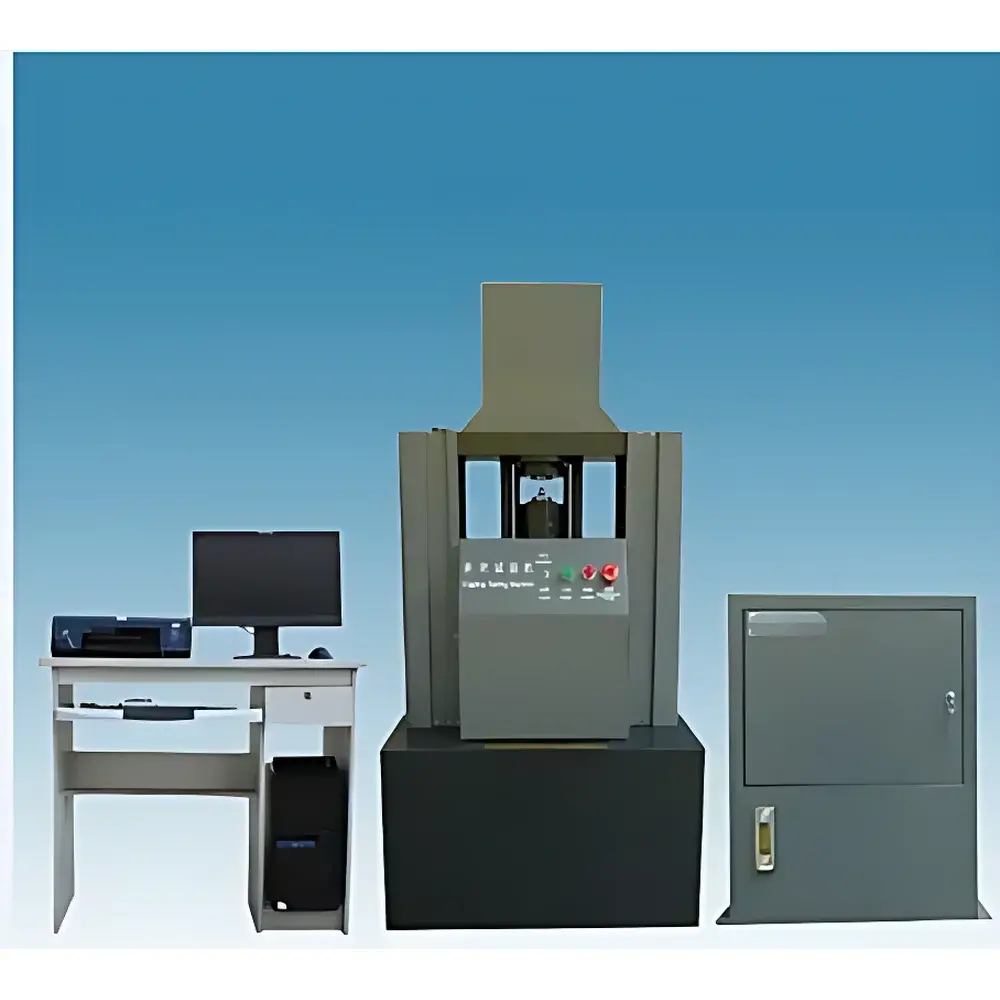
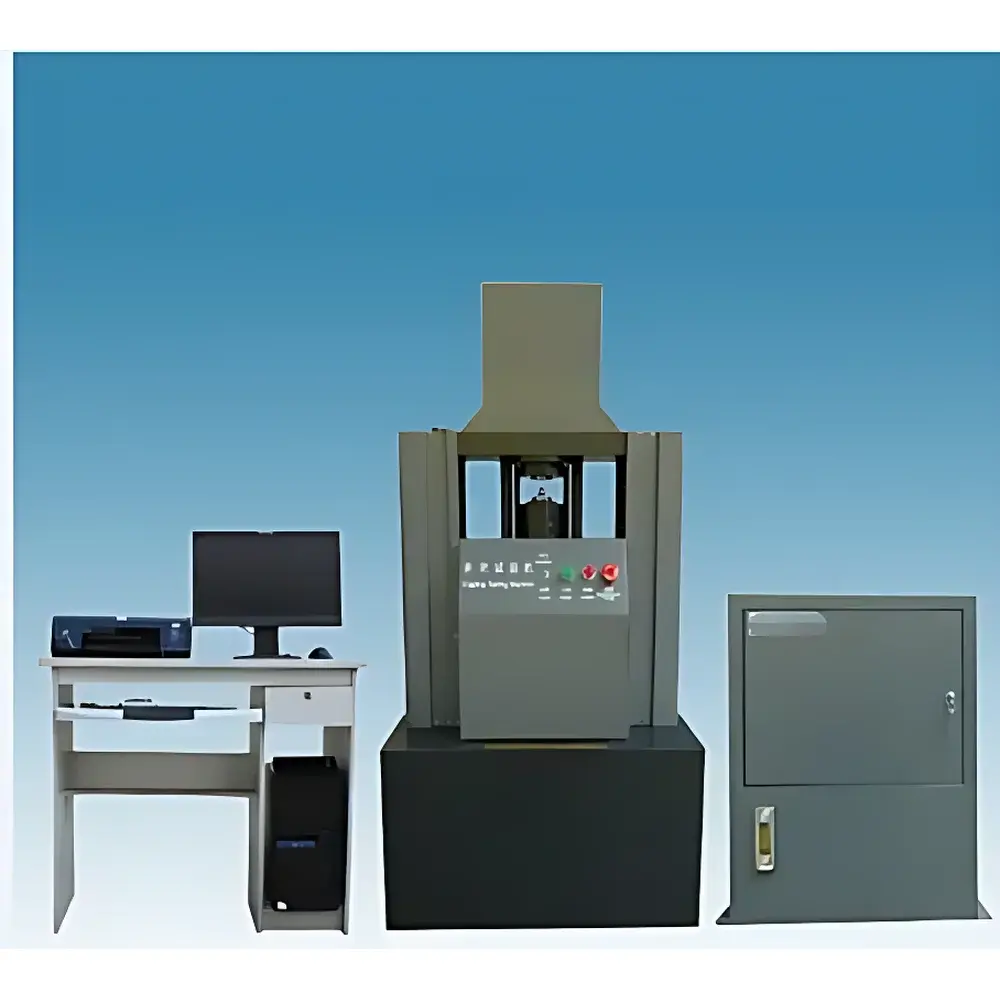
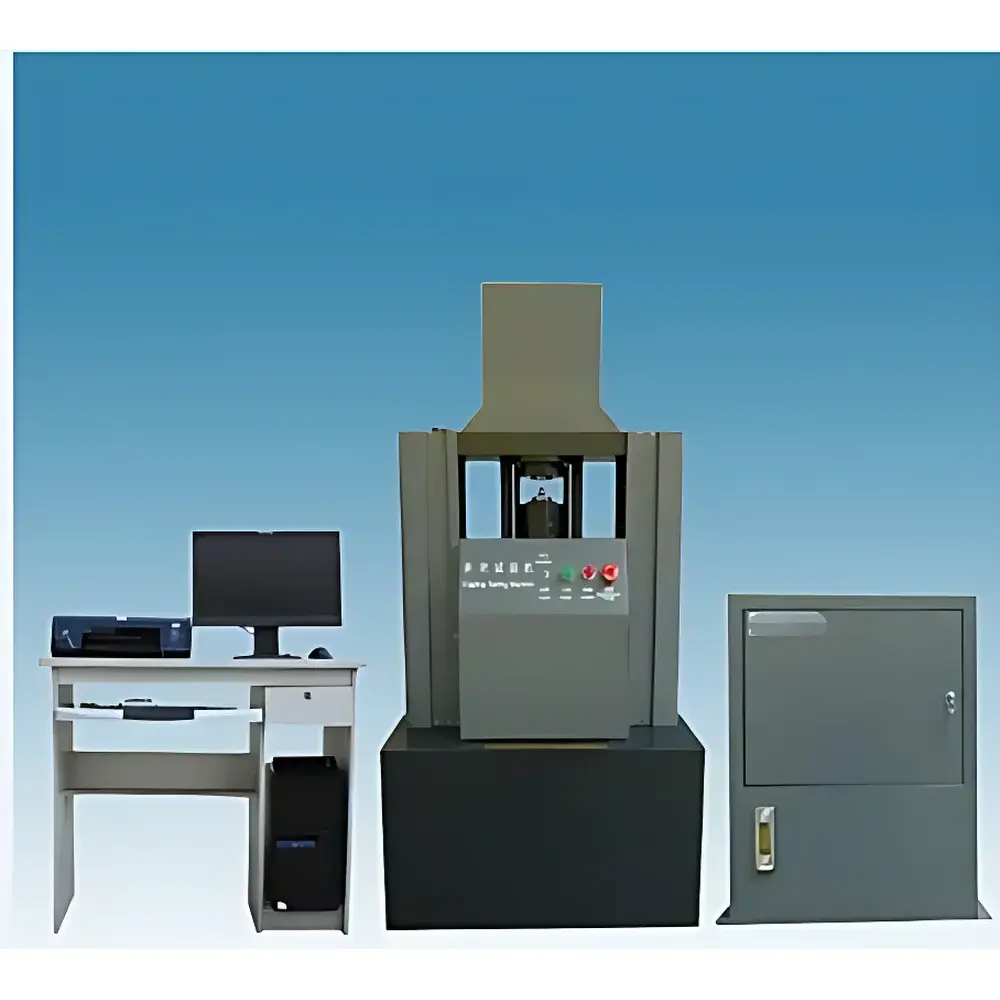
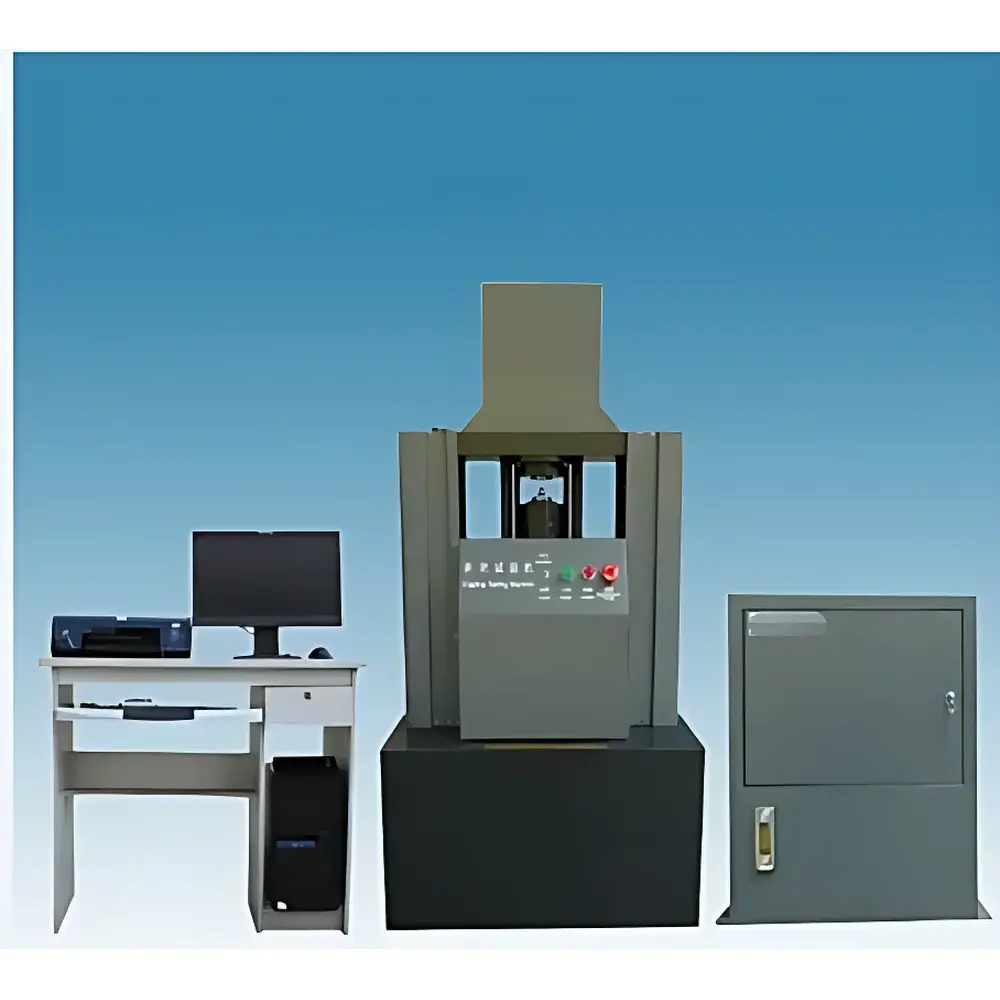
Hengyi HY(BT)-60W Computer-Controlled Erichsen Cupping Tester
| Brand | Hengyi |
|---|---|
| Origin | Shanghai, China |
| Manufacturer Type | Direct Manufacturer |
| Regional Category | Domestic (China) |
| Model | HY(BT)-60W |
| Price Range | USD 2,800 – 7,000 |
| Instrument Type | Fully Automated |
| Max Test Force | 60 kN |
| Force Measurement Range | 0.2–60 kN |
| Accuracy | ±1% FS |
| Test Speed | 2–100 mm/min (constant-rate control) |
| Specimen Thickness Capacity | 0.05–3 mm |
| Clamping Piston Stroke | 40 mm |
| Cupping Depth Resolution | 0.01 mm |
| Dimensions (W×D×H) | 700×570×1100 mm |
| Standard Tooling Set | 20 mm spherical punch, 33 mm die, 27 mm blankholder |
Overview
The Hengyi HY(BT)-60W Computer-Controlled Erichsen Cupping Tester is a precision electromechanical testing system engineered for quantitative evaluation of plastic deformation behavior and anisotropic formability in metallic thin sheets and strips. It operates on the fundamental principle of the Erichsen cupping test—defined in ISO 20482, ASTM E643, and GB/T 4156-2007—where a hemispherical punch is driven at a controlled displacement rate into a circular specimen clamped under constant edge pressure, inducing biaxial stretching until through-thickness cracking occurs. The resulting cupping depth (in mm), known as the Erichsen value (IE), serves as a standardized index of localized ductility and strain hardening capacity. Complementarily, the instrument supports cup drawing tests per GB/T 5125-2008 to determine earing behavior—quantifying planar anisotropy via height variation of drawn cups—and thereby enables comprehensive assessment of sheet metal suitability for deep-drawing operations in automotive, appliance, and packaging industries.
Key Features
- Fully servo-motor-driven loading system enabling precise constant-rate displacement control (2–100 mm/min), eliminating hydraulic hysteresis and flow instability inherent in legacy oil-pressure systems.
- High-accuracy load measurement via calibrated S-type load cell (0.2–60 kN range, ±1% full-scale accuracy), replacing outdated hydraulic pressure transducers to ensure traceable force fidelity.
- Optical grating-based displacement sensor with 0.01 mm resolution for direct, non-contact cupping depth measurement—minimizing mechanical play and thermal drift errors.
- Dual-mode operation: configurable for either standard Erichsen cupping (IE determination) or cup drawing (earing ratio analysis), each with independent parameter presets and calibration protocols.
- Integrated clamping mechanism delivering consistent 10 kN blankholder force across specimen thicknesses from 0.05 mm to 3.0 mm, validated by real-time load feedback and automatic pressure compensation.
- Rigid monolithic frame with optimized load path geometry ensures minimal deflection (<0.02 mm under 60 kN), preserving alignment integrity between punch, die, and blankholder throughout testing.
Sample Compatibility & Compliance
The HY(BT)-60W accommodates standard 60 mm diameter circular specimens cut from cold-rolled steel, aluminum alloys, titanium foils, and copper-based sheets. Its modular tooling set—including a 20 mm radius spherical punch, 33 mm die cavity, and 27 mm blankholder—conforms dimensionally to ISO 20482 Annex A and GB/T 4156-2007 Clause 5. All mechanical components are manufactured to ISO 2768-mK general tolerances, and force/displacement calibration certificates comply with ISO/IEC 17025 requirements when performed by accredited third-party laboratories. The system supports audit-ready documentation for GLP and IATF 16949-aligned quality control workflows, including raw data export in CSV and XML formats compatible with LIMS integration.
Software & Data Management
Control and analysis are executed via dedicated Windows-based software compliant with FDA 21 CFR Part 11 requirements for electronic records and signatures. The interface provides real-time graphical display of load–displacement curves, automatic IE value extraction at crack initiation (determined by acoustic emission threshold or optical fracture detection), and multi-curve overlay for inter-batch comparison. Data management includes user-level access control, timestamped audit trails, batch ID assignment, automated report generation (PDF/Excel), and long-term archival with SHA-256 hash verification. Calibration parameters are digitally locked and require dual-authentication to modify—ensuring data integrity across shifts and operators.
Applications
- Quality assurance of cold-rolled steel coils used in automotive body panels, where IE ≥ 8.5 mm indicates sufficient stretch-forming capability for complex stamping.
- Validation of aluminum alloy 5xxx/6xxx series sheet anisotropy for beverage can end stock, correlating earing ratio (ER) with rolling direction uniformity.
- R&D evaluation of advanced high-strength steels (AHSS), including DP and TRIP grades, under varying strain paths to map forming limit curve (FLC) precursors.
- Supplier qualification testing per OEM specifications (e.g., GMW14142, Ford WSS-M99P1111-A), requiring repeatable IE measurement within ±0.1 mm across 10 consecutive tests.
- Process optimization support for continuous annealing lines, linking cupping results to interstitial-free (IF) steel recrystallization kinetics and texture development.
FAQ
What standards does this tester fully support?
GB/T 4156-2007, GB/T 5125-2008, ISO 20482:2003, ASTM E643-21, and JIS Z 2247.
Can it test ultra-thin foils below 0.1 mm?
Yes—the high-sensitivity load cell (0.2 kN lower limit) and adaptive clamping design enable stable testing of foils down to 0.05 mm thickness without slippage or wrinkling.
Is the software validated for regulated environments?
Yes—electronic signature, audit trail, and calibration lock functions meet FDA 21 CFR Part 11 and EU Annex 11 requirements for GMP-compliant labs.
How is crack initiation detected during cupping?
Via synchronized load-drop algorithm (≥3% sudden force reduction) combined with optional integrated acoustic emission module (sold separately) for micro-crack onset identification.
What maintenance is required for long-term accuracy?
Annual recalibration of load cell and displacement sensor is recommended; lubrication-free linear guides and sealed servo motor eliminate routine mechanical servicing.



