
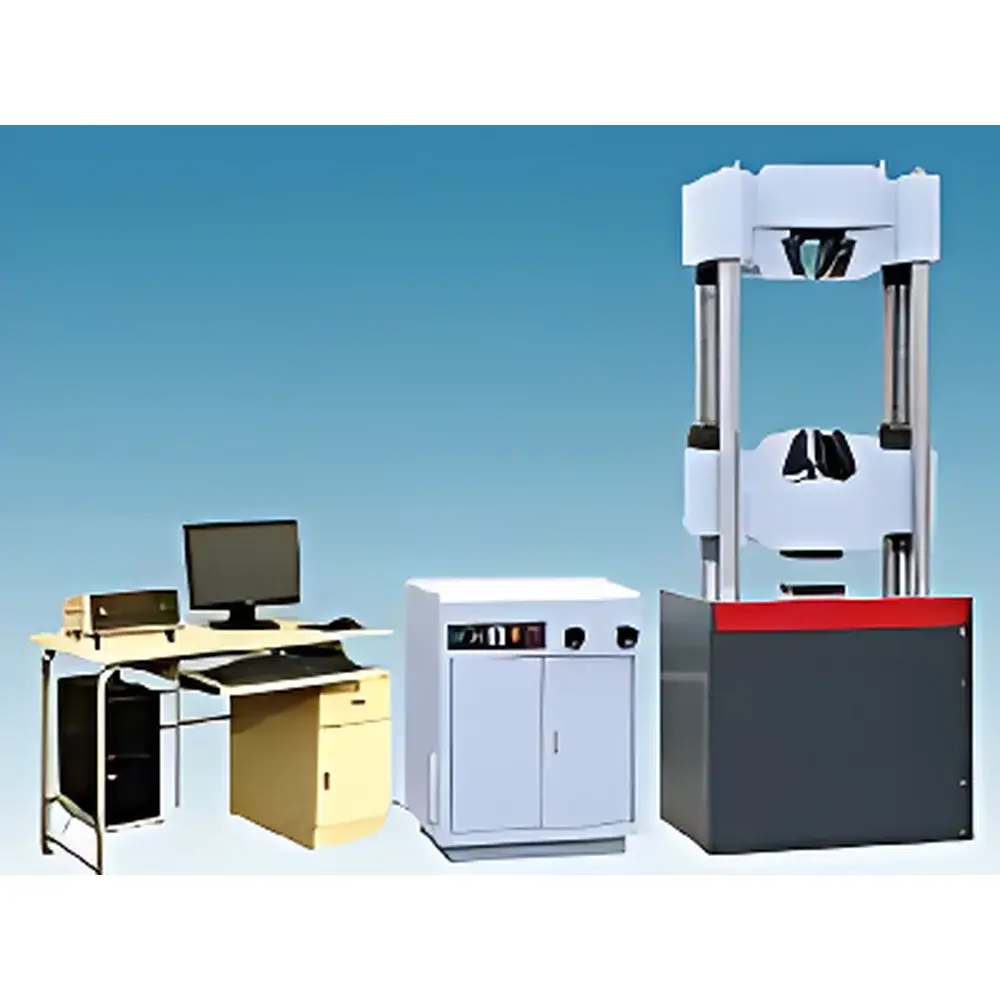
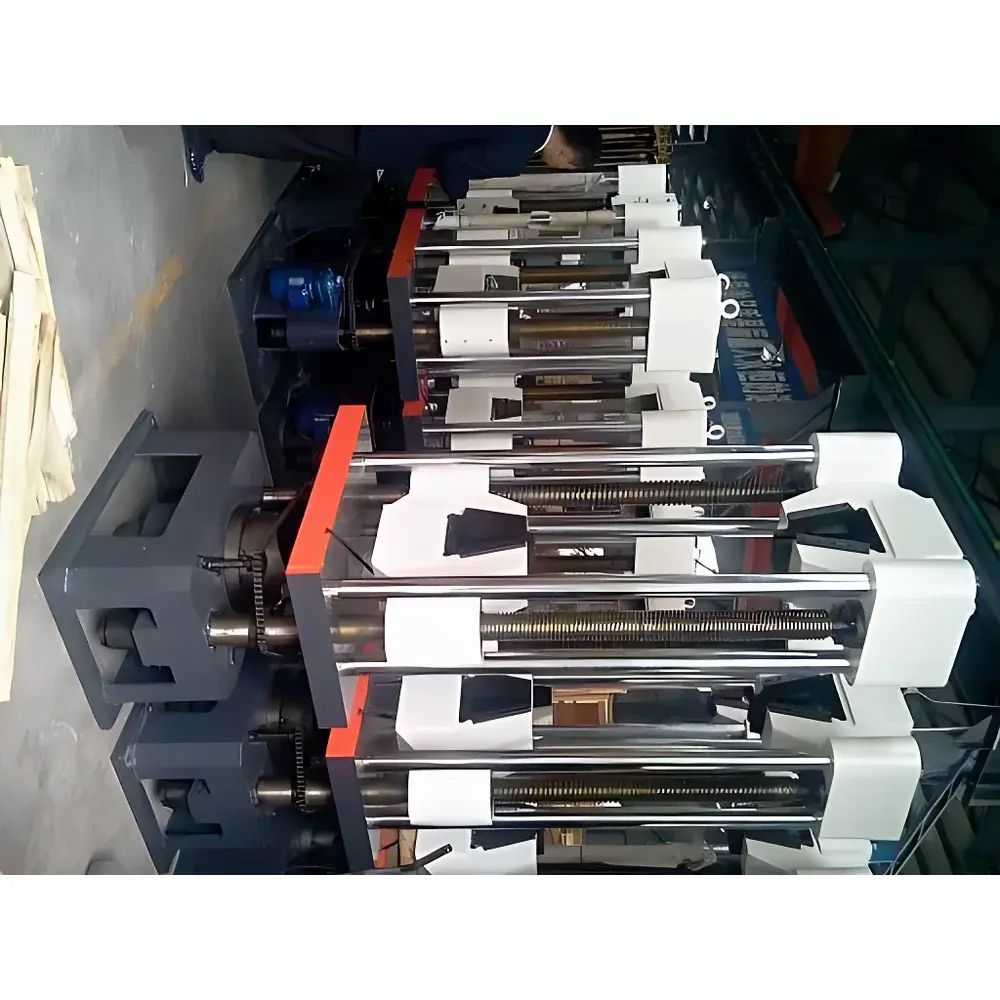
Hengyi HY(WE)100060 Computer-Controlled Electro-Hydraulic Proportional Universal Testing Machine
| Brand | Hengyi |
|---|---|
| Origin | Shanghai, China |
| Manufacturer Type | Direct Manufacturer |
| Country of Origin | China |
| Model | HY(WE)100060TYY |
| Instrument Type | Electro-Hydraulic Proportional Universal Testing Machine |
| Max Load Capacity | 0–1000 kN |
| Load Accuracy | ±0.5% FS |
| Deformation Measurement Accuracy | ±0.5% of reading |
| Displacement Measurement Accuracy | ±0.5% of reading |
| Compression Space | 600 mm |
| Tensile Space | 600 mm |
| Round Specimen Clamping Range | Φ20–Φ60 mm |
| Flat Specimen Thickness Capacity | 0–40 mm |
| Piston Stroke | 150 mm |
| Bend Support Span Adjustment | 100–600 mm |
| Shear Specimen Diameter | Φ10 mm |
| Stress Rate Control Range | 1–60 N/mm²/s |
| Strain Rate Control Range | 0.00025–0.0025 s⁻¹ |
| Closed-Loop Control Accuracy (Force/Displacement/Strain) | ±1% of setpoint |
| Host Dimensions (W×D×H) | 880 × 580 × 2860 mm |
| Motor Power | 1.5 kW, 3-phase |
| Weight | 3500 kg |
Overview
The Hengyi HY(WE)100060 is a computer-controlled electro-hydraulic proportional universal testing machine engineered for high-fidelity mechanical property evaluation of metallic and non-metallic materials under quasi-static loading conditions. It operates on the principle of servo-controlled hydraulic actuation, where proportional valve technology enables precise regulation of oil flow to the load cylinder—thereby delivering stable, repeatable force application across tension, compression, bending, and shear test modes. Designed in accordance with ISO 7500-1 (Class 1 accuracy), ASTM E4, and GB/T 228.1 standards, the system supports full compliance with GLP and GMP laboratory requirements when integrated with audit-trail-enabled software configurations. Its oil-below configuration provides enhanced structural rigidity and thermal stability, minimizing frame deflection during high-load testing up to 1000 kN.
Key Features
- Electro-hydraulic proportional control architecture with real-time feedback from high-precision load cells (±0.5% FS) and displacement transducers (±0.5% reading)
- Integrated microcomputer system featuring bilingual (English/Chinese) Windows-based software with automated calibration, auto-range switching, and multi-curve overlay functionality
- Dual-mode operation: manual hydraulic control for setup and fully automated closed-loop control for standardized tests
- Robust dual-column frame with reinforced crosshead guidance, ensuring alignment accuracy ≤ 0.15 mm/m over full stroke
- Motor-driven adjustable crosshead (600 mm tensile/compression travel) with worm-gear transmission for smooth positioning and repeatability
- Modular gripping systems supporting round specimens (Φ20–Φ60 mm), flat specimens (0–40 mm thickness), and dedicated shear fixtures (Φ10 mm)
- Real-time stress-rate (1–60 N/mm²/s) and strain-rate (0.00025–0.0025 s⁻¹) control with ±1% setpoint accuracy under closed-loop PID regulation
Sample Compatibility & Compliance
The HY(WE)100060 accommodates standard and custom geometries per ISO 6892-1, ASTM E8/E9/E290/E211, and GB/T 228.1–2021. It is validated for metallic alloys (steel, aluminum, titanium), cementitious composites (concrete, mortar), polymer sheets and rods, and fiber-reinforced laminates. All measurement subsystems—including load, displacement, and extensometer inputs—are traceable to national metrological standards. The system meets CE machinery directive requirements (2006/42/EC) and supports optional 21 CFR Part 11-compliant software modules for regulated environments, including electronic signatures, audit trails, and user-access level management.
Software & Data Management
The embedded Windows application provides ISO/IEC 17025-aligned data acquisition and reporting workflows. It captures raw sensor signals at ≥1 kHz sampling rate, applies digital filtering per ISO 13384-2, and computes standard mechanical parameters—including Fm, ReH, ReL, Rp0.2, Rm, and elastic modulus E—automatically per EN 10002-1. Test curves (load vs. displacement, stress vs. strain) support zoom, traversal, differential analysis, and multi-test comparison. Reports are exportable in PDF, Excel, and XML formats; metadata includes operator ID, environmental conditions, calibration dates, and instrument firmware version. Optional networked deployment enables centralized database archiving and remote monitoring via secure HTTPS interface.
Applications
- Mechanical qualification of structural steel grades per ASTM A615/A706 in construction QA labs
- Compressive strength and modulus determination of precast concrete elements under ISO 4012
- Tensile characterization of aerospace-grade aluminum extrusions (e.g., 7075-T6) per AMS 4027
- Bending stiffness evaluation of thermoplastic polymer plates (e.g., PC, PEEK) per ISO 178
- Shear strength validation of riveted or bolted joints in automotive chassis components
- Routine QC testing in foundry and forging facilities for yield-to-tensile ratio verification
FAQ
What standards does the HY(WE)100060 comply with for force measurement accuracy?
It conforms to ISO 7500-1 Class 1 requirements, with verified load cell linearity, hysteresis, and repeatability within ±0.5% of full scale.
Can the system be configured for ASTM E211-compliant plane-strain fracture toughness testing?
Yes—when equipped with clip-on extensometers and compliant fixtures, it supports J-integral and δ5 measurements per ASTM E1820 and E211.
Is remote software update and diagnostics supported?
Firmware and application updates are delivered via encrypted USB media; remote diagnostic access requires optional VPN-configured network module.
Does the controller support third-party extensometers?
It accepts analog (±10 V) and digital (RS422, TTL) inputs from major OEM extensometers including ZwickRoell, MTS, and Instron.
What maintenance intervals are recommended for hydraulic oil and filter replacement?
Oil analysis is advised every 2,000 operating hours; full oil change and cartridge filter replacement every 5,000 hours or biannually—whichever occurs first.



