
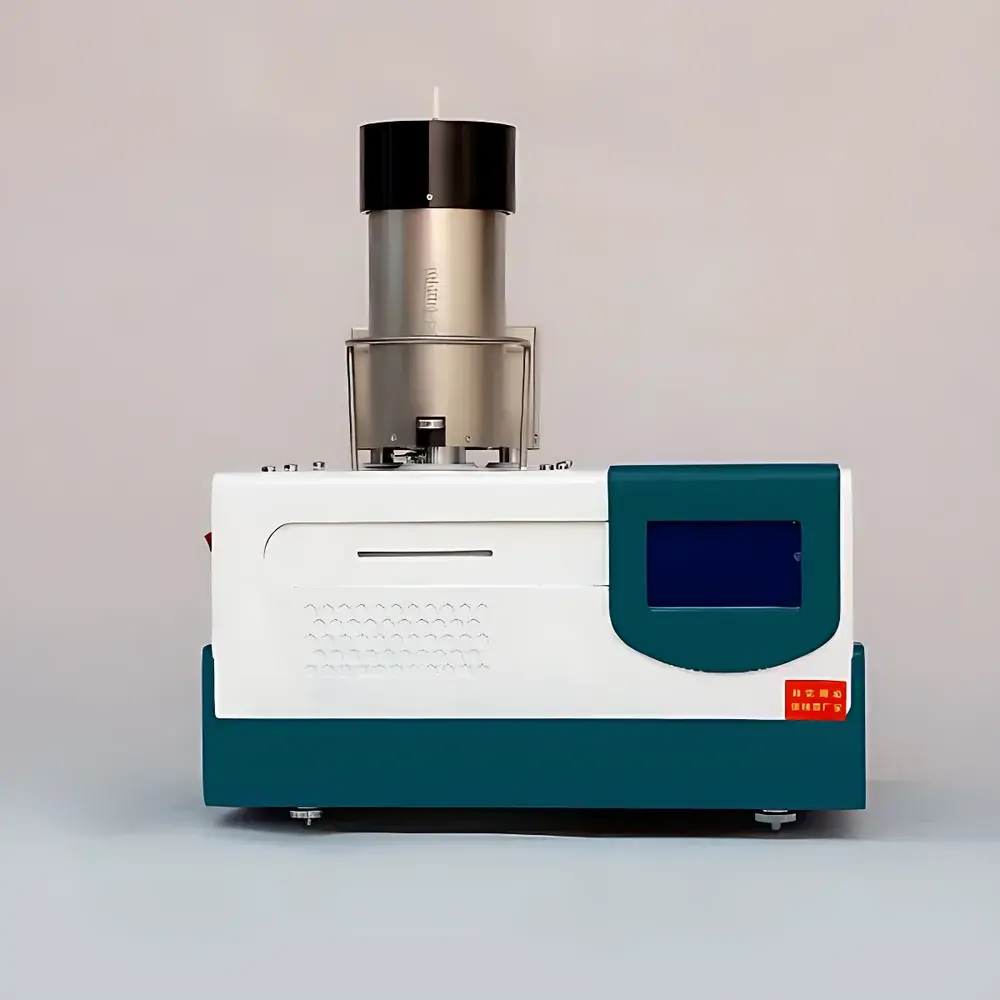
Henven HTG-4 Thermogravimetric Analyzer
| Brand | Henven |
|---|---|
| Origin | Beijing, China |
| Manufacturer Type | Direct Manufacturer |
| Regional Classification | Domestic (China) |
| Model | HTG-4 |
| Operating Environment | Ambient Pressure |
| Sample Capacity | Single Sample |
| Instrument Type | General-Purpose TGA |
| Temperature Range | Room Temperature to 1550 °C |
| Temperature Accuracy | ±0.1 °C |
| Temperature Precision | ±0.1 K |
| Dynamic Weighing Range | 0.01 mg – 5 g |
| Balance Sensitivity | 0.1 µg |
| Mass Accuracy | 0.1 µg |
| Heating/Cooling Rate | 0.1 – 100 K/min |
| Maximum Sample Mass | 5 g |
| Baseline Repeatability | 0.01 mg |
| Baseline Drift | 0.01 mg |
Overview
The Henven HTG-4 Thermogravimetric Analyzer is a precision-controlled, microprocessor-driven instrument engineered for quantitative measurement of mass change as a function of temperature or time under controlled atmospheric conditions. Based on the fundamental principle of thermogravimetry—where sample mass is continuously monitored during programmed thermal treatment—the HTG-4 delivers high-fidelity data for decomposition kinetics, compositional analysis, thermal stability assessment, and reaction pathway elucidation. Its robust architecture integrates furnace control, high-resolution microbalance detection, and dual-thermocouple temperature monitoring into a single compact platform. Designed for compliance with ISO 11358, ASTM E1131, and USP , the system supports both routine quality assurance and advanced materials research across academic, pharmaceutical, polymer, metallurgical, and catalysis laboratories.
Key Features
- High-stability vertical microbalance with 0.1 µg resolution and ≤0.01 mg baseline drift over extended runs—enabling reproducible quantification of subtle mass losses (e.g., moisture desorption, polymer volatilization, or catalyst coking).
- Programmable temperature control from ambient to 1550 °C, with heating/cooling rates adjustable from 0.1 to 100 K/min and accuracy maintained at ±0.1 °C across the full range.
- Dual thermocouple system: one measures furnace block temperature (active at all times), the other monitors actual sample temperature in real time—critical for kinetic modeling and calibration traceability.
- Integrated mass flow controller (MFC)-based dual-gas atmosphere system, supporting inert (N₂, Ar), oxidative (air, O₂), reductive (H₂, CO), or corrosive gas environments (custom corrosion-resistant MFCs available upon request).
- Modular crucible support system accommodating standard ceramic, alumina, graphite, quartz, and platinum crucibles (Φ5×4 mm to Φ18×20 mm); optional crucible adapters enable seamless transition between micro- and macro-scale samples (0.01 mg to 5 g).
- Real-time LCD interface displaying simultaneous trends of mass, derivative mass (DTG), temperature (furnace & sample), gas flow status, and system diagnostics—without requiring external PC connection during operation.
Sample Compatibility & Compliance
The HTG-4 accommodates diverse solid and powdered samples—including polymers, pharmaceutical actives and excipients, inorganic oxides, metal alloys, carbon-based catalysts, and composite precursors—without modification to core hardware. Its modular design permits rapid crucible exchange and optional vacuum integration (down to 2.5×10⁻² Pa with add-on vacuum unit) for pyrolysis studies under reduced pressure. The instrument meets essential regulatory prerequisites for GLP-compliant laboratories: full audit trail logging (user ID, method parameters, calibration records), electronic signature support, and data integrity safeguards aligned with FDA 21 CFR Part 11 requirements when operated with validated software modules. All thermal calibrations (temperature and mass) are traceable to NIST-certified standards using certified reference materials (e.g., Ni, Al₂O₃, CaC₂O₄·H₂O).
Software & Data Management
The proprietary HTG Control Suite provides native acquisition and post-processing capabilities for TG, DTG, and DDTG curves; mass-loss step identification; percentage composition calculation; isoconversional kinetic analysis (Friedman, Kissinger-Akahira-Sunose); and multi-curve overlay comparison. Raw data export is supported in ASCII, CSV, and universal .tdms formats compatible with MATLAB®, OriginLab®, and Python-based analytical pipelines. The software includes automated baseline correction algorithms, dynamic range switching during acquisition, and timestamped screenshot capture at user-defined intervals. Custom algorithm integration is available via documented API—enabling implementation of client-specific kinetic models or regulatory reporting templates (e.g., ICH Q5C stability protocols).
Applications
- Quantitative determination of filler content, moisture, solvent residue, and volatile organic compounds (VOCs) in polymer composites per ISO 3451 and ASTM D6370.
- Thermal degradation profiling of active pharmaceutical ingredients (APIs) and excipients to assess processing stability and compatibility—supporting ICH Q1A(R2) and Q5C guidelines.
- Decomposition onset temperature (Td) and char yield evaluation for flame-retardant formulations and carbon fiber precursors.
- Catalyst deactivation analysis via coke deposition quantification and oxidation-reduction cycling under controlled gas atmospheres.
- Mineralogical phase transformation studies in ceramics and refractory materials, including dehydration, carbonate decomposition, and oxide reduction steps.
- Interface with GC/MS or FTIR via heated transfer line (optional 200 °C constant-temperature interface) for evolved gas analysis (EGA) of decomposition products.
FAQ
What calibration standards are recommended for routine verification?
Certified reference materials such as nickel (Curie point at 354 °C), aluminum oxide (phase transition at 1200 °C), and calcium oxalate monohydrate (three-step decomposition) are recommended for temperature and mass calibration per ISO 11358 Annex B.
Can the HTG-4 operate under vacuum or reducing atmospheres?
Yes—vacuum operation down to 2.5×10⁻² Pa is achievable with an optional vacuum pump module; H₂, CO, and other reactive gases are supported via corrosion-resistant MFCs and stainless-steel gas lines.
Is the software compliant with 21 CFR Part 11 for regulated environments?
When deployed with validated configuration (audit trail enabled, electronic signatures configured, and role-based access control applied), the HTG Control Suite satisfies core technical requirements of 21 CFR Part 11 for electronic records and signatures.
How is baseline stability ensured during long-duration isothermal holds?
The system employs active thermal shielding, symmetric furnace geometry, and digital zero-drift compensation algorithms—achieving ≤0.01 mg baseline repeatability over 72-hour isotherms at any temperature within the operating range.
Are custom crucible geometries or materials supported?
Yes—besides standard ceramic and alumina crucibles, custom graphite, quartz, and platinum crucibles (including hermetic variants) can be integrated with mechanical and thermal validation reports provided upon request.



