
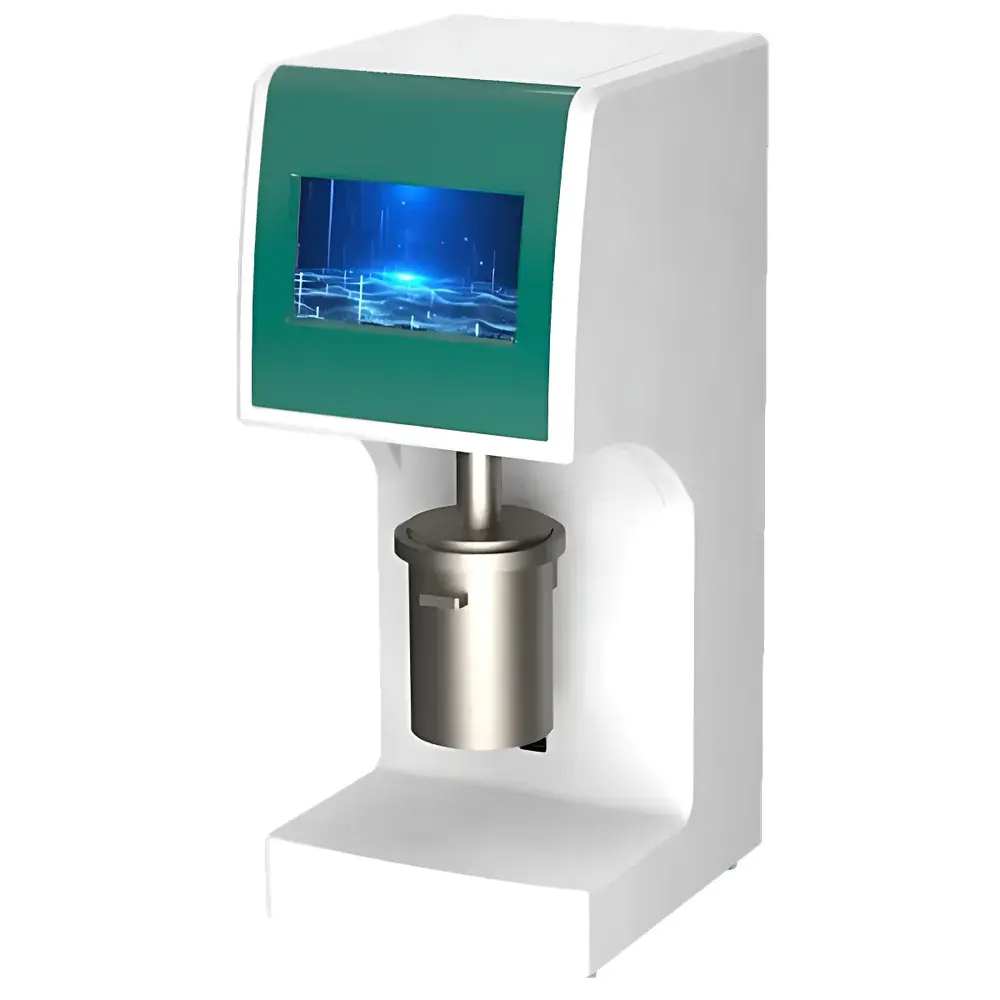
Henven TMA-101 Thermomechanical Analyzer
| Brand | Henven |
|---|---|
| Origin | Beijing, China |
| Manufacturer Type | Direct Manufacturer |
| Instrument Type | Thermomechanical Analyzer (TMA) |
| Model | TMA-101 |
| Temperature Range | Ambient to 950 °C |
| Temperature Accuracy | ±0.1 °C |
| Static Force Range | 0.1–3 N |
| Displacement Range | ±1000 µm |
| Displacement Resolution | 150 nm–1 µm |
| Sensitivity | 0.1 µm |
| Heating Rate | 0.1–10 °C/min (programmable) |
| Sample Height | 1–3 mm (solid) |
| Test Atmosphere | Optional inert gas purge |
| Power Supply | 220 V ±10% |
Overview
The Henven TMA-101 Thermomechanical Analyzer is a precision-controlled, vertically configured static TMA system engineered for quantitative measurement of dimensional changes in solid materials under controlled thermal and mechanical conditions. Operating on the principle of linear thermal expansion and stress-induced deformation, the instrument applies a constant or ramped uniaxial load while subjecting the sample to a precisely programmed temperature profile. It measures minute dimensional variations—typically in micrometers—as a function of temperature or time, enabling determination of coefficients of linear thermal expansion (CTE), glass transition temperatures (Tg), softening points, sintering behavior, and phase transition onset temperatures. Designed for laboratory environments requiring traceable, repeatable thermomechanical data, the TMA-101 adheres to fundamental metrological principles aligned with ASTM E831, ISO 11359-2, and USP , supporting compliance-driven workflows in R&D, quality control, and regulatory documentation.
Key Features
- Rigid, low-drift frame construction ensuring axial stability across the full operating temperature range (ambient to 950 °C), minimizing parasitic thermal expansion artifacts.
- High-precision quartz or alumina probe (5.0 mm diameter) with calibrated force transmission path; static loading capability from 0.1 N to 3 N, corresponding to typical applied stresses of 0.1–0.2 MPa for standard 1–3 mm-height specimens.
- Digital temperature control system with ±0.1 °C accuracy and programmable heating/cooling rates from 0.1 to 10 °C/min, enabling precise thermal ramp definition per ISO 11359-1 requirements.
- Capacitive or LVDT-based displacement transducer delivering ±1000 µm full-scale range, 0.1 µm sensitivity, and 150 nm–1 µm selectable resolution—optimized for high-fidelity tracking of subtle dimensional transitions.
- Modular furnace design with optional inert gas purge (N2, Ar) for oxidation-sensitive samples, supporting both ambient-air and controlled-atmosphere testing protocols.
- Integrated safety interlocks, over-temperature cutoff, and real-time thermal drift compensation algorithms to ensure measurement integrity during extended high-temperature runs.
Sample Compatibility & Compliance
The TMA-101 accommodates rigid solid specimens up to 3 mm in height and compatible with standard geometries including rods, discs, and thin films. It supports common material classes such as thermoplastics, thermosets, elastomers, ceramics, glasses, metallic alloys, and fiber-reinforced composites. All hardware and firmware are designed to support GLP-compliant operation: audit-trail-enabled software logging, user-access controls, electronic signature readiness, and data export formats compliant with FDA 21 CFR Part 11 requirements when paired with validated acquisition software. Calibration certificates traceable to NIM (National Institute of Metrology, China) are available upon request.
Software & Data Management
The instrument operates via dedicated Windows-based acquisition and analysis software supporting real-time visualization, multi-curve overlay, derivative analysis (dL/dT), CTE calculation with baseline correction, and automated transition point detection (e.g., inflection, midpoint, onset). Raw data is stored in vendor-neutral ASCII or CSV format; processed reports include metadata (operator ID, calibration date, environmental conditions) and conform to internal QA templates. Software supports batch processing, statistical reporting (n ≥ 3), and direct integration into LIMS environments via ODBC or API interfaces. Firmware updates maintain alignment with evolving IEC 61508 functional safety guidelines for laboratory instrumentation.
Applications
- Determination of linear coefficient of thermal expansion (CTE) for packaging substrates and PCB laminates.
- Characterization of glass transition (Tg) and cold crystallization in amorphous polymers under low-stress conditions.
- Monitoring dimensional stability of ceramic green bodies during binder burnout and sintering cycles.
- Evaluation of thermal shrinkage and warpage in injection-molded components subjected to post-molding annealing.
- Assessment of interfacial adhesion and delamination onset in multilayer coatings and thin-film stacks.
- Validation of thermal aging effects on composite matrix resins per ASTM D3418 and ISO 22744.
FAQ
What is the maximum recommended sample height for accurate TMA-101 measurements?
Standard protocol specifies 1–3 mm specimen height to ensure uniform stress distribution and minimize buckling risk under static load.
Can the TMA-101 perform dynamic mechanical testing (e.g., frequency sweeps)?
No—the TMA-101 is a static-mode thermomechanical analyzer; it does not support oscillatory or frequency-dependent measurements. For dynamic mechanical analysis (DMA), refer to complementary Henven DMA systems.
Is inert atmosphere purging mandatory for all tests?
Purging is optional and application-dependent; it is strongly recommended for carbon-containing polymers above 300 °C and metal oxides susceptible to oxidation, but ambient-air testing is valid for many inorganic and stable organic materials.
How is temperature calibration verified on the TMA-101?
Calibration is performed using certified reference materials (e.g., high-purity indium, aluminum, and nickel) per ASTM E1545; factory calibration includes dual-point verification at 0 °C (ice point) and 961.78 °C (silver melting point).
Does the system support multi-step temperature programs (e.g., hold-ramp-hold sequences)?
Yes—software allows creation of complex multi-segment thermal profiles with independent ramp rates, dwell times, and endpoint conditions, fully compliant with ISO 11359-1 test method definitions.



