
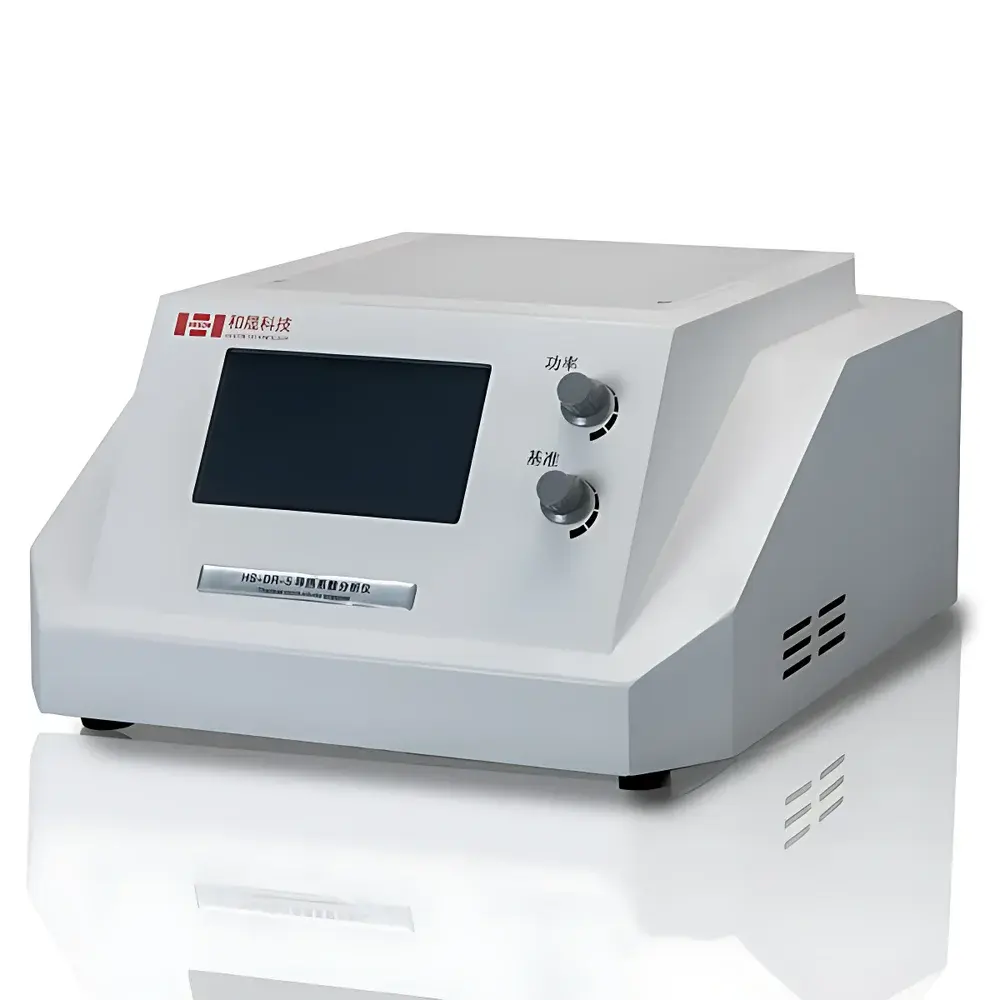
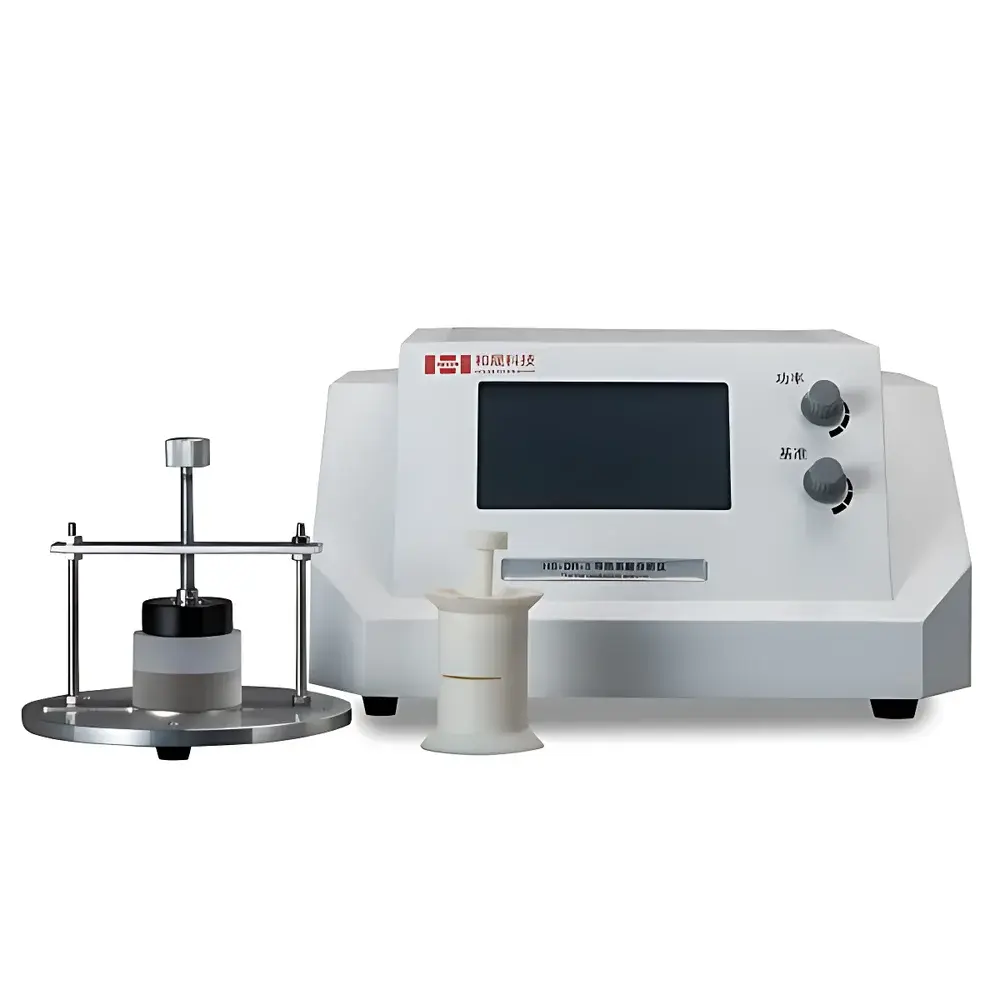
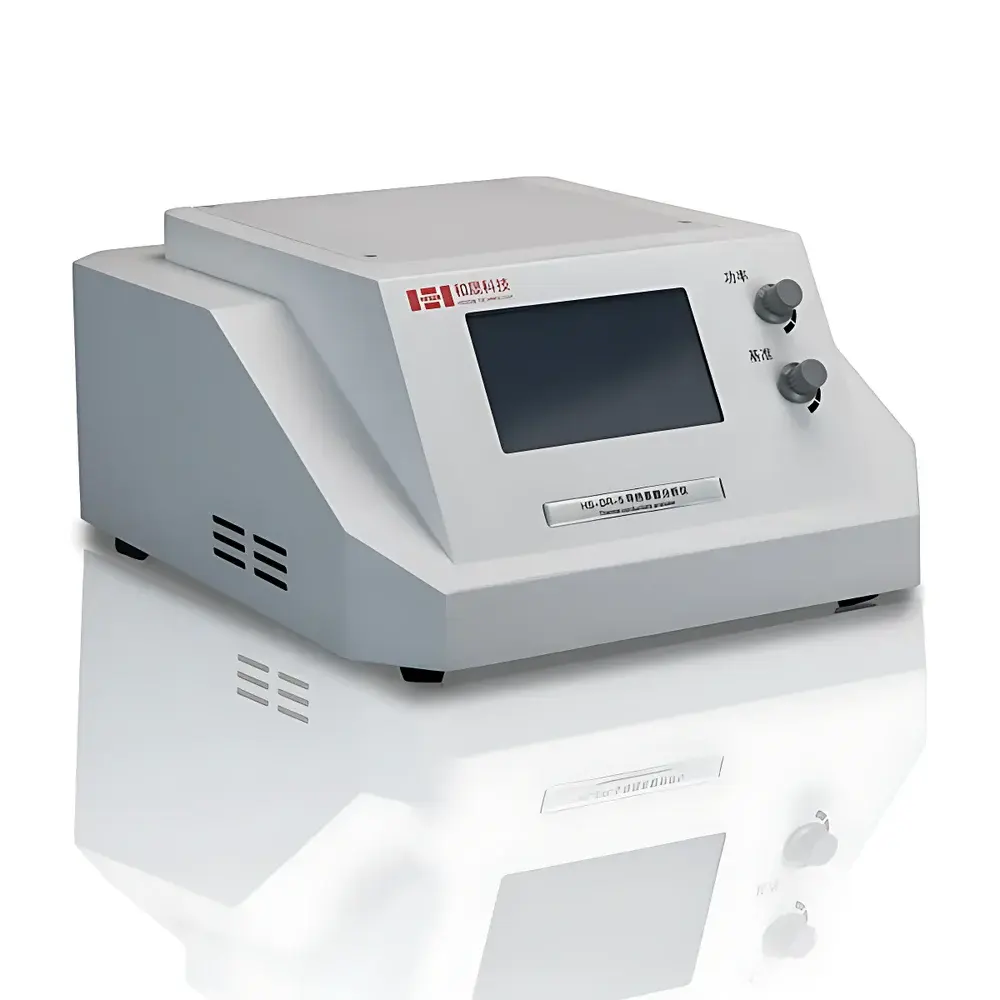
HESON HS-DR-5 Multi-Function Transient Plane Source (TPS) Thermal Conductivity Analyzer
| Brand | HESON |
|---|---|
| Origin | Shanghai, China |
| Manufacturer Type | Direct Manufacturer |
| Instrument Type | Transient Plane Source (TPS) Method |
| Sample Capacity | Single sample per test |
| Test Environment | Ambient temperature (20–30 °C) |
| Dimensions (L×W×H) | 450 × 385 × 165 mm |
| Accuracy | ±3% |
| Thermal Conductivity Range | 0.005–300 W/(m·K) |
| Repeatability | ≤3% |
| Test Atmosphere | Ambient air (no purge required) |
| Sample Forms | Solids, powders, liquids, pastes, granules, gels, coatings, thin films, and insulating materials |
Overview
The HESON HS-DR-5 is a precision-engineered Multi-Function Transient Plane Source (TPS) Thermal Conductivity Analyzer designed for rapid, contact-based measurement of thermal conductivity across a broad spectrum of materials. Based on the internationally standardized TPS principle—first developed by Prof. Silas Gustafsson at Chalmers University of Technology—the instrument employs a dual-spiral alloy sensor probe that functions simultaneously as both a transient heat source and a high-resolution resistance thermometer. When energized with a controlled current pulse, the probe generates a localized, stepwise temperature rise; heat diffuses symmetrically into adjacent sample volumes, and the resulting time-dependent voltage response is captured with microsecond-level temporal resolution. This raw signal is processed via an embedded physics-based inversion algorithm rooted in the analytical solution for transient conduction in an infinite medium with an interfacial disk source. Unlike steady-state or guarded-hot-plate methods, the TPS technique inherently eliminates errors associated with interfacial contact resistance, making it uniquely suitable for heterogeneous, low-density, or compliant materials where conventional clamping introduces uncertainty.
Key Features
- Two interchangeable probes (7.5 mm and 15 mm diameter) enable optimized testing across diverse sample geometries and thermal conductivities—from aerogels (<0.01 W/(m·K)) to dense metals (~300 W/(m·K)).
- Measurement duration fully programmable from 5 to 160 seconds, balancing speed and signal-to-noise ratio without requiring thermal equilibrium.
- Non-destructive testing protocol preserves sample integrity; solids, powders, and liquids can be retested multiple times without structural alteration.
- No specialized sample preparation: flat-faced solids require only minimal surface planarity (≥2× probe diameter in lateral dimension); powders and liquids are tested in standard cylindrical holders.
- ARM-based real-time control system ensures deterministic data acquisition timing and robust computational throughput for on-board coefficient derivation.
- High-resolution analog front-end using imported data acquisition ICs achieves <1 µΩ resistance resolution, critical for sub-millikelvin thermal response fidelity.
- Ergonomic sample stage accommodates variable thicknesses (up to 15 mm for 7.5 mm probe; up to 30 mm for 15 mm probe) with mechanical alignment guides and tactile positioning feedback.
- Full-color capacitive touchscreen interface with intuitive icon-driven workflow supports multi-language operation (English, Chinese, Japanese, Korean).
Sample Compatibility & Compliance
The HS-DR-5 accepts a wide range of physical states without modification: rigid and flexible solids (including composites, ceramics, polymers, and foams), loose or compacted powders, viscous pastes, Newtonian and non-Newtonian liquids, and thin-layer coatings applied on substrates. Its operational compliance aligns with ASTM D5334–22 (“Standard Test Method for Determining Thermal Conductivity of Soil and Soft Rock Using the Thermal Needle Probe”) and ISO 22007-2:2015 (“Plastics — Determination of Thermal Conductivity and Thermal Diffusivity — Part 2: Transient Plane Source (Hot Disk) Method”). While not certified for GLP or GMP environments out-of-the-box, the system’s audit-trail-capable software (with user access logs, parameter versioning, and electronic signature support) facilitates validation under FDA 21 CFR Part 11 when deployed in regulated QC laboratories.
Software & Data Management
The proprietary HESON TPS Analysis Suite provides comprehensive post-acquisition processing: automatic thermal conductivity calculation, thermal diffusivity derivation (via ρ·Cp input), correlation coefficient assessment, and dynamic pass/fail evaluation against user-defined temperature-rise thresholds. Visualization tools include auto-scaling plots, multi-curve overlay, pan/zoom navigation, and differential curve subtraction. All experimental metadata—including probe ID, ambient temperature, test duration, and calibration coefficients—is embedded in each dataset. Reporting templates are fully customizable and exportable in XLSX, CSV, PNG, and native .TPS binary formats. The software supports bidirectional import/export of legacy datasets and features over-the-air firmware and algorithm updates. Data optimization modules include outlier rejection based on statistical deviation and adaptive baseline correction for drift compensation.
Applications
The HS-DR-5 serves research and industrial labs engaged in thermal interface material (TIM) development, battery thermal management design, insulation performance verification, polymer nanocomposite characterization, phase-change material (PCM) qualification, aerospace composite certification, and sustainable building material R&D. Its validated use spans peer-reviewed studies involving graphene-epoxy hybrids, aerogel-reinforced mortars, paraffin/graphite PCMs, bio-based foams, fire-retardant coatings, and vacuum-insulated panel (VIP) core analysis. Academic users include materials science departments at Dalian University of Technology, South China University of Technology, and the Institute of Process Engineering, Chinese Academy of Sciences—where reproducibility under ambient conditions and minimal sample consumption are critical success factors.
FAQ
Is the HS-DR-5 compliant with international standards for thermal conductivity measurement?
Yes—it implements the transient plane source method defined in ISO 22007-2 and is functionally aligned with ASTM D5334 for needle-probe variants.
Can the instrument measure thermal conductivity of highly anisotropic materials?
The standard configuration assumes isotropic behavior; for layered or fiber-reinforced samples, directional measurements require orthogonal probe placement and manual anisotropy correction using supplementary density and specific heat inputs.
What is the minimum sample thickness required for reliable measurement?
For the 7.5 mm probe: ≥3.75 mm; for the 15 mm probe: ≥7.5 mm—ensuring one-dimensional heat flow dominance during the measurement window.
Does the system require calibration with reference standards?
Yes—NIST-traceable glycerol, Pyroceram®, and copper standards are recommended for periodic verification; the software supports multi-point coefficient calibration routines.
Is remote operation or network integration supported?
The instrument includes Ethernet and USB-C interfaces; API documentation and SCPI command sets are provided for integration into automated test benches and LIMS environments.



