
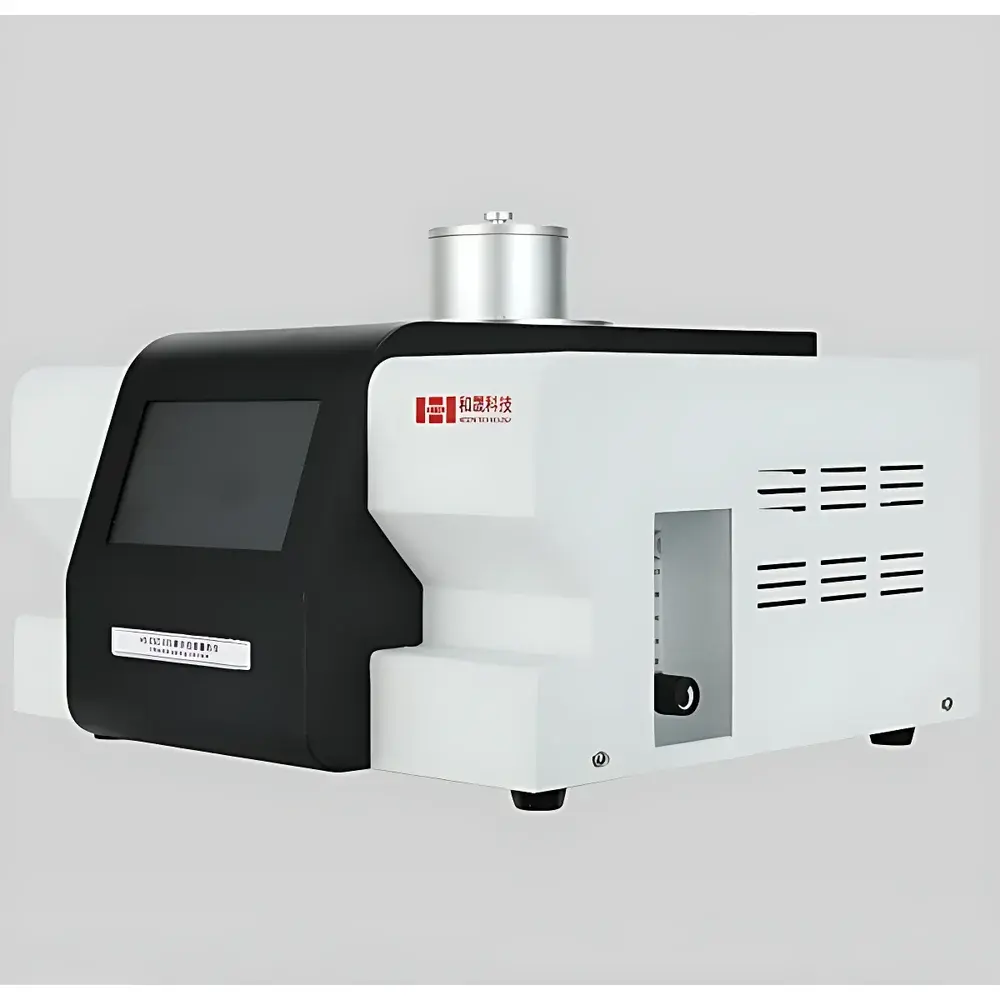
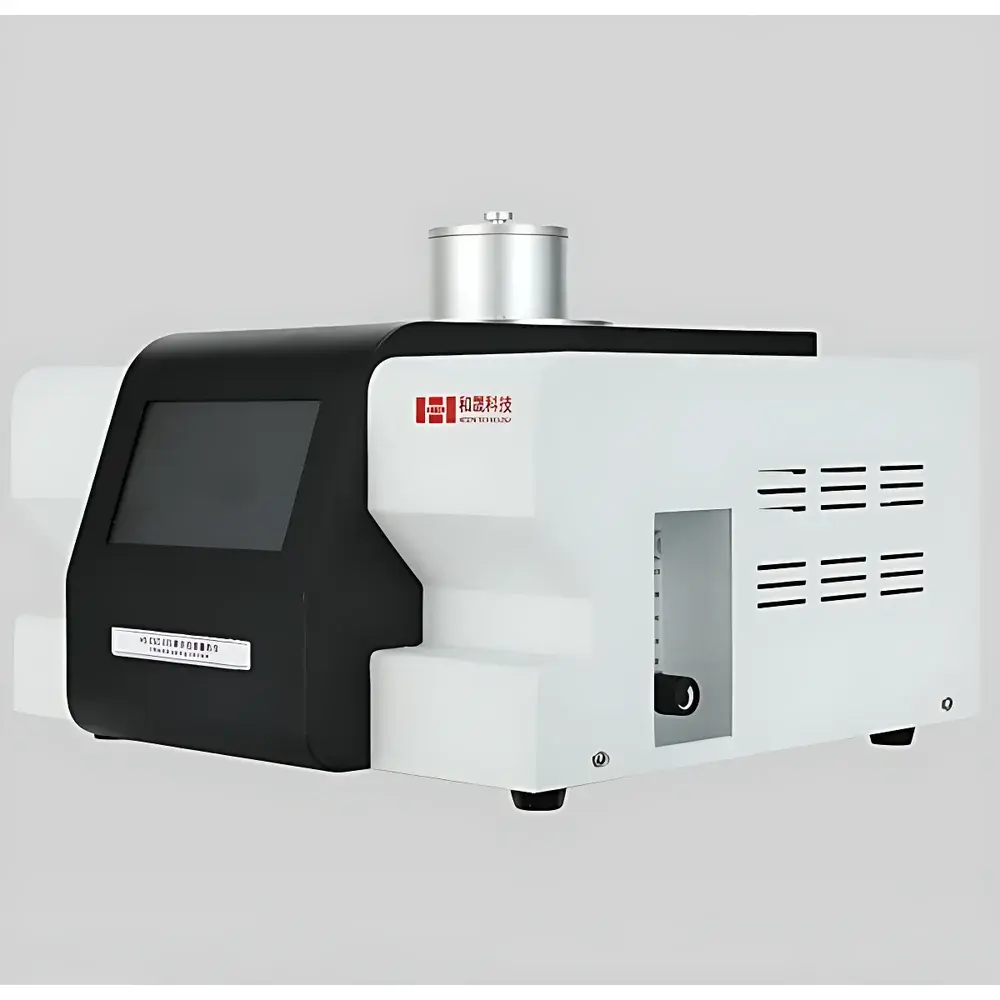
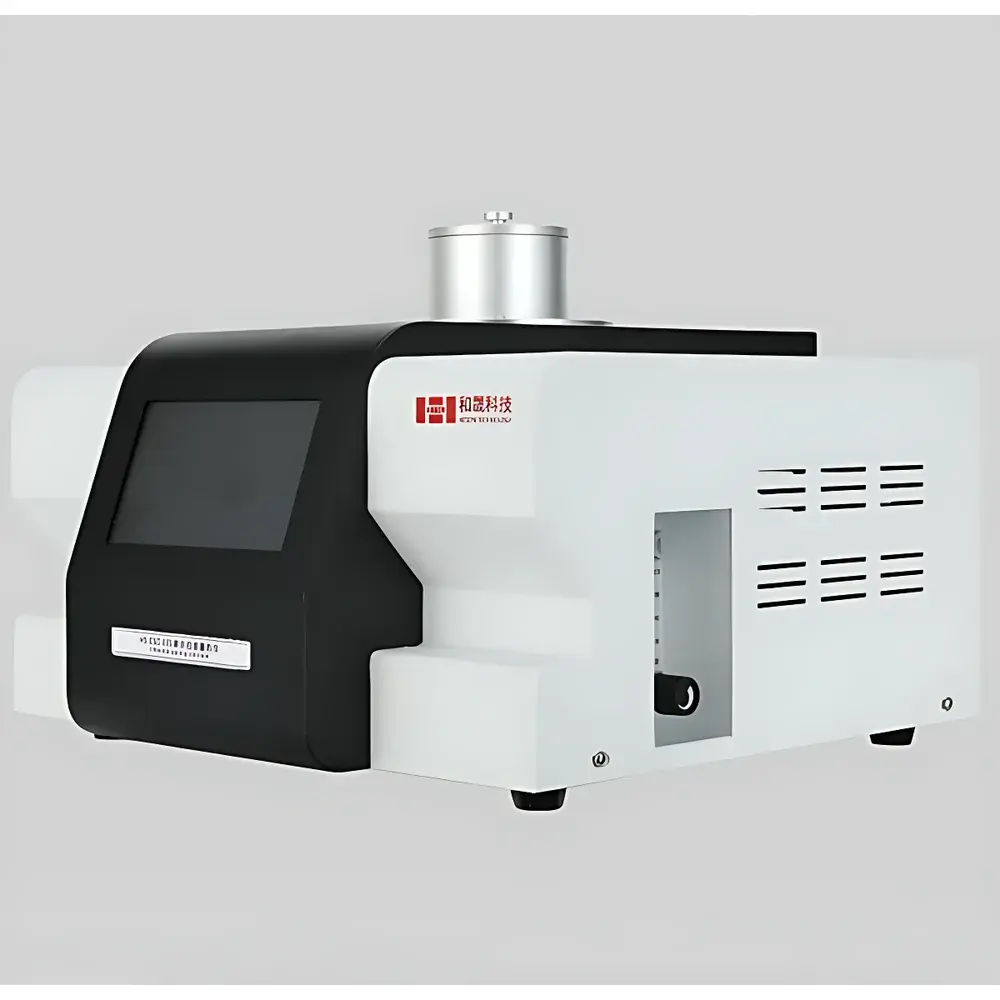
HESON HS-DSC-101 Differential Scanning Calorimeter for Glass Transition Temperature (Tg) Analysis
| Brand | HESON |
|---|---|
| Origin | Shanghai, China |
| Manufacturer Type | Direct Manufacturer |
| Instrument Type | DSC |
| Sample Capacity | Single |
| Temperature Range | Ambient to 600 °C |
| Temperature Accuracy | ±0.1 °C |
| Heating/Cooling Rate | 0.1–100 °C/min |
| Temperature Precision | ±0.01 °C |
| DSC Signal Range | 0 to ±600 mW |
| Temperature Stability (Drift) | ±0.01 °C |
| DSC Resolution | 0.001 mW |
| Temperature Resolution | 0.01 °C |
| Gas Flow Control | Dual-channel automatic switching, 0–300 mL/min (customizable) |
| Calibration Standards Included | Indium, Tin, Lead |
| Thermocouple Configuration | Triple thermocouples (sample, furnace ambient, overheat safety) |
| Power Supply | AC 220 V / 50 Hz |
| Interface | Standard USB |
| Display | 7-inch 24-bit color LCD touchscreen |
Overview
The HESON HS-DSC-101 is a high-stability, research-grade differential scanning calorimeter engineered for precise quantification of thermal transitions in polymeric, pharmaceutical, and advanced composite materials. It operates on the principle of heat-flux DSC, measuring the difference in heat flow between a sample and an inert reference as both are subjected to identical, programmable temperature profiles under controlled atmosphere. This enables accurate determination of fundamental thermal events—including glass transition temperature (Tg), melting enthalpy (ΔHm), crystallization onset (Tc), cold crystallization (Tcc), oxidative induction time (OIT), and curing exotherms—critical for material development, quality assurance, and regulatory compliance. Designed for reproducibility in academic laboratories and industrial R&D settings, the HS-DSC-101 features a robust all-metal furnace architecture that minimizes thermal lag and ensures baseline stability across wide dynamic ranges—from sub-ambient characterization (with optional cooling accessory) to high-temperature decomposition studies up to 600 °C.
Key Features
- Metallic furnace core with optimized thermal mass distribution, delivering superior baseline flatness (<±0.01 °C drift over 60 min) and enhanced signal-to-noise ratio for low-magnitude transitions such as Tg in thin films or low-concentration additives.
- Digital mass flow controller (MFC) for dual-gas lines (e.g., N2/O2), enabling automated, traceable gas switching and real-time logging of flow rate (0–300 mL/min) directly into measurement metadata.
- Triple thermocouple system: dedicated sample sensor, furnace ambient monitor, and independent overheat protection circuit—ensuring operational safety and metrological traceability per ISO 11357 and ASTM E794.
- Integrated 7-inch capacitive touchscreen interface supporting standalone operation; full bidirectional control via PC software (Windows-based) with audit trail capability compliant with FDA 21 CFR Part 11 requirements when configured with user authentication and electronic signature modules.
- Programmable multi-segment thermal protocols: up to four independent heating/cooling/isothermal steps per run, with customizable ramp rates (0.1–100 °C/min), dwell times, and trigger conditions for event-driven analysis (e.g., auto-start upon Tg detection).
Sample Compatibility & Compliance
The HS-DSC-101 accommodates standard aluminum, gold-plated aluminum, or hermetic stainless-steel crucibles (40 µL capacity), compatible with solid polymers, powders, fibers, thin films, gels, and small-volume liquid samples (≤15 mg typical). Its design conforms to international thermal analysis standards including ISO 11357 (Plastics — Differential Scanning Calorimetry), ASTM E794 (Melting and Crystallization Temperatures by DSC), ASTM D3418 (Transition Temperatures of Plastics), and USP <1163> (Thermal Analysis in Pharmaceutical Development). All calibration procedures utilize certified reference materials (Indium, Tin, Lead) traceable to NIST SRMs, and instrument validation supports GLP/GMP environments through documented IQ/OQ/PQ protocols.
Software & Data Management
The proprietary HESON DSC Analysis Suite provides comprehensive data acquisition, baseline correction (tangent, step, or polynomial), peak integration (onset, peak, endset), and comparative overlay functions. Raw data are stored in vendor-neutral ASCII format (.csv) alongside metadata (gas type, flow rate, purge history, calibration timestamp). Software supports automated report generation with configurable templates aligned to internal SOPs or external submission formats (e.g., journal supplementary data, regulatory dossiers). Audit trails record all user actions—including parameter changes, baseline edits, and export events—with timestamps and operator IDs. Optional cloud synchronization enables secure remote access and centralized instrument fleet monitoring.
Applications
The HS-DSC-101 serves as a foundational tool in polymer science (Tg mapping of PA6, PET, PBT, PE, PP, ABS, PC), battery materials (electrolyte thermal stability, SEI formation enthalpy, cathode decomposition kinetics), pharmaceutical formulation (polymorph screening, excipient compatibility, amorphous content quantification), and composites R&D (cure kinetics of epoxy resins, filler dispersion effects on crystallinity, nanomaterial-induced nucleation). Published applications include crosslinking optimization of hydroxypropyl starch (Jilin University), OIT assessment of ADN-based propellants (Beijing Jiaotong University), phase-change behavior in electro-thermochromic fibers (SCI Paper #2), and thermal degradation profiling of GO/polyurea nanocomposites (Jinan University).
FAQ
What is the recommended sample mass for reliable Tg determination?
Typical mass range is 5–12 mg for homogeneous polymers; lower masses (2–5 mg) may be used for thin films or limited-availability biomaterials, provided baseline noise remains below 0.005 mW.
Can the HS-DSC-101 perform modulated DSC (MDSC)?
No—this model implements conventional heat-flux DSC only. MDSC capability requires separate hardware configuration and is not supported in the HS-DSC-101 platform.
Is nitrogen the only acceptable purge gas?
Nitrogen is standard for inert atmosphere measurements; oxygen is used for OIT testing per ASTM D3895. Custom gas mixtures (e.g., air, argon, synthetic air) can be implemented with appropriate MFC calibration and safety interlocks.
How frequently should temperature calibration be performed?
Initial calibration is required before first use; subsequent verification is recommended before each analytical campaign or after any maintenance involving sensor replacement or furnace reassembly.
Does the system support kinetic modeling (e.g., Ozawa-Flynn-Wall)?
Yes—the analysis software includes built-in isoconversional methods for activation energy estimation from multi-rate DSC data, compliant with ICTAC recommendations for kinetic analysis.



