
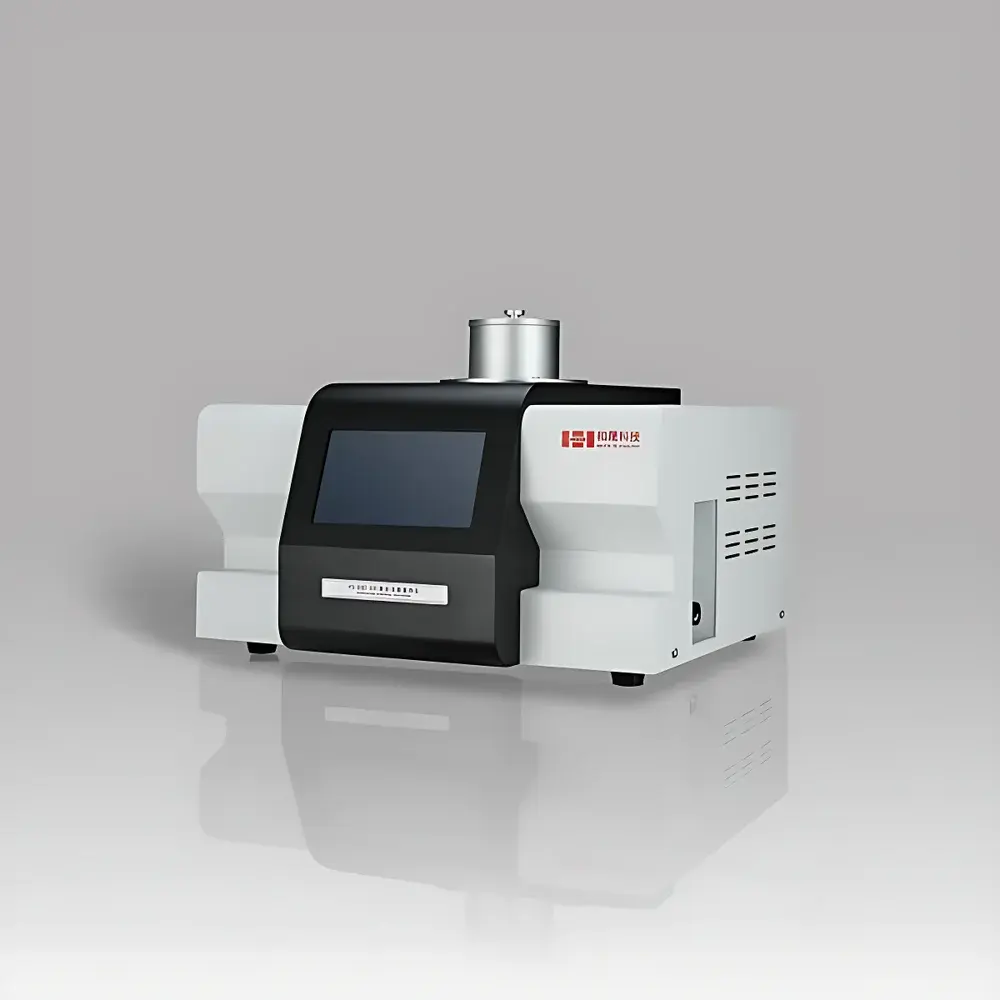
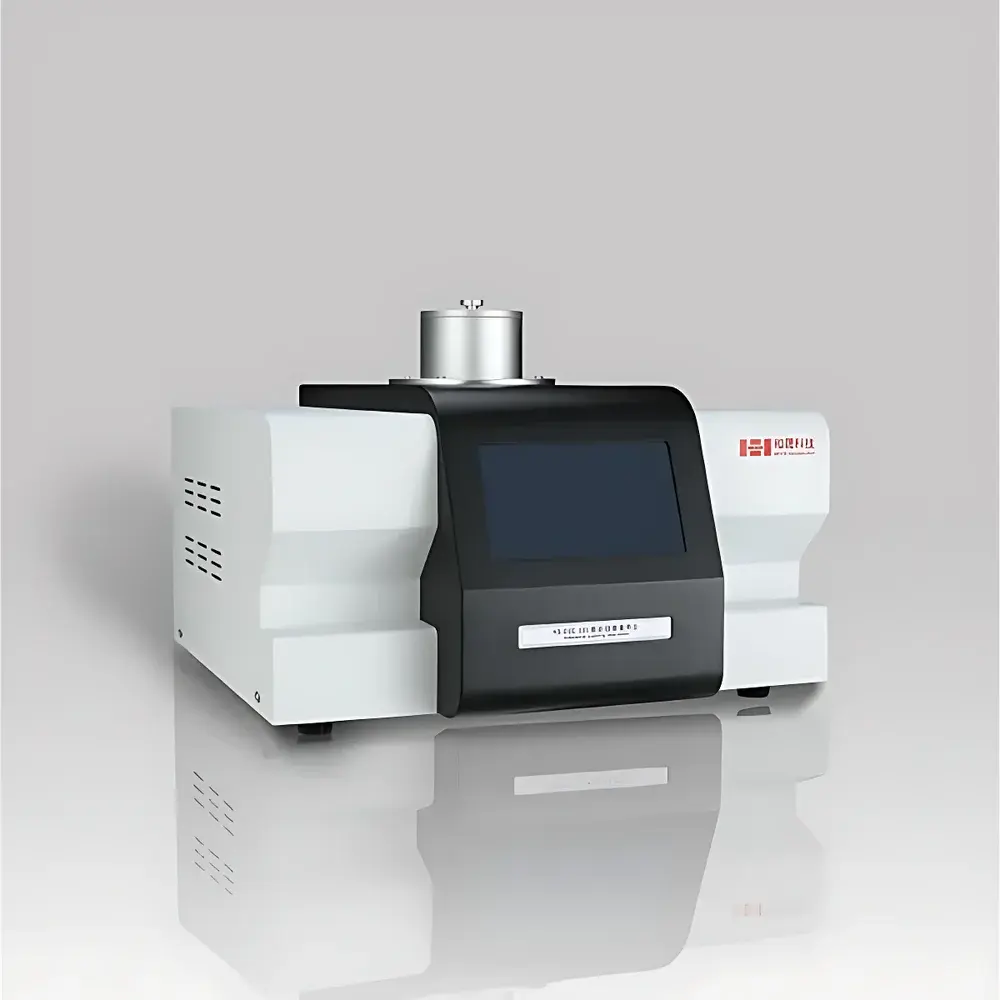
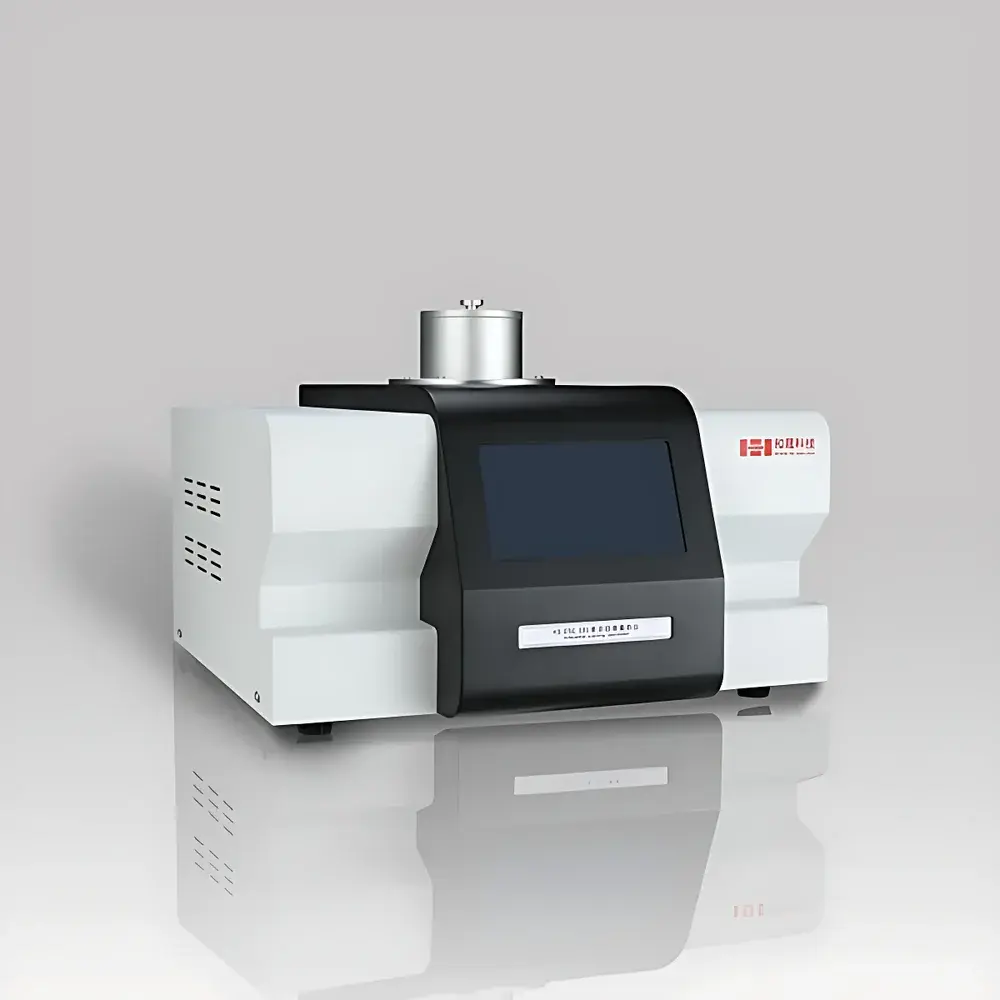
HESON HS-DSC-101 Differential Scanning Calorimeter for Polyetheretherketone (PEEK) Glass Transition Temperature Analysis
| Brand | HESON |
|---|---|
| Origin | Shanghai, China |
| Manufacturer Type | Direct Manufacturer |
| Instrument Type | DSC |
| Sample Capacity | Single-sample |
| Temperature Range | Ambient to 600 °C |
| Temperature Accuracy | ±0.1 °C |
| Heating/Cooling Rate | 0.1–100 °C/min |
| DSC Signal Range | 0–±600 mW |
| Temperature Stability | ±0.1 °C |
| Temperature Resolution | 0.01 °C |
| DSC Resolution & Sensitivity | 0.001 mW |
| Atmosphere Control | Dual-gas auto-switching (N₂/O₂), Flow Range: 0–300 mL/min |
| Calibration Standards Included | Indium, Tin, Lead |
| Compliance | GB/T 41873–2022, GB/T 19466.3–2004 |
Overview
The HESON HS-DSC-101 is a high-precision differential scanning calorimeter engineered for rigorous thermal characterization of high-performance thermoplastics—particularly polyetheretherketone (PEEK) and other engineering polymers. It operates on the principle of heat-flux DSC, measuring the difference in heat flow between a sample and an inert reference as both are subjected to identical, programmable temperature profiles under controlled atmosphere. This enables quantitative determination of thermodynamic transitions including glass transition temperature (Tg), cold crystallization, melting enthalpy (ΔHm), crystallization onset and peak temperatures, oxidative induction time (OIT), and thermal stability thresholds. Designed specifically to meet the stringent requirements of PEEK resin qualification per GB/T 41873–2022, the instrument delivers metrologically traceable data essential for R&D labs, quality assurance departments, and regulatory submissions in aerospace, medical device, and semiconductor packaging industries.
Key Features
- Metallic furnace architecture with triple thermocouple configuration: one for sample temperature sensing, one for internal ambient monitoring, and one dedicated to furnace overheat protection—ensuring long-term baseline stability and thermal uniformity.
- Digital mass flow controllers (MFCs) for dual-gas (N₂/O₂) switching, enabling automated, reproducible atmosphere transitions with flow rates logged directly into the acquisition database (0–300 mL/min, field-configurable).
- 24-bit color 7-inch capacitive touchscreen interface supporting standalone operation; also fully compatible with PC-based control via USB 2.0 interface for method development, real-time visualization, and audit-ready data export.
- Four-segment programmable temperature ramping—including isothermal holds—with customizable heating/cooling rate profiles (0.1–100 °C/min) and sub-milliwatt DSC resolution (0.001 mW) for detecting subtle thermal events in semi-crystalline and amorphous domains.
- Integrated calibration suite: certified reference materials (indium, tin, lead) supplied with NIST-traceable certificates; user-performed temperature and enthalpy calibration supported by built-in validation routines aligned with ISO 11357 and ASTM E794.
Sample Compatibility & Compliance
The HS-DSC-101 accommodates standard aluminum, gold-plated aluminum, or hermetic stainless-steel crucibles (6.7 mm diameter, 5 µL capacity), supporting solid polymer pellets, compression-molded discs, thin films, and powdered formulations. Its operational envelope—ambient to 600 °C with ±0.1 °C accuracy and repeatability—covers full thermal profiling of PEEK (Tg ≈ 143 °C, Tm ≈ 343 °C), polyimides, PPS, and carbon-fiber-reinforced composites. The system complies with Chinese national standards GB/T 41873–2022 (PEEK resin specifications) and GB/T 19466.3–2004 (DSC-based melting/crystallization analysis), and supports alignment with international frameworks including ISO 11357 series, ASTM D3418, and USP <848> for thermal analysis in regulated environments. Optional GLP-compliant software modules provide 21 CFR Part 11–ready electronic signatures, audit trails, and secure user access controls.
Software & Data Management
HESON’s proprietary ThermalPro™ software provides intuitive method setup, real-time curve overlay, multi-sample comparative analysis, and automated transition identification (tangent-onset, midpoint, peak, and inflection algorithms per ASTM E1356). All raw DSC thermograms are stored in vendor-neutral ASCII format with embedded metadata (operator ID, timestamp, gas flow, calibration history). Batch processing tools support statistical reporting across production lots—including Cp correction, baseline subtraction, and enthalpy normalization to mass or surface area. Data export options include CSV, PDF reports with embedded spectra, and direct integration into LIMS platforms via ODBC drivers. Raw files retain full instrumental parameter logs required for FDA or NMPA audit readiness.
Applications
- Quantitative Tg determination of PEEK resins per GB/T 41873–2022—critical for batch release and material equivalency assessment in implantable device manufacturing.
- Oxidative Induction Time (OIT) testing at 200 °C under oxygen purge to evaluate antioxidant efficacy and long-term thermo-oxidative stability of high-purity PEEK grades.
- Cold crystallization kinetics analysis during controlled heating scans—enabling optimization of annealing protocols for improved dimensional stability and mechanical isotropy.
- Melting behavior characterization of injection-molded PEEK components, including detection of multiple melting peaks indicative of melt-recrystallization phenomena.
- Thermal aging studies tracking enthalpy relaxation, crosslink density changes, and degradation onset temperatures in reinforced composites exposed to elevated service conditions.
FAQ
What is the recommended crucible type for PEEK thermal analysis?
Aluminum crucibles with pierced lids are standard for routine Tg and melting analysis; hermetic stainless-steel crucibles are advised for OIT testing to prevent premature oxidation during nitrogen purge phases.
Can the HS-DSC-101 perform cooling scans below ambient temperature?
No—the instrument’s operational range begins at ambient temperature; sub-ambient capability requires external cryogenic cooling accessories not included in the base configuration.
How is temperature accuracy verified during routine use?
Users perform periodic calibration using supplied indium (Tm = 156.6 °C, ΔH = 28.45 J/g) and tin (Tm = 231.9 °C) standards; deviation beyond ±0.1 °C triggers recalibration protocol per ISO 17025 guidelines.
Is the software compliant with 21 CFR Part 11 for pharmaceutical applications?
Yes—optional ThermalPro™ GLP Edition includes role-based access control, electronic signatures, immutable audit trails, and data integrity validation aligned with FDA expectations for regulated thermal analysis workflows.
What maintenance intervals are recommended for optimal DSC performance?
Furnace cleaning and sensor verification every 6 months; MFC recalibration annually; full system performance qualification (SPQ) recommended prior to critical GMP batch release testing.



