
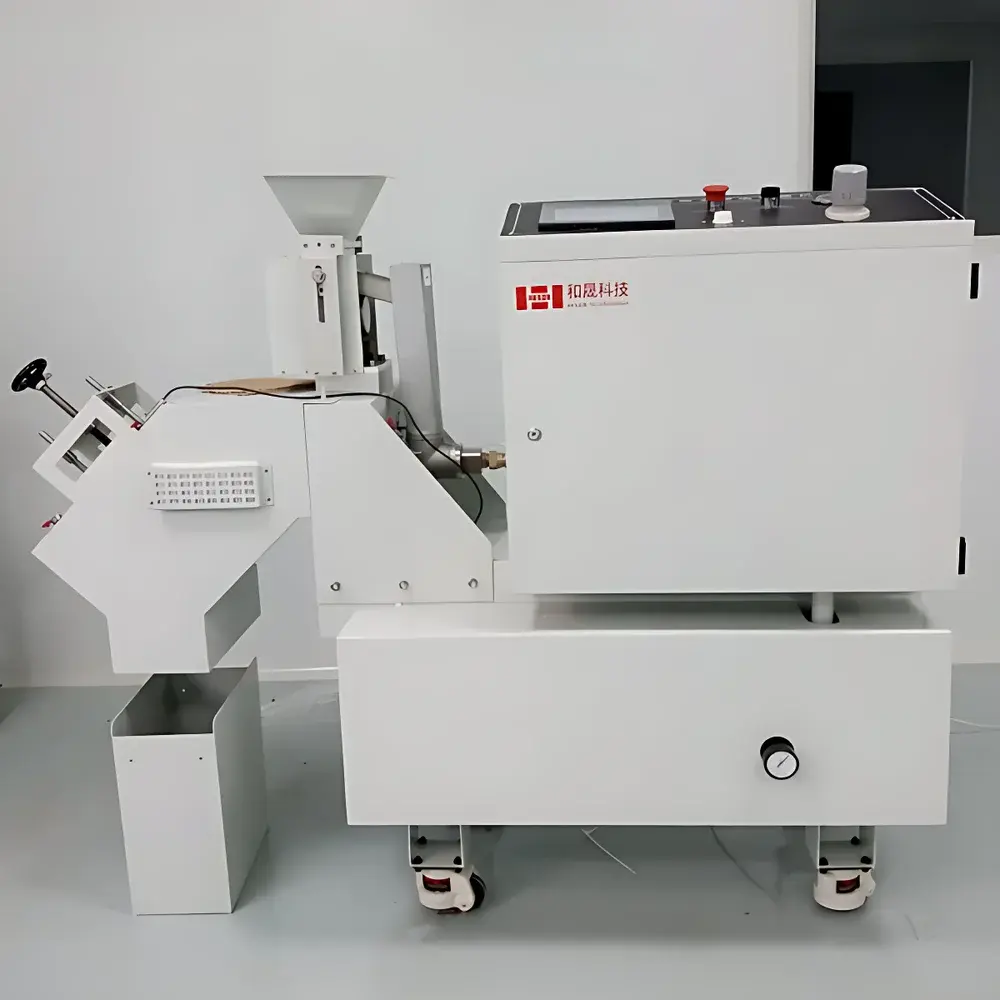
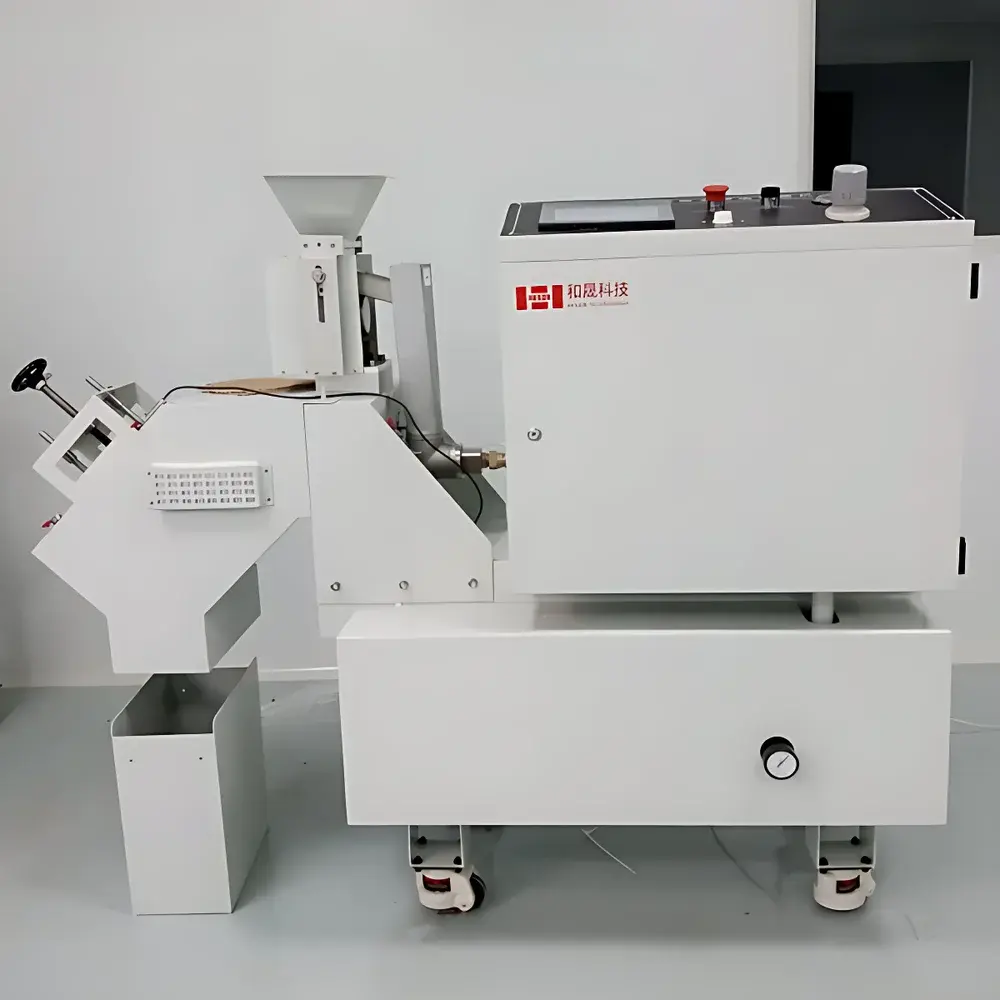
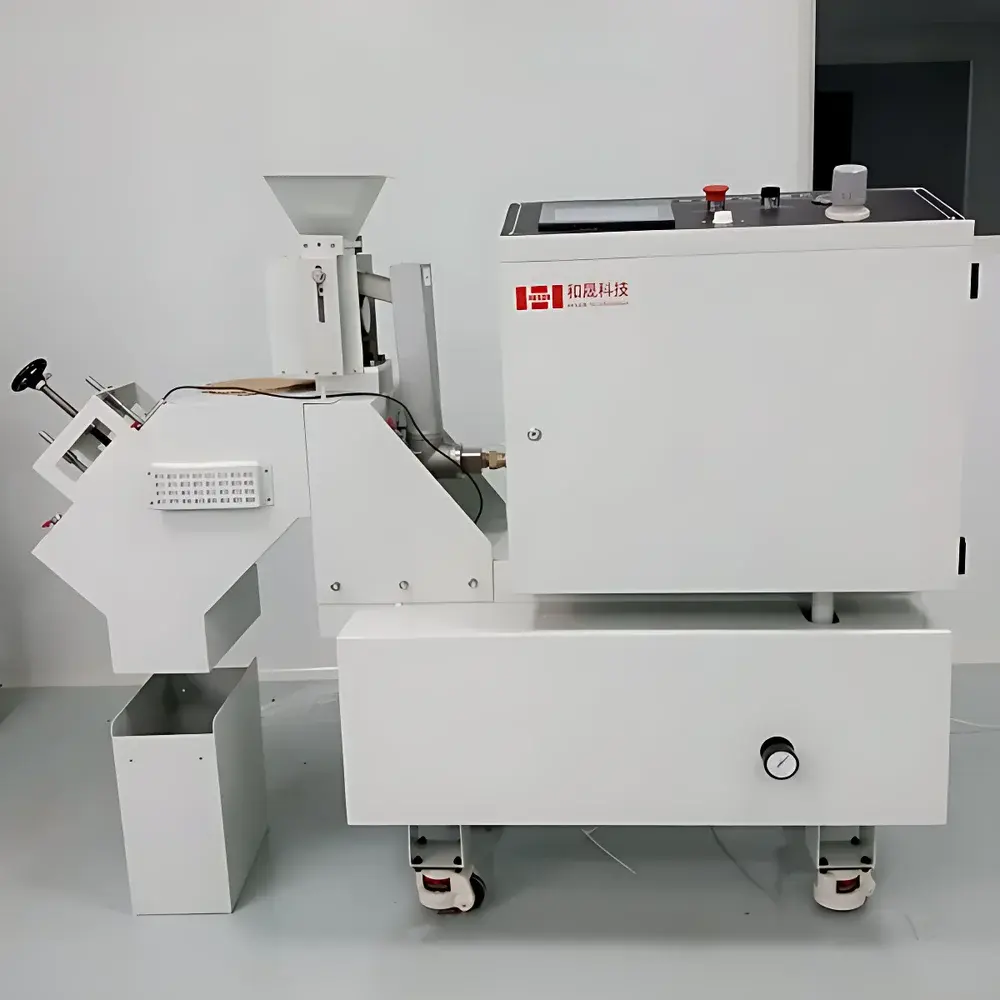
HESON HS-SS-1A MTG Gravel Impact Tester
| Brand | HESON |
|---|---|
| Origin | Shanghai, China |
| Manufacturer Type | Direct Manufacturer |
| Product Line | HS Series |
| Model | HS-SS-1A MTG Gravel Impact Tester |
| Compliance | SAE J400, ISO 20567-1, DIN 55996-1, ASTM D3170, VDA 54, GME 60268, GMW14700, Ford CETP, Toyota TSD, Volkswagen TL 226 |
| Operating Pressure Range | 0–1 MPa (adjustable) |
| Air Flow Rate | 0–0.08 m³/s (adjustable) |
| Compressed Air Inlet ID | ≥12.7 mm |
| Air Reservoir Volume | 136 L |
| Nozzle Internal Diameter | 52.6 mm |
| Nozzle Length | 290 mm |
| Max Specimen Dimensions | 105 mm (W) × 30 mm (T) |
| Impact Angles | 45°/90° (SAE), 54°/90° (VDA), Radiator-Specific Chamber |
| Sound Pressure Level | ≤130 dB(A) |
| Feed Mechanism | Electromagnetic Vibratory Feeder |
| Test Media | Gravel, Sand, Steel Shot, Iron Shot |
| Feed Rate | Adjustable via Vibratory Controller |
| Operating Temperature | 5–35 °C |
| Relative Humidity | ≤85% RH |
| Exclusion Criteria | Flammable, Explosive, Volatile, Corrosive, Biological, or Liquid Samples |
Overview
The HESON HS-SS-1A MTG Gravel Impact Tester is an engineered test system designed to evaluate the resistance of automotive exterior materials—including painted steel, aluminum substrates, thermoplastic polymers, and composite body panels—to mechanical damage caused by high-velocity gravel, sand, and abrasive particulates encountered during real-world road operation. It operates on the principle of controlled pneumatic projection: standardized impact media are accelerated through a calibrated nozzle using regulated compressed air, striking specimens at defined angles and velocities in accordance with internationally recognized automotive durability standards. The tester replicates the cumulative erosive and chipping effects observed on vehicle front-end components—such as bumpers, fenders, wheel arches, and radiator grilles—under sustained exposure to road debris. Its core function is not merely qualitative observation but quantitative assessment of coating cohesion, interlayer adhesion, substrate delamination, and substrate deformation—enabling objective pass/fail determinations against OEM-specified performance thresholds.
Key Features
- Modular architecture comprising interchangeable impact chambers (SAE 45°/90°, VDA 54°/90°, and radiator-specific geometry) for application-specific validation
- Precision-engineered electromagnetic vibratory feeder ensuring consistent, repeatable media flow rate control across test cycles
- Integrated 136 L air reservoir with pressure stabilization circuitry to maintain constant discharge velocity (e.g., 19.4 m/s per SAE J400 Annex C) despite upstream compressor fluctuations
- Adjustable pneumatic control system permitting fine-tuned regulation of both operating pressure (0–1 MPa) and volumetric airflow (0–0.08 m³/s)
- Standardized nozzle assembly (52.6 mm ID, 290 mm length) fabricated from hardened alloy to sustain dimensional integrity over extended service life
- Dedicated specimen fixture system accommodating parts up to 105 mm wide × 30 mm thick, with rigid clamping to prevent dynamic displacement during impact
- Acoustic enclosure design compliant with occupational noise limits (≤130 dB(A)), incorporating damping linings and sealed access ports
- Full electrical safety compliance (IEC 61000-6-2/6-4, CE-marked control cabinet) and fail-safe interlocks for door position, pressure threshold, and feed activation
Sample Compatibility & Compliance
The HS-SS-1A is strictly intended for solid, non-hazardous, non-volatile automotive components and coated substrates. It explicitly excludes flammable, explosive, corrosive, biological, or liquid samples per IEC 61010-1 safety directives. All testing must be conducted within ambient conditions of 5–35 °C and ≤85% RH to ensure thermomechanical stability of both specimen and equipment. The system is validated against multiple tier-1 OEM specifications including SAE J400 (gravel chip resistance), ISO 20567-1 (multiple-impact stone chipping), DIN 55996-1 (coating impact strength), ASTM D3170 (chipping resistance of organic coatings), VDA 54 (stone impact behavior), GMW14700 (coating durability), Ford CETP 00.00-L-467 (stone chip resistance), and Toyota TSD 2402G (abrasion and impact resistance). Calibration traceability follows ISO/IEC 17025 requirements, and all operational parameters—including nozzle velocity, impact angle, media mass distribution, and feed timing—are documented per GLP-compliant audit trails.
Software & Data Management
While the HS-SS-1A operates as a hardware-integrated benchtop system without embedded PC-based software, it supports full digital documentation via external lab management systems. All critical test parameters—including pressure setpoints, airflow readings, feed duration, cycle count, and environmental logs—are recorded manually or via optional analog/digital signal output interfaces (0–10 V, 4–20 mA). These data streams integrate seamlessly with LIMS platforms compliant with FDA 21 CFR Part 11 (electronic signatures, audit trail, data integrity controls) and ISO 17025 Clause 7.5 (record retention, version control). Optional PLC-based controllers provide timestamped event logging for every test sequence, supporting root cause analysis during failure investigations and enabling reproducible test execution across shifts and laboratories.
Applications
- Validation of OEM paint system formulations (e-coat, primer, basecoat, clearcoat) against chipping and edge-lift criteria
- Comparative evaluation of thermoplastic olefin (TPO), polypropylene (PP), and ABS bumper materials under repeated impact loading
- Assessment of adhesive bond integrity between multi-layer composites used in aerodynamic body kits
- Development testing of anti-chip undercoatings and protective film laminates applied to wheel wells and rocker panels
- Qualification of new substrate pretreatments (e.g., zinc phosphate alternatives, silane-based conversion coatings) for enhanced interfacial toughness
- Supporting PPAP submissions by generating standardized test reports aligned with AIAG APQP Phase 3 deliverables
FAQ
What standards does the HS-SS-1A MTG tester support?
It fully complies with SAE J400, ISO 20567-1, DIN 55996-1, ASTM D3170, VDA 54, GMW14700, Ford CETP 00.00-L-467, and Toyota TSD 2402G.
Can the impact angle be changed during a test sequence?
No—angle selection requires mechanical reconfiguration of the impact chamber; each test run uses a fixed, pre-verified orientation (45°, 54°, or 90°) per standard requirements.
Is an air compressor included with the system?
No—the HS-SS-1A requires an externally supplied oil-free compressed air source meeting ISO 8573-1 Class 1.4.1 purity specifications; air dryer and filtration are strongly recommended.
How is impact velocity verified and maintained?
Velocity is calibrated using certified pitot-static probes and high-speed photogate timing; the integrated 136 L reservoir and pressure-regulated discharge path ensure ±1.5% velocity stability across ≥100 consecutive shots.
Does the system support automated pass/fail classification?
No—it delivers raw impact data and specimen images; final evaluation follows standardized visual assessment protocols (e.g., ISO 20567-1 rating scale, VDA 54 grading matrix) performed by trained personnel.
Related Products



