
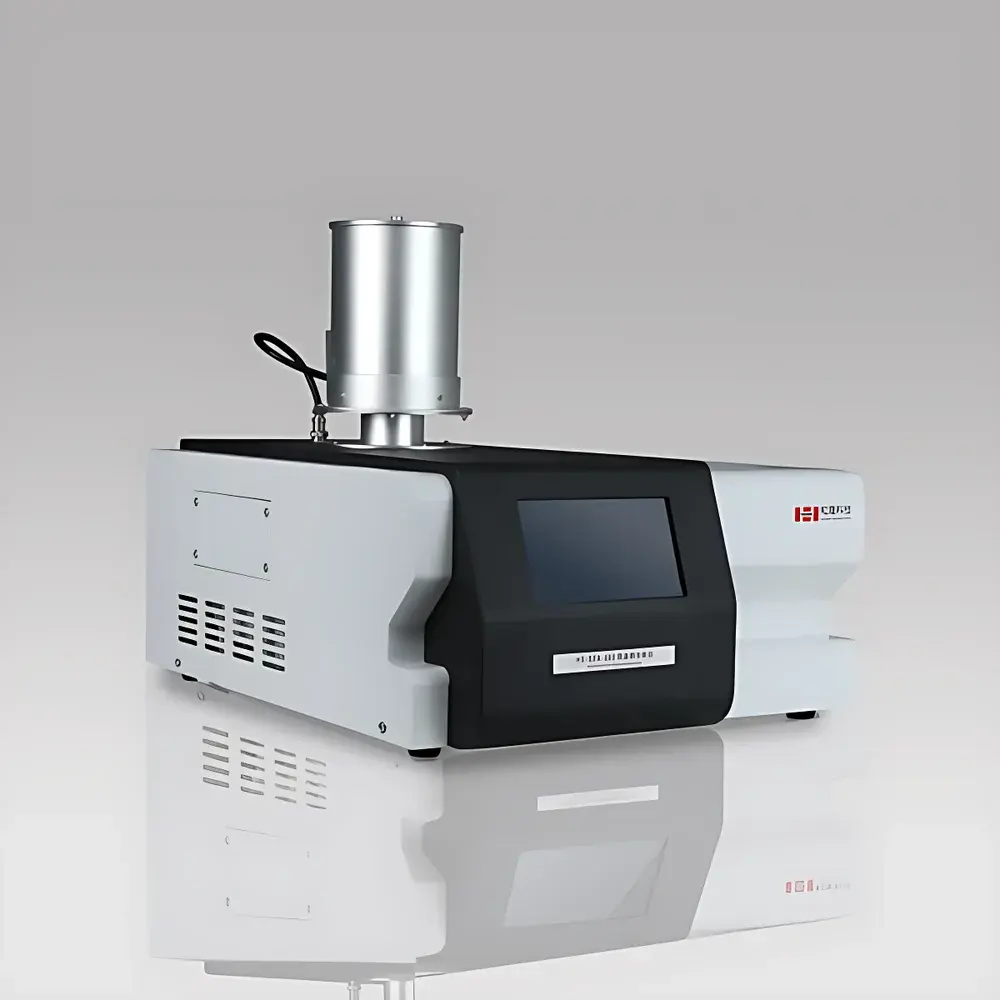
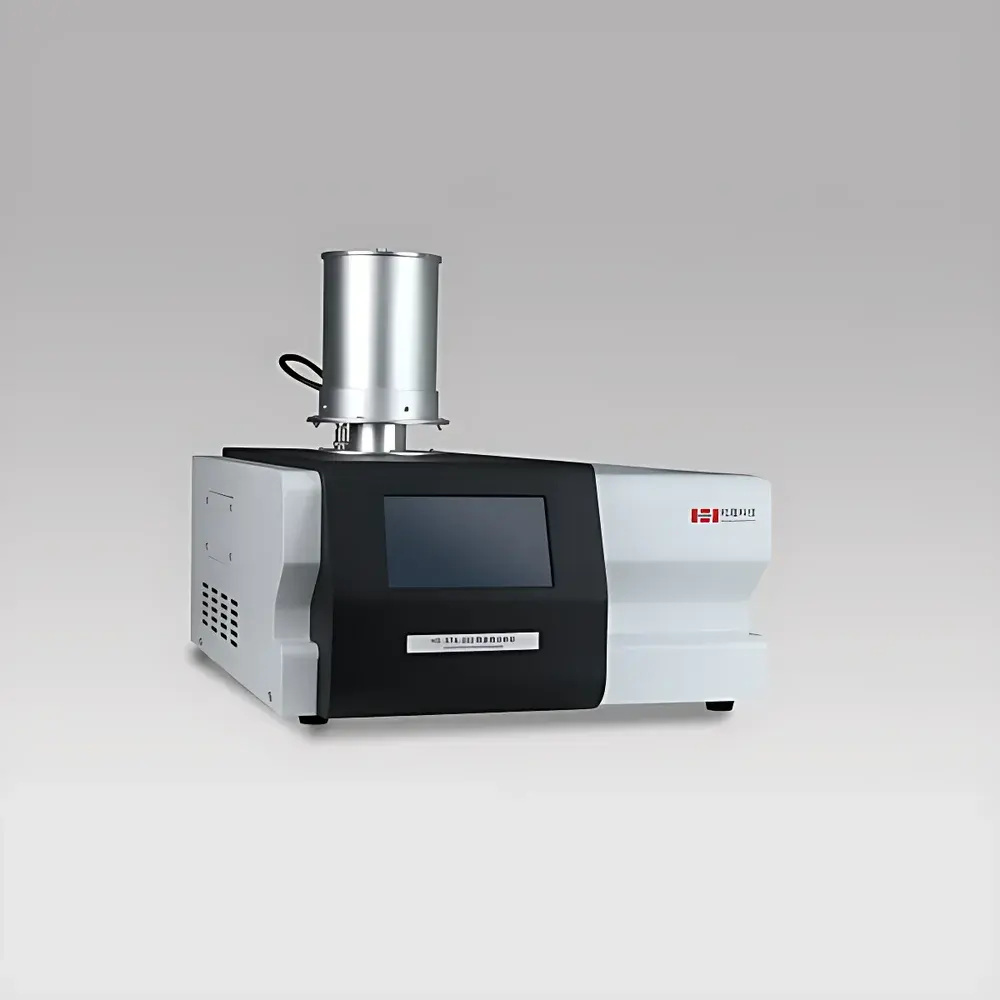
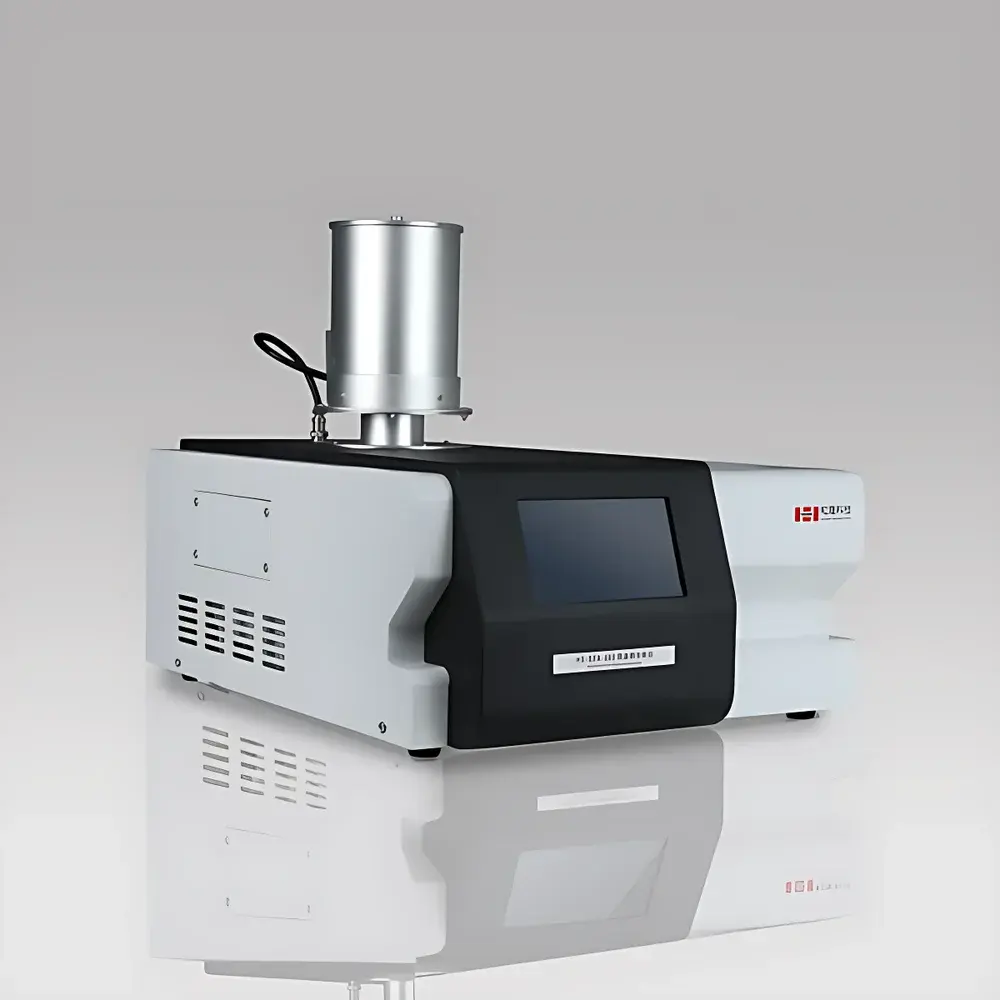
HESON HS-STA-002 Simultaneous Thermogravimetric Analyzer (TGA-DTA)
| Brand | HESON |
|---|---|
| Origin | Shanghai, China |
| Manufacturer Type | Direct Manufacturer |
| Product Origin | Domestic (China) |
| Model | HS-STA-002 (Simultaneous TGA-DTA Analyzer) |
| Temperature Range | Ambient to 1150 °C |
| Heating Rate | 0.1–80 °C/min |
| Temperature Stability | ±0.1 °C |
| Maximum Sample Mass | 2 g |
| Atmosphere | Nitrogen (dual-gas auto-switching, 0–300 mL/min, ≤0.5 MPa) |
Overview
The HESON HS-STA-002 Simultaneous Thermogravimetric Analyzer (TGA-DTA) integrates thermogravimetric analysis (TGA) and differential thermal analysis (DTA) into a single, synchronized measurement platform. By simultaneously recording mass change (Δm) and thermal response (ΔT) from the same sample under identical experimental conditions—including identical temperature history, gas atmosphere, heating rate, and thermal environment—the instrument eliminates inter-test variability inherent in sequential or standalone analyses. This architecture is grounded in classical thermoanalytical principles: TGA detects mass loss or gain associated with decomposition, oxidation, dehydration, or volatilization, while DTA identifies endothermic or exothermic transitions—such as melting, crystallization, glass transition, or solid-state reactions—by measuring temperature differentials between sample and inert reference. The co-registered data streams enable unambiguous correlation between mass events and thermal events, supporting rigorous mechanistic interpretation of complex thermal behavior in materials ranging from polymers and pharmaceuticals to ceramics, catalysts, and energy storage materials.
Key Features
- High-stability dual-wound nickel-chromium alloy furnace with optimized thermal homogeneity and extended service life up to 1150 °C;
- Precision-machined noble-metal sensor tray engineered for high-temperature stability, oxidation resistance, and long-term signal reproducibility;
- Physically decoupled power supply and forced-air cooling system, isolating thermal and mechanical noise from the microbalance assembly;
- Top-opening furnace design with vertical lift mechanism—minimizing risk of sample rod damage during loading and ensuring consistent positioning accuracy;
- Water-jacketed thermal isolation housing surrounding the balance chamber, actively suppressing conductive and convective heat transfer from the furnace zone;
- 32-bit ARM Cortex-M3 processor enabling real-time signal acquisition at high sampling rates, with dedicated 24-bit quad-channel ADC for simultaneous high-resolution capture of TG, DTA, and temperature signals;
- Modular furnace architecture allowing field-replacement of heating modules to accommodate custom thermal ranges or specialized atmospheres upon request;
- 7-inch 24-bit color LCD touchscreen interface with intuitive navigation, on-device curve visualization, and embedded method storage.
Sample Compatibility & Compliance
The HS-STA-002 accommodates solid, powdered, and granular samples up to 2 g (extendable to 30 g with optional configuration), compatible with standard alumina, platinum, or graphite crucibles. Dual independent mass flow controllers support automated switching between inert (N₂) and reactive (e.g., air, O₂, Ar) atmospheres, with precise regulation from 0 to 300 mL/min and pressure tolerance up to 0.5 MPa. The system meets foundational requirements for GLP-compliant thermal analysis workflows: temperature calibration traceable to NIST-certified standards, thermal stability and repeatability validated per ISO 11357-1 and ASTM E1131; DTA sensitivity and baseline linearity verified against certified indium and zinc references. While not pre-certified for FDA 21 CFR Part 11, the instrument’s audit-trail-ready data structure—including timestamped raw signal logs, operator ID tagging, and immutable method parameters—supports validation under GxP environments when integrated with compliant LIMS or ELN platforms.
Software & Data Management
Data acquisition and analysis are performed via proprietary Windows-based software supporting multi-step temperature programming (up to four independent ramp/hold segments), real-time overlay of TG and DTA curves, derivative (DTG) calculation, peak integration, and baseline correction. All raw data—including 24-bit analog-to-digital counts, calibrated mass (mg), temperature (°C), and DTA signal (μV)—are stored in open binary + CSV formats to ensure long-term accessibility and third-party interoperability. USB 2.0 interface enables direct transfer to external storage or network-connected workstations. Software supports user-defined report templates compliant with institutional thesis formatting or journal submission guidelines (e.g., ACS, RSC, Elsevier). Firmware updates are delivered via signed package files with version-controlled changelogs and rollback capability.
Applications
- Decomposition kinetics and activation energy estimation of polymer composites using Ozawa-Flynn-Wall and Kissinger methods;
- Distinguishing overlapping thermal events in battery cathode materials—e.g., lattice oxygen release vs. phase transition in layered oxides;
- Quantifying residual solvent content and thermal stability margins in active pharmaceutical ingredients (APIs) per ICH Q1A(R2);
- Characterizing carbonization yield and pore development in biomass-derived activated carbons under controlled N₂ purge;
- Evaluating catalytic coke formation and oxidative regeneration behavior in supported metal catalysts;
- Assessing thermal safety profiles of energetic materials, including decomposition onset, self-heating rates, and adiabatic time-to-explosion prediction;
- Validating thermal curing profiles and crosslink density evolution in epoxy resins and polyurethanes.
FAQ
What is the maximum operating temperature and typical lifetime of the furnace assembly?
The HS-STA-002 is rated for continuous operation up to 1150 °C. Under recommended maintenance (including periodic crucible cleaning and atmosphere purity control), the dual-wound Ni-Cr furnace typically exceeds 5,000 hours of cumulative use.
Can the system be upgraded to support DSC functionality instead of DTA?
No—the HS-STA-002 is configured exclusively for DTA detection. For DSC-capable simultaneous analyzers, consult the HESON HS-DSC-STA series, which incorporates heat-flux compensation and calibration against certified reference materials.
Is nitrogen the only supported atmosphere?
The standard configuration includes dual-gas auto-switching capability. While nitrogen is the default inert gas, users may configure second-gas inputs (e.g., synthetic air, argon, oxygen) via optional MFC modules and compatible gas lines.
How is temperature calibration performed and how often is it required?
Calibration uses high-purity indium (156.6 °C) and zinc (419.5 °C) standards per ISO 11357-1. Initial calibration is factory-performed; annual recalibration is recommended for ISO/IEC 17025-accredited labs, or after any major hardware intervention.
Does the instrument support automatic sample changing?
Not natively—the HS-STA-002 is a manual-load system. Robotic autosamplers are available as an integrated add-on module (HS-ASC-01), supporting up to 16 positions with programmable dwell times and purge sequencing.



