
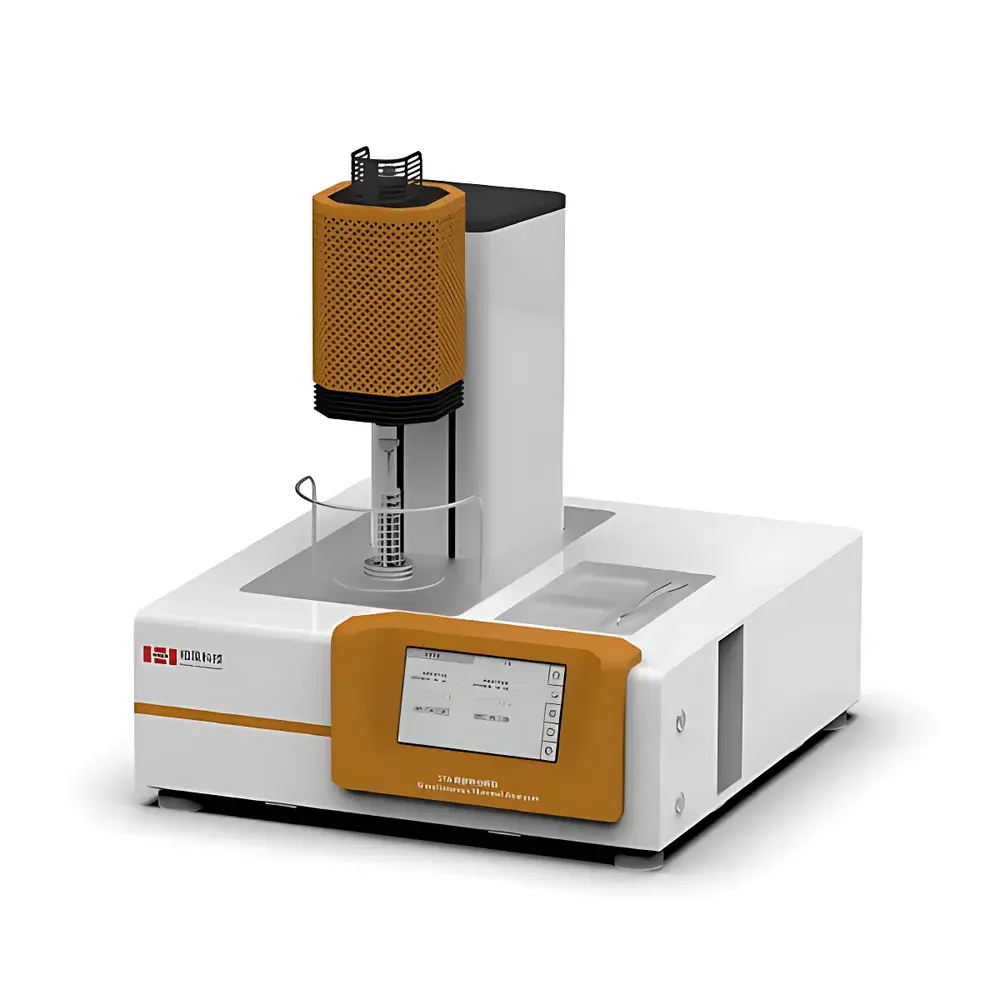
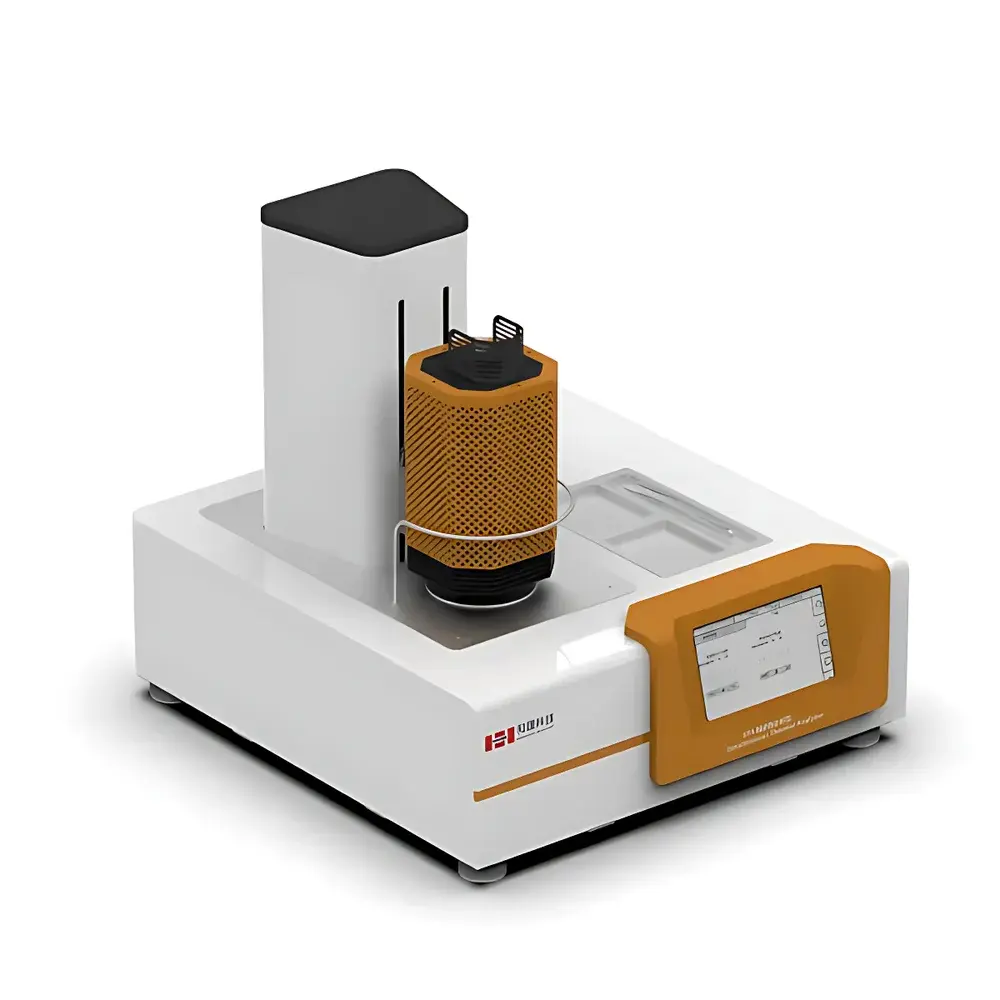
HESON HS-STA-302 Simultaneous Thermal Analyzer (TGA-DSC)
| Brand | HESON |
|---|---|
| Origin | Shanghai, China |
| Manufacturer Type | Direct Manufacturer |
| Region of Origin | Domestic (China) |
| Model | HS-STA-302 |
| Price | Upon Request |
| Temperature Range | RT to 1300 °C |
| Heating Rate | 0.1–100 °C/min |
| Temperature Stability | ±0.1 °C |
| Maximum Sample Mass | 3 g |
| Atmosphere | Nitrogen (dual-gas automatic switching, 0–300 mL/min, ≤0.5 MPa) |
Overview
The HESON HS-STA-302 Simultaneous Thermal Analyzer is an engineered platform for concurrent thermogravimetric analysis (TGA) and differential scanning calorimetry (DSC), enabling real-time, synchronized measurement of mass change and heat flow under controlled thermal conditions. Based on the principle of coupled microbalance and high-sensitivity heat-flux detection, the instrument operates within a vertically oriented furnace architecture—optimized to minimize buoyancy-induced artifacts and convective interference. This design ensures high-fidelity resolution of subtle thermal events, including decomposition onset, phase transitions, oxidative stability thresholds, and multi-step reaction kinetics. The system supports full programmable temperature control (heating, isothermal hold, and cooling), with seamless integration into regulated laboratory environments requiring traceable calibration and audit-ready data handling.
Key Features
- High-resolution microbalance with 1 μg mass resolution and exceptional repeatability, utilizing imported load-cell technology for stable long-term signal integrity.
- Thermal control system covering ambient to 1300 °C (extendable to 1400 °C upon configuration), with ±0.1 °C temperature stability and 0.01 °C resolution—validated against NIST-traceable reference materials.
- Dual-channel gas management system with automated switching between two atmospheres (e.g., N₂ and synthetic air), precise mass-flow control (0–300 mL/min), and pressure regulation up to 0.5 MPa.
- Vertical top-loading sample chamber accommodating 0.01 mg–3 g samples (expandable to 50 g with optional accessories), minimizing thermal lag and ensuring uniform heating profiles.
- ARM-based embedded controller delivering deterministic real-time data acquisition at up to 10 Hz sampling rate, with low-latency USB 2.0 interface for host PC synchronization.
- Integrated baseline compensation algorithm that dynamically subtracts crucible-only drift, yielding chemically pure TG curves without manual post-processing.
- 7-inch 24-bit color touchscreen interface with intuitive graphical workflow navigation—supporting method setup, live curve monitoring, and on-device report preview.
Sample Compatibility & Compliance
The HS-STA-302 accommodates a broad spectrum of solid and powdered samples—including polymers, pharmaceuticals, catalysts, ceramics, battery electrode materials, and geological specimens—within standard alumina or platinum crucibles. Its modular design includes standardized flange interfaces for direct coupling with Fourier-transform infrared (FTIR) spectrometers and quadrupole mass spectrometers (QMS), enabling evolved gas analysis (EGA) during thermal events. The system complies with key international standards governing thermal analysis methodology, including ISO 11358 (polymers), ASTM E1131 (TGA), ASTM E1269 (DSC), and USP <1163> for pharmaceutical thermal characterization. Built-in calibration routines support automated verification of temperature accuracy (using In, Sn, Zn, Al standards) and mass linearity (certified weights), fulfilling GLP/GMP documentation requirements and facilitating FDA 21 CFR Part 11-compliant electronic records when paired with validated software.
Software & Data Management
The proprietary STAControl™ software provides unified acquisition, visualization, and quantitative analysis of TGA-DSC datasets. It supports advanced kinetic modeling (e.g., Ozawa-Flynn-Wall, Kissinger, and model-free Friedman methods), derivative thermogravimetry (DTG), peak deconvolution, and multi-curve comparison. All raw data are stored in vendor-neutral ASCII formats with embedded metadata (timestamp, operator ID, method parameters, calibration logs). Audit trails record every user action—including method edits, calibration executions, and report exports—with immutable timestamps. Export options include PDF reports with customizable templates, CSV for third-party statistical tools, and XML for LIMS integration. Software validation packages—including IQ/OQ documentation and test protocols—are available for regulated laboratories.
Applications
- Quantitative determination of filler content, moisture, solvent residue, and ash yield in polymer composites and packaging films.
- Thermal stability assessment of active pharmaceutical ingredients (APIs) and excipients under inert and oxidative atmospheres per ICH Q1A(R2).
- Decomposition pathway mapping of metal-organic frameworks (MOFs) and battery cathode materials (e.g., NMC, LFP) during heating ramps.
- Phase transition analysis of shape-memory alloys, liquid crystals, and semi-crystalline thermoplastics—including cold crystallization, melting enthalpy, and glass transition identification.
- Reaction enthalpy and stoichiometry evaluation in catalytic decomposition processes, supported by simultaneous mass loss and heat flow correlation.
- Quality control screening for batch-to-batch consistency in ceramic precursors and refractory compounds.
FAQ
What is the maximum recommended sample mass for optimal DSC sensitivity?
For highest DSC signal-to-noise ratio and thermal response fidelity, we recommend 1–5 mg for most organic and polymeric samples; up to 3 g may be used for high-thermal-mass inorganic materials with appropriate crucible selection.
Does the system support cooling below ambient temperature?
The standard HS-STA-302 configuration supports cooling from 1000 °C to 50 °C in ≤20 minutes using forced-air quenching; cryogenic cooling (e.g., to –50 °C) requires optional mechanical refrigeration module.
Can the instrument operate under vacuum conditions?
Yes—the dual-gas manifold supports evacuation via integrated vacuum pump port (optional accessory); ultimate pressure down to 10⁻² mbar is achievable with appropriate sealing and purge protocols.
Is remote operation and monitoring supported?
Remote desktop access and scheduled unattended runs are enabled via Ethernet-enabled host PC; real-time data streaming to networked workstations is supported through TCP/IP API integration.
How frequently should temperature and mass calibration be performed?
We recommend daily verification using certified reference materials before critical measurements; full two-point temperature and three-point mass calibration is advised weekly or after maintenance, per ISO/IEC 17025 internal quality procedures.
Related Products



