
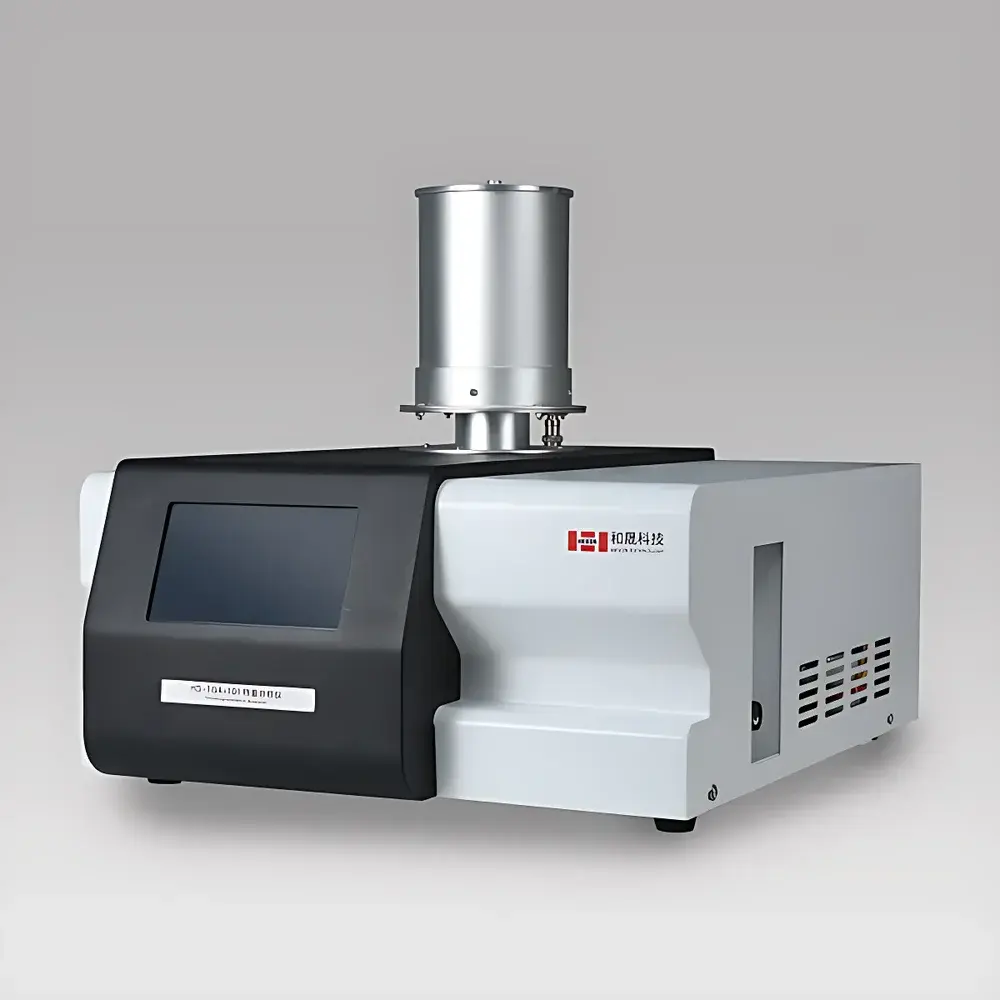
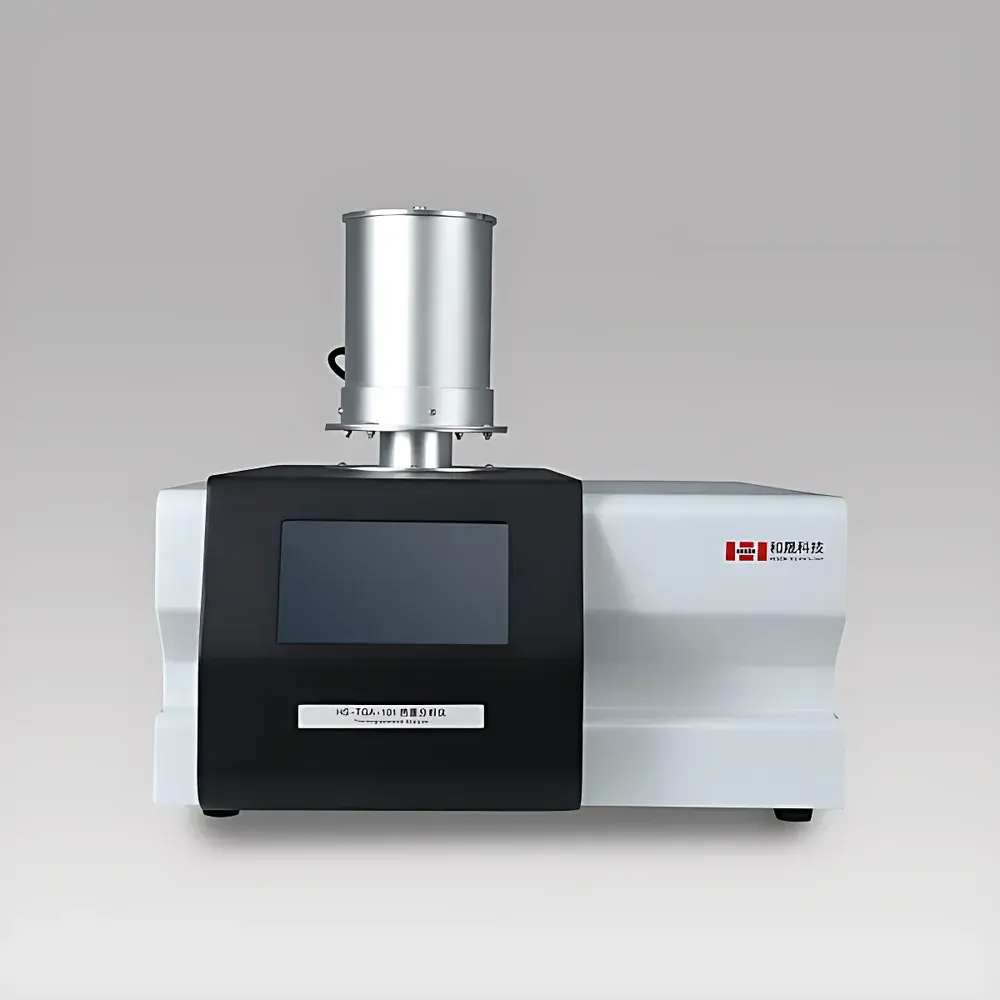
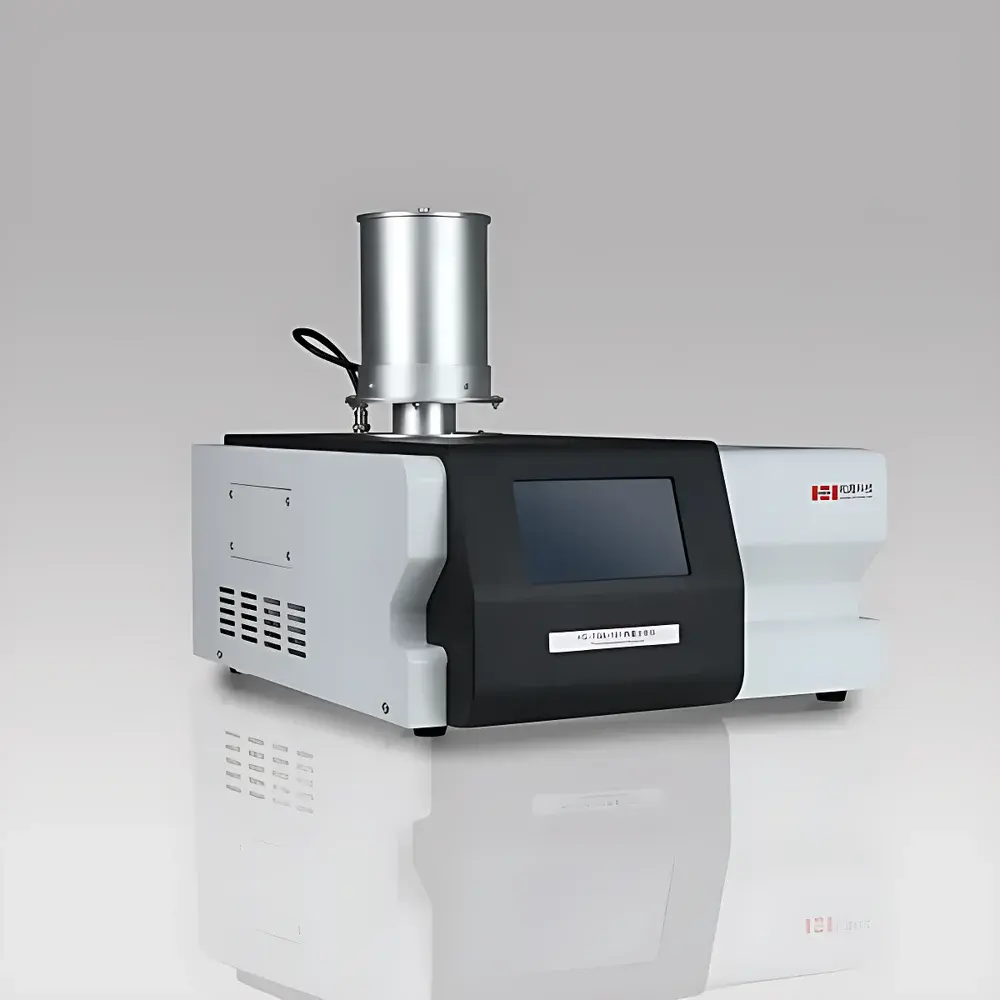
HESON HS-TGA-101 Thermogravimetric Analyzer
| Brand | HESON |
|---|---|
| Origin | Shanghai, China |
| Manufacturer Type | Direct Manufacturer |
| Regional Category | Domestic (China) |
| Model | HS-TGA-101 |
| Operating Environment | Ambient Pressure |
| Sample Capacity | Single Sample |
| Instrument Type | General-Purpose |
| Temperature Range | RT to 1150 °C |
| Temperature Accuracy | ±0.1 K |
| Balance Sensitivity | 10 µg |
| Heating/Cooling Rate | 1–80 °C/min |
| Maximum Sample Mass | 2 g |
| Baseline Drift | ≤10 µg |
Overview
The HESON HS-TGA-101 Thermogravimetric Analyzer is an engineered benchtop instrument designed for precise, real-time monitoring of mass change as a function of temperature or time under controlled atmospheric conditions. Based on the fundamental principle of thermogravimetry—measuring sample mass loss or gain during programmed thermal treatment—the HS-TGA-101 delivers high reproducibility in decomposition kinetics, volatilization profiling, oxidative stability assessment, and compositional quantification. It operates via a high-stability microbalance coupled with a programmable furnace system, enabling accurate detection of mass changes down to 10 µg across a wide thermal range (room temperature to 1150 °C). The system supports both inert (e.g., N₂, Ar) and reactive (e.g., O₂, air) atmospheres through dual-gas automatic switching, facilitating comparative analysis of thermal behavior under differing chemical environments. Its architecture complies with core requirements for GLP-compliant thermal analysis workflows, including traceable temperature calibration, stable baseline performance (<10 µg drift), and deterministic heating/cooling control.
Key Features
- High-resolution microbalance with 10 µg sensitivity and <10 µg baseline drift over extended runs
- Programmable temperature control from ambient to 1150 °C, with accuracy of ±0.1 K and resolution of 0.01 °C
- Adjustable heating/cooling rates from 0.1 to 80 °C/min, supporting rapid screening and high-fidelity kinetic studies
- Four-segment temperature programming capability (ramp-hold-ramp-hold), configurable via intuitive 7-inch 24-bit color touchscreen interface
- Dual-gas flow control system with automatic switching between two independent gas lines (0–300 mL/min, ≤0.5 MPa pressure rating)
- Integrated cooling module enabling rapid cooldown from 1000 °C to 100 °C in ≤15 minutes
- USB 2.0 data export interface compatible with standard laboratory data acquisition and post-processing software
- Robust mechanical design (470 × 580 × 460 mm, 220 V/50 Hz) optimized for routine operation in QC labs, R&D centers, and university teaching facilities
Sample Compatibility & Compliance
The HS-TGA-101 accommodates solid, powdered, or granular samples up to 2 g (extendable to 30 g with optional crucible configuration), making it suitable for polymers, ceramics, metals, pharmaceuticals, composites, and geological materials. Crucible options include platinum, alumina, and quartz—selected per application requirements for chemical inertness and thermal stability. The instrument meets foundational metrological criteria aligned with ISO 11358 (Plastics — Thermogravimetry), ASTM E1131 (Standard Test Method for Compositional Analysis by Thermogravimetry), and USP <467> residual solvent testing protocols. While not certified for FDA 21 CFR Part 11 out-of-the-box, its data logging architecture supports audit-trail-ready implementation when integrated with validated LIMS or ELN platforms compliant with GxP documentation standards.
Software & Data Management
Data acquisition and visualization are handled via embedded firmware with real-time plotting of TG (mass vs. temperature/time) and DTG (first derivative) curves. Raw data exports in CSV format preserve full temporal and thermal metadata—including gas flow parameters, ramp rate, hold times, and balance voltage signals—for downstream analysis in MATLAB, OriginLab, or Thermo-Calc-compatible tools. Optional PC-based software packages provide advanced features such as multi-curve overlay, kinetic modeling (e.g., Kissinger, Ozawa-Flynn-Wall), residue quantification, and automated step-detection algorithms. All data files retain timestamped instrument configuration logs, satisfying basic traceability needs for internal quality audits and method validation documentation.
Applications
The HS-TGA-101 serves as a primary tool in diverse technical domains requiring quantitative thermal stability evaluation. In polymer science, it characterizes degradation onset, filler content (e.g., carbon black, CaCO₃), and moisture/volatile content per ISO 3451. In metallurgy and catalysis, it assesses oxidation kinetics, reduction profiles (e.g., metal oxides under H₂), and catalyst coking behavior. Energy materials research leverages its precision for battery cathode decomposition mapping, biomass pyrolysis staging, and coal combustion reactivity profiling. Academic users apply it to study phase transitions in MOFs, dehydration steps in hydrated salts, and thermal decomposition pathways of pharmaceutical actives—supporting over 30 peer-reviewed publications across institutions including Harbin Institute of Technology, Beijing Institute of Technology, and China University of Mining and Technology.
FAQ
What is the maximum sample mass capacity of the HS-TGA-101?
The standard configuration supports up to 2 g; optional high-capacity crucibles extend this to 30 g.
Can the instrument operate under vacuum conditions?
No—it is configured for ambient-pressure operation with dual-gas purging; vacuum compatibility requires external interfacing and is not supported natively.
Is the temperature calibration traceable to national standards?
Yes—calibration utilizes certified reference materials (e.g., Ni, Cu, Al melting points) following ISO/IEC 17025-aligned procedures; certificate of calibration available upon request.
Does the system support simultaneous TGA-DTA or TGA-DSC coupling?
No—the HS-TGA-101 is a dedicated thermogravimetric platform; differential thermal analysis requires separate instrumentation or hybrid systems.
How is data integrity ensured during long-duration experiments (e.g., >24 h)?
Continuous internal diagnostics monitor balance stability, furnace thermocouple response, and gas flow consistency; raw data streams are written incrementally to non-volatile memory to prevent loss during power interruption.



