
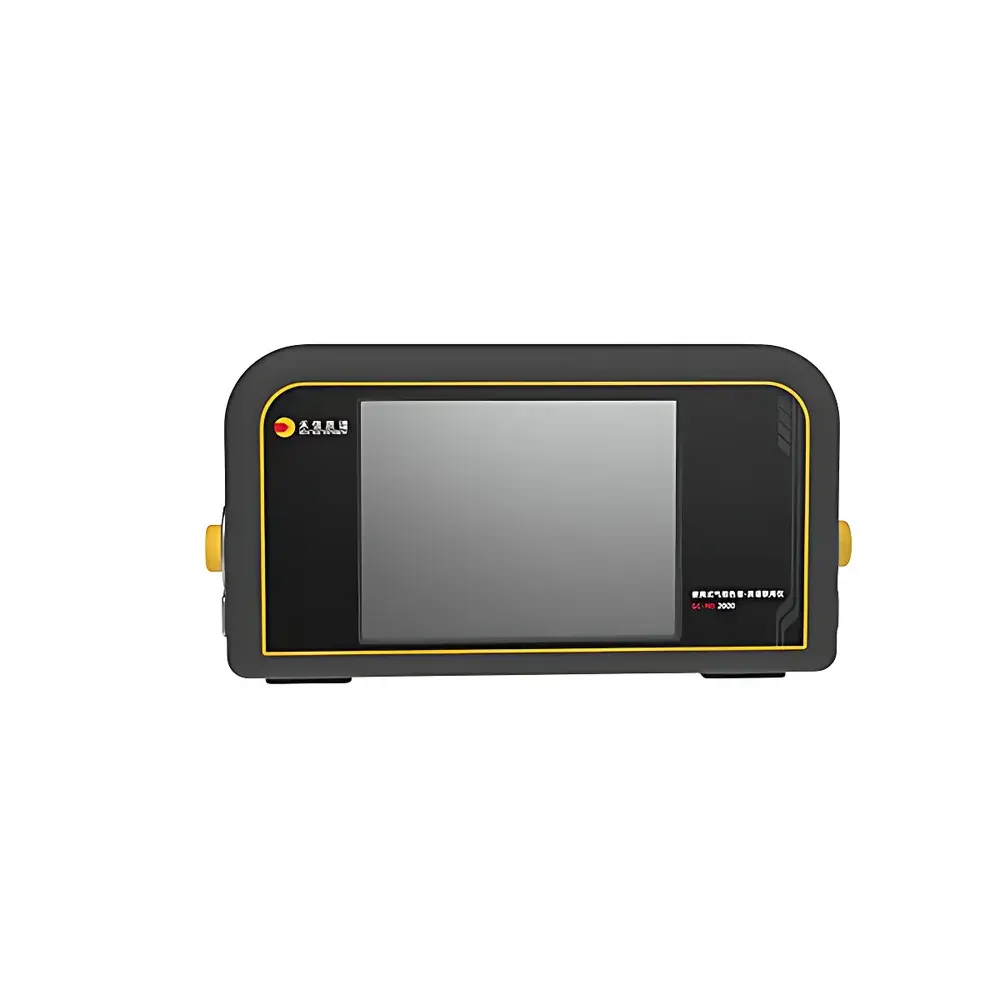
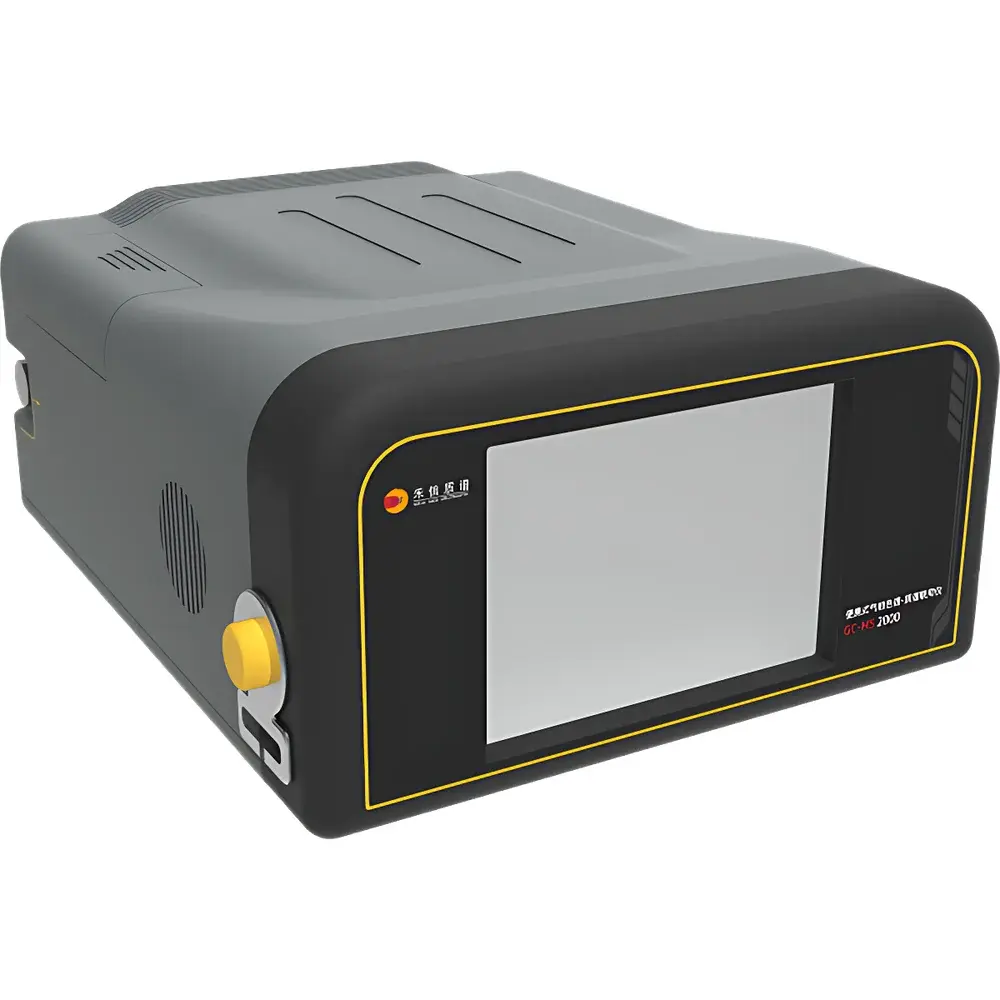
HEXIN MASS SPECTROMETRY GC-MS 2000 Portable Gas Chromatography-Mass Spectrometry System
| Brand | HEXIN MASS SPECTROMETRY |
|---|---|
| Origin | Guangdong, China |
| Manufacturer Type | Authorized Distributor |
| Country of Origin | China |
| Model | GC-MS 2000 |
| Instrument Type | Portable |
| Weight | Not Specified by Manufacturer |
| Mass Range | Available Upon Request |
| Mass Resolution | Available Upon Request |
| Dynamic Range | Available Upon Request |
| Scan Rate (Max) | Available Upon Request |
| Sensitivity | Available Upon Request |
Overview
The HEXIN MASS SPECTROMETRY GC-MS 2000 is a field-deployable gas chromatography–mass spectrometry (GC-MS) system engineered for rapid, on-site identification and quantification of volatile organic compounds (VOCs) and semi-volatile organic compounds (SVOCs) in complex environmental matrices. Unlike laboratory-bound benchtop GC-MS platforms, the GC-MS 2000 integrates a miniaturized quadrupole mass analyzer with a thermally stabilized capillary gas chromatograph—both housed within a ruggedized, transport-ready enclosure. Its operational principle relies on separation via temperature-programmed capillary GC followed by electron ionization (EI) and mass-selective detection in unit-mass resolution mode. The system supports real-time spectral acquisition and library-based compound identification using NIST/EPA/NIOSH reference libraries, enabling trace-level analysis without sample transport or pre-concentration in many cases. Designed for mission-critical deployment, it meets the physical and functional requirements of mobile environmental monitoring, emergency response, and occupational exposure assessment.
Key Features
- Multi-mode sampling interface supporting thermal desorption (TD), quantitative loop injection, solid-phase microextraction (SPME), micro-syringe liquid injection, and headspace analysis—enabling method flexibility across gaseous, aqueous, and solid-phase samples.
- Integrated battery-powered operation with extended runtime (>4 hours typical), allowing uninterrupted analysis during field missions without external AC supply.
- Graphical user interface (GUI) with context-sensitive wizards for method setup, calibration, and data review—reducing operator training time and minimizing procedural errors.
- Ruggedized chassis with IP54-rated enclosure, shock-absorbing mounting, and thermal management optimized for ambient temperatures ranging from −10 °C to +45 °C.
- Onboard spectral library search engine compliant with ASTM D6883 and EPA Method TO-15/TO-17 workflows for VOC confirmation and semi-quantitative screening.
- Embedded internal standard tracking and retention time locking for improved inter-run reproducibility under variable field conditions.
Sample Compatibility & Compliance
The GC-MS 2000 accommodates direct analysis of air (via canister or Tedlar bag), water (after purge-and-trap or SPME), and soil/sediment (via headspace or solvent extraction). It is compatible with standard GC columns including DB-5ms, Rxi-5Sil MS, and equivalent 15–30 m × 0.25 mm ID fused silica capillaries. While not certified to ISO/IEC 17025 for accredited testing, the system supports GLP-aligned data integrity practices—including audit trail logging, electronic signature capability, and raw data export in open formats (e.g., .CDF, .mzML). It conforms to key regulatory frameworks governing field analytical instrumentation, including US EPA SW-846 Methods 8260D (VOCs) and 8270E (SVOCs), as well as EN 14662 for ambient air quality monitoring.
Software & Data Management
The proprietary GC-MS Control Suite provides instrument control, data acquisition, peak integration, and reporting modules—all accessible through a Windows-based application. Raw data files are stored with embedded metadata (operator ID, location GPS coordinates, ambient T/P, calibration status), ensuring traceability per FDA 21 CFR Part 11 requirements when configured with role-based access controls and digital signature enforcement. Batch processing supports automated calibration curve generation using internal standards (e.g., fluorobenzene, bromofluorobenzene), and results can be exported to LIMS-compatible CSV or XML formats. Optional cloud synchronization enables remote diagnostics and method library updates via secure TLS-encrypted channels.
Applications
- Environmental field screening: Real-time detection of BTEX, chlorinated solvents, PAHs, phthalates, and pesticides in ambient air, groundwater plumes, and contaminated soils.
- Emergency response: Rapid identification of unknown chemical releases during hazmat incidents, fire investigations, or industrial accidents—supporting incident command decisions within minutes.
- Occupational hygiene: Personal and area monitoring of workplace VOC exposures against OSHA PELs and ACGIH TLVs.
- Public health surveillance: Field validation of drinking water treatment efficacy and indoor air quality assessments in schools, hospitals, and residential buildings.
- Forensic field analysis: Preliminary screening of ignitable liquids, accelerants, and illicit drug precursors at crime scenes prior to lab confirmation.
FAQ
Is the GC-MS 2000 compliant with EPA Method TO-15 for ambient air analysis?
Yes—the system supports the full TO-15 workflow when coupled with certified SUMMA canisters and appropriate calibration gases; method validation documentation is available upon request.
What is the typical detection limit for benzene in ambient air using the built-in thermal desorption module?
Under standard operating conditions (1 L air sample, 10:1 desorption enrichment), sub-ppbv detection limits are achievable; exact values depend on matrix interference and calibration strategy.
Can the instrument be operated by non-mass spectrometry specialists?
Yes—the GUI-guided method templates, automated tuning routines, and integrated diagnostic alerts enable competent operation by trained environmental technicians after ≤2 days of instruction.
Does the system support regulatory data submission to government agencies?
Raw data and processed reports meet the structural and metadata requirements for submission to most national environmental agencies; formal validation packages (IQ/OQ/PQ) are available as optional services.
Is remote firmware update supported?
Yes—secure over-the-air (OTA) updates are enabled via authenticated HTTPS connections, with rollback capability and version-controlled change logs.




