
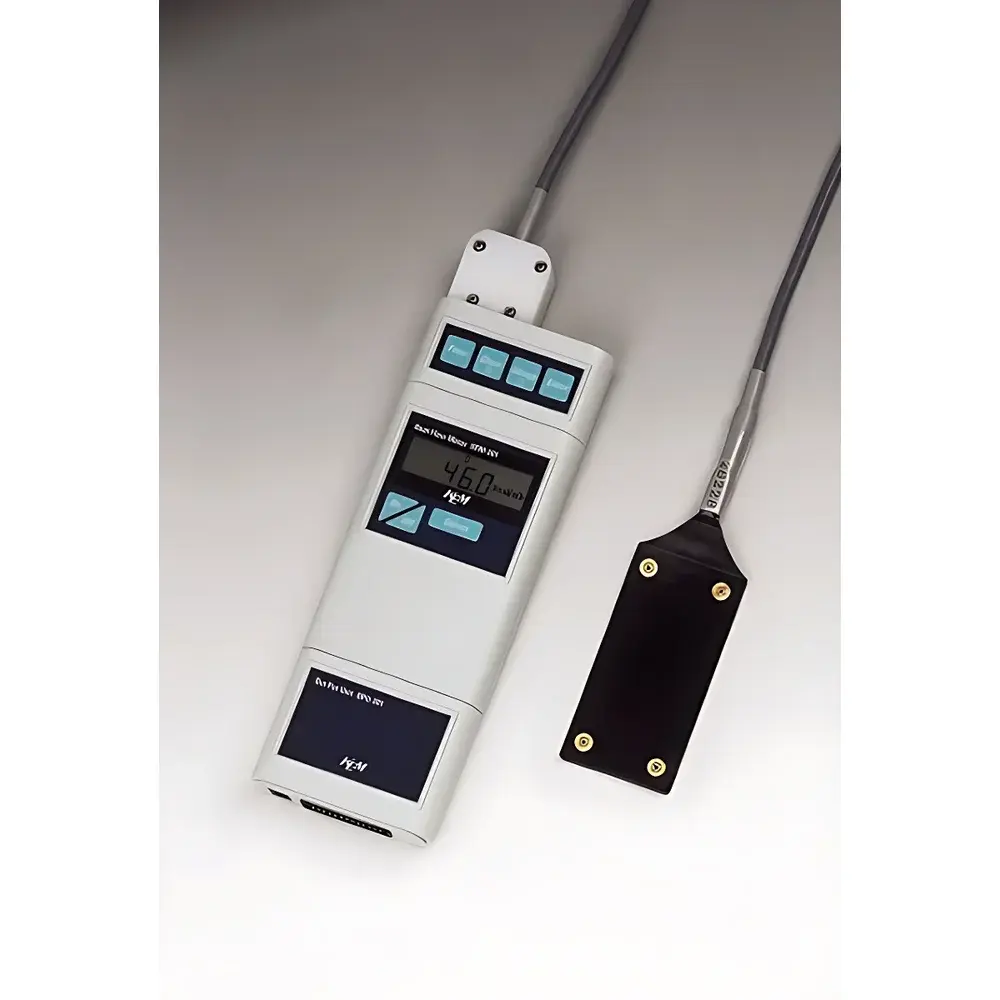
HFM-201 Portable Heat Flow Meter
| Origin | Japan |
|---|---|
| Manufacturer Type | Authorized Distributor |
| Origin Category | Imported |
| Model | HFM-201 |
| Pricing | Upon Request |
Overview
The HFM-201 Portable Heat Flow Meter is a field-deployable, precision thermometric instrument engineered for direct, real-time quantification of heat flux density (q) in watts per square meter (W/m²) across building envelopes, industrial insulation systems, thermal barriers, and process equipment surfaces. It operates on the fundamental principle of Fourier’s law of conduction: q = ΔT / Rₜ, where thermal resistance (Rₜ) of the sensor’s calibrated core plate is known, and the temperature gradient (ΔT) across its thickness is measured via integrated differential thermocouples. The output voltage signal is linearly proportional to incident heat flux, enabling traceable, NIST-compatible measurements without external calibration drift under stable ambient conditions. Designed for compliance with ISO 9869-1 (in-situ measurement of thermal transmittance), ASTM C1041 (standard practice for in-situ measurements of heat flux), and EN 12524 (thermal performance of building materials), the HFM-201 supports both steady-state and transient thermal diagnostics in energy audits, commissioning, and R&D validation workflows.
Key Features
- Simultaneous dual-parameter display: selectable units for heat flux (W/m² or kcal/m²·h) and surface temperature (°C), with real-time switching between measurement modes.
- Interchangeable thermocouple input: supports Type K (Chromel–Alumel, –99.9 °C to 999.9 °C) and Type T (Copper–Constantan, –199.9 °C to 400 °C) probes for broad thermal range adaptability.
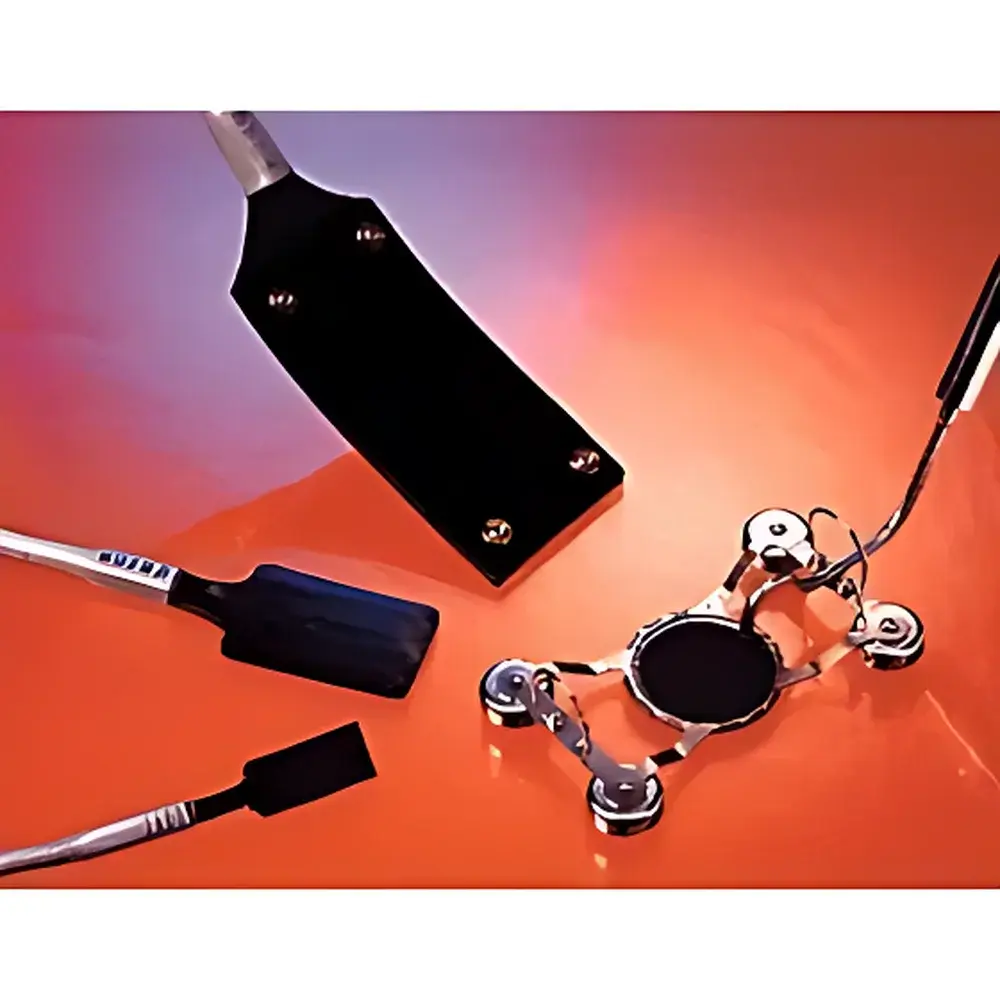
- Integrated TR2-B heat flux transducer (HFT): a robust, thin-film thermopile-based sensor with certified thermal resistance and linear response over ±9999 W/m²; optimized for surface-mounted or embedded installation in insulation layers.
- Onboard data logging: stores up to 100 measurement points across 20 user-defined sessions, with timestamped records retained during power cycling.
- Dual power architecture: operates continuously for up to 80 hours on two AA alkaline cells or via optional AC adapter—enabling extended field deployments without grid dependency.
- RS-232C serial interface (standard): enables bidirectional communication with PCs for firmware updates, configuration export, and raw data retrieval using vendor-supplied software or third-party SCADA platforms.
- Compact, handheld form factor: 82 × 232 × 22 mm (L×W×H); mass ≈ 220 g—including protective carry case—designed for one-handed operation in confined or elevated access zones.
Sample Compatibility & Compliance
The HFM-201 accommodates diverse thermal interfaces through a modular sensor ecosystem. Standard TR2-B suits low-to-moderate flux applications on flat, dry surfaces (e.g., wall insulation, duct cladding). Optional sensors extend capability: TR6-B for sub-100 W/m² monitoring in passive house envelopes; KM1-B for biophysical skin-contact or microscale device testing; K500B-B and K500B-20-B feature rare-earth magnets and ceramic shielding for attachment to ferrous furnace exteriors up to 500 °C; K750-B is rated for embedment within refractory linings or high-density insulation matrices. All sensors conform to IEC 60584-1 (thermocouple tolerances) and are supplied with individual calibration certificates referencing traceable standards. Device firmware supports GLP-compliant audit trails when used with optional data collection software compliant with FDA 21 CFR Part 11 requirements.
Software & Data Management
The HFM-201 interfaces with Windows-based data acquisition software (optional) supporting CSV/Excel export, time-series visualization, statistical averaging (2-, 10-, or 30-point rolling mean), and configurable sampling intervals (1, 2, 5, or 10 seconds). Each stored session retains sensor-specific A/B coefficients—entered manually via keypad—for post-acquisition correction of thermal resistance variance. RS-232C protocol includes command-line control for remote triggering, memory dump, and parameter reset. For integration into enterprise QA/QC systems, the instrument supports ASCII-based telemetry with header metadata (date, time, sensor ID, units), ensuring compatibility with LIMS and CMMS platforms requiring ISO/IEC 17025-aligned traceability.
Applications
- In-situ U-value and R-value verification per ISO 9869-1 for building envelope certification and retrofit evaluation.
- Thermal bridging detection in curtain walls, balconies, and structural penetrations during commissioning.
- Insulation integrity assessment on steam lines, reactors, and kiln shells in petrochemical and cement plants.
- Heat loss/gain quantification in HVAC ductwork, cold storage panels, and refrigerated transport containers.
- Biothermal studies: surface heat dissipation from electronic components, battery packs, or medical devices using KM1-B.
- Validation of thermal simulation models (e.g., EnergyPlus, ANSYS Fluent) using field-measured boundary conditions.
FAQ
What is the measurement principle of the HFM-201?
It employs a calibrated thermopile-based heat flux transducer (HFT) that converts the temperature gradient across a known thermal resistance into a linear millivolt output, directly proportional to incident heat flux density (W/m²).
Can the HFM-201 measure through wet or condensing surfaces?
No—sensor contact surfaces must be dry and thermally coupled; moisture compromises thermal interface resistance and introduces measurement uncertainty beyond ±5%.
Is the TR2-B sensor suitable for high-temperature industrial surfaces?
TR2-B is rated for ≤70 °C continuous exposure; for surfaces >100 °C, select K500B-B or K750-B variants with ceramic encapsulation and magnetic mounting.
How is calibration traceability maintained?
Each HFT carries a unique calibration certificate traceable to national metrology institutes (e.g., NMI-Japan); A/B coefficients are entered manually to compensate for unit-specific sensitivity deviations.
Does the device support wireless data transmission?
No native Wi-Fi or Bluetooth; data transfer requires RS-232C cabling or manual export via SD card (not included)—a deliberate design choice to ensure EMI immunity in electrically noisy plant environments.



