
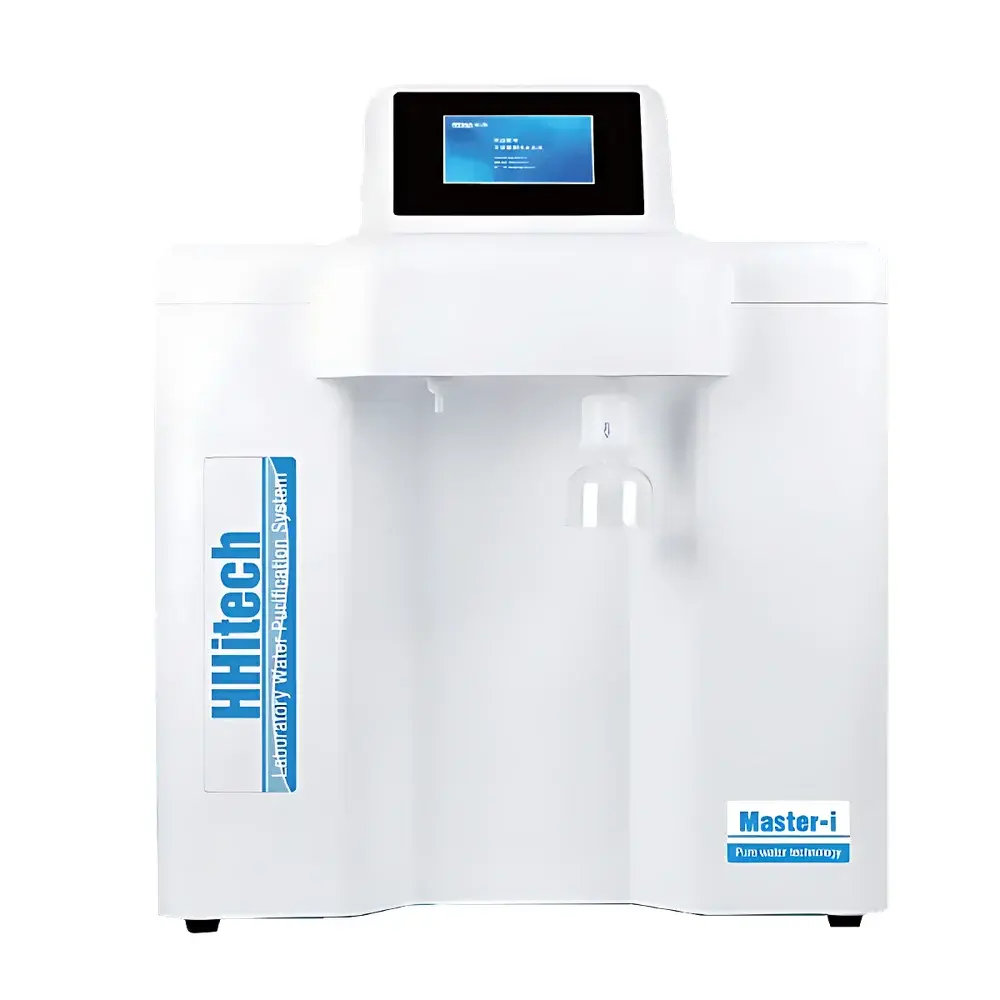
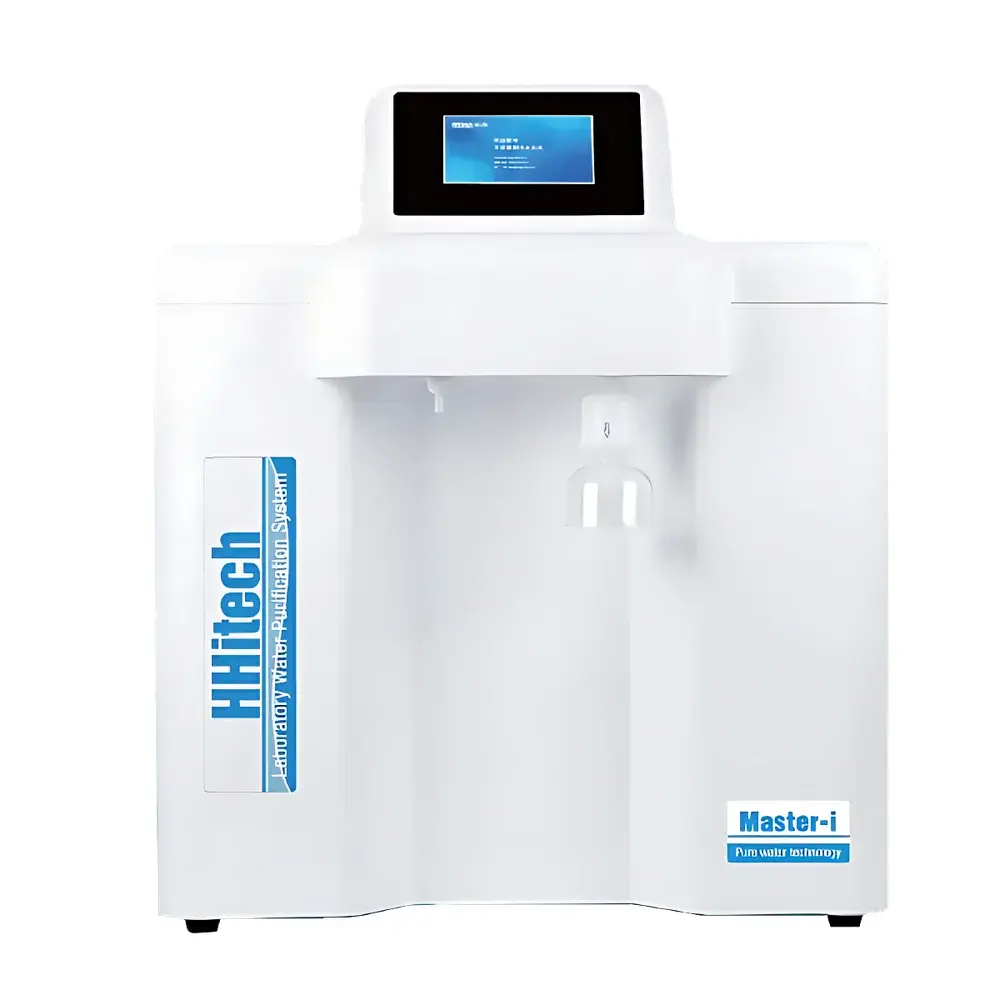
HHitech Master i Series Ultrapure Water System
| Brand | HHitech |
|---|---|
| Origin | Shanghai, China |
| Manufacturer Type | Authorized Distributor |
| Product Category | Domestic |
| Model | Master i |
| Pricing | Available Upon Request |
Overview
The HHitech Master i Series Ultrapure Water System is an integrated, modular laboratory water purification platform engineered for precision, reliability, and regulatory compliance in demanding research, pharmaceutical, and clinical applications. It employs a multi-stage purification architecture grounded in reverse osmosis (RO), electrodeionization (EDI)-free deionization, dual-wavelength ultraviolet (UV) photo-oxidation (185 nm and 254 nm), ultrafiltration (UF), and terminal sterile filtration. The system delivers Type I ultrapure water (ASTM D1193-20, ISO 3696:1987 Class 1, CLSI EP22-A2 compliant) with resistivity up to 18.2 MΩ·cm at 25 °C, TOC < 3 ppb, bacterial count < 0.01 CFU/mL, endotoxin < 0.001 EU/mL, and RNase/DNase levels below detection limits (≤1 pg/mL and ≤5 pg/mL, respectively). Designed for continuous operation with intelligent intermittent recirculation, the Master i minimizes microbial proliferation while maintaining energy efficiency and long-term stability of water quality.
Key Features
- Modular configuration supporting multiple output capacities: 20, 38, or 48 L/h pure water production; secondary RO output up to 35 L/h; maximum dispensing flow rate of 2.0 L/min
- Dual-wavelength UV oxidation module (185 nm + 254 nm) using imported low-pressure mercury lamps for simultaneous organic degradation and microbiological inactivation
- 5000 Da molecular weight cutoff (MWCO) imported ultrafiltration membrane for effective removal of endotoxins, pyrogens, RNases, and DNases — validated for cell culture, IVF, and molecular biology workflows
- Terminal sterilizing filter with 0.45 µm + 0.1 µm PES (polyethersulfone) composite membrane certified to meet ISO 13408-1 requirements for sterile filtration
- NSF-certified fluid path components (tubing, fittings, valves) minimizing extractables and ensuring ultra-low TOC leaching (<1 ppb baseline contribution)
- Smart touchscreen HMI with embedded web server, cloud connectivity (HHitech Cloud Platform), and optional LIMS/BMS integration via RS232 or Ethernet
- Automated RO membrane anti-scaling flush cycle with programmable interval and duration; manual override function for maintenance diagnostics
- QR-code–enabled consumables management system with real-time usage tracking, predictive replacement alerts, and immutable cloud-based audit trails
- GLP-compliant data logging: full traceability of water quality parameters (resistivity, TOC, temperature), dispense volume/timestamp, alarm history, and cartridge service records
Sample Compatibility & Compliance
The Master i Series is validated for consistent production of reagent-grade water meeting or exceeding international standards including ASTM Type I, ISO 3696 Class 1, CLSI EP22-A2, and pharmacopeial specifications (USP , EP 2.2.44). Its purified water stream complies with GB/T 6682–2008 (Chinese National Standard for Laboratory Water) Grade III requirements. All wetted materials comply with NSF/ANSI Standard 61 for drinking water system components. The system supports critical applications requiring low bioburden and molecular purity — including HPLC mobile phase preparation, ICP-MS calibration, ELISA assay buffers, stem cell culture media, and next-generation sequencing (NGS) library preparation. Endotoxin-free operation is verified per LAL assay protocols (FDA-recommended kinetic chromogenic method).
Software & Data Management
The embedded control software features full GLP/GMP-aligned functionality: time-stamped, user-authenticated data capture; tamper-proof electronic records stored locally and synchronized to HHitech’s encrypted cloud platform; exportable CSV/PDF reports compatible with FDA 21 CFR Part 11 requirements (when paired with optional digital signature module). The system logs all operational events — including resistivity drift, UV lamp intensity decay, UF membrane pressure differential, and consumable lifecycle metrics. Remote monitoring and configuration are supported via secure HTTPS interface or dedicated iOS/Android application. Optional R-DIS standalone dispensing units integrate independent conductivity and flow sensors, enabling location-specific water quality verification at point-of-use.
Applications
- High-sensitivity analytical instrumentation: LC-MS, GC-MS, ICP-OES, ICP-MS, AAS
- Molecular biology: PCR, qRT-PCR, CRISPR-Cas9 editing, RNA-seq, plasmid transfection
- Cell and tissue culture: primary cell expansion, iPSC maintenance, organoid systems, IVF embryo culture
- Pharmaceutical QC/QA: dissolution testing, stability studies, cleaning validation rinse water
- Clinical diagnostics: immunoassay reagent formulation, hematology analyzer diluents, flow cytometry sheath fluid
- Electronics manufacturing: wafer cleaning, photomask rinsing, semiconductor process chemistry
FAQ
What is the expected lifetime of the RO membrane under standard municipal feed water conditions?
With automated anti-scaling flush cycles and proper pre-treatment (KDF + activated carbon), the Dow Filmtec™ RO elements typically achieve 2–3 years of service life before replacement is indicated by >15% decline in salt rejection or sustained resistivity drop below 0.2 MΩ·cm for RO permeate.
Can the Master i be integrated into an existing building management system (BMS)?
Yes — the system provides native Modbus TCP and RS232 interfaces, allowing bidirectional communication with BMS platforms for centralized monitoring of status, alarms, and water quality KPIs.
Is the cloud data storage compliant with GDPR or HIPAA requirements?
Data hosted on HHitech Cloud Platform is stored in ISO 27001-certified Tier III data centers; customer-specific deployments support HIPAA Business Associate Agreements and GDPR-compliant processing addenda upon contractual agreement.
Does the system support automatic calibration of inline resistivity sensors?
No — resistivity sensors are factory-calibrated and require periodic verification using NIST-traceable KCl standard solutions; however, the system logs calibration timestamps and deviation trends for audit readiness.
What validation documentation is provided with the system?
Each unit ships with Factory Acceptance Test (FAT) report, IQ/OQ protocol templates aligned with ISO 9001 and GAMP5, and a Certificate of Conformance detailing material certifications (NSF, RoHS, REACH) and electrical safety compliance (IEC 61010-1).



