
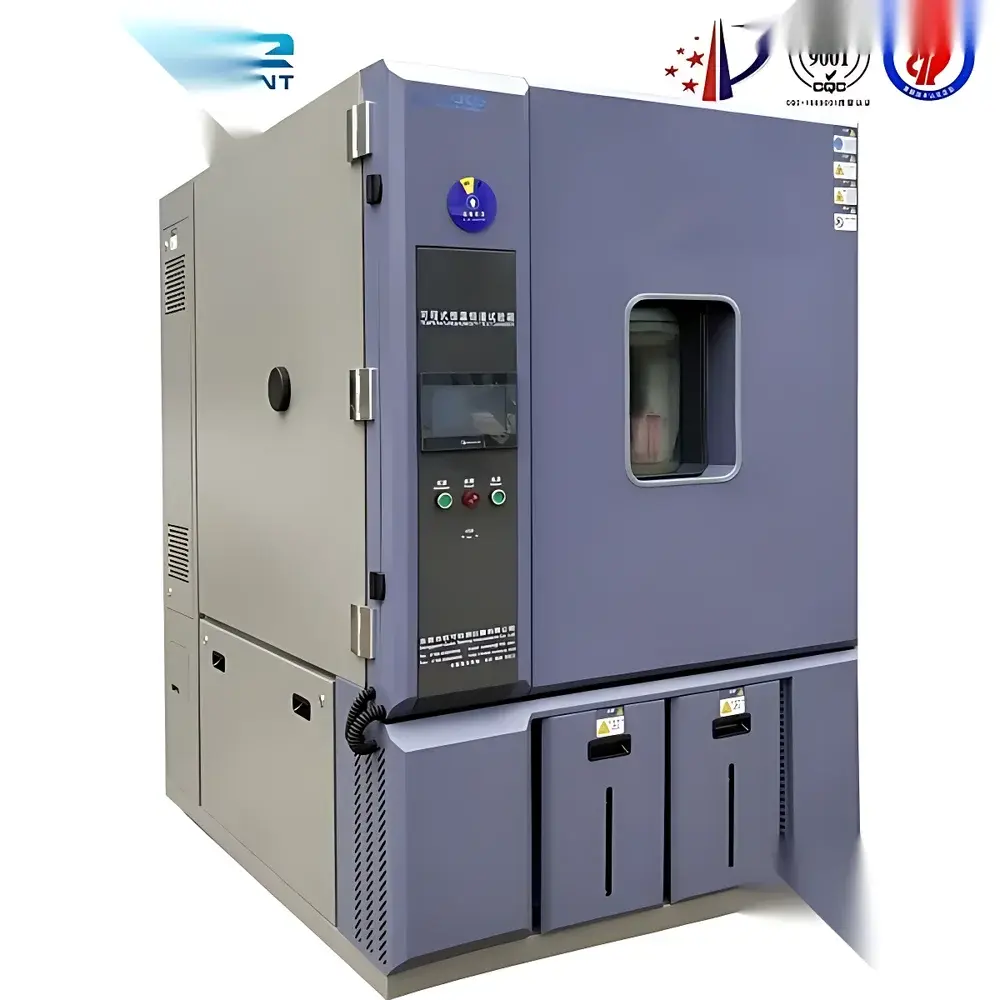
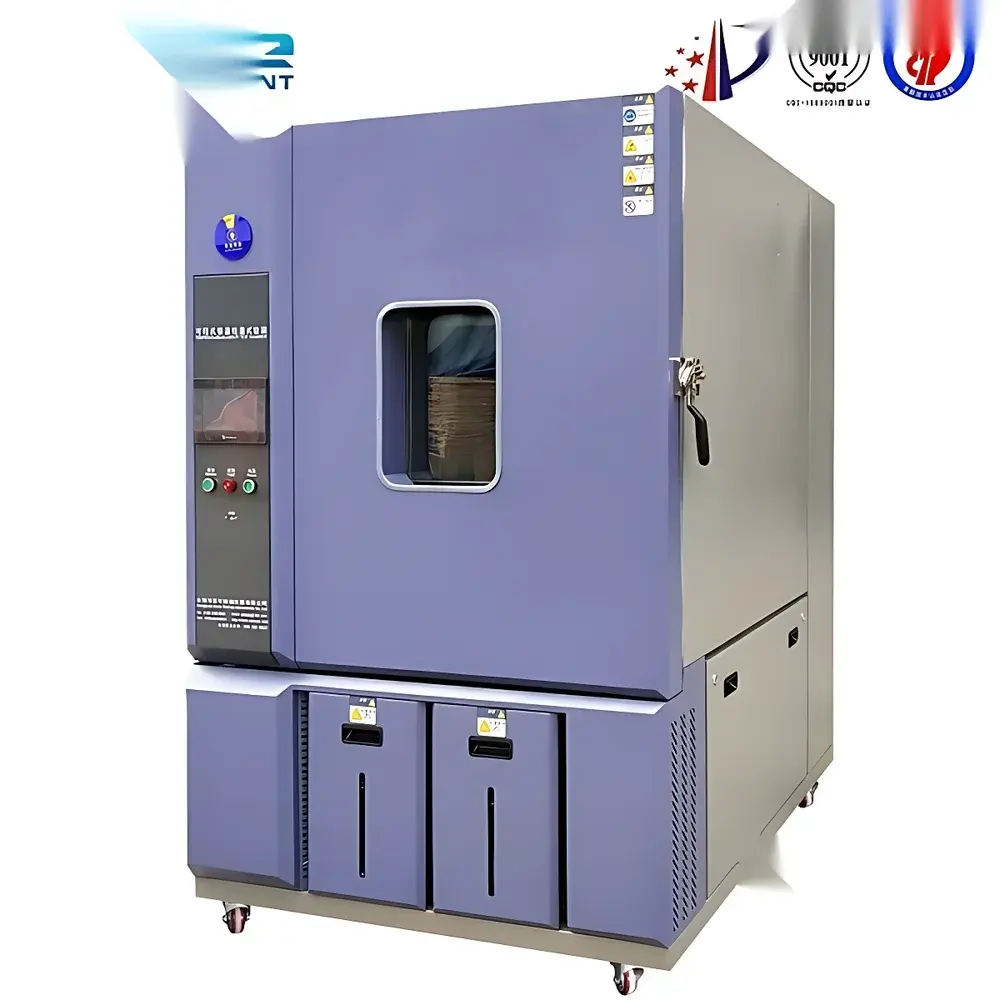
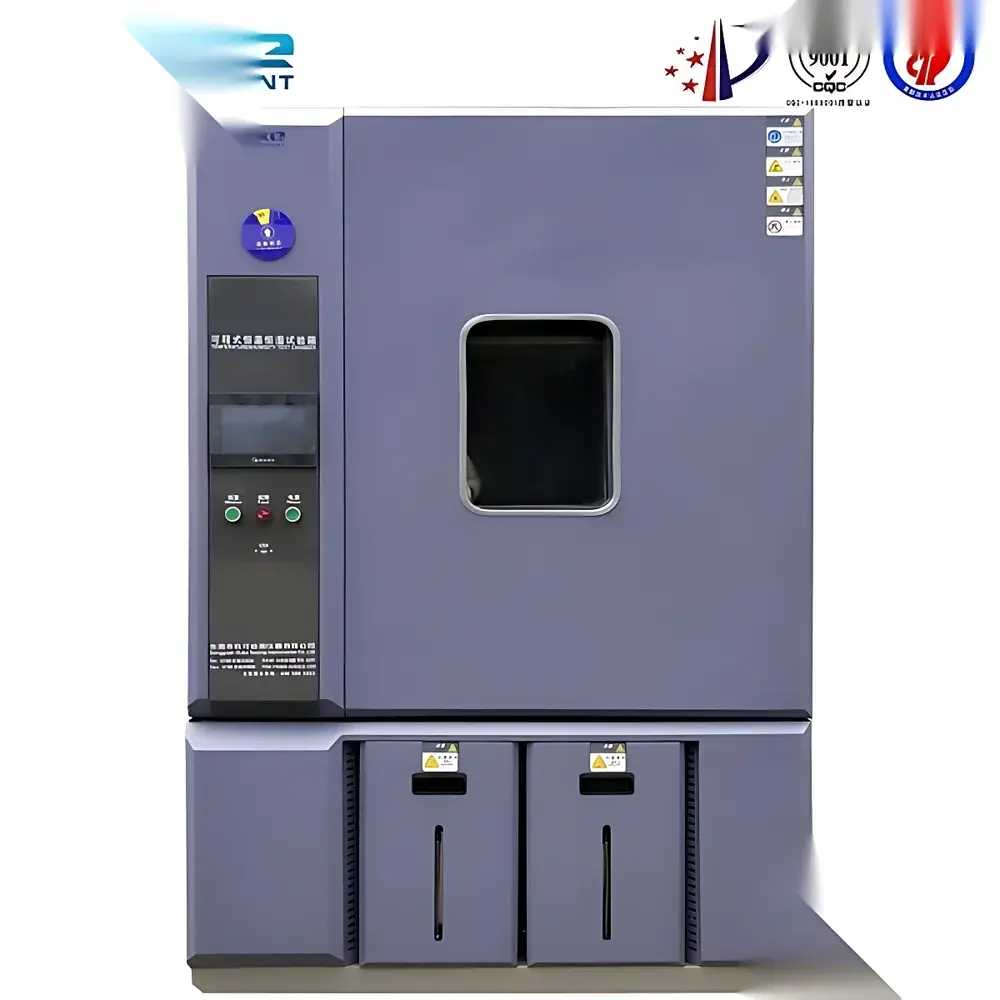
High-Low Temperature Dual 85% RH Environmental Test Chamber
| Brand | Other Brands |
|---|---|
| Origin | Imported |
| Manufacturer Type | General Distributor |
| Price | USD 7,000 (approx.) |
| Construction | External Pressure-Bearing Cabinet with Stainless Steel Interior |
| Insulation | Ultra-Fine Glass Wool + Rigid Polyurethane Foam |
| Refrigeration System | Air-Cooled Hermetic Compressor (Tecumseh/France) |
| Heating System | Stainless Steel Finned Heater |
| Air Circulation | Multi-Blade Fan with HVAC-Grade Motor |
| Temperature Sensor | PT100 Platinum Resistance Thermometer |
| Controller | 7-Inch Touchscreen HMI with PID Algorithm |
| Safety Protections | Over-Temperature (Chamber), Compressor Overload/High-Pressure/Oil-Pressure Fault, Fan Overload, Phase Loss, Compressor Delay Start |
| Optional | PC-Based Remote Monitoring Software & Ethernet Interface |
| Compliance | Designed per IEC 60068-2-1 (Cold), IEC 60068-2-2 (Dry Heat), IEC 60068-2-78 (Damp Heat), MIL-STD-810H Method 502.6/503.5 |
Overview
The High-Low Temperature Dual 85% RH Environmental Test Chamber is an engineered climatic simulation system designed to evaluate the functional integrity and long-term reliability of electronic components, avionics modules, optical sensors, and precision mechanical assemblies under rigorously controlled thermal and humidity stress conditions. Unlike standard temperature-only chambers, this dual-stress platform integrates programmable high-temperature (up to +150 °C), low-temperature (down to −70 °C), and sustained 85% relative humidity (RH) exposure — enabling concurrent or sequential execution of tests aligned with industry-critical standards including IEC 60068-2-78 (damp heat, steady state), MIL-STD-810H Method 502.6 (cold), Method 503.5 (temperature shock), and Telcordia GR-468-CORE for optoelectronic device qualification. Its external pressure-bearing structural design ensures dimensional stability during rapid thermal transients, while the stainless steel interior chamber minimizes outgassing and corrosion risk—critical for aerospace-grade test fidelity and repeatable material aging studies.
Key Features
- Robust external pressure-bearing cabinet architecture with 304 stainless steel inner chamber and double-wall construction for thermal inertia control and mechanical durability.
- High-efficiency air circulation system featuring multi-blade centrifugal fans driven by sealed HVAC-grade motors, ensuring uniform temperature distribution (±0.5 °C at 1/3 volume load, per IEC 60068-3-5).
- Intelligent 7-inch resistive touchscreen HMI with embedded PID control algorithm, real-time trend logging, and user-defined profile sequencing (up to 99 segments per program).
- Dual-stage refrigeration system utilizing a hermetically sealed Tecumseh compressor with air-cooled condenser and eco-friendly R404A/R23 cascade configuration for stable sub-zero operation.
- Redundant safety architecture including independent over-temperature cut-off, compressor high-pressure/low-oil-pressure monitoring, phase-loss detection, and automatic delay restart logic.
- Modular insulation comprising ultra-fine glass wool (≥100 mm thickness) and rigid polyurethane foam (density ≥40 kg/m³), achieving thermal leakage <0.8 kW at −40 °C ambient.
Sample Compatibility & Compliance
The chamber accommodates test specimens up to 600 L internal volume (customizable), with standardized 120 mm diameter cable/port access points for in-situ electrical parameter monitoring (e.g., leakage current, contact resistance, signal integrity). It supports both powered and unpowered test modes, with optional integrated 30 A/250 VAC feedthrough terminals rated for continuous operation under 85% RH. All control firmware and data logs comply with GLP/GMP traceability requirements, supporting audit-ready timestamped event records, user access levels, and electronic signature capability when paired with optional FDA 21 CFR Part 11–compliant software add-ons. Calibration certificates (NIST-traceable PT100 sensors, Class B accuracy) are provided with each unit shipment.
Software & Data Management
The embedded controller stores up to 100 test programs and retains 30 days of minute-interval data locally (non-volatile memory). Optional PC-based software enables remote supervision via Ethernet (TCP/IP), real-time graphing of multiple channels (T1/T2/RH), automated report generation (PDF/CSV), and integration into enterprise LIMS or MES platforms through Modbus TCP or OPC UA protocols. Data export includes ISO/IEC 17025–aligned metadata: sensor ID, calibration date, operator ID, environmental setpoints, deviation alarms, and system health diagnostics (compressor run time, fan RPM, refrigerant pressure).
Applications
- Aerospace component qualification per DO-160G Section 4 (temperature), Section 10 (humidity), and Section 26 (thermal shock).
- Automotive electronics validation under ISO 16750-4 (climate resistance) and AEC-Q200 stress screening.
- Accelerated life testing of PCBAs, MEMS devices, and battery management systems under combined thermal-humidity bias.
- Reliability assessment of optical coatings, adhesives, and encapsulants per ASTM D4329 (fluorescent UV and condensation exposure protocols).
- Pre-compliance screening for medical device packaging per ISO 11607-1 (aging under accelerated humidity conditions).
FAQ
What temperature and humidity ranges does this chamber support simultaneously?
It achieves simultaneous operation from −70 °C to +150 °C and 10–98% RH; the 85% RH condition is fully sustainable across −40 °C to +85 °C.
Is the chamber suitable for HALT or HASS testing?
No — it is not configured for rapid thermal cycling (>10 °C/min) or vibration integration; it is optimized for steady-state and ramp-and-soak environmental stress screening.
Can third-party calibration services be performed on-site?
Yes — the PT100 sensor layout and controller architecture support field verification using portable dry-block calibrators compliant with ISO/IEC 17025.
Does the system meet CE or UKCA marking requirements?
Yes — all electrical subsystems conform to EN 61000-6-2 (immunity) and EN 61000-6-4 (emissions); full declaration of conformity is supplied upon request.
What is the typical lead time for custom chamber configurations?
Standard units ship within 8–10 weeks; bespoke dimensions, port layouts, or special coatings (e.g., electropolished interior) require 14–16 weeks after final engineering approval.



