
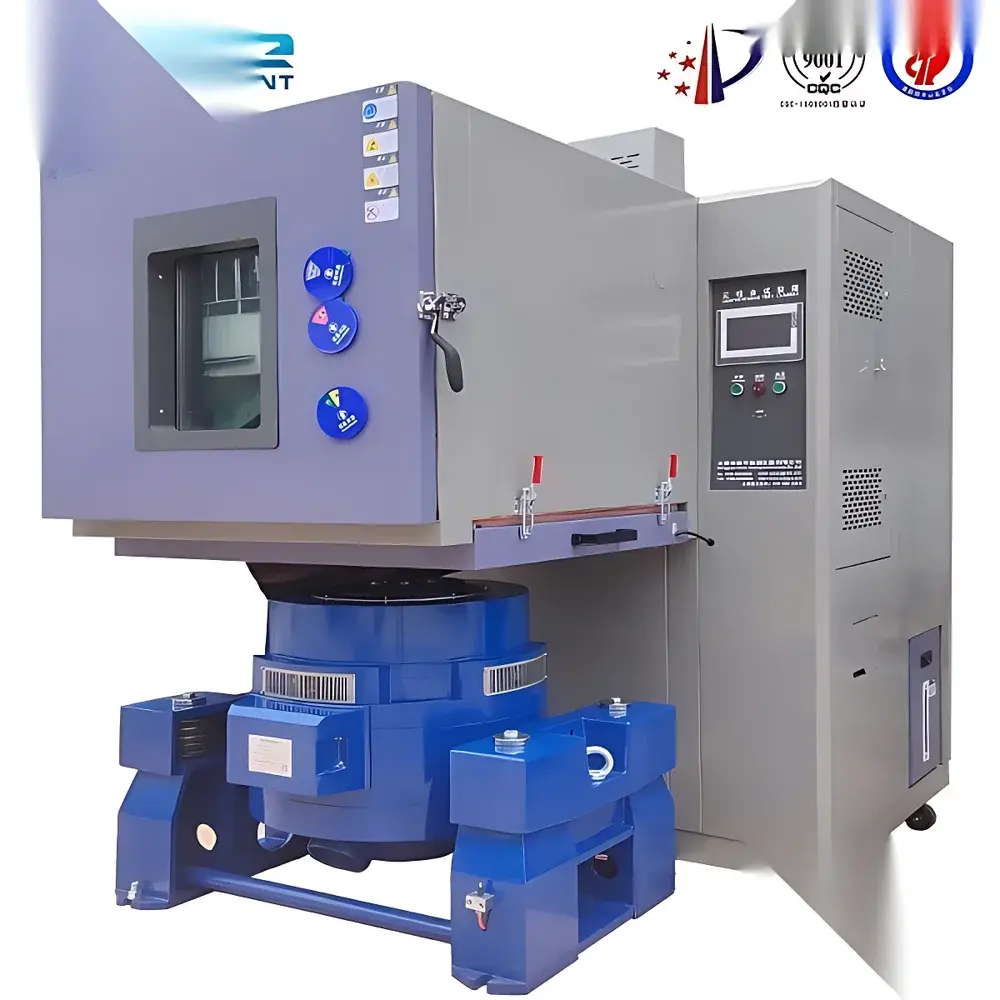
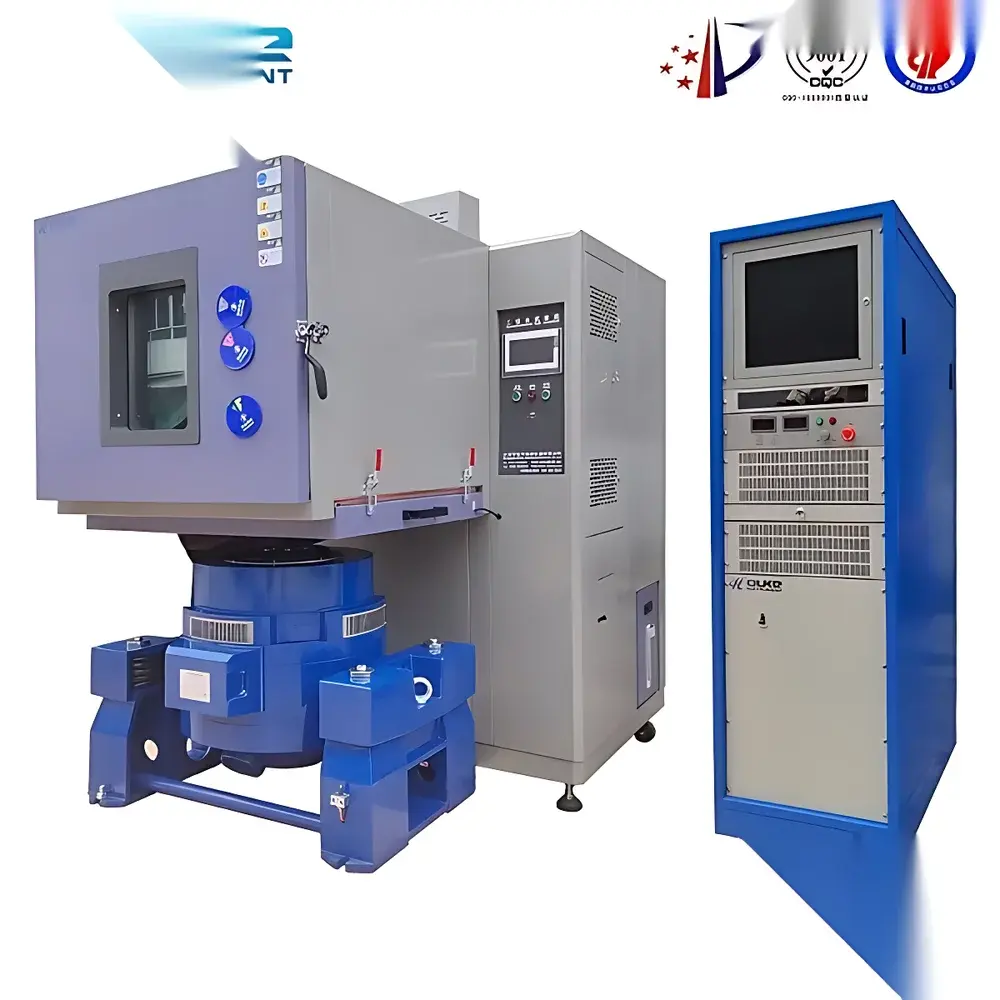
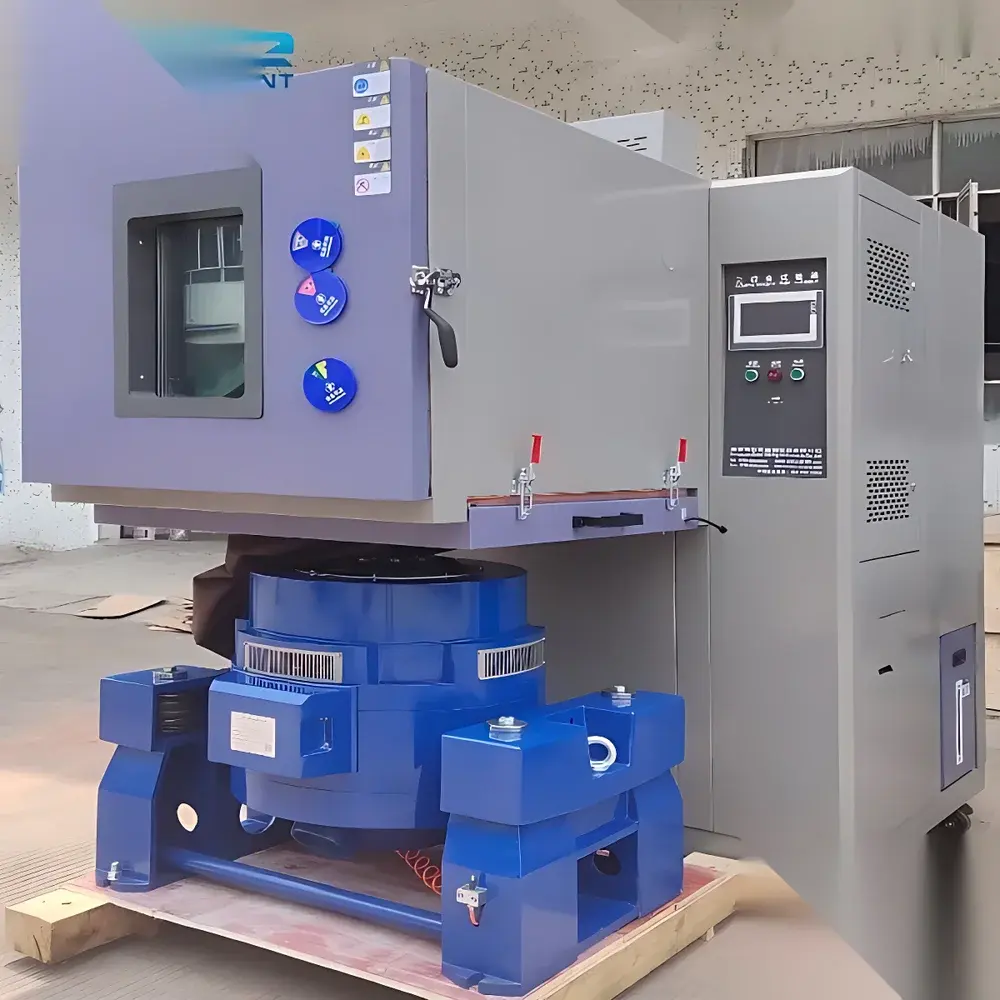
High-Low Temperature and Vibration Combined Environmental Test Chamber
| Brand | Other Brands |
|---|---|
| Origin | Imported |
| Manufacturer Type | General Distributor |
| Price | USD 21,000 (approx.) |
| Temperature Range | –70°C to +180°C |
| Humidity Range | 10–98% RH |
| Vibration System | Electromagnetic Shaker (Optional: 3-axis or 6-DOF) |
| Control Interface | RS232 & USB Data Export |
| Cooling Technology | PWM-Controlled Refrigerant Flow Regulation |
| Compliance | IEC 60068-2, MIL-STD-810H, GB/T 2423 (equivalent to ISO 16750-4), GLP/GMP-ready data logging |
Overview
The High-Low Temperature and Vibration Combined Environmental Test Chamber is an integrated reliability validation platform engineered for accelerated stress testing of electronic assemblies, automotive components, aerospace subsystems, and medical devices. It simultaneously subjects test specimens to controlled thermal profiles (including rapid ramp rates and extreme setpoints), humidity cycling, and mechanically induced vibration—mimicking real-world operational and transport environments. Unlike sequential single-stress chambers, this system implements true concurrent multi-stress exposure based on Couette-flow-coupled thermal-vibrational boundary condition modeling. Its architecture supports deterministic and random vibration spectra (per ISO 10816 and ASTM D4728), while maintaining tight thermal uniformity (±1.0°C) and humidity stability (±2.5% RH) under dynamic mechanical load—critical for identifying latent defects such as solder joint fatigue, polymer creep, interlayer delamination, and connector fretting corrosion.
Key Features
- Triple-stress synergy: Simultaneous control of temperature (–70°C to +180°C), relative humidity (10–98% RH), and electromagnetic vibration (frequency range: 5–2000 Hz; acceleration up to 60 grms, optional 3-axis or 6-degree-of-freedom shaker integration)
- PWM-based refrigerant flow modulation: Replaces legacy compressor on/off or heater-compensated cooling strategies. Regulates refrigerant distribution across main cooling, cold bypass, and hot bypass circuits—enabling precise sub-zero temperature stabilization without auxiliary heating, reducing energy consumption by ≥40% in sustained low-temperature operation
- Anti-condensation logic: Adaptive dew-point monitoring and chamber wall temperature pre-conditioning prevent condensation on test samples during thermal transitions, preserving electrical integrity and optical surface clarity
- Modular expansion capability: Optional LN2V liquid nitrogen injection module for ultra-rapid cooling (≥10°C/min from +25°C to –55°C); LHC low-humidity sensor with regenerative desiccant wheel for extended dry-cycle testing down to 5% RH
- Dual-interface data acquisition: RS232 serial communication for real-time SCPI command control and synchronization with external DAQ systems; USB port enables standalone event-triggered data dump (temperature, humidity, vibration acceleration, alarm logs) without PC dependency
- Redundant safety architecture: 12-point internal thermal monitoring, over-temperature/over-humidity/vibration amplitude cutoff, door interlock, and wireless SMS/email alert transmission via integrated GSM/WiFi telemetry module
Sample Compatibility & Compliance
The chamber accommodates standard test specimens up to 600 mm × 600 mm × 600 mm (W×D×H) with configurable mounting interfaces—including threaded inserts, T-slots, and vacuum chuck options—for PCBs, ECUs, battery packs, and structural housings. All control firmware and data logging modules comply with GLP and GMP documentation requirements, supporting audit-trail-enabled user access control, electronic signature, and 21 CFR Part 11–compliant data archiving when paired with validated software. Test protocols align with IEC 60068-2-1 (cold), -2 (dry heat), -14 (change of temperature), -64 (vibration, general requirements), and MIL-STD-810H Method 514.7 (vibration) and Method 502.7 (temperature/humidity). Humidity calibration traceability follows ISO/IEC 17025-accredited standards.
Software & Data Management
The embedded controller runs a real-time Linux OS with deterministic task scheduling. The optional PC-based software suite provides waveform synthesis (sine, random, shock, swept-sine, fatigue-spectrum), profile sequencing, and failure threshold mapping. All test data—including time-stamped temperature/humidity readings, triaxial vibration FFT spectra, and alarm timestamps—are stored in CSV and binary .tdms formats. Built-in encryption (AES-256) secures data at rest and in transit. Software supports automated report generation compliant with ISO 17025 clause 7.8.2, including uncertainty budgets for thermal and vibrational measurement chains.
Applications
- Automotive electronics: ECU validation under combined thermal shock and road-simulation vibration per ISO 16750-4
- Aerospace avionics: DO-160G Section 24 (temperature), Section 25 (vibration), and Section 26 (humidity) compliance verification
- Medical device packaging: Accelerated aging studies of sterile barrier systems under cyclic humidity and mechanical stress
- Consumer electronics: Drop-and-thermal endurance testing of smartphones, wearables, and IoT edge nodes
- Battery module qualification: Thermal runaway propagation analysis under mechanical abuse and ambient thermal gradients
FAQ
Does the chamber support real-time synchronization between vibration input and thermal profile execution?
Yes—via IEEE 1588 Precision Time Protocol (PTP) enabled on the controller’s Ethernet interface, enabling sub-millisecond phase alignment between shaker drive signals and thermal ramp commands.
Can test data be exported in formats compatible with MATLAB or Python analysis pipelines?
All raw datasets are natively exportable as CSV and HDF5 files, with metadata headers conforming to NI DIAdem and Pandas DataFrame schema conventions.
Is third-party calibration certification available for the humidity and temperature sensors?
Yes—NIST-traceable calibration certificates (ISO/IEC 17025 accredited) are provided for all primary sensors upon request, with annual recalibration intervals recommended.
What is the maximum allowable payload mass for the integrated vibration table?
Standard configuration supports 50 kg at 20 grms (5–1000 Hz); heavy-duty variants accommodate up to 200 kg with optional hydraulic shaker augmentation.
How is software validation performed for regulated industries?
IQ/OQ/PQ documentation packages—including risk assessments, requirement traceability matrices, and test scripts—are supplied for FDA, EU MDR, and ISO 13485 environments.



