
High-Pressure High-Humidity Test Chamber for Automotive Lighting Systems
| Brand | Other Brands |
|---|---|
| Origin | Imported |
| Supplier Type | General Distributor |
| Pressure Range | 0–2.5 kg/cm² (Chamber Design Pressure: 3.5 kg/cm²) |
| Pressure Stability | ±0.02 kg/cm² |
| Test Condition | 121 °C, 100 % RH, Saturation Vapor Pressure 1.04 kg/cm² |
| Internal Chamber Dimensions | Ø240 mm × 440 mm (D) |
| Pressurization Time to 1.04 kg/cm² | ≤45 min |
| Timer Range | 000–999 hr |
| Control System | Microprocessor-Based Controller with LED Display |
| Configuration | Vertical Upright |
Overview
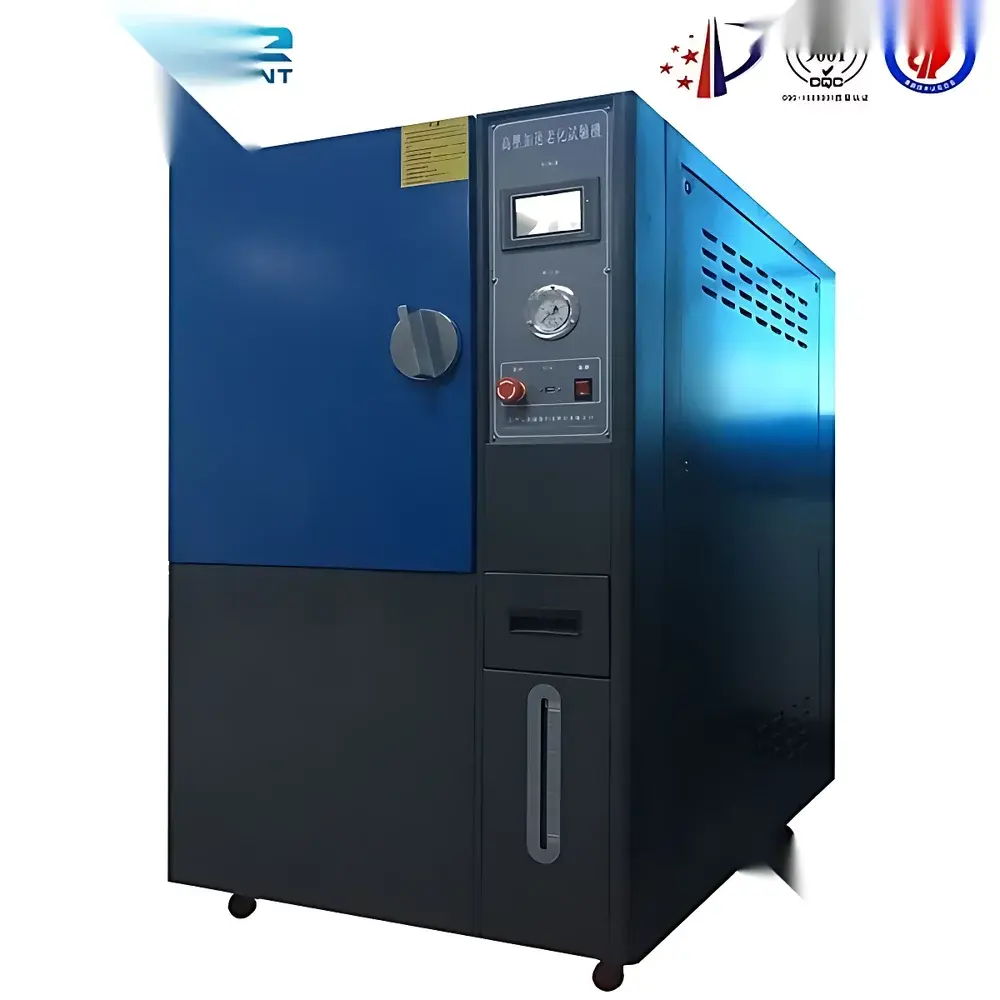
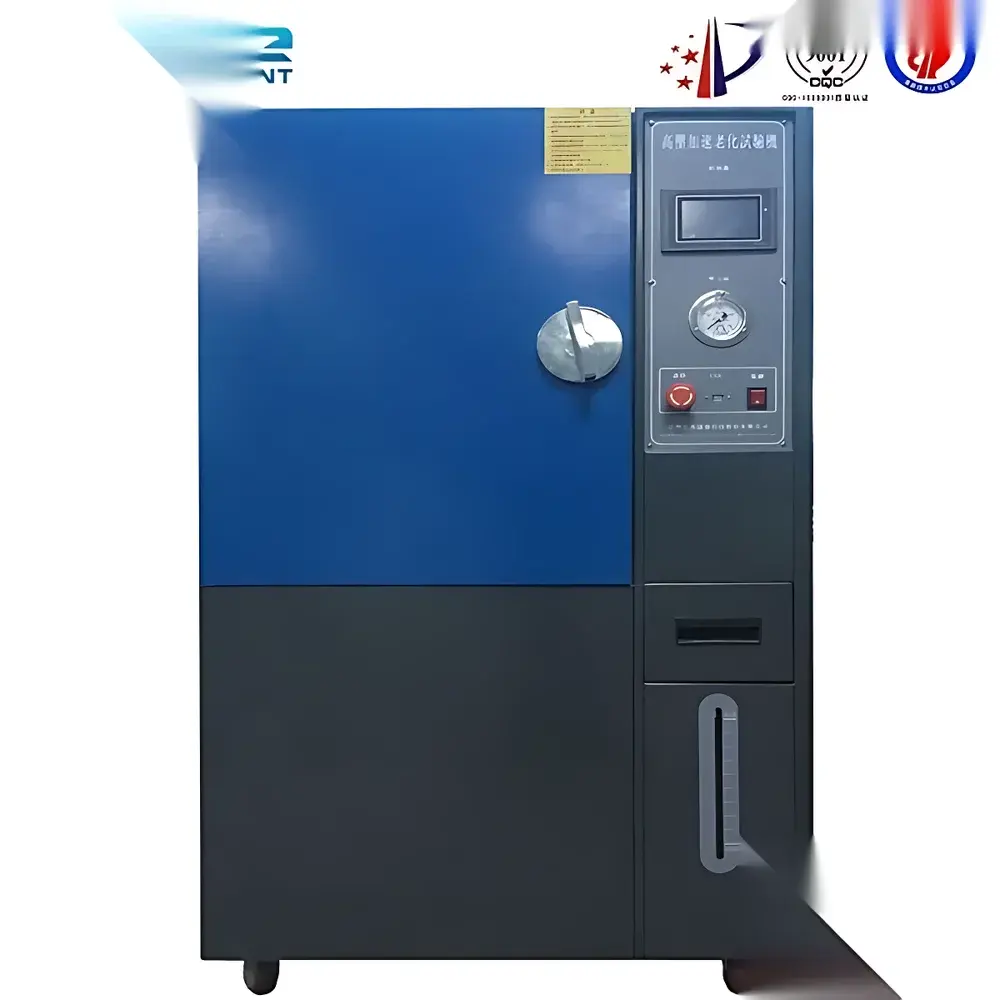
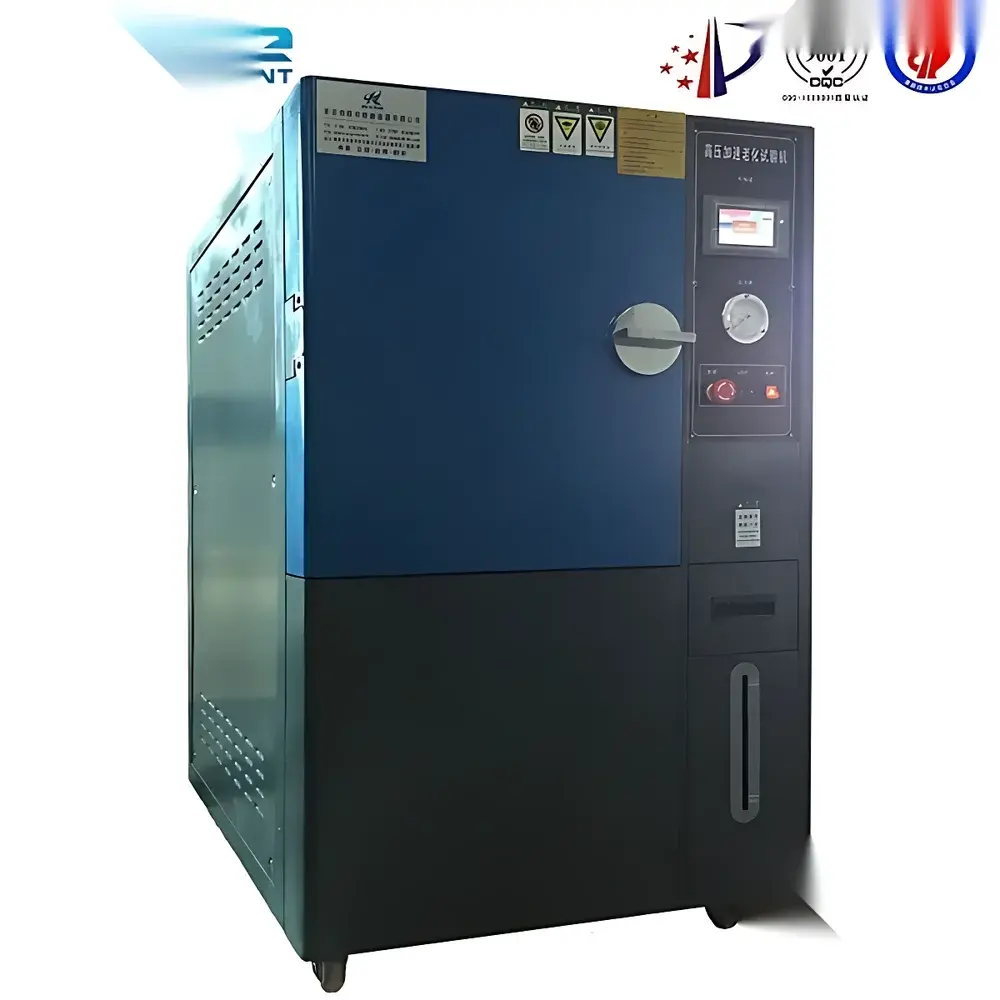
The High-Pressure High-Humidity Test Chamber for Automotive Lighting Systems is a purpose-engineered environmental stress test system designed to evaluate the moisture resistance and hermetic integrity of non-hermetically sealed automotive lighting assemblies—including headlamps, taillamps, and LED modules—under accelerated condensing humidity and elevated pressure conditions. Operating on the principle of saturated steam pressurization, the chamber subjects samples to controlled high-temperature (121 °C), 100 % relative humidity (RH), and hydrostatic pressure (up to 1.04 kg/cm²) to accelerate moisture ingress through micro-defects in encapsulants, housings, gaskets, and lens-seal interfaces. This methodology follows industry-standard accelerated stress testing protocols aligned with JEDEC JESD22-A102 (Steady-State Temperature Humidity Bias Accelerated Life Test) and AEC-Q200 qualification frameworks for passive and optoelectronic components used in automotive applications. The test reveals latent weaknesses such as interfacial delamination, metallization corrosion, ion migration-induced short circuits between external leads, and dielectric breakdown caused by conductive electrolyte formation under bias. As with all highly accelerated tests, users must interpret results in context: moisture plasticization of polymeric housing materials may lower glass transition temperature (Tg), potentially inducing non-operational failure modes not representative of real-world service life. Therefore, correlation with field data and complementary testing (e.g., thermal cycling, IP67/IP69K validation) is recommended for comprehensive reliability assessment.
Key Features
- Microprocessor-based digital controller with LED time/pressure display for precise parameter monitoring and reproducible test execution.
- Vertically oriented stainless-steel inner chamber (Ø240 mm × 440 mm depth) engineered for uniform steam distribution and minimal thermal stratification.
- Robust pressure vessel design rated to 3.5 kg/cm², exceeding standard test requirements (max operational pressure: 2.5 kg/cm²) with ±0.02 kg/cm² stability for high repeatability.
- Automated pressurization sequence achieving 1.04 kg/cm² saturation pressure within ≤45 minutes at 121 °C—compliant with common automotive OEM moisture sensitivity level (MSL) and qualification cycle benchmarks.
- Integrated safety interlocks including over-pressure relief valve, temperature cutoff, and door-locking mechanism to meet IEC 61000-6-2 and ISO 13857 mechanical safety requirements.
Sample Compatibility & Compliance
The chamber accommodates full-scale automotive lighting units—including sealed-beam, projector, and adaptive driving beam (ADB) modules—as well as subassemblies such as PCB-mounted LED arrays, driver electronics housings, and polycarbonate/acrylic lens assemblies. It supports test durations from 1 hour to 999 hours, enabling both qualification-level stress screening and extended reliability studies. While not certified to specific ISO/IEC 17025 calibration standards out-of-the-box, the system’s pressure and temperature control architecture is compatible with third-party validation per ASTM E2234 (Standard Practice for Qualification of Environmental Chambers) and supports GLP-compliant documentation when paired with external data loggers and audit-trail-enabled software. Its operational envelope aligns with key automotive reliability standards including AEC-Q101 (discrete semiconductors), AEC-Q200 (passives), and ISO 16750-4 (electrical loads and environmental conditions).
Software & Data Management
This chamber operates via embedded firmware without proprietary PC software; however, analog output signals (0–10 V or 4–20 mA) for chamber temperature and pressure are provided for integration with external SCADA systems, LIMS platforms, or programmable logic controllers (PLCs). Users may connect calibrated external sensors and recorders to generate 21 CFR Part 11–compliant audit trails when used in regulated quality assurance environments. All test parameters—including start time, target pressure, hold duration, and shutdown confirmation—are retained in non-volatile memory for traceability. Optional RS-485 or Ethernet interfaces can be added for remote monitoring and automated report generation in enterprise-grade quality management systems (QMS).
Applications
- Qualification of new lamp housing gasket materials and sealing processes against moisture-induced degradation.
- Evaluation of conformal coating effectiveness on LED driver PCBs exposed to condensing humidity.
- Failure analysis root-cause investigation of field returns linked to corrosion, leakage current, or inter-lead bridging.
- Design verification of optical lens adhesives and potting compounds under combined thermal-humidity stress.
- Supporting PPAP (Production Part Approval Process) submissions for Tier 1 suppliers to OEMs requiring MSL-3 or higher moisture sensitivity compliance.
FAQ
What is the maximum allowable test duration?
The timer supports continuous operation up to 999 hours (approximately 41.6 days), suitable for extended reliability validation cycles.
Does the chamber support ramp-and-soak profiles?
No—it is configured for steady-state saturated steam exposure only; temperature and pressure are held constant during the test phase.
Can this chamber be used for non-automotive electronics?
Yes, provided the sample geometry fits the chamber volume and the application requires JEDEC JESD22-A102–style stress conditions; however, automotive lighting-specific validation protocols take precedence in documentation.
Is calibration certification included?
Factory calibration data is supplied; formal ISO/IEC 17025 calibration certificates require third-party service engagement.
How is safety ensured during high-pressure operation?
Dual redundant safety mechanisms include a mechanical pressure relief valve set at 3.0 kg/cm² and an electronic over-pressure cut-off at 2.6 kg/cm², both independently certified to PED 2014/68/EU requirements.



