
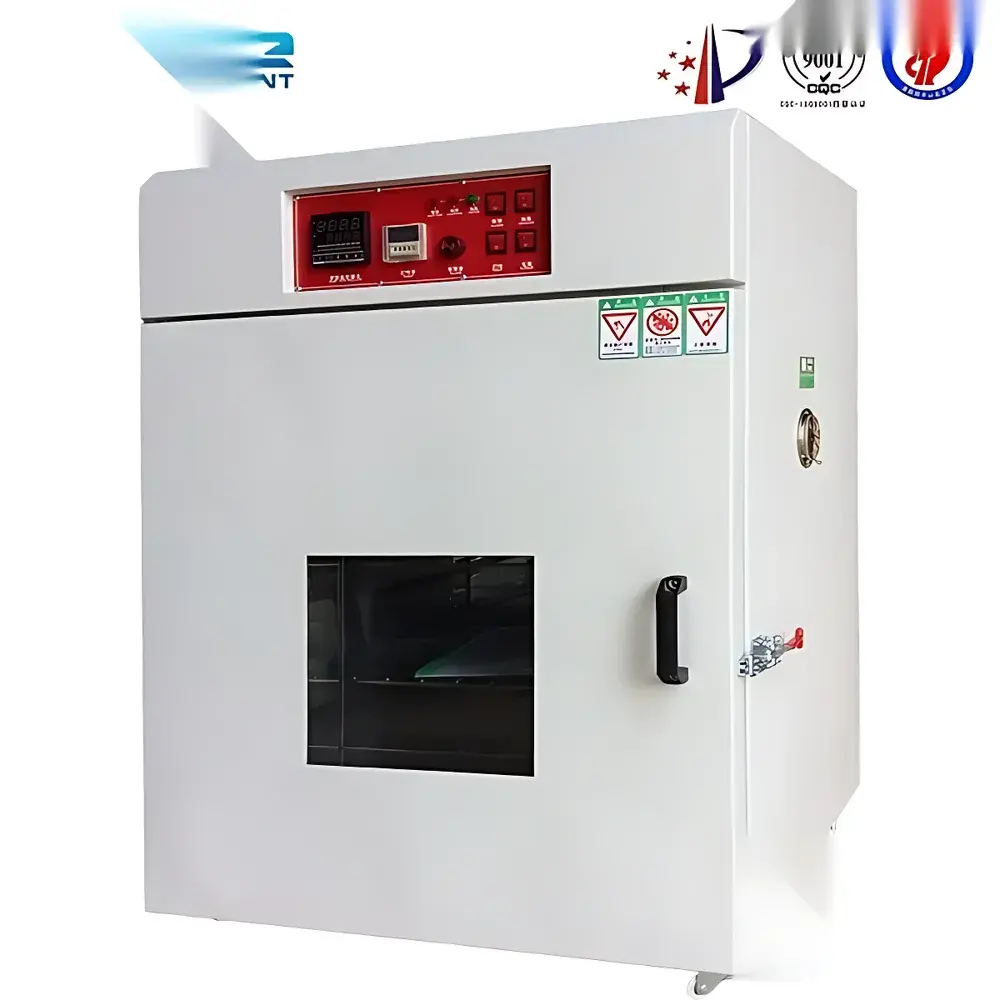
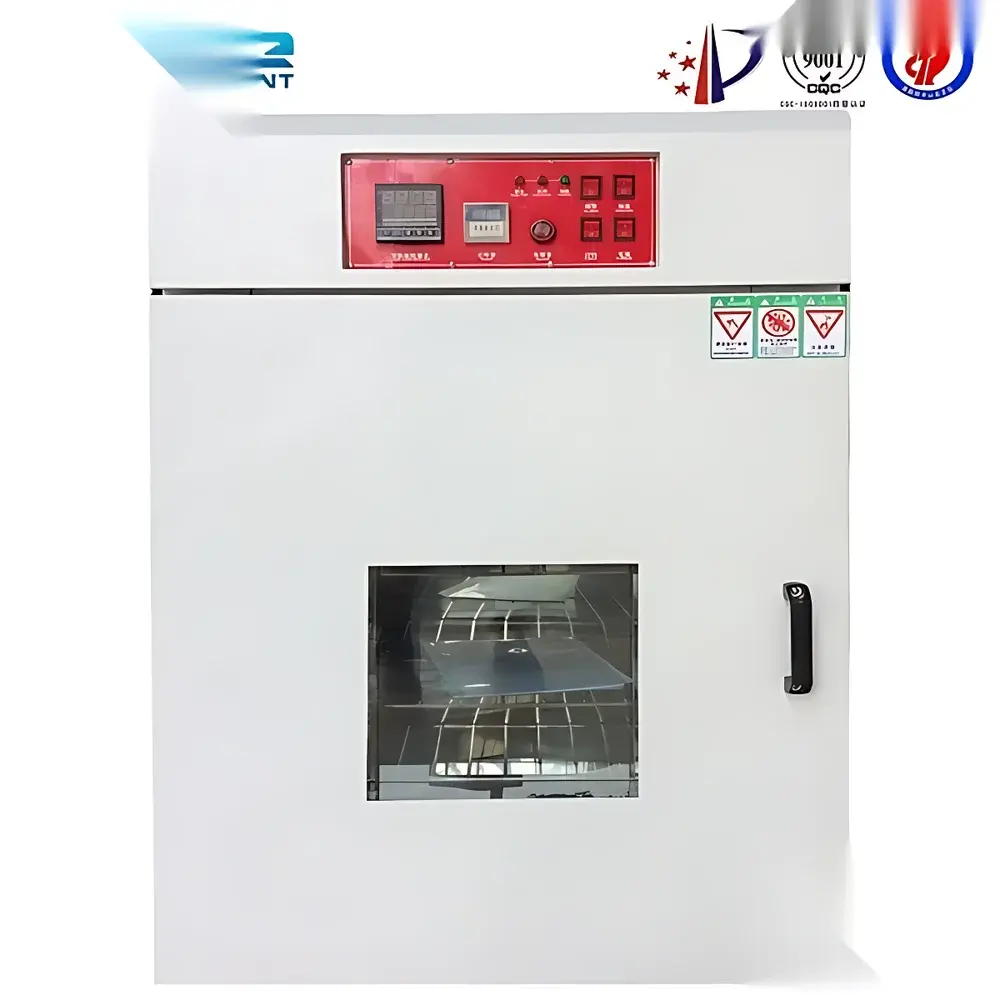
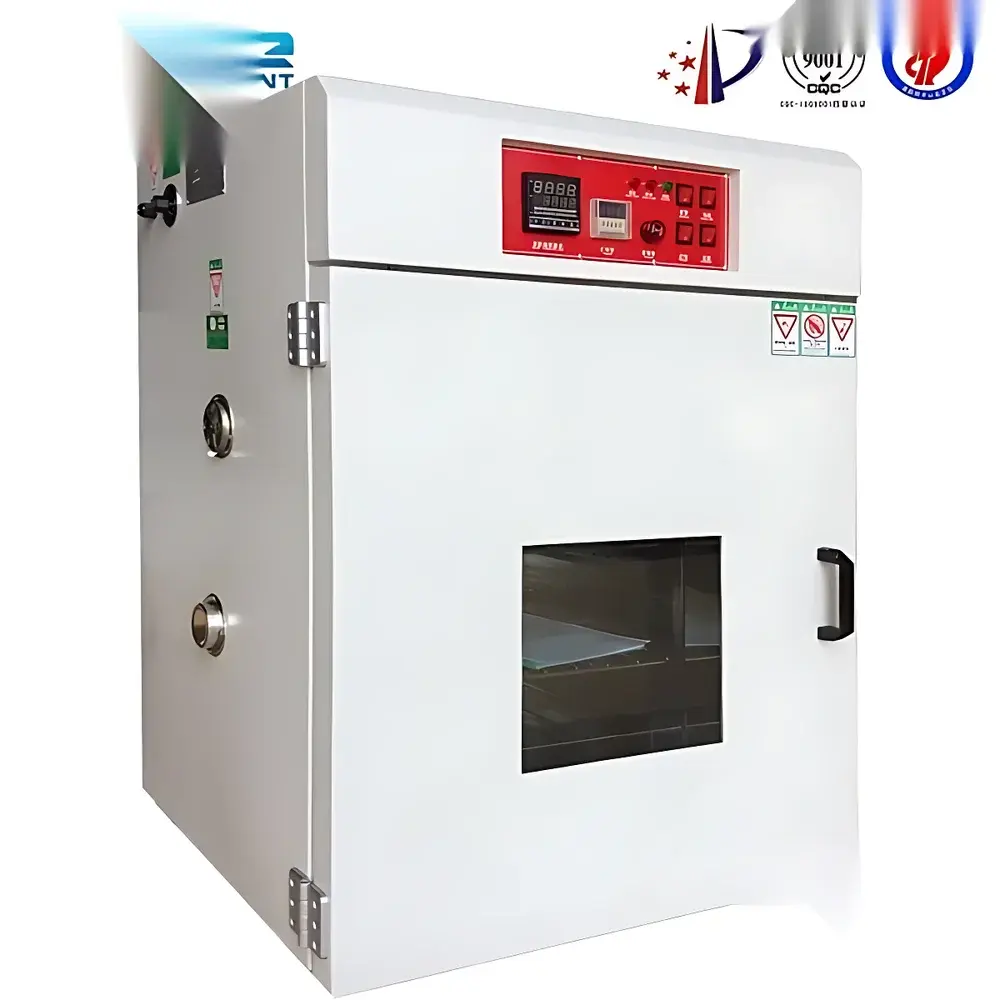
High Temperature Aging Test Chamber
| Brand | OEM |
|---|---|
| Origin | Imported |
| Manufacturer Type | Authorized Distributor |
| Price | USD 920 (FOB) |
| Temperature Range | Ambient +20°C to 500°C |
| Interior Material | SUS304 Stainless Steel |
| Exterior Material | 1.2 mm Cold-Rolled A3 Steel with Powder Coating |
| Insulation | Rigid Polyurethane Foam + Glass Fiber |
| Door Insulation | Glass Fiber Mat |
| Heating System | 2 kW Nickel-Chromium Far-Infrared Heaters (Independent Circuit) |
| Control System | Fuji Electric PXR Series PID Controller with SSR Output |
| Sensor | Pt100 Platinum Resistance Thermometer |
| Air Circulation | Forced Horizontal Airflow via High-Temperature Turbine Fan (SUS310S Shaft, Ceramic Bearings) |
| Safety Features | Overtemperature Cut-off, Leakage Current Protection, Real-Time Thermal Runaway Monitoring |
| Compliance | Designed per IEC 60068-2-2 (Test B: Dry Heat), ASTM D3045, and ISO 188 Annex C for thermal aging of polymers |
Overview
The High Temperature Aging Test Chamber is an industrial-grade environmental test system engineered for accelerated thermal aging, stability evaluation, and long-term performance validation of materials and components under sustained elevated temperatures. Operating on the principle of controlled convective heat transfer within a thermally insulated chamber, it maintains precise, uniform temperature distribution across the working volume—critical for replicating real-world service conditions in aerospace structural composites, automotive under-hood electronics, polymer insulation systems, and electronic packaging substrates. Unlike general-purpose ovens, this chamber integrates a dedicated high-temperature airflow architecture, independent heating circuits, and Class A thermal sensing to ensure compliance with standardized aging protocols where temperature homogeneity (±1.5°C at 300°C, per IEC 60068-2-2) and temporal stability (±0.5°C over 24 h) are mandatory for data integrity.
Key Features
- Robust dual-layer chamber construction: 1.2 mm cold-rolled A3 steel outer shell with electrostatic powder coating, paired with seamless SUS304 stainless steel interior lining resistant to oxidation up to 500°C
- High-efficiency thermal insulation: Composite wall assembly comprising rigid polyurethane foam (λ ≤ 0.022 W/m·K) and high-density glass fiber mat (continuous use up to 650°C), minimizing thermal bridging and energy loss
- Precision temperature control: Fuji Electric PXR-series PID controller with auto-tuning capability, coupled with SSR solid-state relays for zero-crossing switching—ensuring stable setpoint tracking and extended heater life
- Uniform forced-air circulation: Horizontal airflow pattern generated by a high-temperature turbine fan with SUS310S shaft and ceramic ball bearings, delivering consistent air velocity (>0.5 m/s) and temperature uniformity across the test zone
- Dual-redundant safety architecture: Independent overtemperature cut-off (mechanical bimetal switch + digital limit alarm), earth leakage circuit breaker (30 mA sensitivity), and real-time thermal runaway detection via differential thermocouple monitoring
Sample Compatibility & Compliance
This chamber accommodates flat, cylindrical, or irregularly shaped specimens—including printed circuit boards (PCBs), elastomeric seals, wire insulation jackets, battery cell housings, and composite laminates—without compromising airflow dynamics. Internal dimensions are customizable per client requirements (standard range: W500 × D500 × H600 mm). The system meets essential regulatory and industry-standard requirements for thermal aging testing: IEC 60068-2-2 (Test Bb), ASTM D3045-18 (Standard Practice for Heat Aging of Plastics), ISO 188:2011 (Rubber—Accelerated ageing), and UL 746B (Polymeric Materials—Long Term Properties). It supports GLP-compliant test documentation when integrated with optional data logging modules compliant with FDA 21 CFR Part 11 audit trail requirements.
Software & Data Management
While the base configuration utilizes a standalone Fuji controller with local display and manual setpoint entry, optional Ethernet-enabled data acquisition modules allow integration into centralized lab management systems. These modules record time-stamped temperature readings (Pt100 input, 0.1°C resolution), heater duty cycle, fan status, and alarm events at user-defined intervals (1 s to 60 min). Export formats include CSV and PDF reports with embedded calibration certificates. All firmware complies with IEC 62443-3-3 for industrial cyber-security baseline protection, and data archives support version-controlled traceability for ISO/IEC 17025 accredited laboratories.
Applications
- Thermal endurance qualification of insulating materials per IEEE 98 and IEC 60216
- Accelerated life testing of adhesives, potting compounds, and encapsulants used in power electronics
- Oxidation resistance assessment of aluminum alloys and titanium-based fasteners in aerospace applications
- Stress-relief baking of precision machined components prior to metrology
- Pre-conditioning of sensors and MEMS devices prior to functional testing
- Validation of thermal shutdown thresholds in battery management systems (BMS)
FAQ
What is the maximum continuous operating temperature?
The chamber is rated for continuous operation at 500°C, verified per IEC 60068-2-2 Annex A. Sustained operation above 450°C requires periodic verification of door gasket integrity and fan bearing lubrication.
Can the chamber be configured for inert atmosphere testing?
Yes—optional nitrogen purge ports (ISO-KF 25 flange) and pressure regulation valves are available for low-oxygen environments; full inert gas integration requires separate gas panel design.
Is calibration certification included with shipment?
A factory-as-built temperature uniformity report (per IEC 60068-3-5) and Pt100 sensor calibration certificate (NIST-traceable) are provided standard. On-site IQ/OQ documentation support is available upon request.
What maintenance intervals are recommended?
Fan bearing inspection every 1,000 operational hours; door gasket replacement every 2 years or after 500 thermal cycles >400°C; annual verification of PID controller linearity and SSR response latency.
Does the system meet CE marking requirements?
Yes—the chamber complies with EU Machinery Directive 2006/42/EC, Low Voltage Directive 2014/35/EU, and EMC Directive 2014/30/EU. Declaration of Conformity and technical file are supplied with delivery.



