
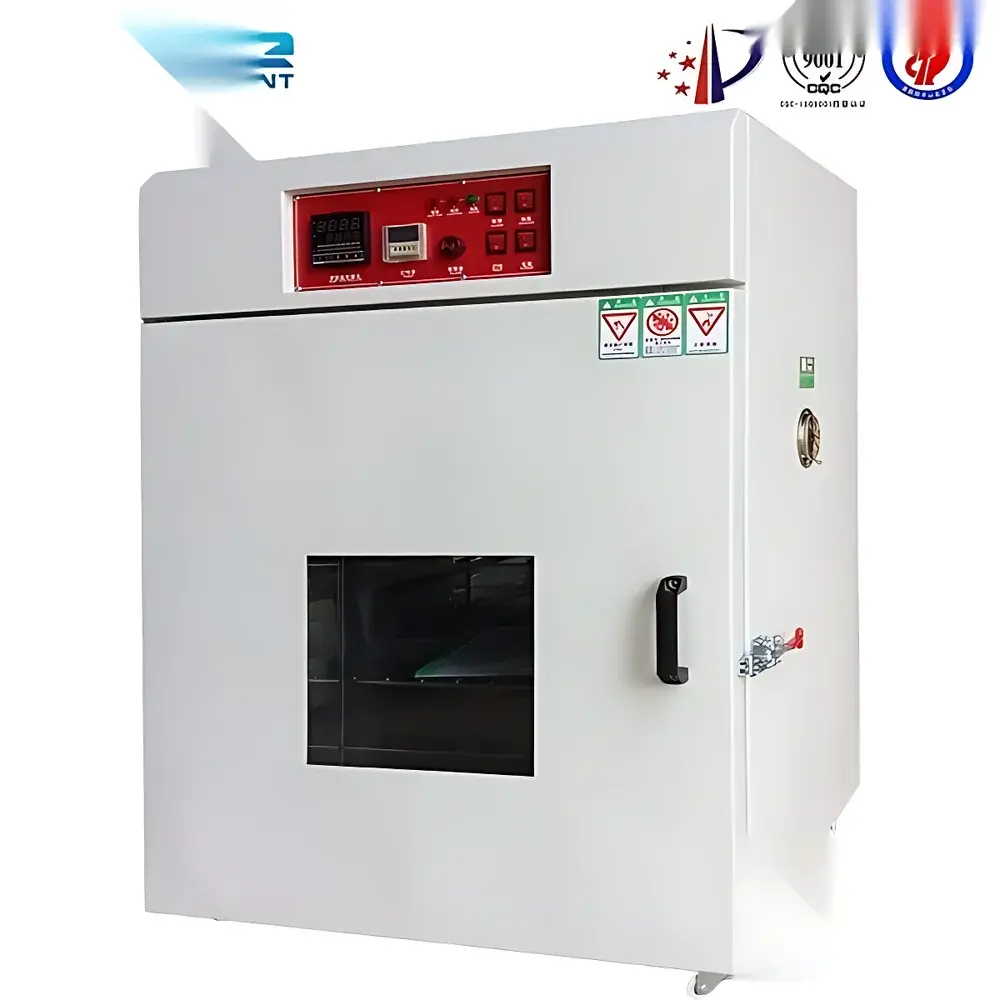
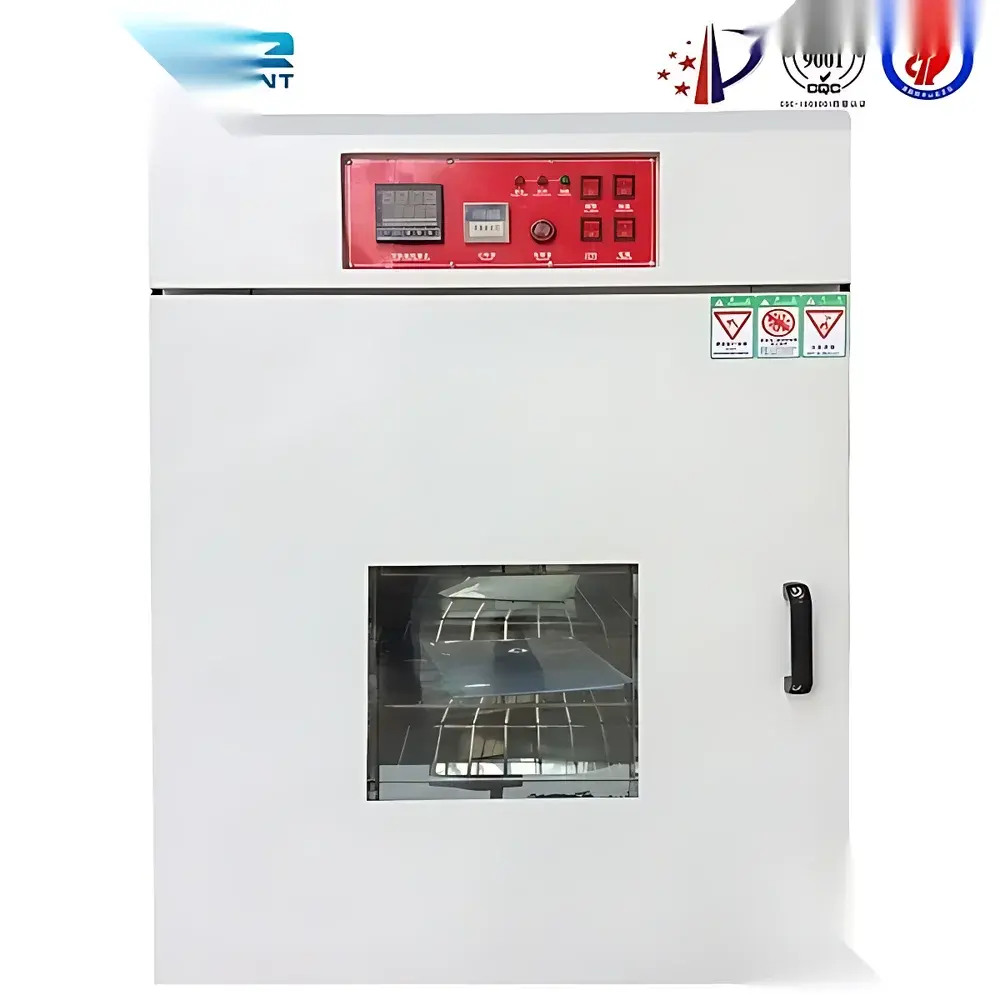
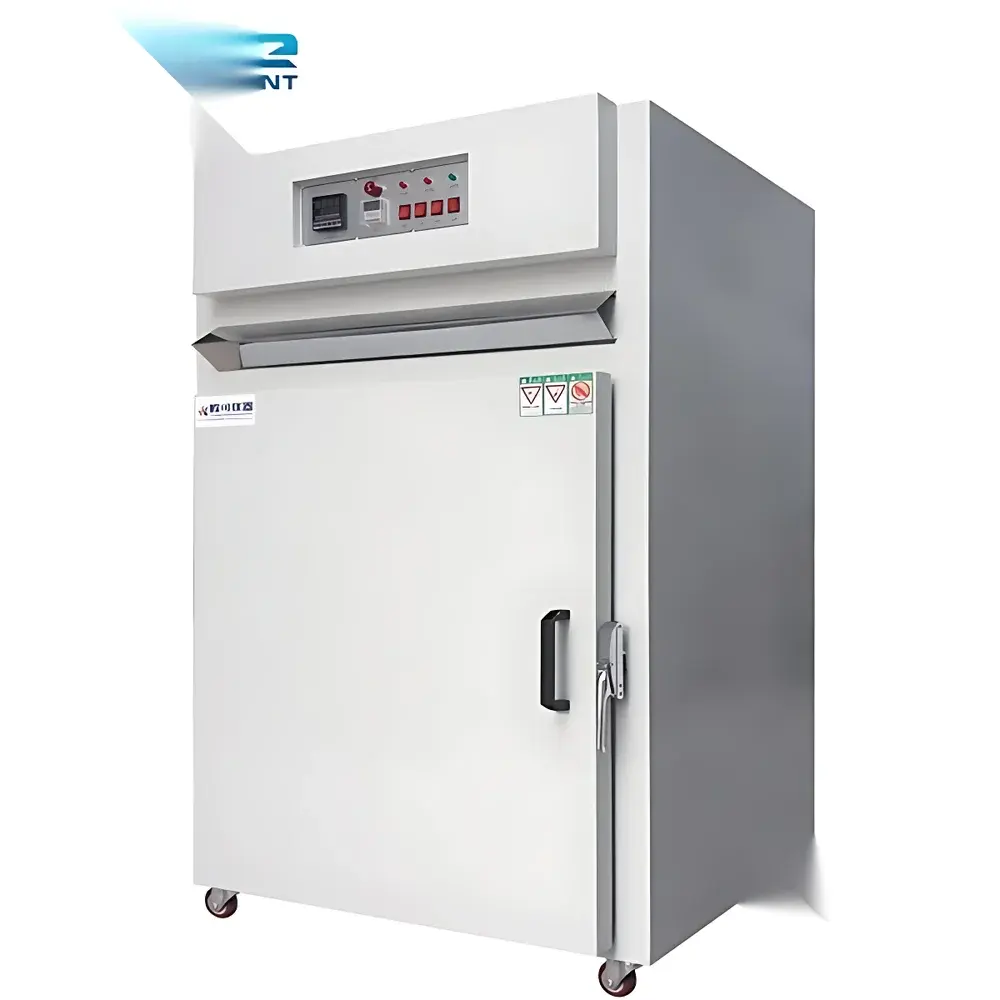
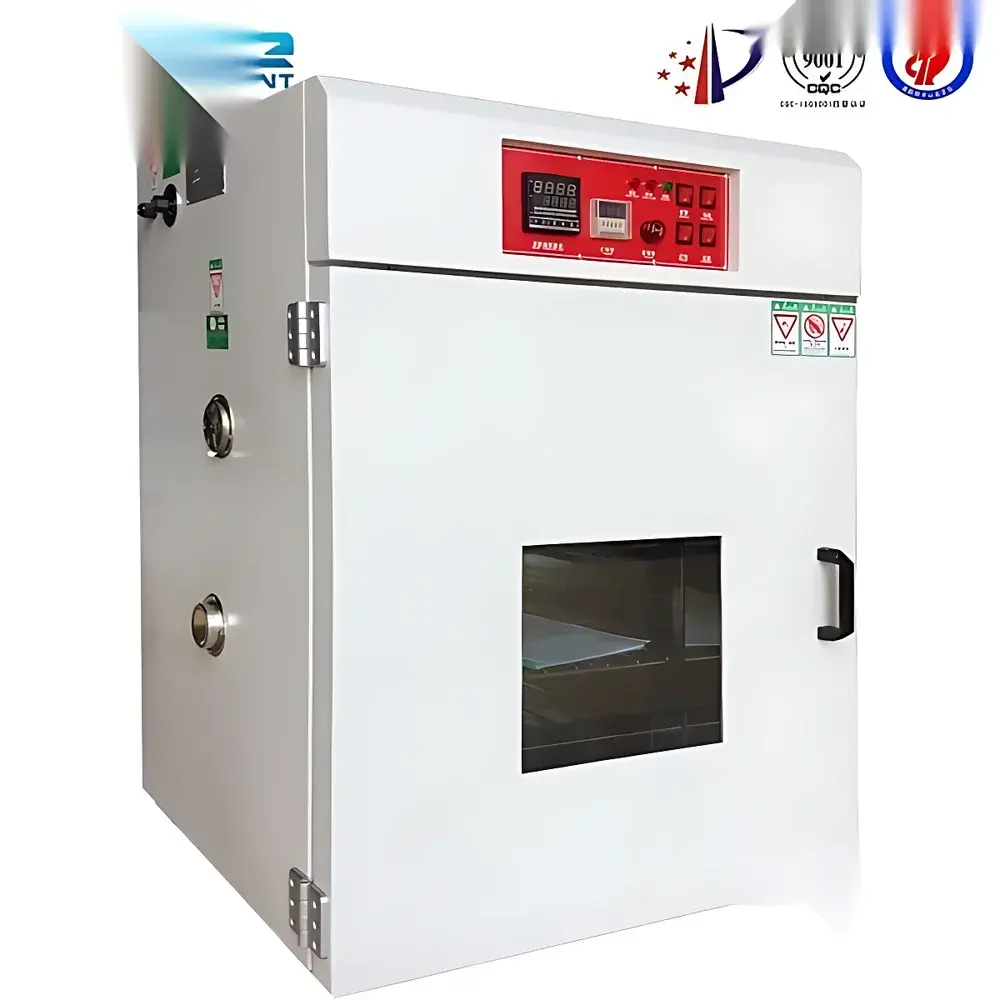
High Temperature Aging Test Chamber – OK-T-150 Series (RT to 300 °C, Stainless Steel Interior, Microprocessor-Controlled)
| Key Features | Temperature Range: RT +10 °C to 300 °C (customizable up to 500 °C) |
|---|---|
| Internal Dimensions | 500 × 600 × 500 mm (W×H×D) |
| External Dimensions | 700 × 1200 × 700 mm (W×H×D) |
| Temperature Uniformity | ±1.5 °C |
| Control Accuracy | ±0.5 °C |
| Heating System | Dual independent 2 kW nickel-chromium far-infrared heaters |
| Sensor | PT100 platinum resistance thermometer |
| Controller | LED digital or optional high-resolution touchscreen microprocessor controller with programmable timer (0–999 min) |
| Air Circulation | Forced convection via bottom-mounted centrifugal blower with left-side lateral airflow duct |
| Construction | Interior—SUS#304 stainless steel |
| Standard Accessories | Two adjustable stainless steel wire shelves |
| Power Supply | AC 220 V ±5 % / 50 Hz or AC 380 V ±5 % / 50 Hz |
| Total Rated Power | 4 kW (dual heater configuration) |
| Safety Protections | Over-temperature alarm, over-temperature cut-off, earth leakage protection |
| Compliance | Designed and validated per GB/T 2423.2–2022 (“Environmental testing — Part 2: Tests — Test B: Dry heat”) |
Overview
The OK-T-150 High Temperature Aging Test Chamber is an industrial-grade environmental test system engineered for precise, repeatable thermal exposure of non-volatile materials under controlled dry-heat conditions. Based on forced-air convection and calibrated platinum-resistance (PT100) sensing, it operates on the fundamental principle of convective heat transfer within a thermally insulated chamber, enabling stable temperature maintenance across its full operating range—from ambient +10 °C up to 300 °C (with optional 500 °C configuration). This chamber complies with the structural and procedural requirements of GB/T 2423.2–2022, the Chinese national standard aligned with IEC 60068-2-2, which defines test method Bb (dry heat) for evaluating thermal endurance, aging behavior, and dimensional stability of electronic components, polymers, coatings, and passive hardware. Its dual-heater architecture and microprocessor-driven power modulation ensure rapid ramp rates while minimizing thermal overshoot and spatial gradients—critical for accelerated life testing, pre-conditioning prior to mechanical or electrical evaluation, and quality assurance in manufacturing environments.
Key Features
- Stainless steel interior (SUS#304) ensures corrosion resistance, ease of cleaning, and long-term dimensional stability under repeated thermal cycling.
- Dual independent 2 kW far-infrared nickel-chromium heating elements allow segmented thermal management and redundancy—enabling consistent heating even during partial load operation.
- Forced-air circulation system utilizes a bottom-mounted centrifugal blower and laterally directed airflow duct to achieve uniform thermal distribution, verified at ±1.5 °C across the working volume per GB/T 2423.2–2022 Annex B.
- Microprocessor-based temperature controller offers programmable ramp-soak profiles, real-time deviation monitoring, and data logging capability (via optional RS485/Modbus interface).
- Integrated safety architecture includes triple-layer thermal protection: adjustable over-temperature alarm, independent mechanical cut-off relay, and residual-current device (RCD) compliant with IEC 61000-4-5.
- Front-accessible terminal block and rear-mounted power inlet simplify integration into laboratory or production line utility infrastructure.
Sample Compatibility & Compliance
The chamber accommodates rigid, non-volatile specimens including printed circuit board assemblies (PCBAs), encapsulated sensors, ceramic substrates, metal fasteners, and thermoset polymer housings. It is explicitly unsuitable for flammable solvents, volatile organic compounds (VOCs), pressurized containers, or samples emitting condensable vapors—consistent with ISO 17025 clause 5.3.2 on equipment suitability assessment. All structural and control subsystems meet electromagnetic compatibility (EMC) requirements per GB/T 18268.1–2010 (IEC 61326-1) and electrical safety standards per GB 4793.1–2007 (IEC 61010-1). Documentation supports GLP-compliant validation protocols, including IQ/OQ documentation templates and traceable calibration records for PT100 sensor and controller output.
Software & Data Management
While the base configuration employs a standalone microcontroller with LED or touchscreen HMI, optional firmware upgrades enable Modbus RTU communication over RS485 for integration into centralized SCADA or LIMS platforms. Logged parameters—including setpoint, actual chamber temperature, elapsed time, and alarm status—are timestamped and exportable as CSV files. Audit trail functionality (per FDA 21 CFR Part 11 Annex A guidelines) is available via optional software package, providing user-authenticated access control, electronic signatures, and immutable event logs for regulated environments.
Applications
- Accelerated aging of automotive electronics per AEC-Q200 stress test schedules.
- Pre-bake conditioning of moisture-sensitive devices (MSL-rated ICs) prior to reflow soldering.
- Thermal stability verification of adhesives, conformal coatings, and potting compounds per IPC-CC-830B.
- Material qualification testing for aerospace fasteners and composite layups under MIL-STD-810H Method 501.7.
- Calibration lab support for thermocouple and RTD reference verification at elevated temperatures.
FAQ
What is the maximum allowable operating temperature for standard configuration?
The standard OK-T-150 model is rated for continuous operation up to 300 °C. A factory-modified version supporting 500 °C is available upon request, subject to upgraded insulation, gasketing, and thermal shielding.
Does the chamber support automated test sequencing?
Yes—when equipped with the optional programmable controller module, users can define multi-step temperature ramps, dwell times, and hold conditions via front-panel interface or remote Modbus commands.
Is calibration certification included with delivery?
A factory-as-found calibration report (covering PT100 sensor and controller output at three points: 100 °C, 200 °C, and 300 °C) is provided. UKAS-accredited calibration is available as a value-added service.
Can the chamber be integrated into an existing building management system (BMS)?
Yes—RS485 Modbus RTU output enables direct integration with most industrial BMS platforms. Custom OPC UA gateway support is available upon specification.
What maintenance intervals are recommended for sustained accuracy?
We recommend annual verification of temperature uniformity and control accuracy per GB/T 2423.2–2022 Annex C. Blower motor lubrication and filter inspection should occur every 6 months under continuous operation.



