
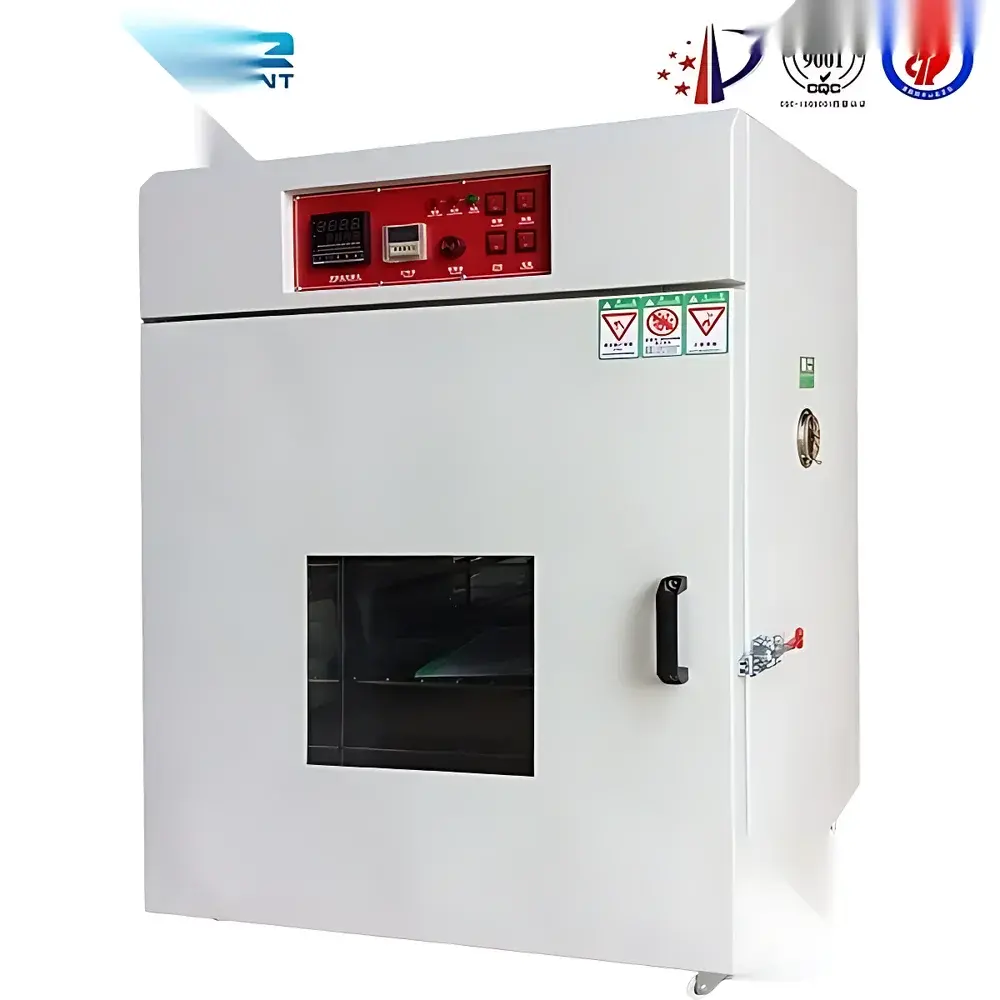
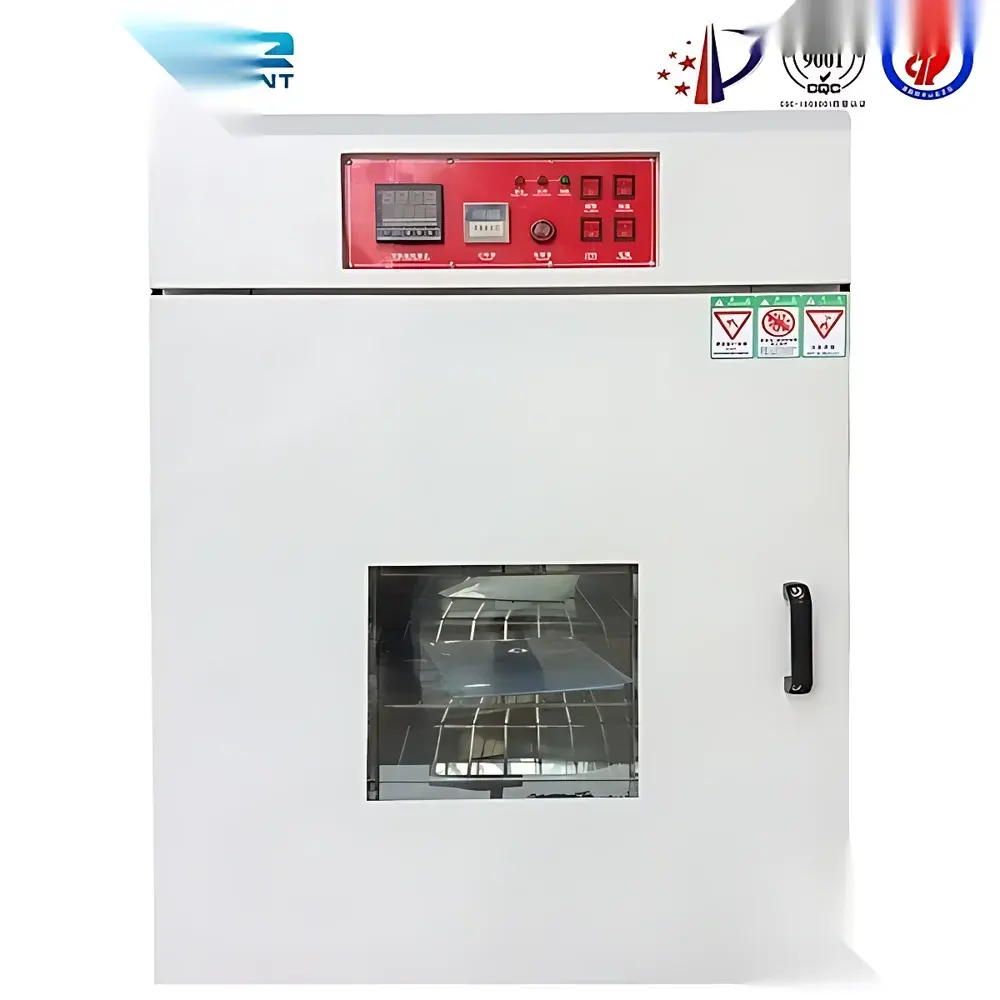
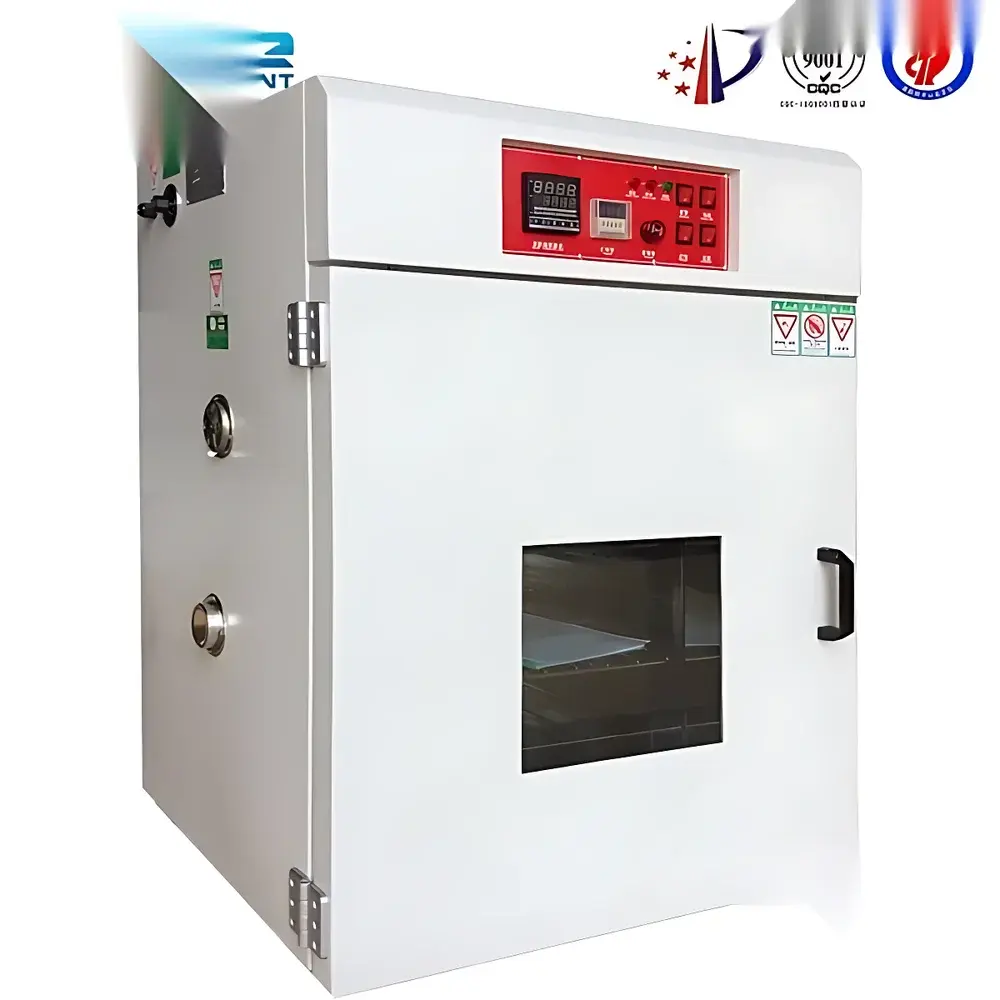
High Temperature Aging Test Chamber
| Brand | Other Brands |
|---|---|
| Origin | Imported |
| Manufacturer Type | General Distributor |
| Price | USD 920 (approx. based on ¥6500 at 1:7.07 exchange rate) |
| Temperature Range | Ambient +20°C to 500°C |
| Interior Material | SUS304 Stainless Steel |
| Exterior Material | 1.2 mm A3 Cold-Rolled Steel with Powder Coating |
| Insulation | Rigid Polyurethane Foam + Glass Fiber |
| Heating System | PID + Solid-State Relay (SSR) Controlled Resistive Heating |
| Air Circulation | Forced Horizontal Airflow via High-Temperature Turbine Fan |
| Temperature Sensor | Pt100 Platinum Resistance Thermometer |
| Compliance | GB/T 2423.2-2008 (Equivalent to IEC 60068-2-2) |
| Safety Features | Overtemperature Cut-off, Leakage Current Protection, Audible/Visual Alarm |
Overview
The High Temperature Aging Test Chamber is an engineered environmental simulation system designed for accelerated thermal aging, stability assessment, and performance validation of materials and components under sustained elevated temperatures. It operates on the principle of controlled convective heat transfer within a thermally insulated chamber, utilizing precision PID-regulated resistive heating elements and forced horizontal airflow to ensure uniform thermal distribution across the working volume. This chamber is not a general-purpose oven but a calibrated test environment conforming to the technical requirements of GB/T 2423.2–2008 (identical in scope and methodology to IEC 60068-2-2: Tests Bb – Dry Heat), making it suitable for qualification testing in aerospace, automotive electronics, consumer appliance development, and advanced material R&D laboratories.
Key Features
- Thermally Robust Construction: Interior chamber fabricated from mirror-finished SUS304 stainless steel (thickness ≥1.0 mm), resistant to oxidation and thermal creep up to 500°C; outer enclosure formed from CNC-machined 1.2 mm A3 cold-rolled steel with electrostatic powder coating for corrosion resistance and mechanical durability.
- High-Performance Thermal Insulation: Dual-layer insulation comprising rigid polyurethane foam (thermal conductivity ≤0.022 W/m·K) and high-density glass fiber blanket (operating limit ≥600°C), minimizing heat loss and ensuring stable chamber wall temperatures during prolonged high-temperature operation.
- Precision Temperature Control: Fuji Electric digital temperature controller with auto-tuning PID algorithm, coupled with Class A Pt100 RTD sensors (IEC 60751) mounted at multiple spatial locations to monitor and regulate thermal uniformity (±1.5°C at 500°C, per GB/T 2423.2 verification protocol).
- Forced Convection System: High-efficiency, long-life turbine fan with ceramic bearings and nickel-alloy impeller, capable of continuous operation at ≥500°C; airflow pattern optimized for horizontal laminar circulation to reduce thermal stratification and improve test specimen exposure consistency.
- Integrated Safety Architecture: Triple-redundant overtemperature protection: primary control loop cutoff, independent mechanical overheat limiter (bimetallic switch), and fail-safe solid-state relay shutdown; additionally equipped with residual-current circuit breaker (RCCB) rated at 30 mA for personnel and equipment protection.
Sample Compatibility & Compliance
This chamber accommodates standard test specimens—including printed circuit boards (PCBs), polymer housings, battery modules, elastomeric seals, and passive electronic components—within its configurable internal workspace. Its design supports both static aging (non-operational storage simulation) and operational life testing (powered devices under thermal stress). The system meets the environmental conditioning requirements specified in GB/T 2423.2–2008 and is functionally aligned with ISO 16750-4 (road vehicles), ASTM D3045 (thermal aging of plastics), and MIL-STD-810H Method 501.7 (high temperature). While not certified to UL or CE as a standalone appliance, its electrical architecture complies with IEC 61000-6-2 (immunity) and IEC 61000-6-4 (emissions) when installed per manufacturer-specified grounding and power supply guidelines.
Software & Data Management
The Fuji controller provides local real-time display of setpoint, actual chamber temperature, elapsed test time, and alarm status via a 4.3-inch TFT LCD interface. Optional RS-485 Modbus RTU output enables integration with laboratory data acquisition systems (e.g., LabVIEW, WinCC, or custom SCADA platforms) for automated logging, trend analysis, and audit-trail generation. When configured with optional data logger firmware, the unit records timestamped temperature readings at user-defined intervals (1–60 sec), supporting GLP-compliant documentation for internal quality audits. No cloud connectivity or proprietary software suite is included; all data export is via CSV over serial or USB-to-serial adapter.
Applications
- Accelerated life testing of thermoplastic enclosures and adhesives under continuous thermal load
- Stress screening of solder joints and wire bond integrity in automotive ECUs
- Validation of thermal endurance for lithium-ion battery separators and cathode materials
- Outgassing behavior assessment of space-grade polymers per ECSS-Q-ST-70-02C
- Pre-conditioning of calibration standards prior to dimensional metrology
- Compliance verification for IEC 60068-2-2 test plans in third-party certification labs
FAQ
What is the maximum continuous operating temperature, and is derating required above 400°C?
The chamber is rated for continuous operation up to 500°C. No derating is mandated by design; however, sustained use above 450°C may reduce heater element service life. Recommended maintenance interval shortens to 3 months under such conditions.
Can the chamber be configured for ramp-and-soak thermal profiles?
Yes—the Fuji controller supports up to 99 programmable segments with adjustable ramp rates (0.1–10°C/min) and soak durations (0.1–9999 min), compliant with GB/T 2423.2 Annex B test profiles.
Is the interior volume customizable for non-standard sample dimensions?
Standard models are available in 50 L, 100 L, and 225 L capacities. Custom internal dimensions can be engineered upon request, subject to structural integrity verification and thermal uniformity validation per IEC 60068-3-5.
Does the system include NIST-traceable temperature calibration documentation?
Factory calibration is performed using a Fluke 1524 thermometer and reference-grade PRTs traceable to NIST. A calibration certificate (as-found/as-left) is provided with each unit; annual recalibration is recommended per ISO/IEC 17025 guidelines.
What power supply specifications are required for the 500°C model?
Single-phase 220–240 VAC ±10%, 50/60 Hz, 30 A dedicated circuit with minimum 6 mm² copper conductor and Class C surge protection is required. Three-phase 380 VAC configuration is available for higher-capacity variants.



