
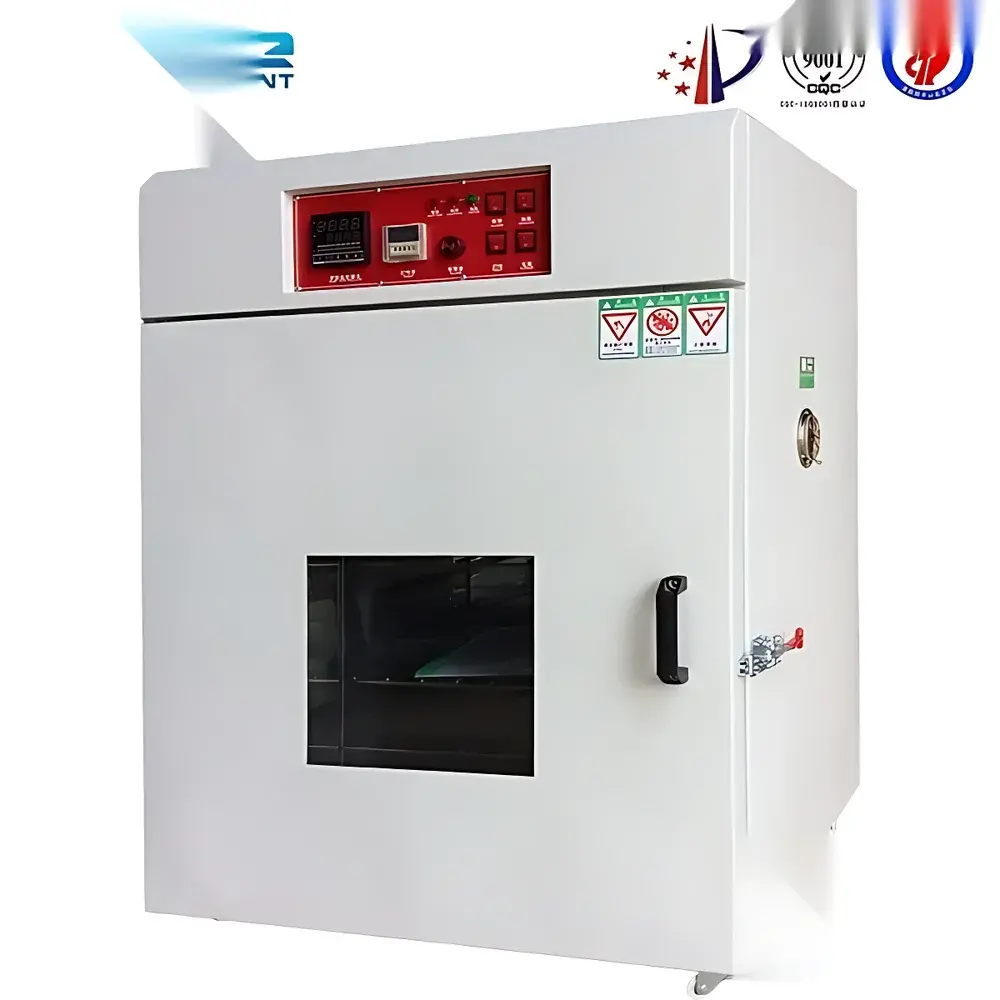
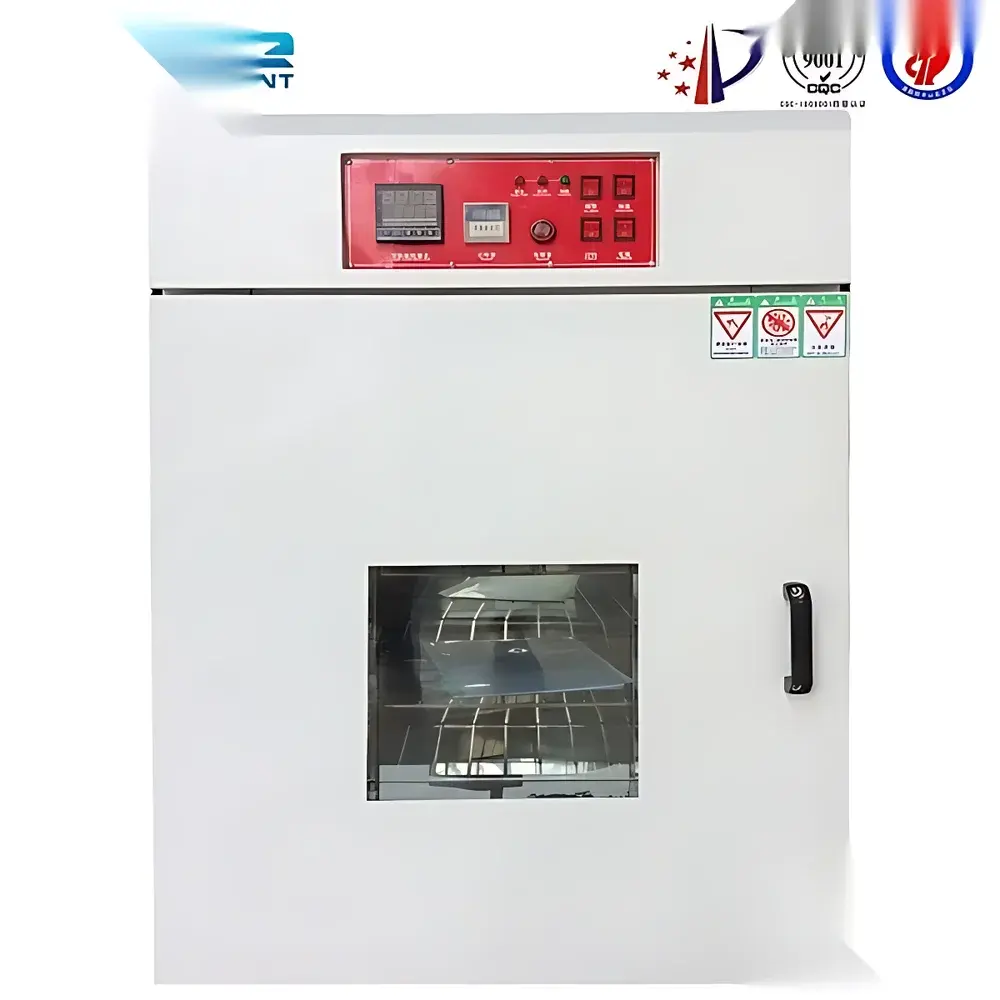
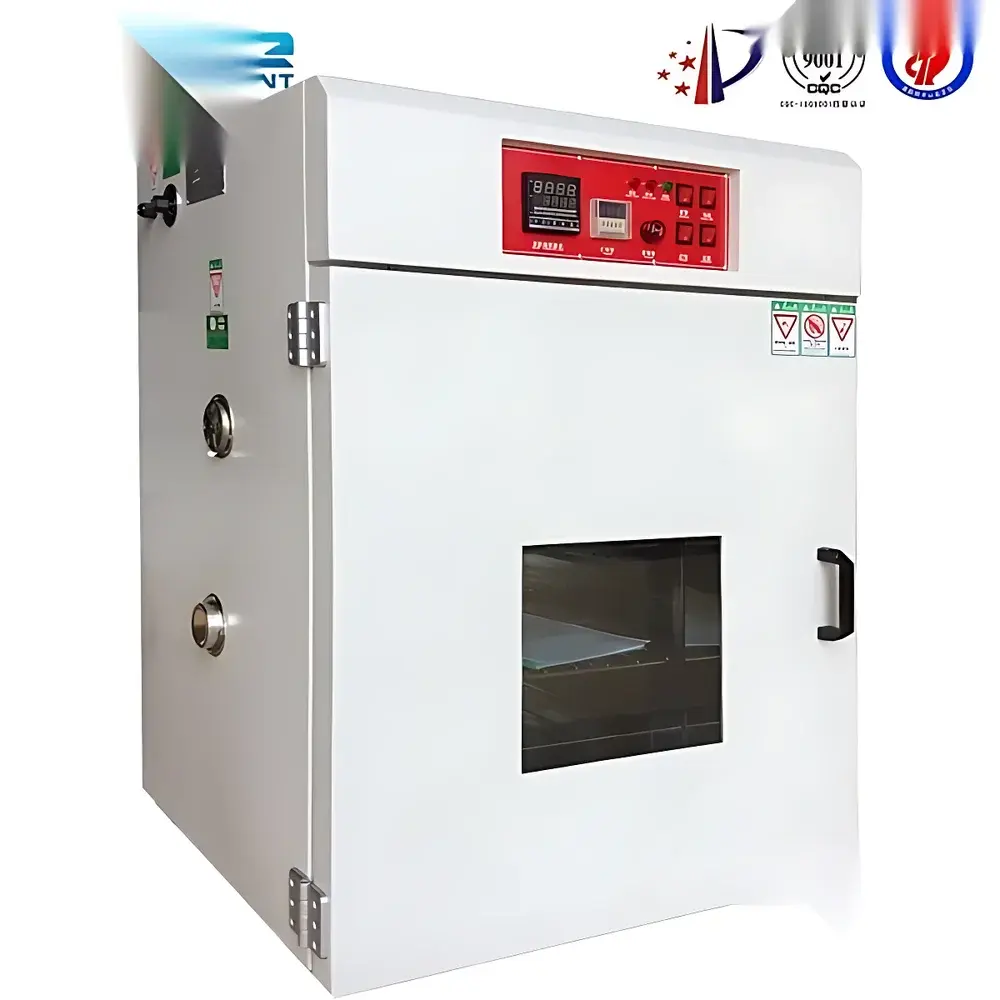
High-Temperature Precision Oven
| Brand | OEM / Custom Brand |
|---|---|
| Origin | Imported |
| Manufacturer Type | Authorized Distributor |
| Price | USD 950 (FOB) |
| Temperature Range | Ambient +20°C to 500°C |
| Control System | PID + Solid-State Relay (SSR) |
| Sensor | Pt100 Platinum Resistance Thermometer |
| Interior Material | SUS304 Stainless Steel |
| Exterior Material | 1.2 mm Cold-Rolled SECC Steel with Powder-Coated Finish |
| Insulation | Rigid Polyurethane Foam + Glass Fiber (Double-Layer) |
| Door Insulation | High-Density Glass Wool |
| Air Circulation | Forced Horizontal Airflow via High-Temperature Turbine Fan |
| Safety Features | Over-Temperature Cut-Off, Leakage Current Protection, Real-Time Thermal Runaway Monitoring |
| Compliance | Fully Compatible with GB/T 2423.2–2008 (IEC 60068-2-2), Supports ASTM D573 & ISO 188 Test Protocols |
Overview
The High-Temperature Precision Oven is a rigorously engineered environmental test chamber designed for controlled thermal aging, stability assessment, and accelerated life testing of materials and components under sustained elevated temperatures. Operating on the principle of forced convection heating with precise closed-loop temperature regulation, it maintains thermal uniformity and stability across its working volume—critical for evaluating long-term degradation mechanisms in polymers, elastomers, electronic assemblies, aerospace composites, and automotive sealing systems. Unlike general-purpose drying ovens, this instrument meets the stringent spatial and temporal temperature tolerance requirements defined in IEC 60068-2-2 (Test Bb) and GB/T 2423.2–2008, making it suitable for qualification testing in R&D labs, quality assurance departments, and third-party certification laboratories operating under GLP or ISO/IEC 17025 frameworks.
Key Features
- Stable temperature control from ambient +20°C up to 500°C, with ±0.5°C accuracy and ≤±1.0°C uniformity (measured at 9-point grid per IEC 60068-3-5)
- Dual-layer insulation system: rigid polyurethane foam (core) combined with high-density glass fiber (perimeter and door), minimizing heat loss and surface temperature rise
- Forced horizontal airflow architecture utilizing a high-efficiency, continuous-duty turbine fan with ceramic-bearing shaft and nickel-alloy impeller—rated for uninterrupted operation at 500°C
- PID + SSR (Solid-State Relay) temperature regulation with auto-tuning capability; eliminates overshoot and reduces stabilization time by >30% vs. conventional ON/OFF controllers
- Robust mechanical construction: 1.2 mm SECC steel outer shell (powder-coated for corrosion resistance) and seamless SUS304 stainless steel interior chamber (electropolished finish, weld-free corners)
- Integrated safety redundancy: independent over-temperature cut-off circuit (mechanical bimetal switch), real-time leakage current monitoring, and thermal runaway detection with automatic power isolation
Sample Compatibility & Compliance
This oven accommodates standard test specimens per ASTM D573 (rubber—deterioration in air oven), ISO 188 (vulcanized rubber—accelerated ageing), and MIL-STD-810H Method 501.7 (high temperature). Chamber dimensions are customizable to accommodate large-format automotive harnesses, PCB panels, battery modules, or aerospace composite coupons. All models are pre-configured to support traceable calibration per ISO/IEC 17025 requirements—including provision for dual-sensor validation ports and NIST-traceable certificate options. The unit complies with electromagnetic compatibility (EMC) standards EN 61326-1 and electrical safety standard EN 61010-1, and supports audit-ready documentation for FDA 21 CFR Part 11 compliance when paired with optional data logging software.
Software & Data Management
Equipped with a programmable Fuji PXR series digital controller (or equivalent OEM-grade PID module), the oven supports up to 99 programmable segments with ramp-soak profiles, event-triggered alarms, and password-protected parameter locking. Optional Ethernet- or RS485-enabled data acquisition modules provide real-time temperature logging at user-defined intervals (1 s to 60 min), exportable in CSV or XML format. Audit trail functionality records operator ID, setpoint changes, alarm events, and calibration interventions—fully aligned with GLP/GMP data integrity principles. Remote monitoring and alarm notification (via SMTP or Modbus TCP) are available through optional gateway integration.
Applications
- Accelerated thermal aging of silicone gaskets, EPDM seals, and fluoropolymer coatings used in automotive powertrain systems
- Pre-conditioning of lithium-ion battery cells prior to cycle life testing (per UN 38.3 Section 38.3.4)
- Outgassing studies of adhesives and potting compounds for space-grade electronics (in accordance with ECSS-Q-ST-70-02C)
- Stability evaluation of pharmaceutical excipients and packaging materials under ICH Q1A(R2) long-term and accelerated storage conditions
- Heat resistance verification of printed circuit board laminates (IPC-TR-579, IPC-TM-650 2.6.26)
- Thermal stress screening of solder joints and wire bond interconnects in avionics modules
FAQ
What is the maximum allowable load mass for stable temperature uniformity at 500°C?
At full-rated temperature, the recommended maximum load is 20% of internal chamber volume (by mass) to ensure ≤±1.0°C uniformity across the working zone. Load distribution must be non-obstructive to horizontal airflow.
Can this oven be validated for IQ/OQ/PQ protocols?
Yes—each unit ships with a factory calibration report (traceable to NIST standards), and optional IQ/OQ documentation packages—including sensor mapping templates, alarm verification checklists, and deviation handling SOPs—are available upon request.
Is the chamber compatible with inert atmosphere purging?
Standard configuration includes two 1/4″ NPT gas inlet/outlet ports on the rear panel; optional nitrogen purge kits with flow regulators and O₂ analyzers can be integrated for oxygen-sensitive applications.
Does the controller support multi-step thermal cycling?
Yes—the Fuji PXR controller supports up to 99 segments with independent ramp rates (0.1–10.0°C/min), soak durations (0–9999 min), and loop repetition (1–999 cycles).
What maintenance intervals are recommended for long-term reliability?
Fan bearings require inspection every 2,000 operational hours; insulation integrity and door gasket compression should be verified quarterly; full system calibration is recommended annually or after any physical impact or electrical surge event.



