
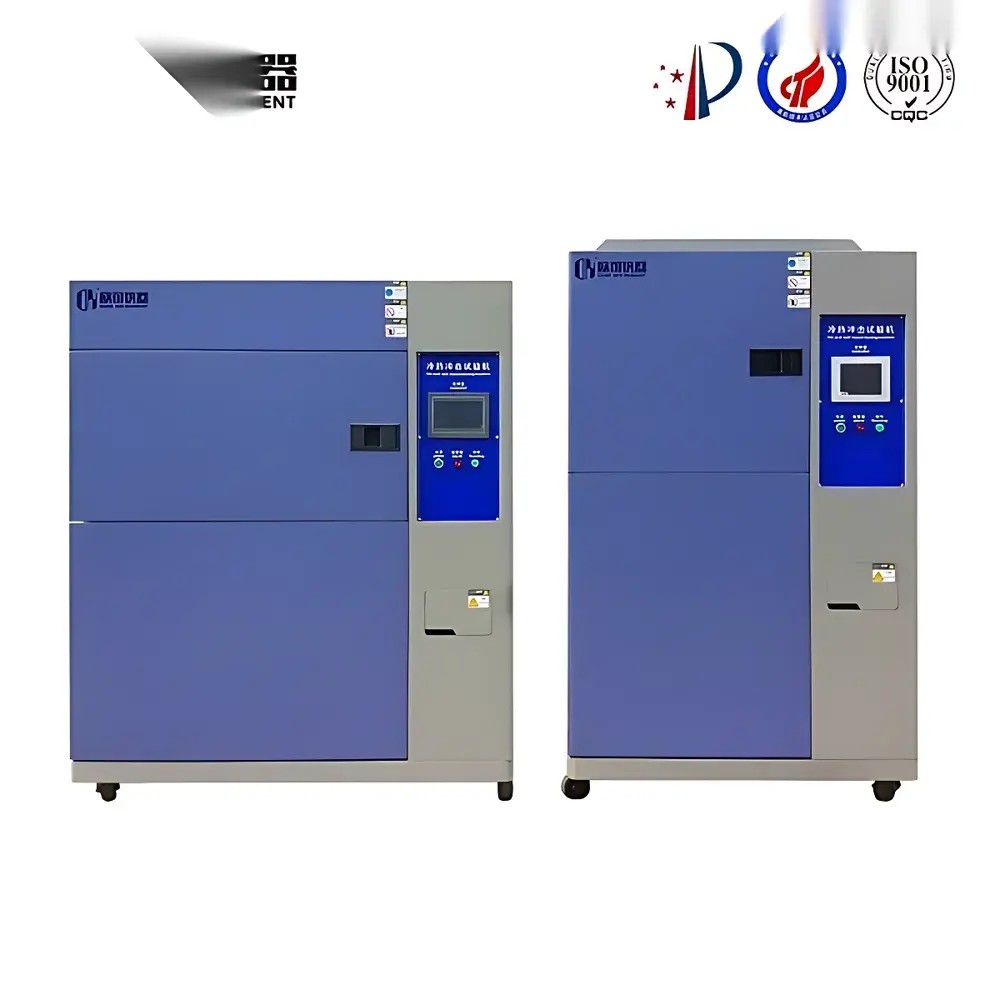
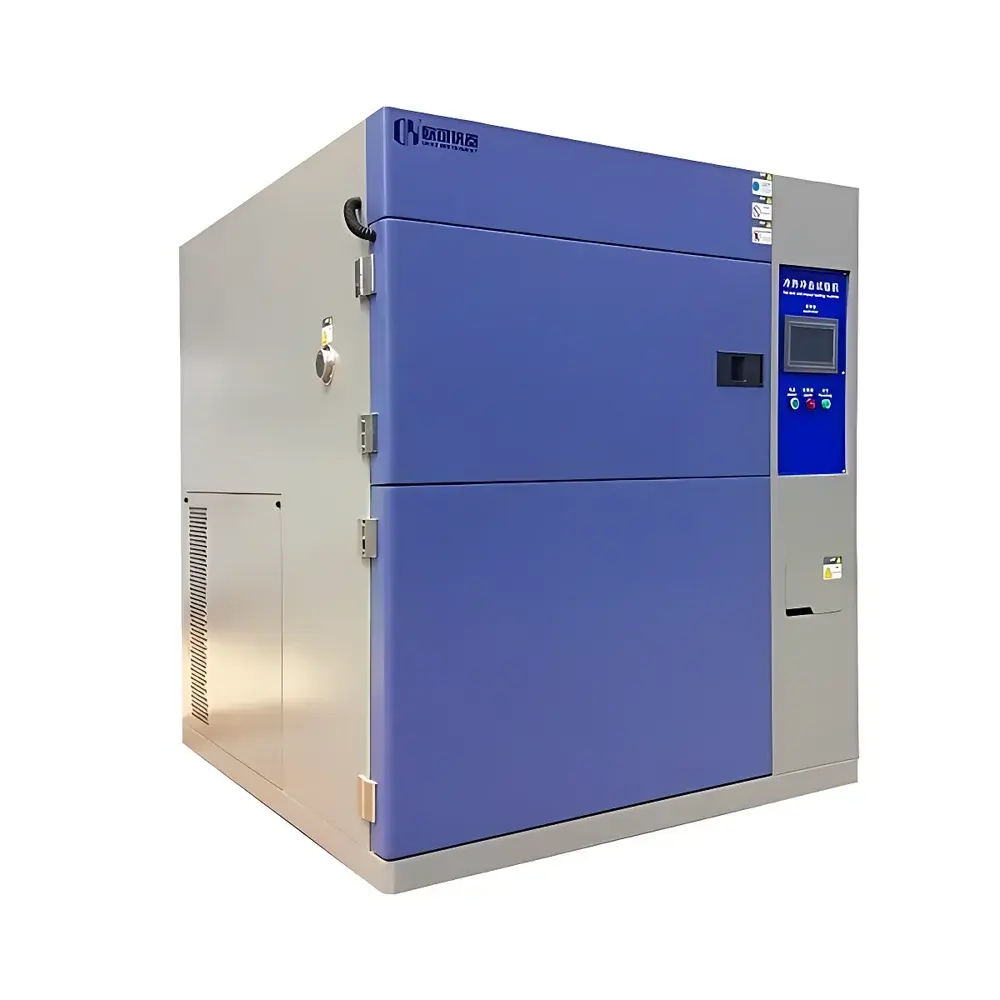
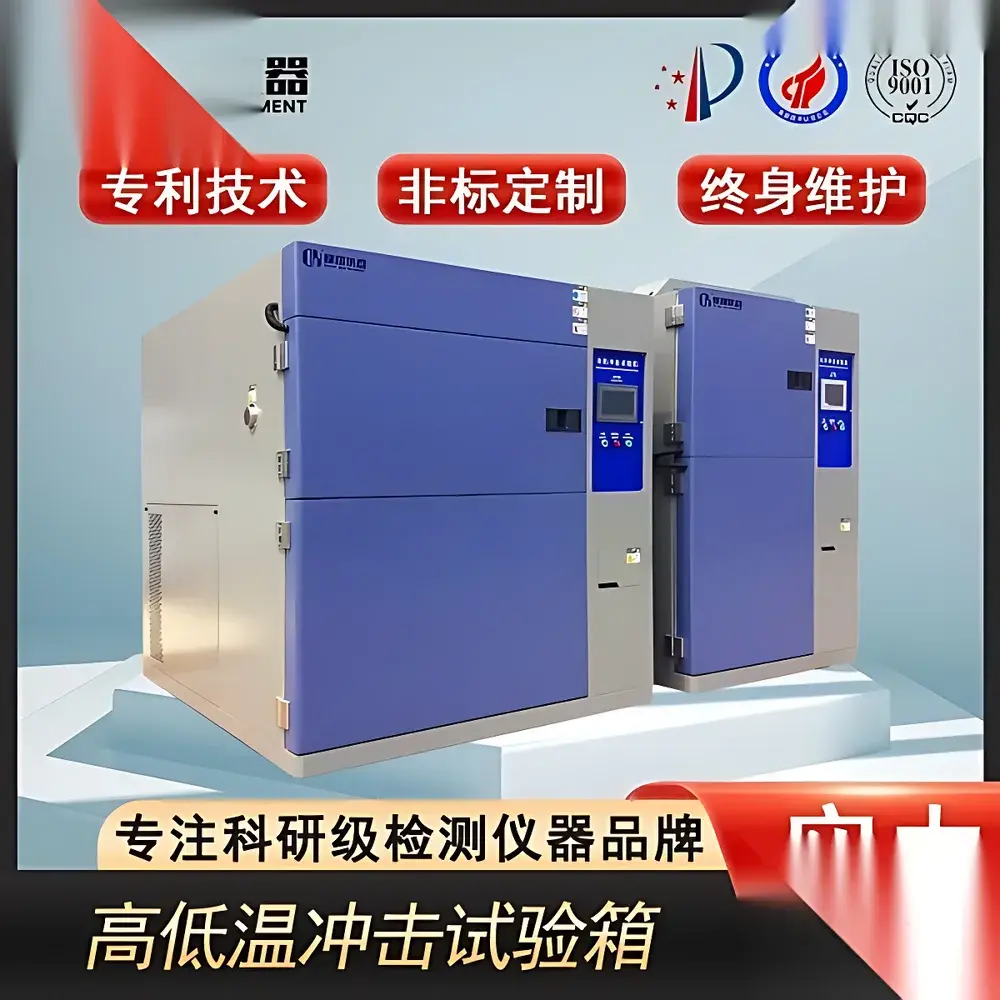
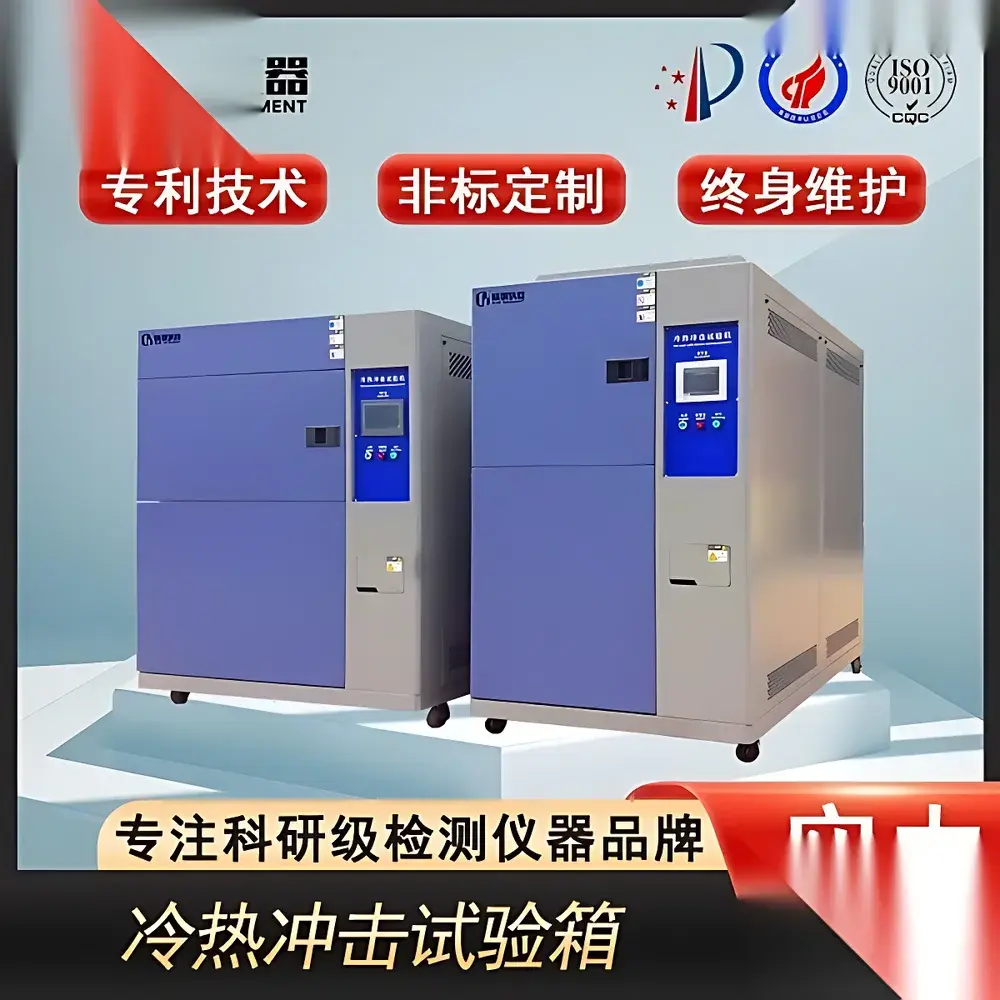
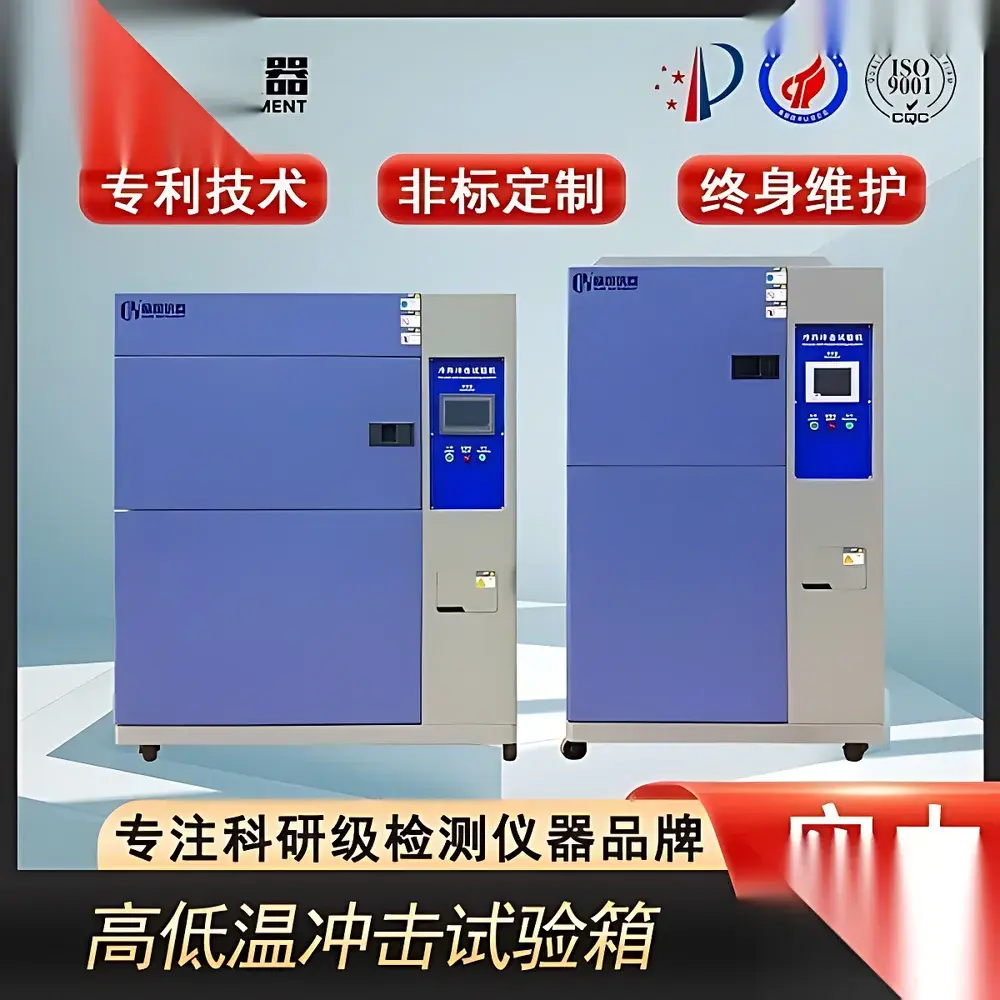
High-Temperature Thermal Shock Test Chamber
| Brand | Other Brands |
|---|---|
| Origin | Imported |
| Manufacturer Type | Authorized Distributor |
| Price | USD 11,200 (FOB) |
| Control System | TEMI880 Color Touchscreen Programmable Temperature & Humidity Controller (English/Chinese Switchable) or TEMI300 Membrane Keypad Controller (English Only) |
| Refrigeration | French-made Tecumseh hermetic compressor |
| Cooling Method | Air-cooled |
| Insulation | Rigid polyurethane foam + ultra-fine glass fiber |
| Interior Material | SUS304 stainless steel |
| Exterior Material | Cold-rolled steel with electrostatic powder coating or optional SUS304 brushed finish |
| Air Circulation | Wide-band forced convection (top discharge / bottom intake), multi-wing centrifugal blower |
| Temperature Range | −70 °C to +180 °C (standard thermal shock configuration) |
| humidity range | 20–98% RH (optional humidification module) |
| Safety Protections | Compressor overheat/overcurrent/overpressure protection |
Overview
The High-Temperature Thermal Shock Test Chamber is an engineered environmental simulation system designed to evaluate material and component reliability under rapid, repetitive transitions between extreme high-temperature and ambient or sub-zero conditions. Based on the principle of accelerated thermal stress testing—defined by standards such as MIL-STD-810H Method 503.6, IEC 60068-2-14, and JIS Z 8704—it subjects test specimens to controlled, programmable thermal excursions with defined dwell times, transition rates, and cycle counts. This chamber supports both two-zone (hot/cold chamber) and single-chamber (air-shutter) thermal shock configurations, enabling precise replication of field-relevant thermal fatigue scenarios encountered in aerospace electronics, automotive power modules, PCB assemblies, and advanced battery systems. Its robust architecture ensures long-term stability, repeatability, and traceable performance across qualification, incoming inspection, and R&D validation workflows.
Key Features
- Programmable dual-mode control: TEMI880 color touchscreen controller (with bilingual UI and real-time data logging) or TEMI300 membrane keypad unit (for simplified operation in regulated environments)
- High-fidelity thermal response: Forced-air circulation via multi-wing centrifugal blower ensures uniform temperature distribution (±1.5 °C within working volume per IEC 60068-3-5) and rapid recovery (<3 min to stabilize after door opening)
- Dual-stage refrigeration system: Optimized air-cooled circuit using Tecumseh hermetic compressors and binary or cascade low-temperature loop design for stable operation down to −70 °C
- Structural integrity: Interior constructed from seamless SUS304 stainless steel; exterior available in electrostatically coated cold-rolled steel or optional brushed SUS304 finish; double-layer silicone rubber gasket seals rated for −70 °C to +200 °C
- Comprehensive safety suite: Independent overtemperature cutoff, compressor fault monitoring (overcurrent, overpressure, winding overheat), heater/humidifier dry-run protection, and water-level sensing
- Standard integration-ready interfaces: RS-485/RS-232 communication port compliant with Modbus RTU protocol; optional Ethernet gateway for SCADA or MES connectivity
Sample Compatibility & Compliance
The chamber accommodates samples up to 500 mm × 500 mm × 500 mm (W×D×H) with adjustable stainless-steel sample racks and a Ø50 mm cable/port access on the left side. Dual-pane tempered observation window enables non-intrusive visual monitoring without thermal leakage. All materials comply with RoHS Directive 2011/65/EU and meet UL 61010-1 electrical safety requirements. The system supports audit-ready documentation packages aligned with ISO/IEC 17025 calibration traceability and GLP/GMP operational protocols. Optional validation kits include IQ/OQ documentation templates, temperature mapping reports (per ASTM E2297), and sensor calibration certificates issued by ISO/IEC 17025-accredited laboratories.
Software & Data Management
Included PC-based control software provides full remote operation, real-time trend visualization, alarm history export (CSV/PDF), and automated report generation—including cycle count, max/min/mean values, and deviation alerts. Data logs are timestamped and stored with user authentication (role-based access control). The software architecture conforms to FDA 21 CFR Part 11 requirements when configured with electronic signature support and audit trail functionality. Exported datasets are compatible with JMP, MATLAB, and Minitab for statistical process analysis and Weibull life modeling.
Applications
This thermal shock chamber serves critical functions in failure mode analysis (FMA), solder joint reliability assessment (IPC-9701), die-attach integrity verification, and qualification of conformal coatings per IPC-CC-830. It is routinely deployed in Tier-1 automotive suppliers for AEC-Q200 stress screening, in semiconductor packaging labs for JEDEC JESD22-A104 qualification, and in photovoltaic module testing per IEC 61215 thermal cycling protocols. Its precision and repeatability make it suitable for comparative aging studies, HALT pre-screening, and supplier audit readiness preparation.
FAQ
What is the typical transition time between −40 °C and +150 °C?
Standard single-chamber models achieve ≤15 s transfer time (excluding dwell); two-zone configurations achieve ≤10 s, depending on load mass and thermal inertia.
Can this chamber operate under humidity-controlled thermal shock conditions?
Yes—when equipped with the optional surface-evaporation humidification system, it supports combined temperature-humidity shock per IEC 60068-2-30, with humidity control range 20–98% RH at temperatures ≥+10 °C.
Is calibration and validation support provided?
Factory calibration certificate is included; on-site IQ/OQ/ PQ validation services and annual recalibration are available through certified service partners with ISO/IEC 17025 accreditation.
What maintenance intervals are recommended?
Compressor oil and refrigerant checks every 24 months; filter replacement and blower inspection every 12 months; door gasket integrity verification quarterly.
Does the system meet CE marking requirements?
Yes—the chamber complies with the EU Machinery Directive 2006/42/EC, EMC Directive 2014/30/EU, and Low Voltage Directive 2014/35/EU, and carries the CE mark with Declaration of Conformity.
Related Products



